Gongbi Landscape · 1530
Handscroll (Qiu Ying, 1530)
Qiu Ying (1494–1552) har skabt Handscroll. Det er fra 1530. Det tilhører Gongbi Landscape-bevægelsen. Den er udført i Acrylic On Canvas. Det opbevares på Metropolitan Museum of Art i New York, USA.
- 1530
- Acrylic On Canvas
- Metropolitan Museum of Art, New York

 Se i rummet

 Håndmalet oliemalerie
 Del som kort
 Del
 Faktablad


 Download
 Lignende værker
 Røntgenundersøgelse
 Diasshow
 Spørgsmål og svar

 Statistikker
Handscroll kort fortalt
- Titel
- Handscroll
- Kunstner
- Qiu Ying (1494–1552)
- Kunstner født i
- Taicang, Kina
- Dato
- 1530
- Materiale
- Acrylic On Canvas
- Hvor det kan ses
- Metropolitan Museum of Art, New York, USA
- Bevægelse
- Gongbi Landscape
- Periode
- Late Medieval
- Motiv
- ming dynasty, landscape, scroll, qiu ying, luohans, chinese art
Hvad forestiller Handscroll?
Qiu Ying’s “Up the River During Qingming”: A Masterpiece of Ming Dynasty Serenity
“Up the River During Qingming,” painted by Qiu Ying during the mid-16th century, is more than just a landscape; it's a carefully constructed meditation on harmony, leisure, and the enduring beauty of nature. Attributed to one of China’s Four Masters of the Ming Dynasty – alongside Shen Zhou, Tang Yin, and Wen Zhengming – this exquisite handscroll offers a rare glimpse into the refined aesthetic sensibilities of Suzhou during that era. The work, currently residing in the collection of the National Gallery of Canada, invites viewers into a tranquil scene brimming with subtle symbolism and masterful brushwork.
Qiu Ying’s artistic journey was remarkably unconventional for his time. Rather than pursuing formal training within established art circles, he began as a lacquer artisan, honing his skills in meticulous detail – a foundation that profoundly influenced the precision and control evident throughout “Up the River During Qingming.” This early experience instilled in him an unparalleled understanding of line and color, qualities he would later translate into his celebrated landscape paintings. His apprenticeship with Zhou Chen in Suzhou further solidified his technical abilities, exposing him to the techniques of the Wu School, known for its emphasis on ink washes and a more expressive approach to nature.
A Symphony of Detail: Technique and Style
The painting’s remarkable quality stems from Qiu Ying's mastery of the gongbi technique – a highly detailed, realistic style that was favored by court painters. Each element—from the meticulously rendered bamboo stalks to the delicate folds of the pavilions—is executed with painstaking precision, creating an illusion of incredible depth and texture. Notice the subtle gradations of color achieved through layering washes of ink and pigment; this creates a luminous quality that brings the scene to life. The composition is carefully balanced, drawing the eye across the landscape in a deliberate and engaging manner. The artist’s use of loose brushwork, particularly in depicting the distant mountains and flowing river, contrasts beautifully with the tightly controlled detail of the foreground elements, demonstrating Qiu Ying's versatility and his ability to seamlessly blend different artistic approaches.
Symbolism Woven into the Landscape
“Up the River During Qingming” is rich in symbolic meaning. The scene depicts a scholar leisurely enjoying a day by the river, surrounded by carefully arranged pavilions and gardens. This imagery reflects the Confucian ideals of scholarly pursuits, contemplation, and harmony with nature – values highly esteemed during the Ming Dynasty. The presence of the tavern and the farmer gathering water vegetables adds a touch of everyday life to the scene, reminding us that even amidst beauty and tranquility, human activity continues. The bamboo grove, a recurring motif in Chinese art, symbolizes resilience, integrity, and longevity—qualities admired in virtuous individuals. The distant mountains represent permanence and stability, while the flowing river embodies fluidity and change.
A Window into Ming Dynasty Culture
Beyond its aesthetic beauty, “Up the River During Qingming” offers a valuable insight into Ming Dynasty culture. It reflects the importance of gardens as spaces for contemplation, artistic expression, and social interaction. The lavish furnishings within the pavilions—including the exquisite celadon vase—demonstrate the wealth and sophistication of the era’s elite. The painting also reveals the influence of philosophical ideas, particularly those associated with Zhou Dunyi, whose “On the Love for the Lotus” inspired the scene's composition and symbolism. Qiu Ying’s ability to seamlessly integrate these diverse elements into a cohesive and harmonious whole is a testament to his artistic skill and cultural awareness.
Collecting a Legacy: Reproduction and Inspiration
Reproductions of “Up the River During Qingming” capture only a fraction of the painting's original impact. The subtle nuances of color, texture, and brushwork are difficult to replicate fully, but high-quality reproductions offer an accessible way to appreciate Qiu Ying’s artistry. This work serves as a powerful reminder of the enduring appeal of Chinese landscape painting—a genre that continues to inspire artists and captivate viewers with its beauty, symbolism, and profound sense of serenity.
Hvilket museum udstiller Handscroll?
Metropolitan Museum of Art
New York, USA
Oprindelse og historie for Metropolitan Museum of Art Metropolitan Museum of Art begyndte med en vision, der blev delt af en gruppe forretningsmænd, finansfolk samt førende kunstnere og tænkere. Efter institutionens stiftelse i 1870 søgte museet efter et permanent hjem til at huse sine stadigt voksende erhvervelser. Før det fandt sin nuværende placering, havde museet kortvarigt residens på Douglas Mansion-ejendommen på West 14th Street.


Højopløselige billeder af Handscroll

Public domain: kunstneren døde i 1552.
Andre størrelser, beskæringer og kildeangivelse →Qiu Ying, Handscroll (1530), Metropolitan Museum of Art. Frit tilgængelig
Spørgsmål om Handscroll besvaret
Hvor kan man i dag se "Handscroll" af Qiu Ying udstillet?
"Handscroll" af Qiu Ying er udstillet på Metropolitan Museum of Art, New York, USA. Museets fortegnelse henviser til det originale værk og ikke til reproduktioner.
Hvornår blev "Handscroll" skabt?
"Handscroll" af Qiu Ying blev skabt i 1530.
Hvilket medie er "Handscroll" af Qiu Ying udført i?
Qiu Ying brugte Acrylic On Canvas-teknikken til "Handscroll". Teknikken definerer det originale værks materielle karakter.
Hvad forestiller "Handscroll" af Qiu Ying?
Temaerne i "Handscroll" af Qiu Ying omfatter ming dynasty, landscape, scroll, qiu ying, luohans, chinese art, gongbi, som tilsammen udgør værkets motivverden.
Er "Handscroll" fri for ophavsret?
Ophavsretsstatus for "Handscroll" af Qiu Ying: værket er i det offentlige domæne – ophavsretten er udløbet. Dette afgør, om der frit må foretages reproduktioner af billedet.
Hvem har skabt "Handscroll"?
"Handscroll" blev skabt af Qiu Ying. Informationen på denne side beskriver Qiu Yings originale værk.
Hvilken kunstretning tilhører "Handscroll" af Qiu Ying?
"Handscroll" af Qiu Ying tilhører Gongbi Landscape-bevægelsen. Denne bevægelse giver den stilistiske kontekst for værket.
Hvor i Qiu Yings karriere placerer "Handscroll" sig?
Inden for Qiu Yings karriere tilhører "Handscroll" perioden Mid-16th Century, hvilket gør det muligt at sammenligne værket med kunstnerens øvrige værker.
Hvor gammel var Qiu Ying, da vedkommende skabte "Handscroll"?
Qiu Ying var 36 år gammel, da vedkommende skabte "Handscroll" i 1530. Alderen er beregnet ud fra kunstnerens fødselsår, 1494.
Om kunstneren, Qiu Ying
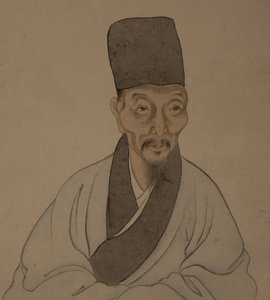
1494–1552, Kina
Qiu Ying
Et liv formet af penselstrøg: Qiu Yings verden Født under ydmyge kår i 1494 i byen Taicang, nær det nuværende Jiangsu-provins, rejste Qiu Ying sig til at blive en af Ming-dynastiets mest berømmedte malere. I modsætning til mange af sin tids kunstnere, der nød godt af en lærdomsrig opvækst og formel uddannelse inden for etablerede kunstneriske kredse, var Qiu Yings vej bemærkelsesværdig selvskabt. Han påbegyndte ikke sin kunstneriske rejse gennem traditionelle kanaler, men som lærling hos en lakforarbejder, hvor han finpudsede sine færdigheder i detaljeret dekorativt arbejde – et fundament, der skulle få en dyb indflydelse på den minutiøse præcision, som kendetegner hans senere malerier. Denne tidlige erfaring indgydede i ham en beherskelse af linje og farve, kvaliteter han senere forfinede under vejledning af Zhou Chen i Suzhou, som var et pulserende kulturelt knudepunkt i Ming-perioden.
Også af Qiu Ying
 Up the River During Qingming1644
 Zhao Mengfu Writing the Heart (Hridaya) Sutra in Exchange for Tea1542
 Lady Su Hui and Her Verse Puzzle501
 The Seven sages of the bamboo grove1552

Essays om Handscroll
 Understanding Chinese Painting: A Comparison of Gongbi and XieyiMaster the differences between Gongbi and Xieyi styles. Discover the history and techniques of Chinese ink painting now.
 25 Must-See Masterpieces at Berlin's Alte NationalgalerieExplore 25 iconic masterpieces from Berlin's Alte Nationalgalerie. From Romanticism to Impressionism, discover them all on OriginalUniqueAr…
 Understanding Chinese Art: Literati Painting and Song Academy PaintingMaster the distinction between Song Academy and Literati painting styles. Explore Chinese art history through expert analysis today.