Tekststørrelse

() ·

Et maleri skabt til dig, i hånden

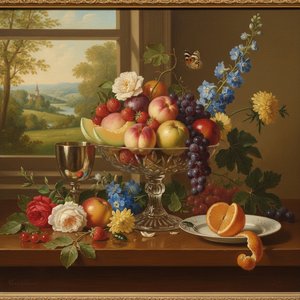
Still Life with Fruit

Håndlavet oliereproduktion

Håndmalet olie på lærred i din valgte størrelse og ramme, udført efter bestilling af vores kunstnere. ( Skift til printsalg Skift til digitalt billede)

Beskrivelse af samlerobjektet

James Peale's 'Still Life with Fruit' (1821) is a stunning example of American academic realism, showcasing opulent fruit & dramatic lighting. Explore this captivating miniature masterpiece!

Kunstnerbiografi

James Peale (1749-1831) var en amerikansk maler kendt for sine delikate miniatureportrætter og livlige stillbilleder. Hans arbejde fanger det amerikanske koloniale liv med neoklassisk elegance, ofte i samarbejde med sin bror Charles Willson Peale.

fra ·

Kapitel 1

Hvor stor skal den være?

Træk i skyderen for at ændre størrelsen; billedet til venstre viser rammen i dens faktiske bredde. Originalens proportioner bevares.

Standardstørrelse
speciallavet
CM
INCH

Vælg mellem vores forudindstillede størrelser, der matcher kunstværkets originale proportioner.

bredde
højde

Indtast den bredde og højde, du har brug for, så det passer til din ramme eller din væg. Da dette er håndmalet, kan kunstneren ved en anden form på størrelsen male lidt mere rundt om billedet eller skære lidt væk — det er op til dig. Vi sender dig et digitalt mockup til godkendelse, før maleriet påbegyndes. Billedet, der vises på denne side, viser ikke det endelige resultat — det er kun mockuppet, der gør.

Kapitel 2

Hvordan skal det leveres?

Vælg kanterne på det opspændte lærred

Vælg din ramme

Corner sample of the WhiteWrap canvas edge finish, stretched on massivt træ bars
Hvid kant Dkr1
Corner sample of the BlurSideWrap canvas edge finish, stretched on massivt træ bars
Udvasket kant Dkr1
Corner sample of the ExtendedWrap canvas edge finish, stretched on massivt træ bars
Fortsat motiv Dkr1
Corner sample of the P118B picture frame: støbt polystyren, 5 cm wide and 3 cm thick
P118B Dkr10
Corner sample of the P118H picture frame: støbt polystyren, 5 cm wide and 3 cm thick
P118H Dkr10
Corner sample of the P118W picture frame: støbt polystyren, 5 cm wide and 3 cm thick
P118W Dkr10
Corner sample of the P438Z picture frame: støbt polystyren, 5.5 cm wide and 3.5 cm thick
P438Z Dkr10
Corner sample of the P508JH picture frame: støbt polystyren, 7 cm wide and 3.5 cm thick
P508JH Dkr12
Corner sample of the P508YH picture frame: støbt polystyren, 7 cm wide and 3.5 cm thick
P508YH Dkr12
Corner sample of the P805H picture frame: støbt polystyren, 5 cm wide and 3.5 cm thick
P805H Dkr10
Corner sample of the P805Z picture frame: støbt polystyren, 5 cm wide and 3.5 cm thick
P805Z Dkr10
Corner sample of the P919BZ picture frame: støbt polystyren, 7 cm wide and 3.5 cm thick
P919BZ Dkr10
Corner sample of the P919G picture frame: støbt polystyren, 7 cm wide and 3.5 cm thick
P919G Dkr10
Corner sample of the P919XJ picture frame: støbt polystyren, 7 cm wide and 3.5 cm thick
P919XJ Dkr10
Corner sample of the P959ZH picture frame: støbt polystyren, 5 cm wide and 3 cm thick
P959ZH Dkr10
Corner sample of the P968JZ picture frame: støbt polystyren, 6 cm wide and 4 cm thick
P968JZ Dkr12
Corner sample of the W106C picture frame: massivt træ, 5 cm wide and 3 cm thick
W106C Dkr8
Corner sample of the W218G picture frame: massivt træ, 5 cm wide and 3 cm thick
W218G Dkr10
Corner sample of the W218JH picture frame: massivt træ, 5 cm wide and 3 cm thick
W218JH Dkr8
Corner sample of the W218Y picture frame: massivt træ, 5 cm wide and 3 cm thick
W218Y Dkr10
Corner sample of the W307PJ picture frame: massivt træ, 6 cm wide and 3 cm thick
W307PJ Dkr10
Corner sample of the W316G picture frame: massivt træ, 6 cm wide and 3 cm thick
W316G Dkr10
Corner sample of the W316PJ picture frame: massivt træ, 6 cm wide and 3 cm thick
W316PJ Dkr8
Corner sample of the W316Y picture frame: massivt træ, 6 cm wide and 3 cm thick
W316Y Dkr10
Corner sample of the W398PJ picture frame: massivt træ, 5 cm wide and 3 cm thick
W398PJ Dkr8
Corner sample of the W4111J picture frame: massivt træ, 6.5 cm wide and 3.5 cm thick
W4111J Dkr10
Corner sample of the W500HY picture frame: massivt træ, 7 cm wide and 5 cm thick
W500HY Dkr15
Corner sample of the W500JH picture frame: massivt træ, 7 cm wide and 5 cm thick
W500JH Dkr15
Corner sample of the W692G picture frame: massivt træ, 8 cm wide and 4 cm thick
W692G Dkr12
Corner sample of the W849H picture frame: massivt træ, 5 cm wide and 3 cm thick
W849H Dkr8
Corner sample of the W940BG picture frame: massivt træ, 7.5 cm wide and 4.5 cm thick
W940BG Dkr15
Corner sample of the W953PJ picture frame: massivt træ, 6 cm wide and 3.5 cm thick
W953PJ Dkr8
Corner sample of the H24-GOLD picture frame: udskåret træ med gesso, 10 cm wide and 6 cm thick
H24-GOLD Dkr30
Corner sample of the H24-SILVER picture frame: udskåret træ med gesso, 10 cm wide and 6 cm thick
H24-SILVER Dkr30
Corner sample of the H36-GOLD picture frame: udskåret træ med gesso, 15 cm wide and 6.5 cm thick
H36-GOLD Dkr45
Corner sample of the H36-SILVER picture frame: udskåret træ med gesso, 15 cm wide and 6.5 cm thick
H36-SILVER Dkr45
Ramme-forhåndsvisning
Indrammet

Profil: . Samlet størrelse med ramme: .

Kapitel 3

Hvem maler det, og bør der ændres noget?

Eksempler på hvad kan ændres: Udskift ansigt med kundens eget foto; Tilføj kæledyr (f.eks. udskift kat med hund); Inkluder skjult besked i baggrunden; Skift baggrundslandskab eller elementer.
Efter bestilling vil OriginalUniqueArt.com-teamet sende en e-mail til kunden for at få instruktioner og levere et udkast til forhåndsvisning

Verdensomspændende levering () på 3-4 uger i stedet for de standard 5 uger. (4 november). Ingen kompromiser med kvaliteten.

Kapitel 4

De sidste detaljer

En navneplade, ligesom på et museum?

Detaljer om indgraveret bronzeskilt

This elegant plaque features the artist's name and the title of the artwork, finely engraved for a timeless presentation.

It is made from bronze with a refined, elegant finish. The text is precisely laser-engraved for a sharp and permanent result. Measuring 9x2 cm, the plaque is compact yet easy to read. It's built to be durable and scratch-resistant, offering a professional, museum-quality look. Mounting is simple thanks to the included adhesive backing.

Detaljer om gennemsigtig akrylplade

The plaque includes essential engraved details such as the artist's name, the title of the artwork, the date it was created, the type of media used-like oil on canvas or watercolor-a brief description of the piece, and a QR code that links to the complete artwork information.

It is crafted from clear acrylic, offering a sleek, modern appearance. The text is UV-engraved in black to ensure strong visual contrast. With a size of 10x15 cm, it ensures optimal readability. It comes equipped with two metal hooks for secure wall mounting. The plaque is designed to be weather-resistant, making it suitable for various environments, and it includes interactive features that work seamlessly with smartphone scanning.

Detaljer om sort akrylplade

This elegant plaque includes engraved information such as the artist's name, the title of the artwork, the date it was created, the type of media used (like oil on canvas or watercolor), a short description of the artwork, and a QR code for quick access to more information.

The plaque itself is made from refined black acrylic with a premium finish. The text is laser-engraved in white for high contrast and readability. Its size is 10x15 cm, designed to be easy to read. It comes with two metal hooks for professional mounting. The design is sleek and fits any interior style. It is also weather-resistant and durable, with built-in digital integration for mobile compatibility.

En beskyttende lak?

Hvornår skal det leveres?

Kapitel 5

Dit maleri, præcis som du har bestilt det

Still Life with Fruit

Reproduktionsmetode

Størrelse på reproduktion

-

Eksklusivt udvalgte senior-kunstnere

Mere detaljerigdom, finesse og ekstra produktionstid

-

Indramning af reproduktion

-

-

For kunstværker eller reproduktioner, der er større end 105 cm (ca. 41 tommer) på en hvilken som helst side, vil rammen blive leveret som et adskilt sæt. Denne metode sikrer sikker levering og forhindrer skader under transport.

Professionel montering er påkrævet – dette er ikke et gør-det-selv produkt.
Sættet skal samles, og lærredet skal opspændes af en erfaren professionel indrammer ved brug af trælim (ikke medfølger), en lærredsspænder og klemmer til at holde blindrammen vinkelret, mens limen tørrer. Forkert samling eller ujævn spænding af lærredet kan beskadige kunstværket permanent og er ikke dækket af vores garanti.

  • Alle massive trælister er inkluderet, præcist tilpasset i størrelsen.

  • Samles med de medfølgende skruer samt trælim til hjørneforbindelserne, som ikke medfølger og skal anskaffes af din indrammer.

  • Professionelt værktøj er påkrævet og medfølger ikke: en lærredsstrækker (spændetang) og klemmer til at holde blindrammen vinkelret, mens limen tørrer.

Vigtigt:
Hjørneforbindelserne kræver trælim, listerne skal holdes fast med skruetvinger, indtil limen er helt tør, og opspænding af lærredet på den samlede ramme kræver en lærredsspænder. Ingen af disse dele er inkluderet i sættet. Vi anbefaler, at du kontakter en erfaren professionel indrammer, før du bestiller denne størrelse.

Navneskilt

-

-

Beskyttende fernis

Blank lak (fremhæver farverne og beskytter mod lys og fugt)

-

Tilpas mit kunstværk

Eksempler på tilpasningsmuligheder: Udskift ansigt med kunde-foto; Tilføj kæledyr (f.eks. udskift kat med hund); Inkluder skjult besked i baggrunden; Ændr baggrundslandskab eller elementer.

-

Hurtig levering

Verdensomspændende levering () på 3-4 uger i stedet for de standard 5 uger. (4 november). Ingen kompromiser med kvaliteten.

-

Ekspreslevering

Verdensomspændende levering til inden for 5 uger. (11 november).

Inkluderet

Samlet pris

Dkr 1992

Samlet pris Dkr 1992

Glasmulighed er kun tilgængelig i størrelser under 110 cm

Inkluderet i hver ordre

  • Gratis ekspresforsendelse til hele verden
  • Lærred af linned i høj kvalitet
  • Fuld transportforsikring
  • Garanti for refusion af told og importafgifter
  • Garanti for præcis farvegengivelse
  • 100 dages returret ved fabrikationsfejl
  • 100% fuld returret
  • Mængderabat ved flere køb

A Symphony of Color and Form: James Peale’s Still Life with Fruit

James Peale's Still Life with Fruit, painted circa 1821, is more than just a depiction of perishable bounty; it’s a meticulously crafted window into the burgeoning aesthetic sensibilities of early America. This remarkable work, now housed within the collections of museums and art institutions worldwide, reveals a masterful blend of Neoclassical restraint and Baroque exuberance – a testament to Peale's artistic versatility and his deep understanding of both European traditions and the evolving American visual landscape.

The painting immediately captivates with its rich palette. Deep crimson peaches glow alongside the vibrant yellows of ripe pears, while the verdant greens of grapes and leafy foliage provide a grounding counterpoint. Peale’s technique is characterized by an almost obsessive attention to detail; each fruit is rendered with astonishing realism – the subtle variations in skin texture, the delicate veins tracing across leaves, even the slight imperfections that speak to their natural origins. This commitment to accuracy wasn't merely technical; it reflected a broader fascination with the natural world prevalent during this period, fueled by advancements in scientific observation and botanical illustration.

The Miniature Master’s Grand Vision

While often associated with his exquisite miniature portraits – a genre where Peale truly excelled – Still Life with Fruit demonstrates his ambition to tackle larger-scale works. This shift reflects a growing interest in still life painting within the American art world, influenced by European trends and a desire to elevate the status of decorative arts. Peale’s background as a cabinetmaker undoubtedly informed his approach; he clearly valued craftsmanship and sought to imbue his paintings with a sense of tactile richness. The arrangement of the fruit itself is carefully considered – a deliberate composition designed to draw the eye across the canvas, creating a dynamic visual rhythm.

Interestingly, Peale’s career was punctuated by military service during the American Revolution, an experience that instilled in him a disciplined approach to observation and execution. This dedication translates into the painting's remarkable clarity and precision. The lighting is particularly noteworthy – a dramatic chiaroscuro effect that casts deep shadows and highlights the luminous surfaces of the fruit, adding depth and drama to the scene.

Symbolism and the American Spirit

Beyond its technical merits, Still Life with Fruit carries symbolic weight. Fruit, in this context, represents abundance, prosperity, and the rewards of labor – themes deeply resonant within the developing American identity. The variety of fruits—peaches, pears, grapes—suggests a connection to the land and a celebration of its bounty. It’s a visual affirmation of the nation's potential for growth and success.

Furthermore, the painting can be viewed as an embodiment of Neoclassical ideals – order, balance, and harmony. The carefully arranged composition, the restrained color palette, and the meticulous rendering of detail all contribute to this sense of formal elegance. However, Peale subtly infuses this formality with a touch of Baroque exuberance—the dramatic lighting, the rich colors, and the sheer abundance of fruit create an atmosphere of opulent delight.

A Timeless Appeal

Still Life with Fruit remains a captivating work of art, offering a glimpse into the artistic and cultural landscape of early America. Its meticulous detail, evocative symbolism, and masterful technique continue to resonate with viewers today. Whether admired for its historical significance or simply appreciated for its aesthetic beauty, this painting stands as a testament to James Peale’s artistry and his enduring legacy.

Spørgsmål og svar

Hvordan relaterer stilen i "Still Life with Fruit" sig til kunstnerens samtid?

I "Still Life with Fruit" af James Peale mødes Academic Realism-stilen med Tidlig moderne tid-æraen.

Hvilke andre navne er James Peale kendt under?

James Peale optræder under de alternative navne Charles Willson Peale, Raphaelle Peale, Rembrandt Peale.

Hvor harmonisk er farvevalget i "Still Life with Fruit" af James Peale?

Farveharmonien i "Still Life with Fruit" er beskrevet som Strong Color Unity.

Læs mere om dette maleri

Se i rummet Se i AR Skift til printsalg Skift til digitalt billede Del som kort
Detaljer Guide Tilføj til favoritter Download Lignende værker Røntgenundersøgelse Diasshow Spørgsmål og svar Statistikker

I tal

  • 1821året det blev malet
  • 29vælg mellem forskellige rammer
  • standardstørrelser, i deres egne proportioner
  • 5uger at male og levere

James Peale

James Peale

1749 - 1831, USA

Hurtige fakta om James Peale

  • Artistic Movement Or Style: Neoklassicisme
  • Artists Or Movements Influenced By This Artist: ['Charles Willson Peale']
  • Artists Who Influenced This Artist: ['Benjamin West']
  • Date Of Birth: 1749
  • Date Of Death: 1831
  • Full Name: James Peale
  • Nationality: Amerikaner
  • Notable Artworks:
    • Portrætter af prominente personer
    • Fruit Still Lifes
  • Place Of Birth: Chestertown, Maryland

Kunstnerbiografi

James Peale: A Quiet Master of Miniature and Still Life

James Peale (1749 – May 24, 1831) was an American painter celebrated for his exquisite miniature portraits & vibrant still life paintings, and a younger brother of noted painter Charles Willson Peale. He captured colonial America with neoclassical grace, establishing himself as one of the foremost artists of his time—a figure whose understated brilliance continues to resonate today.
  • Early Life and Apprenticeships
  • Military Service and Revolutionary Experience
  • Collaboration with Charles Peale and Artistic Development
  • The Miniature Portrait Genre: Precision and Emotion
  • Still Life Painting: Light, Texture, and Observation

Early Life and Apprenticeships

James Peale was born in Chestertown, Maryland, the second child, after Charles, of Charles Peale (1709–1750) and Margaret Triggs (1709–1791). His father died when he was an infant, and the family moved to Annapolis shortly thereafter. Young James began his artistic education early, undertaking apprenticeships in saddlery and cabinetmaking—trades that instilled within him a meticulous attention to detail and craftsmanship, qualities which would prove invaluable throughout his career. These formative experiences shaped his understanding of material and technique, laying the groundwork for his later mastery of watercolor on ivory.

Military Service and Revolutionary Experience

The burgeoning revolutionary fervor dramatically altered James Peale’s trajectory. In 1769 he enlisted in William Smallwood's regiment within the Continental Army—a decision driven not only by patriotic duty but also by a profound immersion into the realities of war. He swiftly ascended through the ranks, demonstrating courage and tactical acumen during pivotal battles—Long Island, White Plains, Trenton, Brandywine, Germantown, Princeton, and Monmouth—witnessing firsthand the hardships endured by soldiers and the heroism displayed on the battlefield. This military service instilled within him not only bravery but also a keen observational skill—a capacity to register nuance under pressure—influencing his artistic sensibility.

Collaboration with Charles Peale and Artistic Development

Following his return from London in 1769, where he studied under Benjamin West, James Peale joined forces with his brother Charles, establishing a studio that became a crucible for artistic innovation. Together they designed floats for Philadelphia’s grand procession celebrating the ratification of the United States Constitution—a testament to their shared commitment to republican ideals and their collaborative spirit. This partnership fostered intellectual exchange and propelled both artists toward new creative horizons.

The Miniature Portrait Genre: Precision and Emotion

James Peale distinguished himself as a master of watercolor on ivory, achieving unparalleled renown for his miniature portraits. These exquisitely detailed depictions captured not merely likeness but also the essence of character—a feat accomplished through painstaking observation and masterful technique. Unlike larger canvases that prioritize grandeur, miniatures demanded an intimacy of execution, requiring artists to convey profound emotion within a confined space. Peale’s miniatures stand as enduring symbols of personal connection and artistic refinement.

Still Life Painting: Light, Texture, and Observation

Beyond portraiture, James Peale excelled in still life compositions—particularly those featuring fruit—demonstrating an exceptional ability to render textures, light, and form with breathtaking realism. His canvases glowed with luminosity, capturing the subtle nuances of color and surface detail—a testament to his unwavering dedication to scientific observation and artistic expression. Like his brother Charles, Peale’s work embodies the neoclassical aesthetic—characterized by clarity, restraint, and an appreciation for natural beauty.

Legacy and Influence

James Peale's contribution to American art history is undeniable. He solidified his place as a pivotal figure in establishing an authentically American artistic identity—a legacy preserved through the enduring beauty of his paintings and the influence he exerted on generations of artists who followed him. His meticulous approach, combined with his sensitivity to emotion, continues to inspire admiration and scholarly study.

Hurtige fakta

  • Artistic style: Detailed, realistic
  • Movement: Academic Realism
  • Medium: Oil on wood panel
  • Dimensions: 18.4 x 25.4 in.
  • Year: 1821
  • Location: De Young Museum

Kunstquiz

Der er kun ét korrekt svar på hvert spørgsmål.

Spørgsmål 1:
What is the primary subject of James Peale’s ‘Still Life with Fruit’?
Spørgsmål 2:
In what year was James Peale’s ‘Still Life with Fruit’ painted?
Spørgsmål 3:
James Peale was known for his expertise in which artistic technique?
Spørgsmål 4:
The painting reflects which artistic movement’s emphasis on realism and detail?
Spørgsmål 5:
What does the inclusion of various fruits and vegetables in the painting likely symbolize?
Udforsk kunstværker organiseret efter temaer, stilarter og karakteristika.