Art Nouveau · 1900
Emotion (Ferdinand Hodler, 1900)
Ferdinand Hodler (1853–1918) har skabt Emotion. Det er fra 1900. Det tilhører Art Nouveau-bevægelsen. Den er udført i Acrylic On Canvas. Det opbevares på Kunsthistorisches Museum i Wien, Østrig. Målene er 115 × 70 cm.
- 1900
- Acrylic On Canvas
- 115 × 70 cm
- Kunsthistorisches Museum, Wien

 Se i rummet

 Håndmalet oliemalerie
 Del som kort
 Del
 Faktablad


 Download
 Lignende værker
 Røntgenundersøgelse
 Diasshow
 Spørgsmål og svar

 Statistikker
Emotion kort fortalt
- Titel
- Emotion
- Kunstner
- Ferdinand Hodler (1853–1918)
- Kunstner født i
- Bern, Schweiz
- Dato
- 1900
- Materiale
- Acrylic On Canvas
- Dimensioner
- 115 × 70 cm
- Hvor det kan ses
- Kunsthistorisches Museum, Wien, Østrig
- Bevægelse
- Art Nouveau
- Motiv
- woman, landscape, emotion, flowers, mountains, symbolism
Hvad forestiller Emotion?
Emotion – A Study in Quiet Intensity
Ferdinand Hodler’s “Emotion,” painted in 1900, stands as a cornerstone of Swiss Art Nouveau and embodies the movement's preoccupation with psychological depth alongside exquisite formal beauty. This striking portrait captures a woman bathed in soft light, positioned amidst a serene mountainous landscape—a deliberate juxtaposition designed to amplify the painting’s contemplative spirit. Hodler meticulously crafted this piece using oil paints on canvas, employing a technique characterized by smooth blending and subtle tonal gradations that contribute significantly to its ethereal quality. The artist's masterful handling of color – predominantly blues and pinks – isn’t merely decorative; it serves as a conduit for conveying profound emotional resonance.- Subject Matter: The central figure is presented with understated grace, her gaze directed inward—a hallmark of Hodler’s approach to portraying human experience. Her hands gently resting on her neck symbolize vulnerability and introspection, inviting the viewer to contemplate themes of solitude and contemplation.
- Style & Technique: Hodler's Art Nouveau style prioritizes organic forms and flowing lines, mirroring the natural world he so admired. The brushstrokes are deliberately soft and diffused, creating an atmosphere of tranquility and conveying a sense of timelessness.
- Historical Context: Painted at the cusp of the 20th century, “Emotion” reflects the broader artistic currents of its time—a reaction against academic conventions and a fervent embrace of Symbolism’s expressive power. Hodler sought to capture not just outward appearance but inner feeling, aligning with the philosophical debates surrounding consciousness and emotion prevalent in European intellectual circles.
- Symbolism: The mountainous backdrop serves as more than mere scenery; it represents resilience and permanence—visual metaphors for confronting life's challenges with fortitude. Similarly, the scattered pink flowers symbolize beauty amidst simplicity and offer a subtle counterpoint to the woman’s contemplative posture.
Exploring Hodler’s Artistic Vision
Hodler’s preoccupation with capturing inner experience aligns closely with the broader Symbolist movement, which rejected realism in favor of exploring subconscious realms and conveying spiritual truths through evocative imagery. Unlike Impressionists who sought to depict fleeting moments of sensory perception, Hodler aimed for a deeper understanding of human psychology—a goal achieved through meticulous observation and masterful artistic execution. His work continues to inspire artists and collectors alike, demonstrating the enduring relevance of Symbolism’s expressive language.Reproductions & Interior Design Considerations
A high-quality reproduction of “Emotion” can bring a touch of Swiss Alpine elegance into any interior space. OriginalUniqueArt.com offers exceptional reproductions crafted with archival pigments and printed on premium canvas—preserving the painting's original luminosity and textural nuances. Consider framing it in a neutral palette to complement its muted tones, allowing the artwork’s subtle beauty to shine through as a focal point of contemplation.Hvilket museum udstiller Emotion?
Kunsthistorisches Museum
Wien, Østrig
Historien om Kunsthistorisches Museum Kunsthistorisches Museum i Wien, Østrig, udsprang af et ønske om at give offentligheden adgang til de enorme skatte, som Habsburg-familien besad. Institutionen blev grundlagt i 1871 på initiativ fra kejser Franz Joseph I med det formål at huse disse kejserlige kunstsamlinger. Projektet var en monumental opgave for monarkiet, da det markerede overgangen fra private skatte til et rum dedikeret til offentlig fremvisning.


Højopløselige billeder af Emotion

Public domain: kunstneren døde i 1918.
Andre størrelser, beskæringer og kildeangivelse →Ferdinand Hodler, Emotion (1900), Kunsthistorisches Museum. Frit tilgængelig
Spørgsmål om Emotion besvaret
Hvor kan man i dag se "Emotion" af Ferdinand Hodler udstillet?
Du kan se det originale værk "Emotion" på Kunsthistorisches Museum, Wien, Østrig.
Hvornår er "Emotion" af Ferdinand Hodler skabt?
"Emotion" af Ferdinand Hodler blev skabt i 1900.
Hvilken teknik er "Emotion" udført med?
"Emotion" af Ferdinand Hodler er udført i Acrylic On Canvas. Reproduktionerne har til formål at gengive denne tekniks visuelle udtryk.
Hvad er de faktiske mål på "Emotion" af Ferdinand Hodler?
De registrerede mål for "Emotion" af Ferdinand Hodler er 70 x 115 cm. Reproduktioner kan bestilles i andre størrelser, mens de samme proportioner bevares.
Hvad forestiller "Emotion" af Ferdinand Hodler?
"Emotion" af Ferdinand Hodler forestiller: woman, landscape, emotion, flowers, mountains, symbolism, dress.
Er "Emotion" af Ferdinand Hodler i det offentlige domæne?
Hvad angår ophavsret, er "Emotion" i det offentlige domæne – ophavsretten er udløbet.
Hvilken kunstner tilskrives "Emotion"?
"Emotion" blev skabt af Ferdinand Hodler. Informationen på denne side beskriver Ferdinand Hodlers originale værk.
Hvilken kunstretning tilhører "Emotion" af Ferdinand Hodler?
"Emotion" er et værk fra Art Nouveau. Denne stilart angiver den kunstneriske tradition, som værket indgår i.
Hvilken periode i Ferdinand Hodlers karriere tilhører "Emotion"?
Inden for Ferdinand Hodlers karriere tilhører "Emotion" perioden Mature, hvilket gør det muligt at sammenligne værket med kunstnerens øvrige værker.
Om kunstneren, Ferdinand Hodler
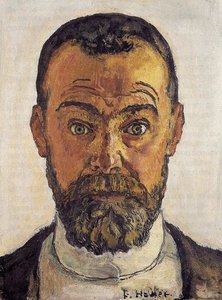
1853–1918, Schweiz
Ferdinand Hodler
Dødelighedens Arkitektur Født i Bern, Schweiz, i 1853, var Ferdinand Hodlers tidlige år præget af en stille, vedvarende sorg. Før han nåede ungdomsårene, efterlod tuberkulosen, som krævede hans far og to yngre brødre, et tomrum i hans hjem. Dette tidlige møde med tab blev et tilbagevendende motiv i hans værk, en skygge, der ville følge ham fra de beskedne begyndelser i hans læretid til højdepunkterne i hans professionelle karriere. Han påbegyndte sin uddannelse som dekorationsmaler og assisterede sin stedfar med kommercielt skiltemalerarbejde, en praktisk uddannelse, der indprentede ham en præcis beherskelse af linje og form.
Om Ferdinand Hodler Bemærkelsesværdige værker af Ferdinand Hodler
Også af Ferdinand Hodler
 Eiger, Monch and Jungfrau in Moonlight1908
 Woman in Ecstasy1911
 Sunset on Lake Geneva1915
 Study of two figures1897

Essays om Emotion
 The Resonance of Boldness: Exploring Emotional Impact & Artistic ExpressionExplore the powerful world of Expressionism with OriginalUniqueArt. Discover key artists like Kirchner & Rothko, understand its emotional i…
 Mastering Parallelism: The Top 25 Essential Artworks by Ferdinand HodlerImmerse yourself in the rhythmic beauty of Ferdinand Hodler. Explore 25 iconic masterpieces of Swiss Symbolism and Parallelism. From emotiv…
 Når Kunsten Passer Som Arkitektur: Præcisionen i Skræddersyet Design – Harmoni mellem Rum og VærkOplev hvordan skræddersyet kunst transformerer dit hjem! Få ekspertråd om rumpsykologi, farvevalg og harmonisk indretning. Skab et unikt in…