
 Se i rummet
 Del som kort
 Del
Del
 Detaljer
 Guide
Guide

 Download
 Lignende værker
 Røntgenundersøgelse
 Diasshow
 Q&A
Q&A Statistikker
Untitled (AQTDLT)


 Vis mere
Giclée / Kunsttryk
Giclée- eller lærredstryk i museumskvalitet med hurtig produktion og fleksible muligheder for finish. ( Køb håndmalet maleri Skift til digitalt billede)




P118B Dkr10

P118H Dkr10

P118W Dkr10

P438Z Dkr10

P508JH Dkr12

P508YH Dkr12

P805H Dkr10

P805Z Dkr10

P919BZ Dkr10

P919G Dkr10

P919XJ Dkr10

P959ZH Dkr10

P968JZ Dkr12

W106C Dkr8

W218G Dkr10

W218JH Dkr8

W218Y Dkr10

W307PJ Dkr10

W316G Dkr10

W316PJ Dkr8

W316Y Dkr10

W398PJ Dkr8

W4111J Dkr10

W500HY Dkr15

W500JH Dkr15

W692G Dkr12

W849H Dkr8

W940BG Dkr15

W953PJ Dkr8




Vælg mellem vores forudindstillede størrelser, der matcher kunstværkets originale proportioner.

Indtast den bredde og højde, du har brug for, så det passer til din ramme eller din væg. Et print kan kun beskæres, aldrig gøres større end selve billedet, så en størrelse med et andet format vil medføre, at dele af motivet går tabt. Vi sender dig en digital mockup til godkendelse, før vi printer noget. Billedet vist på denne side viser ikke den faktiske beskæring — det er kun mockuppen, der gør.
Verdensomspændende levering () på 2 uger i stedet for de sædvanlige 4/5 uger. (1 november)

Gratis ekspresforsendelse til hele verden

Lærred af linned i høj kvalitet

Fuld transportforsikring

Garanti for refusion af told og importafgifter

Garanti for præcis farvegengivelse

100 dages returret ved fabrikationsfejl

100% fuld returret

Mængderabat ved flere køb
 Glasmulighed er kun tilgængelig i størrelser under 110 cm

Untitled (AQTDLT)
Giclée / Kunsttryk
Størrelse på reproduktion
-


Samlet pris
Dkr 538
A Majestic Vista: Carleton Watkins’ 1883 Depiction of Mountain & Town Life
- Subject and Composition: This striking black and white photograph by Carleton Watkins presents a compelling juxtaposition of the natural world and burgeoning human settlement. A dominant, imposing mountain forms the backdrop, its scale dwarfing the town nestled at its base. The composition skillfully balances these elements – the rugged wilderness versus the ordered structures of civilization. Numerous buildings, identifiable by their chimneys, populate the townscape, suggesting a thriving community. The inclusion of a train adds another layer to this narrative, hinting at connectivity and progress.
- Technique & Style: Watkins was a master of the collodion wet-plate process, demanding meticulous preparation and execution in the field. This technique resulted in images characterized by incredible detail, tonal range, and sharpness – qualities readily apparent here. The photograph isn’t merely a record; it's an *interpretation* of the landscape. Watkins didn’t simply capture what was there; he carefully selected viewpoints, controlled exposure, and utilized large-format cameras to create images that conveyed his artistic vision. His style leans towards Pictorialism, emphasizing aesthetic beauty and atmospheric effects over purely documentary accuracy.
Historical Context: The American West & the Railroad’s Influence
- The Era of Expansion: Created in 1883, this photograph exists within a pivotal moment in American history – the rapid expansion westward. Following the Civil War, the completion of the transcontinental railroad spurred settlement and economic development across the West. Watkins’ work often documented these changes, serving as both artistic statements and visual records of a transforming nation.
- Watkins & Preservation: Interestingly, while documenting this expansion, Watkins' photographs also played a crucial role in advocating for the preservation of Western landscapes. His images were instrumental in convincing Congress to establish Yosemite National Park – a testament to the power of photography as an agent of conservation.
- The train visible within the scene is not merely a detail; it’s symbolic of this era, representing progress, connection, and the changing relationship between humans and the environment.
Emotional Impact & Symbolic Resonance
- A Sense of Awe: The photograph evokes a powerful sense of awe in the face of nature’s grandeur. The sheer scale of the mountain inspires humility, while the town represents human ambition and resilience.
- Contrasts & Tensions: There's an underlying tension within the image – a contrast between the untamed wilderness and the ordered world created by humans. This duality speaks to the complex relationship between civilization and nature, a theme that continues to resonate today.
- Timeless Appeal: Watkins’ masterful composition and technical skill ensure this photograph remains captivating for contemporary viewers. It offers not only a glimpse into the past but also prompts reflection on our own place within the natural world.
Spørgsmål og svar
Hvad deler "Untitled (AQTDLT)" med resten af Carleton Watkinss produktion?
"Untitled (AQTDLT)" deler med Carleton Watkinss øvrige værker sin American Romanticism-stil og de gennemgående temaer: american romanticism, westward expansion, landscape pioneer, railroad era views, conservationist themes, yosemite advocacy, photographic documentation, early landscape photography.
Hvor harmoniske er farverne i "Untitled (AQTDLT)" af Carleton Watkins?
"Untitled (AQTDLT)" af Carleton Watkins fremviser en Strong Color Unity farveharmoni.
Hvor kan jeg finde en guide til "Untitled (AQTDLT)"?
Der er en Elevguide-side tilgængelig for "Untitled (AQTDLT)" af Carleton Watkins: et printbart faktablad om kunstværket, designet til elever og undervisningsbrug.
Kunstnerbiografi
Carleton Watkins: Pioner inden landskabsfotografi
Tidligt liv og rødder (1829-1851)
- Født: 11. november 1829 i Oneonta, New York.
- Carleton E. Watkins var den ældste af otte børn født af John og Julia Watkins, henholdsvis en tømrer og en kroejer.
- Han nød en opvækst på landet, hvor han udviklede færdigheder som jæger og fisker og deltog i lokale aktiviteter som glee club og den presbyterianske kirkes kor.
- I 1851, drevet af drømmen om lykken, rejste Watkins til San Francisco sammen med sin barndomsven, Collis Huntington.
Tidlig karriere og fotografiske begyndelser (1851-1861)
- Selvom de indledningsvist ikke fandt guld, fandt både Watkins og Huntington succes inden for deres respektive felter.
- Watkins begyndte som leverandør af forsyninger til mineoperationer, før han blev butiksmedarbejder i George Murrays boghandel.
- Et vendepunkt: En uventet ledig stilling i atelieret hos daguerreotypisten Robert H. Vance førte Watkins ind i et læreforhold, på trods af at han ingen tidligere fotografisk erfaring havde.
- Han mestrede hurtigt kunstformen, overgik sin instruktør og opbyggede et ry for sit kvalitetsarbejde.
- I 1858 etablerede Watkins sin egen fotografivirksomhed og påtog sig opgaver som at illustrere Californien for James Mason Hutchings samt at dokumentere mineejendomme.
Yosemite og æraen med mammut-plader (1861-1867)
- Vendepunktet: I juli 1861 rejste Watkins til Yosemite Valley, udrustet med sit mammoth-plate kamera (der brugte glasplader på 18x22 tommer) og et stereoskopisk kamera.
- Han indfangede nogle af de første detaljerede fotografier af Yosemite og fremviste dets storhed for et publikum i øst.
- Disse billeder var afgørende for at overbevise Kongressen om at bevare Yosemite Valley som en nationalpark – et vidnesbyrd om den visuelle dokumentations magt.
- I 1864 blev han bestilt af Californiens geologiske undersøgelse til at fotografere Yosemite.
- Han åbnede sit første offentlige galleri i 1867 og udstillede ved Verdensudstillingen i Paris, hvor han modtog en medalje for sit arbejde.
Succes, tilbageslag og det senere liv (1867-1916)
- Watkins' ”Yosemite Art Gallery” fremviste over hundrede store udsigter fra Stillehavskysten og tusindvis af stereoskopiske billeder.
- Forretningsmæssige udfordringer: På trods af sin kunstneriske succes kæmpede Watkins med forretningsledelse og mistede sit galleri til kreditor J.J. Cook, som derefter reproducerede hans arbejde uden kreditering på grund af manglen på ophavsretslove for fotografier på det tidspunkt.
- Han svarede igen ved at skabe en ”Ny Serie” af billeder i et forsøg på at genvinde sin kunstneriske vision.
- Watkins blev gift med Frances Sneed i 1879 og fik to børn: Julia (født 1881) og Collis (født 1883).
- Et gradvist tab af synet hæmmede hans arbejde i 1890'erne, hvilket kulminerede i en manglende evne til at færdiggøre en bestilling fra Phoebe Hearst.
De sidste år og eftermæle
- Økonomiske vanskeligheder førte til, at familien Watkins måtte bo i en jernbanevogn i atten måneder.
- Jordskælvet og branden i San Francisco i 1906 ødelagde hans atelier sammen med utallige fotografier og negativer.
- Watkins trak sig tilbage til Capay Ranch og blev erklæret utilregnelig i 1910, hvorefter han blev indlagt på Napa State Hospital for de sindssyge.
- Død: Han døde i 1916 og blev begravet i en umarkeret grav på hospitalets område.
- Watkins' eftermæle lever videre som en pioner inden for landskabsfotografi, hvis billeder ikke blot indfangede skønheden i det amerikanske vesten, men også spillede en afgørende rolle i dets bevarelse.

Carleton Watkins
1829 - 1916 , USA
Kort om kunstneren
- Birth Date: 11. november 1829
- Birth Place: Oneonta, New York
- Death Date: 1916
- Influenced: Amerikanske naturbeskyttelsesindsats
- Influenced By: Robert H. Vance
- Movement: Amerikansk landskabsfotografi
- Name: Carleton Watkins
- Nationality: Amerikansk
- Notable Works:
- The Devil
- Pohono, Bridal Veil, 900 Feet, Yosemite
- Castle Rock, Columbia River
Relaterede artikler

Grant Wood & American Regionalism: Identity, Myth & the Rural Landscape
Explore the world of Grant Wood & American Regionalism with OriginalUniqueArt. Discover the symbolism behind 'American Gothic', recurring themes, and the movement's lasting impact on art history. High-quality reproductions available.

Albert Bierstadt: Luminosity, Landscape & the American Ideal
Explore the breathtaking landscapes of Albert Bierstadt, master of the American West & a leading figure in the Hudson River School. Discover his luminous style and iconic paintings – a timeless investment for art lovers.
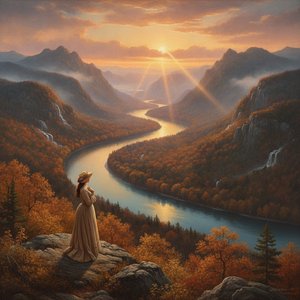
Capturing the Soul of Nature: A Journey Through the Sublime Majesty of American Romanticism
Explore the breathtaking beauty of American Romanticism. Discover how Hudson River School masters captured the sublime spirit of the wilderness through luminous oil landscapes and emotional depth. A journey into the soul of nature for the true art enthusiast.

Evocations of Place: A Historical Journey Through Landscape Art
Explore the rich history of landscape art with OriginalUniqueArt. Discover renowned artists, movements like Impressionism & Romanticism, and expert guidance for collecting timeless pieces. Find your perfect serene escape today!

Herman Herzog: Capturing American Landscapes & the Pursuit of Domestic Idealism
Explore the captivating landscapes of Herman Herzog, a pivotal American artist known for his realistic depictions of Yosemite & Florida scenes. Discover his legacy, artistic journey, and market value with OriginalUniqueArt.