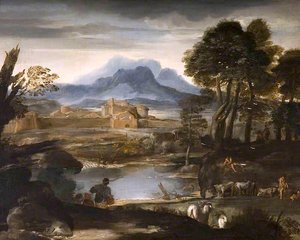
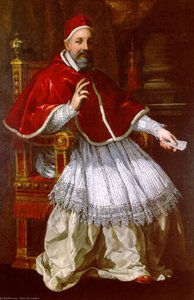
Portrét Pietro da Cortona

100 nejslavnějších obrazů autora Pietro da Cortona, výběr z galerie

Aktualizováno listopad 2026 · seřazeno podle našeho skóre popularity (vyhledávání, návštěvy a objednávky u každého díla) · 173 děl umělce Pietro da Cortona v našem katalogu

Stručně řečeno

Z všech originálů, které Pietro da Cortona zanechal, je nejslavnější Triumf Boží opatření (1633), který se nachází ve sbírce Palazzo Barberini, Řím. Hned za ním následují The Guardian Angel (1656) a Ceiling vault in the Salone (detail) (1633). Náš katalog obsahuje 173 děl umělce Pietro da Cortona; galerie si zachovala 100 děl, která obdivuje celý svět, přičemž každé je znázorněno s datem vzniku, názevem muzea a jeho příběhem.

1596 – 1669, Cortona Baroque Nejvíce děl: Nationalmuseum

10 nejlepších obrazů umělce Pietro da Cortona: výběr galerie

1
Triumf Boží opatření (1633) od Pietro da Cortona

Triumf Boží opatření

1633 · Fresko · Palazzo Barberini, Řím

Vstoupit pod grandiózní strop Palazzo Barberini znamená poddat se úchvatnému spektaklu božského řádu a pozemské slávy. Triumf Boží opatření od Pietra da Cortony, dokončený na začátku 17. století, zůstává jedním z nejhlubších úspěchů italského baroka. Nejde jen o malbu, ale o imerzivní vesmír, kde hranice mezi fyzickou architekturou místnosti a malovanou nebeskou sférou zcela zanikají. Jak oko putuje vzhůru, těžký kámen paláce zdá se ustupovat nekonečné obloze, kterou vyplňuje vírující,…

2
The Guardian Angel (1656) od Pietro da Cortona

The Guardian Angel

1656 · Oil On Canvas · Galleria Nazionale d'Arte Antica, Řím

Pietro da Cortona's "The Guardian Angel," painted in 1656, isn’t merely a religious scene; it’s a carefully orchestrated drama of light, emotion, and profound symbolism. Housed within the National Gallery of Ancient Art in Rome, this oil on canvas masterpiece transcends its historical context to offer a timeless meditation on faith, innocence, and divine protection. Cortona, a pivotal figure in the Roman Baroque, masterfully employs the techniques of chiaroscuro –…

3
Ceiling vault in the Salone (detail) (1633) od Pietro da Cortona

Ceiling vault in the Salone (detail)

1633 · Fresco · Palazzo Barberini, Řím

To gaze upon this detail from a ceiling vault in the Salone is to be transported entirely out of time and into a realm of divine spectacle. This fresco, executed with breathtaking vigor during the height of the Roman Baroque, does not merely decorate a surface; it dissolves the boundary between architecture and heaven itself. The composition explodes outward, drawing the viewer's eye upward through a dizzying vortex of myth…

4
Vault painting (1632) od Pietro da Cortona

Vault painting

1632 · Fresco · Palazzo Barberini, Řím

To gaze upon this vault painting is to be enveloped by an atmosphere of divine spectacle. It is not merely decoration; it is an architectural manifestation of heavenly glory, executed with the breathtaking ambition characteristic of the High Baroque period. The composition immediately draws the eye inward toward a radiant central medallion, suggesting a source of ultimate enlightenment or divine presence. Surrounding this core vision, Pietro da Cortona has woven…

5
The Stoning of St Stephen (1660) od Pietro da Cortona

The Stoning of St Stephen

1660 · Oil On Canvas · Státní Ermitáž, Sankt-Petěrburg

A Tuscan Sun Illuminates Roman Baroque: Pietro da Cortona’s “The Stoning of Saint Stephen” Pietro Berrettini, universally recognized as Pietro da Cortona, arrived in Rome around 1612/3 bearing not only artistic talent but also an unwavering dedication to mastering the transformative principles of the Italian Baroque. Born in Cortona, Tuscany – a region renowned for its terracotta sculptures and humanist traditions – he began his artistic journey under the tutelage…

6
Madonna and Saints (1626) od Pietro da Cortona

Madonna and Saints

1626 · Oil On Canvas · Museo dell'Accademia Etrusca, Cortona

To stand before a depiction such as Pietro da Cortona’s Madonna and Saints is to be enveloped in the very breath of the Roman Baroque. This monumental work, dating from 1626, is far more than a mere portrait; it is a vibrant theological statement rendered with breathtaking drama. At its heart lies the tender yet majestic grouping of Mary cradling the Christ Child, figures whose divine connection radiates outward to…

7
Holy Family Resting on the Flight to Egypt (1643) od Pietro da Cortona

Holy Family Resting on the Flight to Egypt

1643 · Oil On Canvas · Alte Pinakothek, Mnichov

This exquisite depiction, Holy Family Resting on the Flight to Egypt, invites the viewer into a scene steeped in profound tranquility and sacred narrative. Pietro da Cortona masterfully captures not just a physical journey, but a spiritual pause—a moment where divine figures find respite amidst the wild embrace of nature. The composition centers around Mary, Joseph, and the infant Jesus, portrayed together in a lush forest setting. It is an…

8
Venus as Huntress Appears to Aeneas (1631) od Pietro da Cortona

Venus as Huntress Appears to Aeneas

1631 · Oil On Canvas · Louvre, Paříž

A Divine Encounter: Pietro da Cortona’s Venus as Huntress Pietro Berrettini, celebrated as Pietro da Cortona, emerged from the Tuscan landscape in 1596, establishing himself as a cornerstone of the Italian Baroque. Born in Cortona—a town that would bear his artistic moniker—Cortona possessed an innate talent nurtured by early training under Andrea Commodi in Florence. However, Rome – the epicenter of artistic fervor – swiftly captivated his imagination and propelled…

9
The Alliance of Jacob and Laban (1630) od Pietro da Cortona

The Alliance of Jacob and Laban

1630 · Oil On Canvas · Louvre, Paříž

Pietro da Cortona’s “The Alliance of Jacob and Laban,” painted in 1630-35, is more than just a depiction of a biblical narrative; it's a masterful exercise in illusionistic painting and a profound meditation on family, loyalty, and the enduring power of divine grace. This vibrant scene, housed within the Louvre’s collection, transports the viewer into a sun-drenched Italian garden, brimming with life and echoing with the promise of generations to…

10
The Holy Family with Angels od Pietro da Cortona

The Holy Family with Angels

Oil On Canvas · Birmingham Museums And Art Gallery, Birmingham

To gaze upon this depiction of The Holy Family with Angels is to step directly into the vibrant, dramatic heart of the Roman Baroque. Pietro da Cortona, a master whose brushstrokes seemed capable of capturing divine light itself, has rendered a scene overflowing with spiritual energy and meticulous composition. This painting is not merely a portrait of sacred figures; it is an orchestrated moment of heavenly visitation, designed to lift…

Výběr umělce Pietro da Cortona pokračuje, od 11 do 100

11Portrait of Asdrubale Mattei di Giove (1650) od Pietro da CortonaPortrait of Asdrubale Mattei di Giove1650 · Musée Condé 12Christ and the Woman Taken in Adultery (1650) od Pietro da CortonaChrist and the Woman Taken in Adultery1650 · Státní Ermitáž 13Head of an old man. (1630) od Pietro da CortonaHead of an old man.1630 · Národní muzeum ve Varšavě 14Christ Appearing to Mary Magdalene (1645) od Pietro da CortonaChrist Appearing to Mary Magdalene1645 · Státní Ermitáž 15Ancient Sacrifice Festival before a Round Temple (1621) od Pietro da CortonaAncient Sacrifice Festival before a Round Temple1621 16Infant Christ and St. John (1616) od Pietro da CortonaInfant Christ and St. John1616 17St. Martina (1635) od Pietro da CortonaSt. Martina1635 · Los Angeles County Museum of Art 18The Adulteress (1632) od Pietro da CortonaThe Adulteress1632 · Bavarské státní sbírky malby 19Constantine Burning the Memorials (1633) od Pietro da CortonaConstantine Burning the Memorials1633 · Galleria Nazionale d'Arte Antica 20Saint Jerome in the Desert (1637) od Pietro da CortonaSaint Jerome in the Desert1637 · Detroit Institute of Arts 21The Calling of St Peter and St Andrew (1628) od Pietro da CortonaThe Calling of St Peter and St Andrew1628 · Fitzwilliam Museum 22Landscape with Saint Mary Magdalene (1630) od Pietro da CortonaLandscape with Saint Mary Magdalene1630 · Scottish National Gallery 23Virgin and Child and Saint Martina (1643) od Pietro da CortonaVirgin and Child and Saint Martina1643 · Musée des Beaux-Arts 24Constantine Slaying the Lion (1636) od Pietro da CortonaConstantine Slaying the Lion1636 · Galleria Nazionale d'Arte Antica 25Constantine Ordering the Destruction of the Pagan Idols (1636) od Pietro da CortonaConstantine Ordering the Destruction of the Pagan Idols1636 · Galleria Nazionale d'Arte Antica 26Hagar and the Angel (1643) od Pietro da CortonaHagar and the Angel1643 · Muzeum umění Johna a Mable Ringlingových 27Mary and Child with Saint Martina (1640) od Pietro da CortonaMary and Child with Saint Martina1640 28Portrait of a Prelate (1650) od Pietro da CortonaPortrait of a Prelate1650 · Scottish National Gallery 29The Adoration of the Shepherds (1640) od Pietro da CortonaThe Adoration of the Shepherds1640 · Statens Museum for Kunst 30Title page from the Flora (1638) od Pietro da CortonaTitle page from the Flora1638 31The Age of Iron (1637) od Pietro da CortonaThe Age of Iron1637 32The Triumph of Bacchus (1650) od Pietro da CortonaThe Triumph of Bacchus1650 33Saint Martina Refuses to Adore the Idols (1657) od Pietro da CortonaSaint Martina Refuses to Adore the Idols1657 34St. Mary, little Jesus and st. Katharina (1650) od Pietro da CortonaSt. Mary, little Jesus and st. Katharina1650 · Národní galerie Arménie 35Battle of Alexander versus Darius (1650) od Pietro da CortonaBattle of Alexander versus Darius1650 · Kapitolská muzea 36Saint Constantia's Vision before the Tomb of Saints Agnes and Emerentiana (1654) od Pietro da CortonaSaint Constantia's Vision before the Tomb of Saints Agnes and Emerentiana1654 · Muzeum umění Houston 37Martyrdom of St. Laurence (1650) od Pietro da CortonaMartyrdom of St. Laurence1650 · Musée de Picardie 38Daniel in the Lion's Den (1660) od Pietro da CortonaDaniel in the Lion's Den1660 39Augustus and the Tiburtine Sibyl (1664) od Pietro da CortonaAugustus and the Tiburtine Sibyl1664 · Royal Collection 40Madonna with the Child and angels (1625) od Pietro da CortonaMadonna with the Child and angels1625 · Kapitolská muzea 41Fall of Man (1632) od Pietro da CortonaFall of Man1632 · Bavarské státní sbírky malby 42The Nativity (1656) od Pietro da CortonaThe Nativity1656 · Museo del Prado 43Return of Jacob (1632) od Pietro da CortonaReturn of Jacob1632 · Bavarské státní sbírky malby 44Madonna and Child, Saint John the Baptist and Pope Stephen (1626) od Pietro da CortonaMadonna and Child, Saint John the Baptist and Pope Stephen1626 · Kunstpalast 45Virgin and Child with Saints od Pietro da CortonaVirgin and Child with SaintsPinacoteca di Brera 46Portrait of Cardinal Pietro Maria Borghese od Pietro da CortonaPortrait of Cardinal Pietro Maria BorgheseMinneapolis Institute of Art 47View of the Hall of Saturn (1663) od Pietro da CortonaView of the Hall of Saturn1663 48View of the Galleria Pamphilj (1651) od Pietro da CortonaView of the Galleria Pamphilj1651 · Palazzo Pamphilj 49Saint (Martina?) Being Led to Her Martyrdom (1634) od Pietro da CortonaSaint (Martina?) Being Led to Her Martyrdom1634 · Museo Cerralbo 50Faith, Hope and Charity (1640) od Pietro da CortonaFaith, Hope and Charity1640 · Courtauld Gallery 51Pietà (1620) od Pietro da CortonaPietà1620 · Santa Chiara 52Landscape with a Lake and a Walled Town (1640) od Pietro da CortonaLandscape with a Lake and a Walled Town1640 · Birmingham Museums And Art Gallery 53Gallery vault (1622) od Pietro da CortonaGallery vault1622 · Palazzo Mattei di Giove 54The allume mines of Tolfa (1635) od Pietro da CortonaThe allume mines of Tolfa1635 · Kapitolská muzea 55Pope Urbanus VIII (Maffeo Barberini) (1627) od Pietro da CortonaPope Urbanus VIII (Maffeo Barberini)1627 · Kapitolská muzea 56Festival scenery with celebration of the Eucharist (1633) od Pietro da CortonaFestival scenery with celebration of the Eucharist1633 57Study for the Age of Silver (1635) od Pietro da CortonaStudy for the Age of Silver1635 58Ananias restoring the sight of Saint Paul (1631) od Pietro da CortonaAnanias restoring the sight of Saint Paul1631 59The Age of Bronze (1637) od Pietro da CortonaThe Age of Bronze1637 60The Age of Gold (1637) od Pietro da CortonaThe Age of Gold1637 61Allegory of Divine Providence and Barberini Power (1639) od Pietro da CortonaAllegory of Divine Providence and Barberini Power1639 62Study for the Age of Silver (1637) od Pietro da CortonaStudy for the Age of Silver1637 · Museo Horne 63Wall painting (1642) od Pietro da CortonaWall painting1642 64Study for the façade of the Palazzo Pitti (1640) od Pietro da CortonaStudy for the façade of the Palazzo Pitti1640 65The Trinity in Glory (1648) od Pietro da CortonaThe Trinity in Glory1648 66Ceiling painting (1642) od Pietro da CortonaCeiling painting1642 67Return of Hagar (1637) od Pietro da CortonaReturn of Hagar1637 · Kunsthistorisches Museum 68Ceiling fresco with Medici coat-of-arms (1643) od Pietro da CortonaCeiling fresco with Medici coat-of-arms1643 69View of the Sala della Stufa (1637) od Pietro da CortonaView of the Sala della Stufa1637 70View of the Hall of Mars (1643) od Pietro da CortonaView of the Hall of Mars1643 71Ceiling of the Hall of Venus (1642) od Pietro da CortonaCeiling of the Hall of Venus1642 72View of the Hall of Venus (1642) od Pietro da CortonaView of the Hall of Venus1642 73Ceiling of the Galleria Pamphilj (1651) od Pietro da CortonaCeiling of the Galleria Pamphilj1651 74Vision of St Filippo Neri (1664) od Pietro da CortonaVision of St Filippo Neri1664 75Ceiling Fresco in the Hall of Saturn (1663) od Pietro da CortonaCeiling Fresco in the Hall of Saturn1663 76View of the Hall of Jupiter (1643) od Pietro da CortonaView of the Hall of Jupiter1643 77Marcello Sacchetti (1626) od Pietro da CortonaMarcello Sacchetti1626 · Galleria Borghese 78The Madonna and Child with Saint Martina (1645) od Pietro da CortonaThe Madonna and Child with Saint Martina1645 · Kimbell Art Museum 79Landing of the Trojans at the Mouth of Tiberis (1651) od Pietro da CortonaLanding of the Trojans at the Mouth of Tiberis1651 · Palazzo Pamphilj 80The Punishment of Hercules (1635) od Pietro da CortonaThe Punishment of Hercules1635 · Liechtenstein Museum 81Self-portrait od Pietro da CortonaSelf-portraitMusée Fesch 82La Naissance de la Vierge by Pierre de Cortone od Pietro da CortonaLa Naissance de la Vierge by Pierre de CortoneKostel svatého Vincence 83The Adoration of the Shepherds od Pietro da CortonaThe Adoration of the ShepherdsStatens Museum for Kunst 84Landscape with Harvesting od Pietro da CortonaLandscape with HarvestingNationalmuseum 85Detail of the vault of the Chapel of St Sebastian in St Peter’s, Rome, cartoon od Pietro da CortonaDetail of the vault of the Chapel of St Sebastian in St Peter’s, Rome, cartoonNationalmuseum 86Detail of the vault of the Chapel of St Sebastian in St Peter’s, Rome,cartoon od Pietro da CortonaDetail of the vault of the Chapel of St Sebastian in St Peter’s, Rome,cartoonNationalmuseum 87Detail of the vault of the Chapel of the Holy Sacrament in St Peter’s, Rome, cartoon od Pietro da CortonaDetail of the vault of the Chapel of the Holy Sacrament in St Peter’s, Rome, cartoonNationalmuseum 88Bust of a woman in profile, head turned to the left od Pietro da CortonaBust of a woman in profile, head turned to the left 89The return of Hagar od Pietro da CortonaThe return of Hagar 90Head of a young man, back view od Pietro da CortonaHead of a young man, back view 91Man draped, head of a man od Pietro da CortonaMan draped, head of a man 92Woman in profile to left, holding a vase od Pietro da CortonaWoman in profile to left, holding a vase 93Young man standing wearing a short tunic and a mantle od Pietro da CortonaYoung man standing wearing a short tunic and a mantle 94Statue of an Emperor standing, front view od Pietro da CortonaStatue of an Emperor standing, front view 95The Martyrdom of St. Peter od Pietro da CortonaThe Martyrdom of St. Peter 96Man draped seated, front view, head turned to the right. August od Pietro da CortonaMan draped seated, front view, head turned to the right. August 97Men Digging and Constructing a Wall od Pietro da CortonaMen Digging and Constructing a Wall 98Man sitting, looking up at the sky, a book in hand. prophet od Pietro da CortonaMan sitting, looking up at the sky, a book in hand. prophet 99Young man sitting, lifting a cup od Pietro da CortonaYoung man sitting, lifting a cup 100Scene of ancient sacrifice od Pietro da CortonaScene of ancient sacrifice

Slavná díla Pietro da Cortona podle jednotlivých období

Motivy, které zaujaly Pietro da Cortona

Čtyři témata, která se v těchto originálech nejčastěji objevují, z nichž každé má svůj nejlepší příklad.

Muzea, v nichž jsou vystavena originálna umělce Pietro da Cortona

8 muzea, v nichž je umístěno nejvíce obrazů z této stránky.

Muzeum Město Díla autora Pietro da Cortona Obrazy z tohoto seznamu
Nationalmuseum, StockholmNationalmuseum Stockholm 7 Landscape with Harvesting, Detail of the vault of the Chapel of St Sebastian in St Peter’s, Rome, cartoon, Detail of the vault of the Chapel of St Sebastian in St Peter’s, Rome,cartoon
Kapitolská muzea, ŘímKapitolská muzea Řím 4 Battle of Alexander versus Darius, Madonna with the Child and angels, The allume mines of Tolfa
Palazzo Barberini, ŘímPalazzo Barberini Řím 4 Triumf Boží opatření, Ceiling vault in the Salone (detail), Vault painting
Státní Ermitáž, Sankt-PetěrburgStátní Ermitáž Sankt-Petěrburg 3 The Stoning of St Stephen, Christ and the Woman Taken in Adultery, Christ Appearing to Mary Magdalene
Bavarské státní sbírky malby, MnichovBavarské státní sbírky malby Mnichov 3 The Adulteress, Fall of Man, Return of Jacob
Galleria Nazionale d'Arte Antica, TriestGalleria Nazionale d'Arte Antica Triest 3 Constantine Burning the Memorials, Constantine Slaying the Lion, Constantine Ordering the Destruction of the Pagan Idols
Palazzo Pamphilj, ŘímPalazzo Pamphilj Řím 3 View of the Galleria Pamphilj, Landing of the Trojans at the Mouth of Tiberis
Louvre, PařížLouvre Paříž 2 Venus as Huntress Appears to Aeneas, The Alliance of Jacob and Laban

Pietro da Cortona dekáda po dekádě: originální díla, která definují každou z nich

Díla podle dekád

Vyberte si dekádu a prohlédněte si originál, který ji definuje.

Otázky sběratelů o obrazech umělce Pietro da Cortona

Kterým dílem je Pietro da Cortona nejznámější?Odhalit odpověď

Triumf Boží opatření (1633), Palazzo Barberini, Řím. Následují The Guardian Angel (1656) a Ceiling vault in the Salone (detail) (1633).

Kolik let bylo Pietro da Cortona, když bylo vytvořeno dílo Triumf Boží opatření?Odhalit odpověď

37 let: dílo Triumf Boží opatření pochází z roku 1633 a Pietro da Cortona se narodil/a v roce 1596.

Kterých deset nejslavnějších obrazů má Pietro da Cortona?Odhalit odpověď

Triumf Boží opatření, The Guardian Angel, Ceiling vault in the Salone (detail), Vault painting, The Stoning of St Stephen, Madonna and Saints, Holy Family Resting on the Flight to Egypt, Venus as Huntress Appears to Aeneas, The Alliance of Jacob and Laban a The Holy Family with Angels. Hodnocení výše uvádí rok a muzeum pro každé z nich.

Kolik obrazů zanechal(a) Pietro da Cortona?Odhalit odpověď

Náš katalog obsahuje 173 děl umělce Pietro da Cortona z let 1616 až 1664.

Ve kterých muzeích jsou vystavena díla mistrovská umělce Pietro da Cortona?Odhalit odpověď

Většinou v Nationalmuseum (Stockholm), Kapitolská muzea (Řím) a Palazzo Barberini (Řím). V tabulce muzeí výše jsou vypsány všechny.

V jakých letech namaloval Pietro da Cortona svá nejznámější díla?Odhalit odpověď

V období 1630s: 29 z celkem 100 děl na této stránce vzniklo právě tehdy, z toho Triumf Boží opatření z nich.

Jaká jsou první a poslední slavná originální díla umělce Pietro da Cortona?Odhalit odpověď

Na této stránce je nejstarší dílo z Infant Christ and St. John (1616) a nejnovější z Augustus and the Tiburtine Sibyl (1664).

Jaká témata si Pietro da Cortona vybíral nejčastěji?Odhalit odpověď

Man (23), Woman (23) a People (19) napříč 100 díly na této stránce.

Kterou techniku používal(a) Pietro da Cortona nejčastěji?Odhalit odpověď

Oil On Canvas, u 36 z 100 děl na této stránce.

K kterému uměleckému směru patří Pietro da Cortona?Odhalit odpověď

Baroque, podle originálů na této stránce.

Která díla umělce Pietro da Cortona jsou vystavena v Nationalmuseum?Odhalit odpověď

Landscape with Harvesting, Detail of the vault of the Chapel of St Sebastian in St Peter’s, Rome, cartoon a Detail of the vault of the Chapel of St Sebastian in St Peter’s, Rome,cartoon: muzeum Nationalmuseum, Stockholm má v obsluze 4 děl z této stránky.

Pietro da Cortona: život a dílo

Pietro da Cortona: A Tuscan Sun in the Roman Baroque

Pietro Berrettini, known to history as Pietro da Cortona, emerged from the rolling hills of Tuscany in 1596 to become a defining figure of the Italian Baroque. Born in the town that would lend him his more familiar name, Cortona possessed an innate artistic sensibility nurtured early on by training under Andrea Commodi in Florence. However, it was Rome – the pulsating heart of artistic innovation – that truly ignited his genius. Arriving around 1612/3, he entered the studio of Baccio Ciarpi, immersing himself in a world where illusion and drama were rapidly reshaping the visual landscape. Cortona wasn’t merely absorbing techniques; he was poised to become a master of creating breathtaking spectacles for both church and palace. His early work already hinted at the grandeur that would characterize his mature style, demonstrating a keen understanding of composition and a growing confidence in translating complex narratives onto canvas and fresco. He quickly established himself as a sought-after artist, securing commissions that allowed him to hone his skills and develop his distinctive voice.

The Rise of an Illusionist

Cortona’s ascent was swift, fueled by talent and strategic patronage. The frescoes he executed in the church of Santa Bibiana (1624-1626), undertaken under the watchful eye of Gian Lorenzo Bernini, were pivotal. These works showcased not only his technical prowess but also a burgeoning ability to integrate architecture and painting into a unified, immersive experience. His style was already diverging from traditional approaches; he wasn’t simply decorating spaces, he was transforming them. The influence of earlier masters was evident – the rich color palettes of Titian and Paolo Veronese resonated in his work, while Raphael's compositional grace provided a foundation for his own dynamic arrangements. However, Cortona didn’t merely imitate; he synthesized these influences into something uniquely his own, characterized by a dramatic use of perspective and an increasing mastery of trompe-l'œil, the art of deceiving the eye. Early commissions for the Sacchetti family – including “The Sacrifice of Polyxena,” “The Triumph of Bacchus,” and “The Rape of the Sabine” (1626) – further solidified his reputation, demonstrating a flair for theatricality and narrative complexity. These early successes weren’t merely displays of skill; they were statements of intent, foreshadowing the monumental projects that would define his career.

Palazzo Barberini: A Monumental Achievement

The year 1633 marked a turning point with the commission to decorate the Palazzo Barberini for Cardinal Francesco Barberini, nephew of Pope Urban VIII. This project wasn’t just another assignment; it was an opportunity to create a monumental statement of Baroque art and papal power. The *Allegory of Divine Providence and Barberini Power* that adorns the palace’s grand salon is arguably his most celebrated achievement. Here, Cortona unleashed the full force of his illusionistic skills. He created a swirling vortex of figures, gods, and allegorical representations, all seemingly suspended in mid-air, extending the architectural space beyond its physical limits. The ceiling isn’t merely painted; it is the space, an expansive realm where earthly power is legitimized by divine sanction. The dynamism, the vibrant colors, and the sheer scale of this work established Cortona as a leading figure of the Roman Baroque, rivaling even Bernini and Borromini in influence and acclaim. It became a model for subsequent ceiling decorations throughout Europe, inspiring generations of artists to push the boundaries of illusionistic painting. The Palazzo Barberini commission wasn’t simply about artistic execution; it was about crafting an ideology, visually representing the power and legitimacy of the Barberini family through masterful manipulation of space and form.

Beyond Frescoes: Architecture and Lasting Legacy

While celebrated primarily as a painter, Cortona was also a gifted architect, though fewer of his architectural designs were actually realized. His distinctive approach favored inventive forms and a harmonious integration with decorative elements. He continued to receive prestigious commissions throughout his career, including work at the churches of Santa Maria in Vallicella and San Nicola da Tolentino in Rome. These later projects demonstrate a refinement of his style, characterized by an even greater emphasis on dramatic lighting and emotional intensity. He returned to Florence in 1637 and again in 1640, leaving his mark on the Pitti Palace with frescoes representing the Four Ages of Man. Pietro da Cortona passed away in Rome in 1669, leaving behind a legacy that continues to resonate today. His innovative use of trompe-l'œil, his masterful command of composition and color, and his ability to create immersive, emotionally charged environments cemented his place as one of the most important artists of the Baroque period. He didn’t just paint or build; he conjured worlds, inviting viewers to step into a realm where art and reality blurred, and the divine seemed within reach.

Influences and Artistic Kinship

  • Early Influences: Cortona's formative years were shaped by Florentine masters like Andrea Commodi, instilling in him a foundation of draftsmanship and compositional principles.
  • Roman Baroque Masters: His arrival in Rome exposed him to the revolutionary work of artists such as Annibale Carracci, Caravaggio, and later, Bernini and Borromini. He absorbed their dramatic use of light and shadow, dynamic compositions, and emotional intensity.
  • Venetian Colorism: The rich color palettes and atmospheric effects of Venetian painters like Titian and Veronese profoundly influenced Cortona’s approach to painting, adding a sensual quality to his works.
  • Pietro Paolo Ubaldini: A faithful follower who carried on the traditions established by Cortona, demonstrating the artist's lasting impact on subsequent generations of painters.
Cortona’s legacy extends beyond his individual masterpieces. He helped define the aesthetic vocabulary of the Roman Baroque, influencing countless artists and shaping the artistic landscape of 17th-century Europe. His ability to seamlessly blend painting, sculpture, and architecture created a holistic artistic experience that continues to captivate audiences today. He remains a testament to the power of art to transform space, evoke emotion, and celebrate both earthly grandeur and divine grace.