Portrét Michelangelo Morlaiter

Obrazy autora Michelangelo Morlaiter: 35 nejznámějších díel podle pohledu galerie

Aktualizováno listopad 2026 · seřazeno podle našeho skóre popularity (vyhledávání, návštěvy a objednávky u každého díla) · 93 děl umělce Michelangelo Morlaiter v našem katalogu

Stručně řečeno

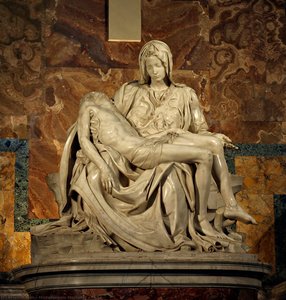
Z pohledu galerie je nejslavnějším dílem Michelangelo Morlaiter obrazem Pieta (1499), jehož originál je vystaven v Bazilika svatého Petra v obci Řím. Study for Haman (1508) a Design for a statue of Henry II of France (1559) doplňují trio, které každé oko okamžitě pozná. Z 93 děl umělce Michelangelo Morlaiter v našem katalogu představuje galerie níže 35 nejznámějších děl, z nichž každé je originálem s uvedením roku vzniku, muzea a toho, co jej činí jedinečným.

High renaissance Nejvíce děl: British Museum

Top 10 obrazů umělce Michelangelo Morlaiter v naší galerii

1
Pieta (1499) od Michelangelo Morlaiter

Pieta

1499 · Marble · Bazilika svatého Petra, Řím

The composition centers on the intimate, physical connection between Mary and her son. In this close-up view, the focus remains entirely on the Virgin Mary as she cradles the body of Jesus in her arms. The arrangement of the figures emphasizes a quiet moment of maternal comfort, capturing the weight of the body against her form. This central grouping is elevated upon a pedestal, which provides a sense of prominence…

2
Study for Haman (1508) od Michelangelo Morlaiter

Study for Haman

1508 · Drawing · British Museum, Londýn

To gaze upon this preparatory study is to step directly into the intense, focused crucible of artistic genius. It is not a finished narrative, but rather a profound meditation—a skeleton rendered in pigment—that speaks volumes about the mind wrestling with form and divine proportion. The subject matter itself, though titled Study for Haman, transcends any single story; it becomes an exhaustive exploration of the human vessel. Here, the artist has…

3
Design for a statue of Henry II of France (1559) od Michelangelo Morlaiter

Design for a statue of Henry II of France

1559 · Ink On Paper · Rijksmuseum, Amsterdam

In this exquisite pen and ink drawing, we are transported back to the mid-16th century, witnessing a moment of profound artistic preparation. The work, titled Design for a statue of Henry II of France, serves as a meticulous blueprint for a monument intended to immortalize a monarch. At its heart lies an equestrian figure, a powerful composition of horse and rider that commands the viewer's attention through sheer anatomical precision.…

Obrazy autora Michelangelo Morlaiter, seřazeny od 11 do 35

Slavná díla Michelangelo Morlaiter podle jednotlivých období

Motivy, které zaujaly Michelangelo Morlaiter

Čtyři témata, která se v těchto originálech nejčastěji objevují, z nichž každé má svůj nejlepší příklad.

Muzea, v nichž jsou vystavena originálna umělce Michelangelo Morlaiter

8 muzea, v nichž je umístěno nejvíce obrazů z této stránky.

Muzeum Město Díla autora Michelangelo Morlaiter Obrazy z tohoto seznamu
British Museum, LondýnBritish Museum Londýn 9 Study for Haman, Sketch of a Nude Man (study for the "Battle of Cascina"), Ideal head of a woman
Louvre, PařížLouvre Paříž 4 Male nude and arm of bearded man, Study of ^quot;Christ on the Cross between the Virgin and St. John the Evangelist^quot;, Studie k „Vzkříšení Kristovo“
Palazzo Grassi, BenátkyPalazzo Grassi Benátky 2 Decoration of the grand staircase, Venetian Reception (detail)
Bazilika svatého Petra, ŘímBazilika svatého Petra Řím 1 Pieta
Rijksmuseum, AmsterdamRijksmuseum Amsterdam 1 Design for a statue of Henry II of France
San Pietro in Vincoli, ŘímSan Pietro in Vincoli Řím 1 Moses
Ashmolean Museum of Art and Archaeology, OxfordAshmolean Museum of Art and Archaeology Oxford 1 Portrait of Andrea Quaratesi
Galleria degli Uffizi, FlorencieGalleria degli Uffizi Florencie 1 Design for Julius II tomb (first version)

Michelangelo Morlaiter, jeden ikonický obraz na každé desetiletí

Díla podle dekád

Vyberte si dekádu a prohlédněte si originál, který ji definuje.

Obrazy umělce Michelangelo Morlaiter: odpovědi galerie

Který obraz autora Michelangelo Morlaiter je nejslavnější ze všech?Odhalit odpověď

Pieta (1499), Bazilika svatého Petra, Řím. Následují Study for Haman (1508) a Design for a statue of Henry II of France (1559).

Kterých 10 nejlepších obrazů má Michelangelo Morlaiter?Odhalit odpověď

Pieta, Study for Haman, Design for a statue of Henry II of France, Battle of Cascina (Copy by Michelangelo's pupil Aristotele da Sangallo), The Study of Adam, Sistine Chapel Ceiling: God Dividing Land and Water, Male nude and arm of bearded man, Sistine Chapel Ceiling: God Dividing Light from Darkness, Sketch of a Nude Man (study for the "Battle of Cascina") a Sistine Chapel Ceiling. Hodnocení výše uvádí rok a muzeum pro každé z nich.

Kolik děl vytvořil/a Michelangelo Morlaiter?Odhalit odpověď

Náš katalog obsahuje 93 děl umělce Michelangelo Morlaiter z let 1499 až 1766.

Kde jsou vystavena nejznámější originály umělce Michelangelo Morlaiter?Odhalit odpověď

Většinou v British Museum (Londýn), Louvre (Paříž) a Palazzo Grassi (Benátky). V tabulce muzeí výše jsou vypsány všechny.

Kdy Michelangelo Morlaiter vytvořil své nejslavnější obrazy?Odhalit odpověď

V období 1500s: 11 z celkem 35 děl na této stránce vzniklo právě tehdy, z toho Study for Haman z nich.

Která jsou nejstarší a nejnovější slavná díla umělce Michelangelo Morlaiter?Odhalit odpověď

Na této stránce je nejstarší dílo z Pieta (1499) a nejnovější z Decoration of the grand staircase (1766).

Kterým tématům se Michelangelo Morlaiter věnoval(a) nejčastěji?Odhalit odpověď

Human anatomy (3), Human form (2) a Religious art (2) napříč 35 díly na této stránce.

V jaké technice tvořil(a) Michelangelo Morlaiter nejčastěji?Odhalit odpověď

Ink On Paper, u 2 z 35 děl na této stránce.

S jakým směrem je spojen(a) Michelangelo Morlaiter?Odhalit odpověď

High renaissance a Renaissance, podle originálů na této stránce.

Jaká originální díla Michelangelo Morlaiter má v obsluze British Museum?Odhalit odpověď

Study for Haman, Sketch of a Nude Man (study for the "Battle of Cascina") a Ideal head of a woman: muzeum British Museum, Londýn má v obsluze 9 děl z této stránky.

Michelangelo Morlaiter: umělec

Michelangelo Morlaiter: Venetian Sculptor and Fresco Artist

Michelangelo Morlaiter (1766 – Present) stands as a testament to the enduring legacy of Venetian artistic tradition, particularly within the School of Athens. Born into a family steeped in sculpture—his father, Giovanni Maria Morlaiter, was himself a celebrated sculptor—Michelangelo inherited not only talent but also an unwavering dedication to mastering the craft of disegno, the foundational principles of Renaissance art. His formative years were spent absorbing the artistic atmosphere of Venice, a city renowned for its patronage of the arts and its commitment to preserving classical ideals.
  • Early Life & Training:
  • Giovanni Maria Morlaiter’s influence was paramount in shaping Michelangelo's early artistic sensibilities. He honed his skills under Giovanni Battista Falconetti, a master sculptor known for his meticulous attention to detail and anatomical accuracy. This rigorous training instilled in Morlaiter a profound understanding of sculptural technique—a skill he would later translate into breathtaking frescoes that adorn prominent Venetian churches.

The Accademia di Scoltura, Pittura, ed Architettura Civile: A Crucible of Artistic Innovation

Michelangelo Morlaiter’s contribution to Venetian art extends far beyond individual masterpieces. He was a founding member and professor at the Accademia di Scoltura, Pittura, ed Architettura Civile in Venice (established 1766), an institution dedicated to reviving classical artistic ideals and fostering excellence in sculpture, painting, and architecture. This academy served as a vital hub for disseminating knowledge and nurturing talent—producing generations of artists who would shape the visual landscape of Venice and beyond. Morlaiter’s role as educator ensured that Venetian artistic traditions continued to flourish into the 19th century.
  • Notable Commissions & Artistic Style:
  • Morlaiter gained renown for his monumental sculptures, notably ‘Ignudo,’ a stunning nude study reflecting the influence of Michelangelo Buonarroti and embodying the humanist spirit of the Renaissance. His frescoes within Chiesa dell'Angelo Raffaele—particularly “The Study of Adam”—demonstrate masterful fresco technique, characterized by layering pigments onto wet plaster to achieve luminous colors and unparalleled textural depth. These works exemplify Venetian Rococo art’s elegance and grace.

Influences & Artistic Legacy

Morlaiter's artistic vision was deeply rooted in the humanist ideals of the Renaissance, mirroring the broader cultural movement that championed reason, observation, and human dignity. He drew inspiration from Michelangelo Buonarroti’s sculptural achievements—particularly his David—and embraced the stylistic conventions of Venetian Rococo art, prioritizing decorative splendor and emotional expression alongside technical virtuosity. His enduring legacy resides in his contribution to Venetian artistic heritage and his role as a pivotal figure in shaping the aesthetic sensibilities of his time.
  • Major Achievements:
  • Morlaiter’s sculptures are celebrated for their anatomical precision and expressive dynamism, capturing the human form with remarkable realism. His frescoes—particularly “The Study of Adam”—are considered masterpieces of Venetian fresco painting, showcasing unparalleled color palettes and textural nuances. He cemented his place in art history as a champion of classical ideals and a pivotal voice within Venice’s artistic community.

Historical Significance

Michelangelo Morlaiter's work represents more than just aesthetic beauty; it embodies the spirit of Venetian Renaissance culture—a commitment to reviving classical art forms and upholding humanist values. His influence extended beyond his immediate circle, shaping artistic trends throughout Venice and contributing to the preservation of Venetian artistic traditions for centuries to come. He stands as a symbol of Venetian artistic excellence and a testament to the enduring power of disegno.