Portrét Ferdinand Georg Waldmüller

Obrazy autora Ferdinand Georg Waldmüller: 100 nejznámějších díel podle pohledu galerie

Aktualizováno listopad 2026 · seřazeno podle našeho skóre popularity (vyhledávání, návštěvy a objednávky u každého díla) · 210 děl umělce Ferdinand Georg Waldmüller v našem katalogu

Stručně řečeno

Z pohledu galerie je nejslavnějším dílem Ferdinand Georg Waldmüller obrazem Portrait of Ludwig van Beethoven (1823), jehož originál je vystaven v Kunsthistorisches Museum v obci Vídeň. The young boy with the stable-lantern / The Young Stableboy with a Stable Lamp (1824) a The Actor Maximilian Korn in a Landscape (1828) doplňují trio, které každé oko okamžitě pozná. Z 210 děl umělce Ferdinand Georg Waldmüller v našem katalogu představuje galerie níže 100 nejznámějších děl, z nichž každé je originálem s uvedením roku vzniku, muzea a toho, co jej činí jedinečným.

1793 – 1865, Vídeň Biedermeier realism Nejvíce děl: Bavarské státní sbírky malby

Top 10 obrazů umělce Ferdinand Georg Waldmüller v naší galerii

1
Portrait of Ludwig van Beethoven (1823) od Ferdinand Georg Waldmüller

Portrait of Ludwig van Beethoven

1823 · Oil On Canvas · Kunsthistorisches Museum, Vídeň

A heavy, dark coat absorbs the light, framing a face etched by internal storms. The subject sits in a bust-length pose, his gaze directed toward the right, away from the viewer's immediate line of sight. Shadows pool deeply in the folds of his white neckcloth and the hollows of his cheeks, creating a sharp, three-dimensional presence. His hair, a wild, wavy mass of grey-white, catches the directional light from the…

3
The Actor Maximilian Korn in a Landscape (1828) od Ferdinand Georg Waldmüller

The Actor Maximilian Korn in a Landscape

1828 · Oil On Panel · Art Institute of Chicago, Chicago

The Actor Maximilian Korn in a Landscape is an oil on panel work created in 1828. The portrait captures a specific presence within a quiet, expansive setting. Ferdinand Georg Waldmüller, an Austrian painter, rendered the figure with a focus on the textures of the era. The subject is Maximilian Korn, a man whose likeness is fixed against the soft light of the natural world.

4
Peasant Lovers (1863) od Ferdinand Georg Waldmüller

Peasant Lovers

1863 · Wood · Städel Museum, Frankfurt nad Mohanem

In 1863, Ferdinand Georg Waldmüller painted Peasant Lovers (Bäuerliches Liebespaar) in Austria. The work captures a tender moment between two young lovers. They are locked in an embrace amidst the quietude of a rural setting. This genre painting focuses on the intimate realities of peasant life.

5
The Interrupted Pilgrimage (The Sick Pilgrim) (1858) od Ferdinand Georg Waldmüller

The Interrupted Pilgrimage (The Sick Pilgrim)

1858 · Oil · Leopold Museum, Vídeň

The Interrupted Pilgrimage (The Sick Pilgrim) is an oil on wood painting by Ferdinand Georg Waldmüller. Created in 1858, the work captures a moment of stillness amidst a rocky landscape. The artist, Ferdinand Georg Waldmüller, was born in Vienna, Austria, in 1793. He lived until 1865, passing away in Hinterbrühl near Mödling.

6
After Confiscation (1859) od Ferdinand Georg Waldmüller

After Confiscation

1859 · Oil On Canvas · Gemäldegalerie Alte Meister, Dresno

Sunlight streams through an open doorway, cutting a sharp path across a crowded courtyard where life unfolds in a series of hushed, heavy moments. A group of women and children gather in this intimate space, their forms caught in a delicate dance between light and shadow. The air feels thick with the weight of their shared experience, a quiet community huddled together amidst the stone walls and textured fabrics of…

7
The Conscript’s Farewell (1854) od Ferdinand Georg Waldmüller

The Conscript’s Farewell

1854 · Leopold Museum, Vídeň

The Conscript’s Farewell is a painting by Ferdinand Georg Waldmüller. Created in 1854, this work captures a heavy moment within a farmhouse parlor. A young man, called up for military service, stands at the center of a domestic storm. He is surrounded by his family, each member caught in the gravity of his departure. The scene is a genre painting, a slice of life frozen in the quiet tension of…

8
Children at the Window (1853) od Ferdinand Georg Waldmüller

Children at the Window

1853 · Oil · Residenzgalerie, Salzburg

In this 1853 painting, a group of five children is gathered around a window, which serves as the central focal point of the scene. The arrangement of the figures creates a sense of quiet interaction: one child stands on the left side of the window, while two children are positioned close to each other in the middle. On the right side, another child stands by the window, and a fifth…

9
Children (1834) od Ferdinand Georg Waldmüller

Children

1834 · Acrylic On Canvas · Státní Ermitáž, Sankt-Petěrburg

Ferdinand Georg Waldmüller's "Children," painted in 1834, isn’t merely a portrait; it’s a carefully constructed tableau of quiet dignity and poignant observation. The painting captures two young girls returning home from school along a winding path, bathed in the soft, diffused light characteristic of the Biedermeier style – an artistic movement deeply rooted in the appreciation of nature and the celebration of everyday life. Waldmüller, a pivotal figure within this…

10
Catharina Freifrau von Koudelka (1821) od Ferdinand Georg Waldmüller

Catharina Freifrau von Koudelka

1821 · Oil On Canvas

Catharina Freifrau von Koudelka is a portrait executed by the Austrian painter Ferdinand Georg Waldmüller. Created about 1821, the work emerged during a period of significant artistic transition in Vienna. The subject is presented with the formal dignity characteristic of the era's social hierarchies.

Obrazy autora Ferdinand Georg Waldmüller, seřazeny od 11 do 100

11Rosina Wieser in her 83rd Year of Life (1820) od Ferdinand Georg WaldmüllerRosina Wieser in her 83rd Year of Life1820 12Portrait of Archduke Johann of Österreich in Uniform (1818) od Ferdinand Georg WaldmüllerPortrait of Archduke Johann of Österreich in Uniform1818 13Portrait of Frau Rossini (Isabella Colbran) (1818) od Ferdinand Georg WaldmüllerPortrait of Frau Rossini (Isabella Colbran)1818 14The court actress Sophie Müller (1822) od Ferdinand Georg WaldmüllerThe court actress Sophie Müller1822 15Rosina Wieser in Armchair (1822) od Ferdinand Georg WaldmüllerRosina Wieser in Armchair1822 16Portrait of a knight of the Golden fleece (1818) od Ferdinand Georg WaldmüllerPortrait of a knight of the Golden fleece1818 17Portrait of the artists mother (1818) od Ferdinand Georg WaldmüllerPortrait of the artists mother1818 18Peasant woman crosing a creek in a ravine (1818) od Ferdinand Georg WaldmüllerPeasant woman crosing a creek in a ravine1818 19Portrait of a child (1822) od Ferdinand Georg WaldmüllerPortrait of a child1822 20man with writing plate (1817) od Ferdinand Georg Waldmüllerman with writing plate1817 21Girl with flowers (1817) od Ferdinand Georg WaldmüllerGirl with flowers1817 22maid with snake (1817) od Ferdinand Georg Waldmüllermaid with snake1817 23Man with book (1817) od Ferdinand Georg WaldmüllerMan with book1817 24Christ and the Samaritan Woman at the Well (1818) od Ferdinand Georg WaldmüllerChrist and the Samaritan Woman at the Well1818 25Portrait of a Middle-Aged Lady (1828) od Ferdinand Georg WaldmüllerPortrait of a Middle-Aged Lady1828 · Bavarské státní sbírky malby 26Lady in White Dress before a Wienerwald Landscape (1829) od Ferdinand Georg WaldmüllerLady in White Dress before a Wienerwald Landscape1829 27Elisabeth Waldmüller, the Mother of the Artist (1830) od Ferdinand Georg WaldmüllerElisabeth Waldmüller, the Mother of the Artist1830 28Day Laborer with His Son (1823) od Ferdinand Georg WaldmüllerDay Laborer with His Son1823 29Mrs. Theresia Rupprecht (1825) od Ferdinand Georg WaldmüllerMrs. Theresia Rupprecht1825 30Female Portrait in White Ball Toilette (1830) od Ferdinand Georg WaldmüllerFemale Portrait in White Ball Toilette1830 31Countess Széchenyi (1828) od Ferdinand Georg WaldmüllerCountess Széchenyi1828 · Clevelandské muzeum umění 32Self-portrait (1828) od Ferdinand Georg WaldmüllerSelf-portrait1828 33Portr. of a gentleman with sabre (1830) od Ferdinand Georg WaldmüllerPortr. of a gentleman with sabre1830 34Portrait of a lady, half figure (1829) od Ferdinand Georg WaldmüllerPortrait of a lady, half figure1829 35portrait of a lady (1829) od Ferdinand Georg Waldmüllerportrait of a lady1829 36Cows in a meadow (1823) od Ferdinand Georg WaldmüllerCows in a meadow1823 37Little Count Esterhazy in trousers with a rabbit (1827) od Ferdinand Georg WaldmüllerLittle Count Esterhazy in trousers with a rabbit1827 38Portrait of a Cartographer with his Wife (1824) od Ferdinand Georg WaldmüllerPortrait of a Cartographer with his Wife1824 · Westfälisches Landesmuseum 39Portrait of a lady (1825) od Ferdinand Georg WaldmüllerPortrait of a lady1825 40Old soldier with children (1827) od Ferdinand Georg WaldmüllerOld soldier with children1827 41Portrait of the family Geymüller in a park (1827) od Ferdinand Georg WaldmüllerPortrait of the family Geymüller in a park1827 42two hunters in the mountains (1829) od Ferdinand Georg Waldmüllertwo hunters in the mountains1829 43Boy with a Stable Lantern (1825) od Ferdinand Georg WaldmüllerBoy with a Stable Lantern1825 44Portrait of a Woman in Riding Attire, with her Greyhound (1839) od Ferdinand Georg WaldmüllerPortrait of a Woman in Riding Attire, with her Greyhound1839 45The Engraver François Haury (1834) od Ferdinand Georg WaldmüllerThe Engraver François Haury1834 46Woman in Green, Salmon-Pink Shimmering Dress (1837) od Ferdinand Georg WaldmüllerWoman in Green, Salmon-Pink Shimmering Dress1837 47The Wife of the Court Official Josef von Stadler (1835) od Ferdinand Georg WaldmüllerThe Wife of the Court Official Josef von Stadler1835 48The Roman Ruin in Schönbrunn (1832) od Ferdinand Georg WaldmüllerThe Roman Ruin in Schönbrunn1832 49Aloisia Eltz in the Armchair (1834) od Ferdinand Georg WaldmüllerAloisia Eltz in the Armchair1834 50Josephine Schaumburg, née Stahel (1834) od Ferdinand Georg WaldmüllerJosephine Schaumburg, née Stahel1834 51A Girl Adorns the Mother of God with a Rose (1836) od Ferdinand Georg WaldmüllerA Girl Adorns the Mother of God with a Rose1836 52Old Woman with White Ribbon Cap (1832) od Ferdinand Georg WaldmüllerOld Woman with White Ribbon Cap1832 53Heinrich Werner (1830 - 1861), the son of the married couple Johann and Magdalena Werner (1835) od Ferdinand Georg WaldmüllerHeinrich Werner (1830 - 1861), the son of the married couple Johann and Magdalena Werner1835 54Count Demetrius Apraxin as a Child before a Mountain Landscape (1832) od Ferdinand Georg WaldmüllerCount Demetrius Apraxin as a Child before a Mountain Landscape1832 55The Imperial and Royal Börsenkammerrat Johann Werner (1788-1879) (1835) od Ferdinand Georg WaldmüllerThe Imperial and Royal Börsenkammerrat Johann Werner (1788-1879)1835 56Magdalena Werner (1804-1872) (1835) od Ferdinand Georg WaldmüllerMagdalena Werner (1804-1872)1835 57The Princely Esterházy Counselor Mathias Kerzmann with his second wife Maria Helena, née Mikolischütz, and daughter Maria (1835) od Ferdinand Georg WaldmüllerThe Princely Esterházy Counselor Mathias Kerzmann with his second wife Maria Helena, née Mikolischütz, and daughter Maria1835 58Lady in Cinnabar Green Dress (1838) od Ferdinand Georg WaldmüllerLady in Cinnabar Green Dress1838 59Girl's Head with Blue Headscarf (1836) od Ferdinand Georg WaldmüllerGirl's Head with Blue Headscarf1836 60Countess Dimitri Tatischeff (1838) od Ferdinand Georg WaldmüllerCountess Dimitri Tatischeff1838 · Städel Museum 61A Greek in a red coat (1839) od Ferdinand Georg WaldmüllerA Greek in a red coat1839 · Moravská galerie v Brně 62View of Ischl (1838) od Ferdinand Georg WaldmüllerView of Ischl1838 · Alte Nationalgalerie 63Am Allerseelentag (1839) od Ferdinand Georg WaldmüllerAm Allerseelentag1839 · Alte Nationalgalerie 64Portrait of a young lady with a pearl necklace (1835) od Ferdinand Georg WaldmüllerPortrait of a young lady with a pearl necklace1835 · Bavarské státní sbírky malby 65Portrait of a Woman (1836) od Ferdinand Georg WaldmüllerPortrait of a Woman1836 · Bavarské státní sbírky malby 66Portrait of a lady from the family of the nobles of Managetta and Lerchenau (Katharina Jackson, née Bonin-Ghibaud?) (1837) od Ferdinand Georg WaldmüllerPortrait of a lady from the family of the nobles of Managetta and Lerchenau (Katharina Jackson, née Bonin-Ghibaud?)1837 · Bavarské státní sbírky malby 67Portrait of a Noblewoman Managetta von Lerchenau (1837) od Ferdinand Georg WaldmüllerPortrait of a Noblewoman Managetta von Lerchenau1837 · Bavarské státní sbírky malby 68Julia Comtesse Apraxin (1835) od Ferdinand Georg WaldmüllerJulia Comtesse Apraxin1835 69Mr. Wohlleben, the brother of the Mayor of Vienna, Stephan Edler von Wohlleben (1836) od Ferdinand Georg WaldmüllerMr. Wohlleben, the brother of the Mayor of Vienna, Stephan Edler von Wohlleben1836 70Portrait of Emilie Werner (1832 - 1835), daughter of Johann and Magdalena Werner (1835) od Ferdinand Georg WaldmüllerPortrait of Emilie Werner (1832 - 1835), daughter of Johann and Magdalena Werner1835 71Emperor Ferdinand I of Austria (1839) od Ferdinand Georg WaldmüllerEmperor Ferdinand I of Austria1839 72portrait of a young lady (1839) od Ferdinand Georg Waldmüllerportrait of a young lady1839 73Portrait of Friedrich von Guaita Bürgermeister von Frankfurt/Main (1834) od Ferdinand Georg WaldmüllerPortrait of Friedrich von Guaita Bürgermeister von Frankfurt/Main1834 74Portrait of a girl (1837) od Ferdinand Georg WaldmüllerPortrait of a girl1837 75Portrait of a young gentleman in uniform (1836) od Ferdinand Georg WaldmüllerPortrait of a young gentleman in uniform1836 76Portrait of sitting lady (1837) od Ferdinand Georg WaldmüllerPortrait of sitting lady1837 77Visit of the grand Parents (1835) od Ferdinand Georg WaldmüllerVisit of the grand Parents1835 78The Beggar (1836) od Ferdinand Georg WaldmüllerThe Beggar1836 79A traveling family of beggars is rewarded by poor peasants on Christmas Eve (1834) od Ferdinand Georg WaldmüllerA traveling family of beggars is rewarded by poor peasants on Christmas Eve1834 80Three graces garlanded with roses (1836) od Ferdinand Georg WaldmüllerThree graces garlanded with roses1836 81Gustav Barth, Choir Master of the Wiener Männergesangsverein (1843) od Ferdinand Georg WaldmüllerGustav Barth, Choir Master of the Wiener Männergesangsverein1843 82Lower Austrian Peasants' Wedding (1843) od Ferdinand Georg WaldmüllerLower Austrian Peasants' Wedding1843 83Christmas Morning (1844) od Ferdinand Georg WaldmüllerChristmas Morning1844 84Gentleman in black skirt with white vest (1841) od Ferdinand Georg WaldmüllerGentleman in black skirt with white vest1841 85Portrait of a young woman. (1840) od Ferdinand Georg WaldmüllerPortrait of a young woman.1840 · Národní muzeum ve Varšavě 86Women Bathing at the Brook (1848) od Ferdinand Georg WaldmüllerWomen Bathing at the Brook1848 87Lime kiln in the Hinterbrühl (1845) od Ferdinand Georg WaldmüllerLime kiln in the Hinterbrühl1845 · Liechtenstein Museum 88At the ruins of the fire (1847) od Ferdinand Georg WaldmüllerAt the ruins of the fire1847 89The bridesmaid / Wreath-Bearing Virgin (1843) od Ferdinand Georg WaldmüllerThe bridesmaid / Wreath-Bearing Virgin1843 90The Adoption. (1847) od Ferdinand Georg WaldmüllerThe Adoption.1847 · National Museum in Wrocław 91Portrait of a Lady in a Black Silk Dress Sitting on a Red Fauteuil (1850) od Ferdinand Georg WaldmüllerPortrait of a Lady in a Black Silk Dress Sitting on a Red Fauteuil1850 92Portrait of Madame Josef Bayer (1854) od Ferdinand Georg WaldmüllerPortrait of Madame Josef Bayer1854 · Petit Palais 93Palm Sunday (1853) od Ferdinand Georg WaldmüllerPalm Sunday1853 · Moravská galerie v Brně 94Brushwood collectors in the Wienerwald (1855) od Ferdinand Georg WaldmüllerBrushwood collectors in the Wienerwald1855 95Anna Bayer, the artists second wife (1850) od Ferdinand Georg WaldmüllerAnna Bayer, the artists second wife1850 96Depleted power (1854) od Ferdinand Georg WaldmüllerDepleted power1854 97Restored to New Life (1852) od Ferdinand Georg WaldmüllerRestored to New Life1852 98Old woman with children (1854) od Ferdinand Georg WaldmüllerOld woman with children1854 99Woman with child (1855) od Ferdinand Georg WaldmüllerWoman with child1855 100Homecoming into the fathers house (1855) od Ferdinand Georg WaldmüllerHomecoming into the fathers house1855

Slavná díla Ferdinand Georg Waldmüller podle jednotlivých období

Motivy, které zaujaly Ferdinand Georg Waldmüller

Čtyři témata, která se v těchto originálech nejčastěji objevují, z nichž každé má svůj nejlepší příklad.

Muzea, v nichž jsou vystavena originálna umělce Ferdinand Georg Waldmüller

8 muzea, v nichž je umístěno nejvíce obrazů z této stránky.

Muzeum Město Díla autora Ferdinand Georg Waldmüller Obrazy z tohoto seznamu
Bavarské státní sbírky malby, MnichovBavarské státní sbírky malby Mnichov 11 Portrait of a Middle-Aged Lady, Portrait of a young lady with a pearl necklace, Portrait of a Woman
Alte Nationalgalerie, BerlínAlte Nationalgalerie Berlín 8 View of Ischl, Am Allerseelentag
Moravská galerie v Brně, BrnoMoravská galerie v Brně Brno 4 A Greek in a red coat, Palm Sunday
Städel Museum, Frankfurt nad MohanemStädel Museum Frankfurt nad Mohanem 2 Peasant Lovers, Countess Dimitri Tatischeff
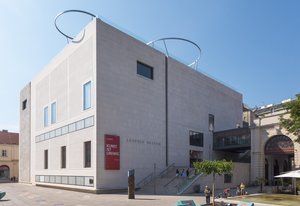
Leopold Museum, VídeňLeopold Museum Vídeň 2 The Interrupted Pilgrimage (The Sick Pilgrim), The Conscript’s Farewell
Kunsthistorisches Museum, VídeňKunsthistorisches Museum Vídeň 2 Portrait of Ludwig van Beethoven
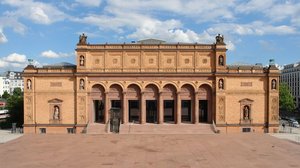
Hamburger Kunsthalle, HamburgHamburger Kunsthalle Hamburg 2 The young boy with the stable-lantern / The Young Stableboy with a Stable Lamp
Clevelandské muzeum umění, ClevelandClevelandské muzeum umění Cleveland 2 Countess Széchenyi

Ferdinand Georg Waldmüller, jeden ikonický obraz na každé desetiletí

Díla podle dekád

Vyberte si dekádu a prohlédněte si originál, který ji definuje.

Obrazy umělce Ferdinand Georg Waldmüller: odpovědi galerie

Který obraz autora Ferdinand Georg Waldmüller je nejslavnější ze všech?Odhalit odpověď

Portrait of Ludwig van Beethoven (1823), Kunsthistorisches Museum, Vídeň. Následují The young boy with the stable-lantern / The Young Stableboy with a Stable Lamp (1824) a The Actor Maximilian Korn in a Landscape (1828).

Kolik let bylo Ferdinand Georg Waldmüller, když dokončil/a Portrait of Ludwig van Beethoven?Odhalit odpověď

30 let: dílo Portrait of Ludwig van Beethoven pochází z roku 1823 a Ferdinand Georg Waldmüller se narodil/a v roce 1793.

Kterých 10 nejlepších obrazů má Ferdinand Georg Waldmüller?Odhalit odpověď

Portrait of Ludwig van Beethoven, The young boy with the stable-lantern / The Young Stableboy with a Stable Lamp, The Actor Maximilian Korn in a Landscape, Peasant Lovers, The Interrupted Pilgrimage (The Sick Pilgrim), After Confiscation, The Conscript’s Farewell, Children at the Window, Children a Catharina Freifrau von Koudelka. Hodnocení výše uvádí rok a muzeum pro každé z nich.

Kolik děl vytvořil/a Ferdinand Georg Waldmüller?Odhalit odpověď

Náš katalog obsahuje 210 děl umělce Ferdinand Georg Waldmüller z let 1817 až 1863.

Kde jsou vystavena nejznámější originály umělce Ferdinand Georg Waldmüller?Odhalit odpověď

Většinou v Bavarské státní sbírky malby (Mnichov), Alte Nationalgalerie (Berlín) a Moravská galerie v Brně (Brno). V tabulce muzeí výše jsou vypsány všechny.

Kdy Ferdinand Georg Waldmüller vytvořil své nejslavnější obrazy?Odhalit odpověď

V období 1830s: 41 z celkem 100 děl na této stránce vzniklo právě tehdy, z toho Children z nich.

Která jsou nejstarší a nejnovější slavná díla umělce Ferdinand Georg Waldmüller?Odhalit odpověď

Na této stránce je nejstarší dílo z man with writing plate (1817) a nejnovější z Peasant Lovers (1863).

Kterým tématům se Ferdinand Georg Waldmüller věnoval(a) nejčastěji?Odhalit odpověď

Woman (53), Man (31) a Portrait (19) napříč 100 díly na této stránce.

V jaké technice tvořil(a) Ferdinand Georg Waldmüller nejčastěji?Odhalit odpověď

Oil, u 47 z 100 děl na této stránce.

S jakým směrem je spojen(a) Ferdinand Georg Waldmüller?Odhalit odpověď

Biedermeier realism, podle originálů na této stránce.

Jaká originální díla Ferdinand Georg Waldmüller má v obsluze Bavarské státní sbírky malby?Odhalit odpověď

Portrait of a Middle-Aged Lady, Portrait of a young lady with a pearl necklace a Portrait of a Woman: muzeum Bavarské státní sbírky malby, Mnichov má v obsluze 5 děl z této stránky.

Ferdinand Georg Waldmüller: umělec

Raný život a umělecké začátky

Ferdinand Georg Waldmüller spatřil světlo světa ve Vídni, v srdci Rakouska, 15. ledna roku 1793, v době hlubokých společenských změn a bouřlivého uměleckého rozmachu. Jeho raný život byl bohužel poznamenán těžkostmi; předčasný úmrtí jeho otce vrhl stín na rodinnou existenci a zasadil do mladého Ferdinanda brzké povědomí o křehkosti života – téma, které se později hluboce odrazilo v jeho tvorbě. Navzdory těmto výzvám projevoval Waldmüller zjevnou vlohu pro kresbu a malbu, což ho vedlo k zápisu na Vídeňskou akademii výtvarných umění již v roce 1807. Jeho docházka však byla poněkud nepravidelná, což odráželo možná neklidnou duši nebo nespokojenost s rigidními akademickými omezeními doby. Zpočátku se s chutí věnoval portrétování, spolehlivé cestě pro aspirujícího umělce hledajícího patrony, ale přitažlivost krajin a žánrových scén – zobrazení každodenního života – ho skutečně uchvátila a nakonec definovala jeho uměleckou pozici. Tyto rané experimenty položily základy stylu charakterizovaného pečlivým pozorováním a hlubokým spojením s přírodním světem.

Umělecká kariéra utkaná z realismu a kontroverzí

Waldmüllerova kariéra se rozvíjela jako dynamická interakce mezi uměleckou inovací a institucionálním odporem. Během formátorských let si doplňoval příjem prací návrháře divadelních kulis a pokračoval v malování portrétů, často při turné s manželkou, zpěvačkou Katharinou Weidnerovou. Tento kočovný životní styl ho vystavoval rozmanitým prostředím a rozšiřoval jeho umělecké obzory. Již ve 20. letech 19. století začal Waldmüller vyvíjet výrazný styl – závazek k realistickým zobrazením každodenního života, zejména v venkovském prostředí. Nezajímal se o idealizaci nebo romantizaci; naopak usiloval o zachycení světa takovýho, jaký skutečně je, se veškerou krásou i nedokonalostmi. Tato oddanost realismu mu přinesla jak uznání, tak kritiku. V roce 1819 získal profesuru na Vídeňské akademii výtvarných umění, ale jeho působení bylo plné konfliktů. Waldmüller vášnivě prosazoval přímé pozorování z přírody – plein air malbu – a otevřeně kritizoval důraz akademie na formální instrukce a dodržování ustálených konvencí. Jeho upřímnost vedla k opakovaným střetům s uměleckým establishmentem a nakonec přispěla k jeho nucenému odchodu v roce 1857. Časté cesty do Itálie, počínaje rokem 1825, a malebná oblast Salzkammergut hluboce ovlivnily jeho krajinářskou tvorbu, zdokonalil jeho schopnost zachytit světlo, texturu a atmosféru s pozoruhodnou přesností.

Témata venkovského života a společenského komentáře

Waldmüllerova umělecká produkce je pozoruhodně rozmanitá, zahrnuje portréty, krajiny a žánrové scény, ale společný motiv spojuje tyto různorodé náměty: hluboký zájem o realitu rakouského života v 19. století. Díla jako Benátský prodejce ovoce (1826), raný příklad jeho žánrového malířského stylu, demonstrují jeho schopnost zachytit pomíjivé okamžiky každodenní existence. Jeho autoportrét z roku 1828 odhaluje bystrou znalost lidské psychologie a nuancí charakteru. Louise Mayer (1836) je důkazem jeho mistrovství v portrétování, zatímco Výhled na Ischl (1838) ukazuje jeho vyvíjející se krajinářské schopnosti. Nicméně to byly obrazy jako Všech svatých (1839), Milostný dopis (1849) a Koupající se ženy (kolem 1848–1849), které ho skutečně odlišily. Tato díla nebyla pouhými malebnými zobrazeními venkovského života; byla naplněna společensky kritickým pohledem, subtilně odhalujícím těžkosti, kterým čelili obyčejní lidé – dopad chudoby, neštěstí a složitostí rodinných vztahů. Nebál se zobrazovat méně okázalé aspekty existence, nabízejíc upřímnější a nuancovanější reprezentaci společnosti, než jaká byla obvyklá v akademickém umění.

Dědictví a historický význam

Ferdinand Georg Waldmüller je právem považován za jednoho z nejvýznamnějších rakouských malířů období biedermeieru. Jeho neochvějná oddanost přirozenému pozorování a plein air malbě předznamenala mnoho uměleckých inovací, které by desítky let později charakterizovaly impresionismus. Vyzval konvenční zobrazení venkovského života a vnesl do žánru, který byl často ovládán idealizovanými obrazy, dávku realismu a společenského komentáře. Navzdory kritice a neúspěchům, kterým čelil během své kariéry – včetně nuceného odchodu z Akademie – Waldmüllerova práce nakonec získala mezinárodní uznání, vyvrcholila výstavami na Světové výstavě v Paříži (1855) a v Buckinghamském paláci (1856), kde obdržel chválu od císaře Napoleona III. a královny Viktorie. Krátce před svou smrtí 23. srpna 1865 v Hinterbrühlu byl povýšen do šlechtického stavu, což bylo pozdní uznání jeho uměleckých přínosů. Waldmüllerovo dědictví přesahuje jeho jednotlivá díla; ovlivnil generace umělců svou detailní realismem, zaměřením na každodenní náměty a odvážnou ochotou zpochybňovat status quo. Zůstává klíčovou postavou v rakouské dějinách umění – skutečným průkopníkem, který otevřel cestu novým přístupům ke krajinářské a žánrové malbě.