Portrét Edward Steichen

47 nejslavnějších obrazů autora Edward Steichen, výběr z galerie

Aktualizováno říjen 2026 · seřazeno podle našeho skóre popularity (vyhledávání, návštěvy a objednávky u každého díla) · 47 děl umělce Edward Steichen v našem katalogu

Stručně řečeno

Z všech originálů, které Edward Steichen zanechal, je nejslavnější Le Tournesol (The Sunflower) (1920), který se nachází ve sbírce National Gallery of Art, Washington. Hned za ním následují Behind-the-scenes photograph, Paying the Piper (1921) a Portrait, Osgood Perkins (1923). Náš katalog obsahuje 47 děl umělce Edward Steichen; galerie si zachovala 47 děl, která obdivuje celý svět, přičemž každé je znázorněno s datem vzniku, názevem muzea a jeho příběhem.

1900 – 1973, Bivange Pictorialism Nejvíce děl: Museum of the Moving Image

10 nejlepších obrazů umělce Edward Steichen: výběr galerie

1
Le Tournesol (The Sunflower) (1920) od Edward Steichen

Le Tournesol (The Sunflower)

1920 · Oil On Canvas · National Gallery of Art, Washington

The eye meets a sudden, bright collision of color where a stylized sunflower rests against a fractured sky. A large, yellow disk dominates the center, its hue shifting from a pale canary to a deep, warm goldenrod as it moves toward a dark honey outline. At the very heart of this bloom, a pine-green circle sits nestled within a ring of celery green. The flower head appears propped over the…

2
Behind-the-scenes photograph, Paying the Piper (1921) od Edward Steichen

Behind-the-scenes photograph, Paying the Piper

1921 · Black and White Photography · Museum of the Moving Image, Astoria

To stand before this monochromatic document from 1921 is to step directly onto the dusty, exhilarating threshold of cinematic history. This photograph, capturing a behind-the-scenes moment from the production of 'Paying the Piper,' is far more than a mere record; it is an artifact imbued with the palpable energy of creation. One can almost hear the clatter of equipment and the hushed direction calls echoing across the makeshift set. The…

3
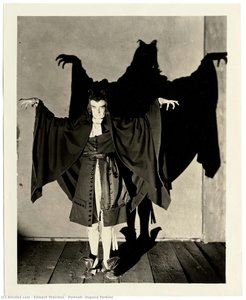
Portrait, Osgood Perkins (1923) od Edward Steichen

Portrait, Osgood Perkins

1923 · Black and White Photography · Museum of the Moving Image, Astoria

Edward Steichen’s 1923 photograph, "Portrait, Osgood Perkins," is not merely a picture; it is an immersion into the velvet depths of theatrical fantasy. This striking black and white studio portrait captures a moment suspended between life and myth. The subject, dramatically costumed as a vampire, stands in profile, his posture radiating an almost predatory elegance. Steichen masterfully uses the stark contrast inherent to early 20th-century photography to sculpt this figure…

4
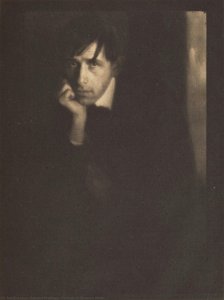
Portrait of Clarence White (1905) od Edward Steichen

Portrait of Clarence White

1905 · Acrylic On Canvas · Denver Art Museum, Denver

To stand before Edward Steichen's Portrait of Clarence White is to step into a hushed moment suspended in time. This photograph is far more than a mere likeness; it is an immersion into the delicate landscape of introspection. The composition draws the viewer immediately into the intimate space shared between the artist and his subject. Clad in the soft, enveloping tones of monochrome, the portrait captures a man whose gaze…

5
Preview slide, The Kid (1921) od Edward Steichen

Preview slide, The Kid

1921 · Akryl na plátně · Museum of the Moving Image, Astoria

Edward Jean Steichen byl pozoruhodná osobnost, která překročila jednoduché kategorizace. Narodil se roku 1879 v malé vesnici Bivange, Luksembursko a jeho život se stal mimořádnou cestou od evropských kořenů k tomu stát se jedním z největších amerických umělců – nejen jako fotograf, ale také jako malíř, kurátor a vizionář, který změnil způsob našeho vnímání vizuální kultury. Jeho rané roky byly poznamenány významným přesunem; roku 1881 Steichenova rodina emigrovala do Hancocku,…

6
Fan magazine, Motion Picture Magazine, vol. 9, no. 6 (1915) od Edward Steichen

Fan magazine, Motion Picture Magazine, vol. 9, no. 6

1915 · Illustration · Museum of the Moving Image, Astoria

In this captivating artifact from July 1915, we are transported back to the dawn of the silver screen, an era where the magic of motion pictures began to weave itself into the very fabric of global culture. The cover of Motion Picture Magazine, volume 9, number 6, serves as more than just a periodical; it is a vibrant time capsule of early twentieth-century celebrity worship and artistic caricature. At its…

7
Herald, The Ten Commandments (1925) od Edward Steichen

Herald, The Ten Commandments

1925 · Print · Museum of the Moving Image, Astoria

This evocative piece captures not merely an event, but a monumental moment in human mythology—the parting of the Red Sea. The composition immediately plunges the viewer into a scene of overwhelming drama and divine intervention. One can almost hear the roar of the receding waters and feel the tension gripping the figures on the shore. It is a visual narrative rendered with epic scope, designed to transport the observer across…

8
Lobby card, Blood and Sand (1922) od Edward Steichen

Lobby card, Blood and Sand

1922 · Illustration · Museum of the Moving Image, Astoria

This evocative lobby card for "Blood and Sand," dating back to 1922, transports the viewer directly into the passionate, sun-drenched melodrama of early cinema. It is more than just a promotional piece; it is a carefully constructed tableau vivant, capturing the very essence of cinematic yearning. The composition immediately draws the eye to the central figure—a man embodying the romantic archetype, dressed in attire suggestive of Spanish passion and drama.…

9
Lobby card, Blood and Sand (1922) od Edward Steichen

Lobby card, Blood and Sand

1922 · Photography · Museum of the Moving Image, Astoria

To gaze upon this lobby card for "Blood and Sand" is to step directly onto the vibrant, dramatic set of early cinema history. This piece is not merely a promotional artifact; it is a carefully constructed tableau vivant, capturing the raw energy and intoxicating allure that defined the silent film era. The composition immediately arrests the viewer with its bold chromatic choices—the passionate reds, the electric yellows, and the deep,…

10
Preview slide, The Immigrant (1919) od Edward Steichen

Preview slide, The Immigrant

1919 · Illustration · Museum of the Moving Image, Astoria

In the realm of vintage visual culture, few images capture the whimsical essence of early cinema as effectively as this Preview slide for The Immigrant. This evocative piece serves as a window into a bygone era, presenting a delightful caricature of the legendary Charlie Chaplin in his most iconic role as the Tramp. The central figure is rendered with a charmingly exaggerated physicality; his oversized shoes, hat, and suit create…

Výběr umělce Edward Steichen pokračuje, od 11 do 47

11Paul Robeson od Edward SteichenPaul RobesonGeorge Eastman House 12Lobby card, The Love Special - Edvard Steichen (1921) od Edward SteichenLobby card, The Love Special - Edvard Steichen1921 · Museum of the Moving Image 13In Memoriam (1906) od Edward SteichenIn Memoriam1906 · Denver Art Museum 14Lobby card, The Heart of the North (1921) od Edward SteichenLobby card, The Heart of the North1921 · Museum of the Moving Image 15Studio fotografické místo, Famous Players-Lasky, Hollywood, Kalifornie (1922) od Edward SteichenStudio fotografické místo, Famous Players-Lasky, Hollywood, Kalifornie1922 · Museum of the Moving Image 16Sunflower (1920) od Edward SteichenSunflower1920 · George Eastman House 17Náhled snímku, Lov velkých zvěří v Africe (1922) od Edward SteichenNáhled snímku, Lov velkých zvěří v Africe1922 · Museum of the Moving Image 18Isadora Duncan in the Parthenon, Athens (1921) od Edward SteichenIsadora Duncan in the Parthenon, Athens1921 · Toledo Museum of Art 19Lobby card, The Green Temptation (1922) od Edward SteichenLobby card, The Green Temptation1922 · Museum of the Moving Image 20Film still, Footlights - Filmový záběr, Podpětníky (1921) od Edward SteichenFilm still, Footlights - Filmový záběr, Podpětníky1921 · Museum of the Moving Image 21Nocturne, Temple d'Amour (1910) od Edward SteichenNocturne, Temple d'Amour1910 22Film still, Experience (1921) od Edward SteichenFilm still, Experience1921 · Museum of the Moving Image 23Brequet Photographic Plane Brought Down in Flames, World War I (1918) od Edward SteichenBrequet Photographic Plane Brought Down in Flames, World War I1918 24Lobby card, Java Head (1923) od Edward SteichenLobby card, Java Head1923 · Museum of the Moving Image 25Advertising slide, Paramount Pictures (1915) od Edward SteichenAdvertising slide, Paramount Pictures1915 · Museum of the Moving Image 26Herald, The Kid Brother (1927) od Edward SteichenHerald, The Kid Brother1927 · Museum of the Moving Image 27Lobby card, The Blue Fox, Episode 10 (1921) od Edward SteichenLobby card, The Blue Fox, Episode 101921 · Museum of the Moving Image 28Special message slide, (1915) od Edward SteichenSpecial message slide,1915 · Museum of the Moving Image 29Lobby card, The Man from Lost River (1921) od Edward SteichenLobby card, The Man from Lost River1921 · Museum of the Moving Image 30The Lotus Screen, S.S.S (1909) od Edward SteichenThe Lotus Screen, S.S.S1909 31Studio site photograph, Thomas H. Ince Studios, Culver City, CA (1922) od Edward SteichenStudio site photograph, Thomas H. Ince Studios, Culver City, CA1922 · Museum of the Moving Image 32Herald, Blood and Sand (1922) od Edward SteichenHerald, Blood and Sand1922 · Museum of the Moving Image 33Portrait, Constance Talmadge (1920) od Edward SteichenPortrait, Constance Talmadge1920 · Museum of the Moving Image 34Preview slide, Cleopatra (1917) od Edward SteichenPreview slide, Cleopatra1917 · Museum of the Moving Image 35Lady in a Flower Field (1899) od Edward SteichenLady in a Flower Field1899 36The Little Round Mirror (1901) od Edward SteichenThe Little Round Mirror1901 37Film still, Behind the Scenes (1914) od Edward SteichenFilm still, Behind the Scenes1914 · Museum of the Moving Image 38Portrait, William Farnum (1920) od Edward SteichenPortrait, William Farnum1920 · Museum of the Moving Image 39Aerial Bombs Dropping on Montmedy, World War I (1918) od Edward SteichenAerial Bombs Dropping on Montmedy, World War I1918 40Aerial View of Trenches (1918) od Edward SteichenAerial View of Trenches1918 · New Orleans Museum of Art 41Film still, Footlights (1921) od Edward SteichenFilm still, Footlights1921 · Museum of the Moving Image 42Jean Walker Simpson (1923) od Edward SteichenJean Walker Simpson1923 43Film still, Puritan Passions (1923) od Edward SteichenFilm still, Puritan Passions1923 · Museum of the Moving Image 44Program Orpheum Theatre, Filadelfie (1915) od Edward SteichenProgram Orpheum Theatre, Filadelfie1915 · Museum of the Moving Image 45Aerial View of Trenches (37) (1918) od Edward SteichenAerial View of Trenches (37)1918 · New Orleans Museum of Art 46Lobby karta, Rosita (1923) od Edward SteichenLobby karta, Rosita1923 · Museum of the Moving Image 47Fotografie studia, Thomas H. Ince Studios, Culver City, Kalifornie (1922) od Edward SteichenFotografie studia, Thomas H. Ince Studios, Culver City, Kalifornie1922 · Museum of the Moving Image

Slavná díla Edward Steichen podle jednotlivých období

Motivy, které zaujaly Edward Steichen

Čtyři témata, která se v těchto originálech nejčastěji objevují, z nichž každé má svůj nejlepší příklad.

Muzea, v nichž jsou vystavena originálna umělce Edward Steichen

6 muzea, v nichž je umístěno nejvíce obrazů z této stránky.

Muzeum Město Díla autora Edward Steichen Obrazy z tohoto seznamu
Museum of the Moving Image, AstoriaMuseum of the Moving Image Astoria 32 Behind-the-scenes photograph, Paying the Piper, Portrait, Osgood Perkins, Preview slide, The Kid
Denver Art Museum, DenverDenver Art Museum Denver 2 Portrait of Clarence White, In Memoriam
George Eastman House, RochesterGeorge Eastman House Rochester 2 Paul Robeson, Sunflower
New Orleans Museum of Art, New OrleansNew Orleans Museum of Art New Orleans 2 Aerial View of Trenches, Aerial View of Trenches (37)
National Gallery of Art, WashingtonNational Gallery of Art Washington 1 Le Tournesol (The Sunflower)
Toledo Museum of Art, ToledoToledo Museum of Art Toledo 1 Isadora Duncan in the Parthenon, Athens

Edward Steichen dekáda po dekádě: originální díla, která definují každou z nich

Díla podle dekád

Vyberte si dekádu a prohlédněte si originál, který ji definuje.

Otázky sběratelů o obrazech umělce Edward Steichen

Kterým dílem je Edward Steichen nejznámější?Odhalit odpověď

Le Tournesol (The Sunflower) (1920), National Gallery of Art, Washington. Následují Behind-the-scenes photograph, Paying the Piper (1921) a Portrait, Osgood Perkins (1923).

Kolik let bylo Edward Steichen, když bylo vytvořeno dílo Le Tournesol (The Sunflower)?Odhalit odpověď

20 let: dílo Le Tournesol (The Sunflower) pochází z roku 1920 a Edward Steichen se narodil/a v roce 1900.

Kterých deset nejslavnějších obrazů má Edward Steichen?Odhalit odpověď

Le Tournesol (The Sunflower), Behind-the-scenes photograph, Paying the Piper, Portrait, Osgood Perkins, Portrait of Clarence White, Preview slide, The Kid, Fan magazine, Motion Picture Magazine, vol. 9, no. 6, Herald, The Ten Commandments, Lobby card, Blood and Sand, Lobby card, Blood and Sand a Preview slide, The Immigrant. Hodnocení výše uvádí rok a muzeum pro každé z nich.

Kolik obrazů zanechal(a) Edward Steichen?Odhalit odpověď

Náš katalog obsahuje 47 děl umělce Edward Steichen z let 1909 až 1927.

Ve kterých muzeích jsou vystavena díla mistrovská umělce Edward Steichen?Odhalit odpověď

Většinou v Museum of the Moving Image (Astoria), Denver Art Museum (Denver) a George Eastman House (Rochester). V tabulce muzeí výše jsou vypsány všechny.

V jakých letech namaloval Edward Steichen svá nejznámější díla?Odhalit odpověď

V období 1920s: 29 z celkem 47 děl na této stránce vzniklo právě tehdy, z toho Le Tournesol (The Sunflower) z nich.

Jaká jsou první a poslední slavná originální díla umělce Edward Steichen?Odhalit odpověď

Na této stránce je nejstarší dílo z The Lotus Screen, S.S.S (1909) a nejnovější z Herald, The Kid Brother (1927).

Jaká témata si Edward Steichen vybíral nejčastěji?Odhalit odpověď

Black and white (8), Early 20th century (7) a Photography (7) napříč 47 díly na této stránce.

Kterou techniku používal(a) Edward Steichen nejčastěji?Odhalit odpověď

Black and White Photography, u 8 z 47 děl na této stránce.

K kterému uměleckému směru patří Edward Steichen?Odhalit odpověď

Pictorialism, podle originálů na této stránce.

Která díla umělce Edward Steichen jsou vystavena v Museum of the Moving Image?Odhalit odpověď

Behind-the-scenes photograph, Paying the Piper, Portrait, Osgood Perkins a Preview slide, The Kid: muzeum Museum of the Moving Image, Astoria má v obsluze 32 děl z této stránky.

Edward Steichen: život a dílo

A Life Bridging Worlds: The Artistic Odyssey of Edward Steichen

Edward Steichen, later known as Edward Jean Steichen, was a figure who transcended simple categorization. Born in 1879 in the small village of Bivange, Luxembourg, his life became an extraordinary journey from European roots to becoming one of America’s most influential artists – not merely as a photographer, but as a painter, curator, and visionary who reshaped how we perceive visual culture. The early years were marked by a significant relocation; in 1881, the Steichen family emigrated to Hancock, Michigan, seeking new opportunities. This move instilled in young Edward a sense of displacement and perhaps, a heightened sensitivity to observation – qualities that would profoundly shape his artistic vision. Even as a child, an innate talent for drawing was evident, nurtured by supportive parents who recognized and encouraged his creative inclinations. The pivotal moment arrived at sixteen when he received his first camera, initiating a period of largely self-directed learning through relentless experimentation. This wasn’t merely about mastering technique; it was about discovering a new language, a way to capture the world with an immediacy and intimacy previously unattainable. A subsequent move to Milwaukee saw him apprenticed as a lithographer, providing valuable technical skills while simultaneously allowing his artistic pursuits to flourish.

From Pictorialism to Modern Vision: Steichen’s Artistic Evolution

Steichen's emergence coincided with the burgeoning Pictorialist movement, an attempt to elevate photography to the status of fine art. He quickly became a central figure, embracing soft focus and painterly effects to create images that evoked mood and atmosphere rather than simply documenting reality. This pursuit led him to Alfred Stieglitz, a kindred spirit who recognized Steichen’s exceptional talent. Together, they co-founded the Photo-Secession in 1902, a group dedicated to promoting photography as a legitimate art form. The publication of *Camera Work*, a highly influential photographic journal, became their platform for disseminating ideas and showcasing groundbreaking work. The establishment of the 291 gallery in New York City further cemented their influence, providing a space where avant-garde European art – Picasso, Matisse, Cézanne – was exhibited alongside photography, fostering cross-cultural dialogue and challenging conventional artistic boundaries. However, Steichen’s artistic journey wasn't one of static adherence to a single style. The upheaval of World War I proved catalytic. He abandoned the ethereal qualities of Pictorialism, embracing instead a “Straight Photography” aesthetic – characterized by sharp focus, precise detail, and an unadorned representation of reality. This shift reflected a broader cultural move towards modernity and a rejection of sentimentality in favor of clarity and directness.

A Master of Many Mediums: Fashion, Film, and the Human Condition

Steichen’s versatility was remarkable. He didn't confine himself to one artistic domain; he seamlessly transitioned between photography, painting, and even filmmaking. His foray into fashion photography during the 1920s and 30s revolutionized the industry. Working for *Vogue* and *Vanity Fair*, he moved beyond mere documentation of clothing to create images that were sophisticated, glamorous, and imbued with a sense of narrative. He understood how to use light, pose, and composition to convey not just style but also personality and emotion. This period established him as a pioneer in the field, setting standards for generations of fashion photographers to come. During World War II, Steichen served his adopted country by directing *The Fighting Lady* (1944), an acclaimed documentary film for the U.S. Navy that offered a compelling glimpse into aerial combat. But perhaps his most enduring legacy lies in *The Family of Man*, curated at the Museum of Modern Art in 1955. This monumental exhibition, featuring photographs from sixty-eight countries, was a powerful statement about universal human experiences – love, birth, death, joy, sorrow – transcending cultural and geographical boundaries. Recognized by UNESCO’s Memory of the World Register, it remains a testament to Steichen's belief in the unifying power of photography.

Notable Works

  • The Pond–Moonlight (1904): A landmark Pictorialist photograph celebrated for its atmospheric depth and tonal richness; a record-breaking auction price attests to its enduring appeal.
  • The Flatiron (1904): Another significant early work showcasing his mastery of photographic technique and composition, also achieving a remarkable price at auction.
  • Portraits of Celebrities: A vast collection capturing the essence of prominent figures in art, literature, and entertainment with insightful sensitivity.
  • The Fighting Lady (1944): An acclaimed World War II documentary film offering a compelling glimpse into aerial combat.
  • The Family of Man (1955): A groundbreaking exhibition at MoMA, featuring photographs from around the globe that explored universal human experiences and earned UNESCO recognition.

Legacy and Influence: A Lasting Impact on Visual Culture

Edward Steichen died in 1973, leaving behind an extraordinary body of work that continues to inspire and provoke. His influence is multifaceted. He fundamentally altered perceptions of photography, elevating it from a purely technical process to a recognized art form. His pioneering work in fashion photography not only defined the aesthetic of an era but also established new standards for visual storytelling within the industry. The 291 gallery, through its championing of European modernism, played a crucial role in introducing American audiences to groundbreaking artistic movements. And *The Family of Man*, with its message of shared humanity, remains profoundly relevant in an increasingly fragmented world. His ability to seamlessly navigate between commercial and artistic pursuits demonstrated that creativity could thrive in diverse contexts. Steichen’s career was a testament to the power of experimentation, innovation, and a relentless pursuit of artistic vision. He wasn't simply documenting the world; he was interpreting it, shaping it, and ultimately, changing how we see it.