 Náhled v interiéru
 Sdílet
 Sdílet
 Podrobnosti o díle
 Průvodce

 Stáhnout
 Podobné položky
 Rentgenové snímky
 Slideshow
 Q&A
Q&A Statistiky
The Wandering Moon


 Zobrazit více
Giclée / Umělecký tisk
Giclée nebo plátěný tisk muzeální kvality s rychlou výrobou a širokou nabídkou povrchových úprav. ( Koupit ručně malovaný obraz Přepnout na digitální obraz)




P118B Kč10

P118H Kč10

P118W Kč10

P438Z Kč10

P508JH Kč12

P508YH Kč12

P805H Kč10

P805Z Kč10

P919BZ Kč10

P919G Kč10

P919XJ Kč10

P959ZH Kč10

P968JZ Kč12

W106C Kč8

W218G Kč10

W218JH Kč8

W218Y Kč10

W307PJ Kč10

W316G Kč10

W316PJ Kč8

W316Y Kč10

W398PJ Kč8

W4111J Kč10

W500HY Kč15

W500JH Kč15

W692G Kč12

W849H Kč8

W940BG Kč15

W953PJ Kč8




Vyberte si z našich přednastavených velikostí, které odpovídají původním proporcím díla.

Zadejte šířku a výšku, které potřebujete pro váš rám nebo stěnu. Tisk lze pouze oříznout, nikdy však nelze zvětšit obraz nad jeho původní rozměr, proto při výběru jiného formátu dochází ke ztrátě části obrazu. Před samotným tiskem vám zašleme digitální náhled k schválení. Obraz zobrazený na této stránce nenabízí skutečný výřez — ten uvidíte pouze v náhledu.
Celosvětové doručení () do 2 týdnů namísto standardních 4/5 týdnů. (30 říjen)

Zdarma celosvětová expresní doprava

Vysoce kvalitní lněné plátno

Kompletní pojištění přepravy

Záruka vrácení celního poplatku

Záruka věrného barevného souladu

100dení lhůta pro vrácení zboží (pouze při vadách výroby)

100% záruka vrácení peněz

Sleva při více objednávkách
 Skleněná varianta je dostupná pouze u rozměrů menších než 110 cm

The Wandering Moon
Giclée / Umělecký tisk
Rozměry reprodukce
-


Celková cena za vybrané možnosti reprodukcí
Kč 1738
The Wandering Moon
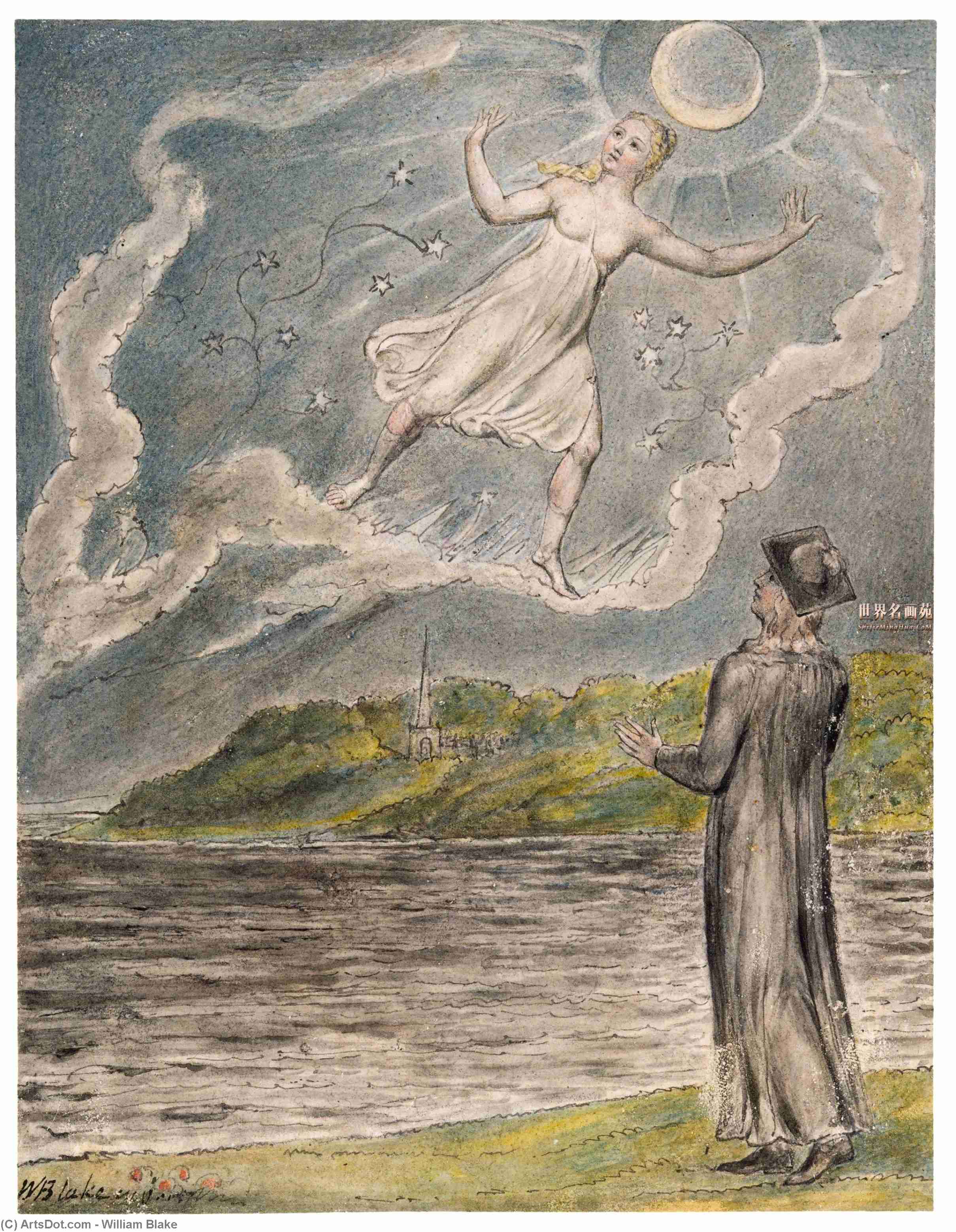
William Blake's The Wandering Moon is a captivating watercolour painting that embodies the essence of Romanticism. Created in 1820, this piece showcases Blake's unique style and his ability to convey deep emotions through his art.Composition and Symbolism
The painting depicts a woman flying through the sky with her arms outstretched, reaching for something or someone as she soars above the clouds. The scene takes place at night, with the moon in the background, adding an air of mystery and wonder. The overall atmosphere is one of freedom and adventure, evoking feelings of enchantment in the viewer. Blake’s masterful use of watercolour—a medium known for its luminous qualities and delicate blending capabilities—perfectly captures this ethereal mood. The woman's upward gaze symbolizes aspiration and spiritual yearning, while the moon represents illumination and guidance, mirroring themes prevalent throughout Romantic literature and mythology.Artistic Style
Blake's style is instantly recognizable for its expressive brushstrokes and subtle colour palette. Unlike the precise realism favored by earlier artistic movements, Blake prioritized conveying emotion rather than accurate representation. The watercolour technique allowed him to achieve a dreamlike effect, layering translucent washes of pigment to create depth and luminosity—a hallmark of Romantic painting. This approach aligns seamlessly with Blake’s broader philosophical convictions, emphasizing imagination and intuition as pathways to understanding the divine.Context and Influence
William Blake was a pivotal figure in the Romantic movement, reacting against Enlightenment rationalism and championing individualism. His artistic vision drew inspiration from sources ranging from biblical narratives to folklore and personal mystical experiences. The Wandering Moon reflects these influences, blending elements of fantasy and reality to create a visual experience that transcends mere depiction—it invites contemplation on profound questions about humanity’s relationship with nature and spirituality. Blake's influence extended far beyond his own time, inspiring subsequent artists and writers who embraced similar expressive styles and thematic concerns.Relevance in Modern Times
Despite being created nearly two centuries ago, The Wandering Moon continues to resonate with audiences today. Its themes of liberation, exploration, and the pursuit of transcendent ideals speak to our enduring fascination with dreams, imagination, and the sublime—concepts central to Romantic thought. Consider commissioning a hand-painted reproduction to infuse your interior space with Blake’s evocative vision and celebrate the timeless beauty of Romantic art. For more information about William Blake and his oeuvre, visit William Blake on Wikipedia.- A Sunshine Holiday by William Blake: View on OriginalUniqueArt
- The Sun in His Wrath by William Blake: View on OriginalUniqueArt
- The Book of Job: When the Morning Stars Sang Together by William Blake: View on OriginalUniqueArt
- Carl Haag: Learn more about the artist at https://OriginalUniqueArt.com/@/Carl-Haag
Otázky a odpovědi
Jsou barvy díla „The Wandering Moon“ od Vilém Blake syté, nebo tlumené?
Barvy díla „The Wandering Moon“ od Vilém Blake mají Ztlumené saturaci. Saturace určuje, jak jsou barvy živé nebo tlumené.
Jakou převládající barvu má dílo „The Wandering Moon“ od Vilém Blake?
Barvou, která v díle „The Wandering Moon“ nejvíce vyniká, je Světle růžově hnědá (#c1b3a3). Dominantní barva je užitečná při sladění uměleckého díla s interiérem.
Mohu si prohlédnout „The Wandering Moon“ od Vilém Blake pod jiným osvětlením?
Stránka Rentgenové snímky díla „The Wandering Moon“ od Vilém Blake nabízí interaktivní prohlížeč, který vám umožňuje procházet jedenácti optickými vrstvami obrazu, včetně pohledu ve stylu rentgenu.
Biografie umělce
William Blake – Visionary Poet & Painter (1757–1827)
William Blake, born in London on November 28, 1757, was a figure perpetually out of step with his time, yet destined to become one of the most celebrated artists and poets of the Romantic Age. His life unfolded against the backdrop of a rapidly changing England—a world grappling with industrialization, political upheaval, and shifting spiritual beliefs. From humble beginnings as the son of a hosier, Blake’s early years were marked by an intensely vivid imagination and a propensity for visionary experiences that would profoundly shape his artistic trajectory. Though largely self-taught in formal academics, he received drawing instruction at a young age, quickly revealing a talent that hinted at the extraordinary path ahead. His apprenticeship with engraver James Basire proved pivotal, providing him not only with technical mastery but also an understanding of printmaking techniques he would later revolutionize. These early influences—the Gothic grandeur of Westminster Abbey, the classical forms of Raphael and Michelangelo—served as foundational elements in his developing aesthetic, though Blake was never one to remain bound by convention.Early Life & Artistic Training
Blake’s formative years instilled within him a deep fascination with mythology and folklore, alongside an acute sensitivity to visual beauty. Despite lacking formal artistic education, he possessed an innate ability to observe and interpret the world around him—skills honed through meticulous sketching and drawing exercises. His apprenticeship under James Basire, a respected engraver, provided invaluable experience in mastering printmaking techniques, particularly etching—a craft that would become central to his distinctive artistic style. This training exposed him to the established conventions of engraving but simultaneously fueled his desire to forge new paths toward creative expression. The architectural grandeur of Westminster Abbey and the idealized forms of Raphael’s frescoes served as enduring inspirations, shaping his aesthetic sensibilities and informing his artistic vision.Illuminated Printing: A Revolutionary Technique
Blake's artistic innovation wasn’t merely about subject matter; it resided fundamentally in *how* he created. Dissatisfied with conventional engraving methods—which he viewed as sterile and restrictive—he developed a unique process known as “illuminated printing.” This involved etching both text and illustrations onto copper plates, then painstakingly hand-coloring the resulting prints—a laborious but deeply personal approach that allowed for complete artistic control. This wasn’t simply illustration accompanying poetry; it was an integrated art form where image and verse were inextricably linked, each enhancing the meaning of the other. Blake's belief in the transformative power of imagination underpinned this revolutionary technique. He argued that “the Imagination is the Eye of God,” asserting that true creativity resided in perceiving realities beyond the confines of sensory experience—a conviction that would permeate his entire oeuvre. This method granted him unparalleled freedom to express his inner vision, resulting in prints imbued with vibrant color and symbolic depth unlike anything produced before.Major Works & Artistic Style
Blake’s artistic output encompassed a remarkable range of mediums—poetry, engravings, watercolors, mezzotints, and drawings—each reflecting his multifaceted intellectual and spiritual interests. His most celebrated works include *Songs of Innocence* (1789) and *Songs of Experience*, paired volumes that explore contrasting perspectives on human nature and morality; *The Marriage of Heaven & Hell* (1793), a provocative prose poem challenging conventional dogma; *Milton* (1804–?11), an ambitious retelling of Milton’s epic poem infused with Blake’s visionary symbolism; and *Jerusalem*, a sprawling prophetic poem envisioning a utopian future rooted in spiritual renewal. His engravings are characterized by a distinctive style—a rejection of linear perspective in favor of flattened planes and stylized figures—that conveys emotion and psychological intensity rather than realistic representation. Blake's use of color was equally innovative, employing bold hues to heighten the symbolic significance of his images and to evoke moods of wonder and terror. He frequently incorporated motifs from mythology and folklore, drawing inspiration from sources as diverse as Dante’s *Divine Comedy* and Hebrew scripture.Legacy & Influence
Despite facing considerable obscurity during his lifetime—characterized by poverty and rejection by mainstream artistic circles—William Blake's influence on subsequent generations of artists and writers has proven profound. His unwavering commitment to imaginative vision and symbolic expression resonated deeply with the Pre-Raphaelites, who embraced him as a kindred spirit and championed his distinctive aesthetic style. Furthermore, Blake’s ideas continue to inspire thinkers and artists today, particularly those concerned with exploring themes of spirituality, rebellion, and the relationship between art and consciousness. He stands as an enduring testament to the transformative potential of creativity—a visionary artist whose work compels us to confront uncomfortable truths and to embrace the boundless possibilities of human imagination. Blake’s legacy extends beyond his artistic achievements; it resides in his unwavering belief that art can serve as a catalyst for social change and spiritual enlightenment—a conviction that continues to inspire artists and intellectuals worldwide.
Vilém Blake
1757 - 1827 , Velká Británie
Rychlé informace o umělci
- Artistic Movement Or Style: Romantismus
- Artists Who Influenced This Artist:
- Raphael
- Michelangelo
- Date Of Birth: 1757
- Full Name: William Blake
- Nationality: Británie
- Notable Artworks:
- Songs of Innocence & Exp.
- The Tyger
- Jerusalem
- Place Of Birth: Londýn, UK
Související články

Nadčasová přitažlivost akvarelu: Historie, techniky a současná praxe
Prozkoumejte fascinující svět akvarelu! Historie, techniky a tipy od odborníků. Naučte se malovat akvarelem jako profesionál a objevte inspiraci v současném umění.

10 legendárních akvarelů, které změnily svět umění | OriginalUniqueArt
Objevte 10 legendárních akvarelů od Turner, Monet a dalších mistrů! Ponořte se do historie umění a inspirujte se pro váš interiér. Kvalitní reprodukce na OriginalUniqueArt.com.

Ephemeral Visions: Exploring the History & Emotional Resonance of Watercolor Painting
Explore the captivating history of watercolor painting, from ancient techniques to modern masters like Kandinsky & Blake. Discover essential artists, collecting tips & the emotional power of this luminous medium. Expert insights for art enthusiasts.

William Blake: Romantic Visionary & Mystical Genius of the Imagination
Explore the mystical art & poetic genius of William Blake (1757-1827). Discover his revolutionary illuminated printing, rich symbolism, and lasting influence on Romanticism. Find handmade reproductions at OriginalUniqueArt.

Ephemeral Visions: Exploring the Artistic Legacy & Contemporary Practice of Watercolor Painting
Explore the captivating world of watercolor painting! Discover its rich history, essential techniques, influential artists & collecting tips. A comprehensive guide for art enthusiasts from OriginalUniqueArt.