Náhled v interiéru
 Sdílet
 Sdílet
 Podrobnosti o díle
 Průvodce

 Stáhnout
 Podobné položky
 Rentgenové snímky
 Slideshow
 Q&A
Q&A Statistiky
Satan smiting job with boils 1


 Zobrazit více
Giclée / Umělecký tisk
Giclée nebo plátěný tisk muzeální kvality s rychlou výrobou a širokou nabídkou povrchových úprav. ( Koupit ručně malovaný obraz Přepnout na digitální obraz)




P118B Kč10

P118H Kč10

P118W Kč10

P438Z Kč10

P508JH Kč12

P508YH Kč12

P805H Kč10

P805Z Kč10

P919BZ Kč10

P919G Kč10

P919XJ Kč10

P959ZH Kč10

P968JZ Kč12

W106C Kč8

W218G Kč10

W218JH Kč8

W218Y Kč10

W307PJ Kč10

W316G Kč10

W316PJ Kč8

W316Y Kč10

W398PJ Kč8

W4111J Kč10

W500HY Kč15

W500JH Kč15

W692G Kč12

W849H Kč8

W940BG Kč15

W953PJ Kč8




Vyberte si z našich přednastavených velikostí, které odpovídají původním proporcím díla.

Zadejte šířku a výšku, které potřebujete pro váš rám nebo stěnu. Tisk lze pouze oříznout, nikdy však nelze zvětšit obraz nad jeho původní rozměr, proto při výběru jiného formátu dochází ke ztrátě části obrazu. Před samotným tiskem vám zašleme digitální náhled k schválení. Obraz zobrazený na této stránce nenabízí skutečný výřez — ten uvidíte pouze v náhledu.
Celosvětové doručení () do 2 týdnů namísto standardních 4/5 týdnů. (2 listopad)

Zdarma celosvětová expresní doprava

Vysoce kvalitní lněné plátno

Kompletní pojištění přepravy

Záruka vrácení celního poplatku

Záruka věrného barevného souladu

100dení lhůta pro vrácení zboží (pouze při vadách výroby)

100% záruka vrácení peněz

Sleva při více objednávkách
 Skleněná varianta je dostupná pouze u rozměrů menších než 110 cm

Satan smiting job with boils 1
Giclée / Umělecký tisk
Rozměry reprodukce
-


Celková cena za vybrané možnosti reprodukcí
Kč 1737
The Harrowed Vision: William Blake’s ‘Satan Smiting Job with Boils’
William Blake's “Satan Smiting Job with Boils” is not merely a depiction of a biblical scene; it’s a visceral plunge into the heart of human suffering, a stark meditation on faith tested by unimaginable torment, and a testament to the artist’s uniquely visionary approach. Created around 1826, this powerful engraving – one of twenty-two meticulously crafted illustrations accompanying Blake's interpretation of the Book of Job – transcends its narrative source material to become a profound exploration of morality, power, and the agonizing nature of divine justice. The image immediately commands attention with its monochromatic palette: shades of black, white, and gray converge to create an atmosphere of oppressive intensity, amplifying the drama and highlighting the stark contrast between Satan’s brutal force and Job's utter vulnerability.
Blake masterfully employs a dynamic composition, anchored by a pyramidal structure where Satan dominates the apex, his outstretched arm radiating menace. Job, prostrate on the ground, is rendered in a contorted pose of agonizing pain – a figure stripped bare not just physically but spiritually. The swirling clouds and indistinct figures in the background contribute to a sense of chaotic turmoil, mirroring Job’s internal struggle. Notice how Blake utilizes hatching and cross-hatching techniques within the engraving process, creating subtle tonal variations that add depth and texture to the forms, particularly in the depiction of Satan's muscular physique and the grotesque details of the boils themselves – symbols not just of physical affliction but also of divine punishment.
A Romantic Confrontation: Style, Technique, and Blake’s Vision
This work is a quintessential example of William Blake’s distinctive artistic style, firmly rooted in the Romantic movement yet infused with his own intensely personal and often unsettling vision. The engraving's flattened perspective, while not strictly adhering to classical rules, serves to heighten the emotional impact, drawing the viewer directly into the scene’s drama. Blake deliberately eschewed the “mixed method” favored by commercial engravers of his time, opting instead for a purely line-based approach – an extraordinary feat of technical skill that allowed him to achieve remarkable detail and expressive power with minimal shading. The fine lines delineate every muscle, every wrinkle of pain on Job’s face, and every swirling vortex in the turbulent clouds.
The choice of monochrome is crucial; it intensifies the scene's gravity, removing any potential distraction from color and focusing attention entirely on form, texture, and emotional content. The stark contrast between light and shadow further emphasizes Job’s vulnerability and Satan’s overwhelming power. Blake’s use of line isn’t merely descriptive; it’s imbued with symbolic meaning – the forceful, jagged lines representing Satan's aggression, while the more flowing, organic lines suggest Job’s suffering and resilience.
Symbolism and Spiritual Weight: Interpreting Blake’s Narrative
Beyond its immediate visual impact, “Satan Smiting Job with Boils” is rich in symbolic meaning. The boils themselves are not simply a depiction of physical wounds but represent the consequences of challenging divine authority – a punishment inflicted by God through Satan's agency. Job’s suffering serves as a potent metaphor for humanity’s struggle against adversity, questioning the nature of faith and the apparent indifference of a powerful deity. Satan, in this context, embodies temptation and the forces of evil, while Job represents innocence, endurance, and unwavering belief. The image invites contemplation on themes of justice, morality, and the human condition – questions that have resonated with viewers for centuries.
Interestingly, Blake’s interpretation of the Book of Job aligns with his own personal experiences—his struggles with poverty, rejection, and a perceived lack of divine guidance. This deeply felt empathy imbues the engraving with an unparalleled emotional intensity, transforming it from a simple illustration into a profound meditation on suffering and faith. The work's enduring power lies in its ability to evoke a visceral response, prompting viewers to confront uncomfortable truths about themselves and the world around them.
Otázky a odpovědi
Mohu si prohlédnout "Satan smiting job with boils 1" v celoplátno formátu slideshow?
Diaporama díla „Satan smiting job with boils 1“ si můžete prohlédnout na stránce Slideshow.
Jaké místo si v dějinách umění zaujímá „Satan smiting job with boils 1“ od Vilém Blake?
Dílo „Satan smiting job with boils 1“ od Vilém Blake patří k období Modern a směru Romanticism. Tyto prvky společně zasazují dílo do historie umění.
V jaké technice je vytvořeno dílo „Satan smiting job with boils 1“ od Vilém Blake?
„Satan smiting job with boils 1“ je dílo vytvořené v technice Engraving.
Biografie umělce
William Blake – Visionary Poet & Painter (1757–1827)
William Blake, born in London on November 28, 1757, was a figure perpetually out of step with his time, yet destined to become one of the most celebrated artists and poets of the Romantic Age. His life unfolded against the backdrop of a rapidly changing England—a world grappling with industrialization, political upheaval, and shifting spiritual beliefs. From humble beginnings as the son of a hosier, Blake’s early years were marked by an intensely vivid imagination and a propensity for visionary experiences that would profoundly shape his artistic trajectory. Though largely self-taught in formal academics, he received drawing instruction at a young age, quickly revealing a talent that hinted at the extraordinary path ahead. His apprenticeship with engraver James Basire proved pivotal, providing him not only with technical mastery but also an understanding of printmaking techniques he would later revolutionize. These early influences—the Gothic grandeur of Westminster Abbey, the classical forms of Raphael and Michelangelo—served as foundational elements in his developing aesthetic, though Blake was never one to remain bound by convention.Early Life & Artistic Training
Blake’s formative years instilled within him a deep fascination with mythology and folklore, alongside an acute sensitivity to visual beauty. Despite lacking formal artistic education, he possessed an innate ability to observe and interpret the world around him—skills honed through meticulous sketching and drawing exercises. His apprenticeship under James Basire, a respected engraver, provided invaluable experience in mastering printmaking techniques, particularly etching—a craft that would become central to his distinctive artistic style. This training exposed him to the established conventions of engraving but simultaneously fueled his desire to forge new paths toward creative expression. The architectural grandeur of Westminster Abbey and the idealized forms of Raphael’s frescoes served as enduring inspirations, shaping his aesthetic sensibilities and informing his artistic vision.Illuminated Printing: A Revolutionary Technique
Blake's artistic innovation wasn’t merely about subject matter; it resided fundamentally in *how* he created. Dissatisfied with conventional engraving methods—which he viewed as sterile and restrictive—he developed a unique process known as “illuminated printing.” This involved etching both text and illustrations onto copper plates, then painstakingly hand-coloring the resulting prints—a laborious but deeply personal approach that allowed for complete artistic control. This wasn’t simply illustration accompanying poetry; it was an integrated art form where image and verse were inextricably linked, each enhancing the meaning of the other. Blake's belief in the transformative power of imagination underpinned this revolutionary technique. He argued that “the Imagination is the Eye of God,” asserting that true creativity resided in perceiving realities beyond the confines of sensory experience—a conviction that would permeate his entire oeuvre. This method granted him unparalleled freedom to express his inner vision, resulting in prints imbued with vibrant color and symbolic depth unlike anything produced before.Major Works & Artistic Style
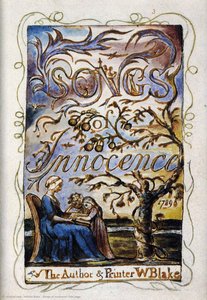
Blake’s artistic output encompassed a remarkable range of mediums—poetry, engravings, watercolors, mezzotints, and drawings—each reflecting his multifaceted intellectual and spiritual interests. His most celebrated works include *Songs of Innocence* (1789) and *Songs of Experience*, paired volumes that explore contrasting perspectives on human nature and morality; *The Marriage of Heaven & Hell* (1793), a provocative prose poem challenging conventional dogma; *Milton* (1804–?11), an ambitious retelling of Milton’s epic poem infused with Blake’s visionary symbolism; and *Jerusalem*, a sprawling prophetic poem envisioning a utopian future rooted in spiritual renewal. His engravings are characterized by a distinctive style—a rejection of linear perspective in favor of flattened planes and stylized figures—that conveys emotion and psychological intensity rather than realistic representation. Blake's use of color was equally innovative, employing bold hues to heighten the symbolic significance of his images and to evoke moods of wonder and terror. He frequently incorporated motifs from mythology and folklore, drawing inspiration from sources as diverse as Dante’s *Divine Comedy* and Hebrew scripture.Legacy & Influence
Despite facing considerable obscurity during his lifetime—characterized by poverty and rejection by mainstream artistic circles—William Blake's influence on subsequent generations of artists and writers has proven profound. His unwavering commitment to imaginative vision and symbolic expression resonated deeply with the Pre-Raphaelites, who embraced him as a kindred spirit and championed his distinctive aesthetic style. Furthermore, Blake’s ideas continue to inspire thinkers and artists today, particularly those concerned with exploring themes of spirituality, rebellion, and the relationship between art and consciousness. He stands as an enduring testament to the transformative potential of creativity—a visionary artist whose work compels us to confront uncomfortable truths and to embrace the boundless possibilities of human imagination. Blake’s legacy extends beyond his artistic achievements; it resides in his unwavering belief that art can serve as a catalyst for social change and spiritual enlightenment—a conviction that continues to inspire artists and intellectuals worldwide.
Vilém Blake
1757 - 1827 , Velká Británie
Rychlé informace o umělci
- Artistic Movement Or Style: Romantismus
- Artists Who Influenced This Artist:
- Raphael
- Michelangelo
- Date Of Birth: 1757
- Full Name: William Blake
- Nationality: Británie
- Notable Artworks:
- Songs of Innocence & Exp.
- The Tyger
- Jerusalem
- Place Of Birth: Londýn, UK
Související články

The Intricate World of Engraving: A Historical Survey of Technique, Artistic Expression & Enduring Legacy
Explore the rich history of engraving with OriginalUniqueArt. Discover techniques, iconic artists like Dürer & Callot, collecting tips, and expert guidance for preserving your art investment. Learn about intaglio printing & more!
10 legendárních гравюр, které změnily umění navždy | OriginalUniqueArt
Prozkoumejte 10 legendárních гравюр od Rembrandta, Dürera a Goyi. Objevte příběhy mistrů, techniky rytiny a umělecké dědictví baroka i renesance. Reprodukce obrazů pro váš interiér na OriginalUniqueArt.com

William Blake: Romantic Visionary & Mystical Genius of the Imagination
Explore the mystical art & poetic genius of William Blake (1757-1827). Discover his revolutionary illuminated printing, rich symbolism, and lasting influence on Romanticism. Find handmade reproductions at OriginalUniqueArt.

Top 10 slavných obrazů s dominantní černou barvou | OriginalUniqueArt.cz
Prozkoumejte 10 nejslavnějších obrazů s dominantní černou barvou od Van Gogha, Muncha a dalších mistrů. Objevte příběhy za uměleckými díly, techniky a inspiraci. Reprodukce obrazů nejvyšší kvality na OriginalUniqueArt.com.

Engraving: A Historical Survey of Technique, Artistic Expression & Enduring Legacy
Explore the rich history of engraving with OriginalUniqueArt. Discover techniques, iconic artists like Dürer & Callot, collecting tips, and expert guidance for preserving your art investment. Learn about intaglio printing & more!