Abstract Expressionism · 1939
Seated Man (Willem De Kooning, 1939)
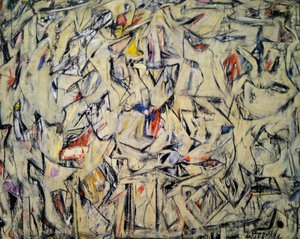
Willem De Kooning (1904–1997) vytvořil dílo Seated Man. Pochází z roku 1939. Patří k hnutí Abstract Expressionism. Je vyrobeno z Oil On Canvas. Rozměry jsou 97 × 87 cm.
- 1939
- Oil On Canvas
- 97 × 87 cm

 Náhled v interiéru

 Ručně malovaná olejná reprodukce
 Sdílet
 Sdílet
 Informační list


 Stáhnout
 Podobné položky
 Rentgenové snímky
 Slideshow
 Otázky a odpovědi

 Statistiky
Seated Man v kostce
- Název díla
- Seated Man
- Autor
- Willem De Kooning (1904–1997)
- Rok narození umělce
- Rotterdam, Nizozemsko
- Datum vytvoření
- 1939
- Technika
- Oil On Canvas
- Rozměry
- 97 × 87 cm
- Období
- Early Medieval
- Motiv
- seated man, figure, chair, dining, baldness, yellow shirt
Co przedstawuje dílo Seated Man?
A Moment Frozen in Time: Willem de Kooning’s ‘Seated Man’
Willem de Kooning's “Seated Man,” painted in 1939, isn’t merely a depiction of a man at rest; it’s a potent distillation of the artist’s evolving approach to capturing human emotion and experience. This oil on canvas, measuring a modest yet significant 97 x 87 cm, currently resides within the Hirshhorn Museum and Sculpture Garden in Washington D.C., offering viewers an intimate glimpse into the mind of a pivotal figure in the New York School of art. De Kooning’s work during this period represents a fascinating crossroads – a deliberate exploration of realism interwoven with the burgeoning abstraction that would define his legacy, creating a dynamic tension within each piece.
The painting immediately draws the eye to its central subject: a man seated in a chair, his posture relaxed yet imbued with an underlying sense of contemplation. His arms are crossed, suggesting both vulnerability and self-possession. The deliberate use of color – primarily yellows and browns – contributes significantly to the work’s mood. The bright yellow shirt contrasts sharply with the darker tones of the figure's clothing and the chair, creating a visual rhythm that guides the viewer’s gaze across the canvas. Notably, de Kooning eschews a completely smooth finish; visible brushstrokes are prominent, adding texture and immediacy to the scene – a characteristic hallmark of his style.
Composition and the Dialogue Between Form and Space
The composition itself is carefully constructed to establish a clear dialogue between form and space. The man occupies the left side of the frame, anchoring the viewer’s attention while simultaneously allowing the right half of the canvas to be dominated by a dining table. This arrangement isn't arbitrary; it subtly suggests a domestic scene, a moment of quiet contemplation or perhaps even a shared meal. Two bowls are placed on the table, one closer to the center and the other slightly further away – a detail that invites speculation about their contents and the context of the gathering. A bottle is positioned in the upper left corner, adding another layer of visual interest and subtly directing the eye upwards.
The placement of these objects isn’t simply decorative; it contributes to the painting's overall sense of ambiguity. Is this a portrait of an individual lost in thought? Or does it represent a broader commentary on human interaction and the rituals of daily life? De Kooning deliberately avoids providing easy answers, leaving the interpretation open to the viewer’s own sensibility.
De Kooning’s Early Abstraction and the Human Condition
“Seated Man” is deeply rooted in de Kooning's early experimentation with abstract expressionism. While retaining elements of realism – particularly in the depiction of the man’s face and posture – the painting demonstrates a willingness to distort and fragment forms, anticipating the more radical gestures that would characterize his later work. This exploration of the human figure, often rendered with a sense of unease or even violence, reflects de Kooning's broader engagement with themes of identity, alienation, and the complexities of modern life. His work during this period was profoundly influenced by artists like Jackson Pollock and Franz Kline, whose techniques he absorbed and adapted to his own unique vision.
A Legacy in Modern Art
“Seated Man” stands as a significant testament to de Kooning’s contribution to the development of abstract expressionism. It exemplifies his ability to balance realism with abstraction, capturing not only the outward appearance of a subject but also its underlying emotional state. The painting's blend of observation and invention makes it a compelling study for art enthusiasts and scholars alike, offering insights into the artist’s creative process and his place within the broader context of 20th-century art. Reproductions of this powerful work offer a tangible connection to a pivotal moment in artistic history, allowing viewers to experience de Kooning's vision firsthand.
Vysokorozlišené fotografie díla Seated Man

Protected by copyright: these files are for personal reference, not a licence to republish.
Willem De Kooning, Seated Man (1939).
Odpovědi na otázky k dílu Seated Man
V jakém roce bylo vytvořeno dílo „Seated Man“ od Willem De Kooning?
Vznik díla „Seated Man“ od Willem De Kooning se datuje do roku 1939.
V jaké technice je vytvořeno dílo „Seated Man“ od Willem De Kooning?
Technikou díla „Seated Man“ od Willem De Kooning je Oil On Canvas. Reprodukce mají za cíl věrně zachytit vzhled této techniky.
Jaké jsou rozměry originálu díla „Seated Man“ od Willem De Kooning?
Zaznamenané rozměry díla „Seated Man“ od Willem De Kooning jsou 97 x 87 cm. Reprodukce lze objednat v jiných velikostech při zachování stejných proporcí.
Co zachycuje dílo „Seated Man“ od Willem De Kooning?
Motivy díla „Seated Man“ jsou seated man, figure, chair, dining, baldness, yellow shirt, abstraction, casual.
Je dílo „Seated Man“ volné z autorských práv?
Stav autorských práv pro dílo „Seated Man“ od Willem De Kooning: toto dílo spadá do stále chráněno autorským právem. To určuje, zda lze volně vytvářet reprodukce tohoto obrazu.
K kterému umělci je dílo "Seated Man" připisováno?
Dílo "Seated Man" se připisuje autorovi Willem De Kooning.
K kterému uměleckému směru patří „Seated Man“ od Willem De Kooning?
Umělecký směr, ke kterému patří dílo „Seated Man“ od Willem De Kooning, je Abstract Expressionism. Tato klasifikace toto dílo umísťuje mezi související umělce a další umělecká díla.
Do jaké fáze tvůrčího rozvoje Willem De Kooning patří dílo „Seated Man“?
V rámci kariéry umělce Willem De Kooning spadá dílo „Seated Man“ do období Early Abstract. Tato fáze umožňuje jeho srovnání s dalšími díly tohoto umělce.
V jakém věku vytvořil/a Willem De Kooning dílo „Seated Man"?
Při vzniku díla „Seated Man“ v roce 1939 bylo umělcům Willem De Kooning (narozenému/é v 1904) 35 let.
O umělci, Willem De Kooning

1904–1997, Nizozemsko
Willem De Kooning
A Life Forged in Abstraction Willem de Kooning, jméno synonymum pro syrovou energii a hluboké emocionální vyjádření abstrakce, se narodil v Rotterdame, Nizozemsko, v roce 1904. Jeho rané dětství bylo poznamenáno rodinným rozpadem – jeho rodiče se rozešli, když mu bylo pouhých pět let – což možná zakořenilo v něm pocit neustálého hledání, který by pronikal celou jeho uměleckou cestou. V patnácti letech ukončil formální školení a učnil se u obchodní umělecké firmy, čímž položil základy pro svou technickou zručnost, ale zároveň podněcoval touhu po překročení konvencí. Večerní kurzy na Academie van Beeldende Kunsten en Technische Wetenschappen v Rotterdame poskytly další základní školení, ale touha po něčem víc – po odvážnější, expresivnější řeči – ho nakonec vedla do Ameriky v roce 1926.
O umělci Willem De Kooning Významná díla umělce Willem De Kooning
Také od autora Willem De Kooning
 Žena I1952
 Parc rosenberg, 1957, soukromá sbírka
 Výkop1950
 Přístup do řeky1960
Eseje k tématu Seated Man
 Willem de Kooning: Abstraction, Gesture & the Evolution of Post-War American PaintingExplore the evolution of Willem de Kooning's iconic Abstract Expressionist paintings. Discover his signature style, key themes & investment…
 Top 10 mistrovských děl holandského baroka – obrazy a umělci | OriginalUniqueArt.czObjevte 10 ikonických děl holandského baroka! Prozkoumejte příběhy Rembrandta, Vermeera a dalších mistrů. Repliky obrazů nejvyšší kvality p…
 Art for Every Course: Designing Dining Spaces with Visual Rhythm and Masterpiece CurationElevate your restaurant's narrative with expert art curation. Discover how to use visual rhythm, masterwork reproductions, and immersive sc…