 Olejová verze
 Vše o Charon







































 U děl nebo reprodukcí, u nichž je jakákoliv strana větší než 105 cm (přibližně 41 palců), bude rám dodán jako sestava v rozloženém stavu. Tato metoda zajišťuje bezpečné doručení a chrání dílo před poškozením během přepravy.


Identification of Charon by Gustave Doré
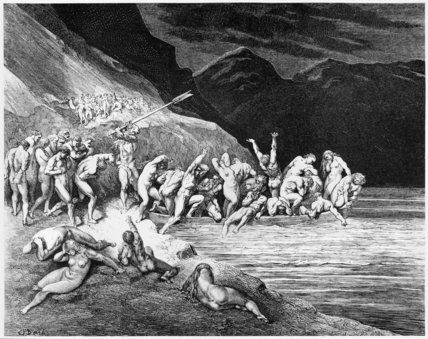
This work, titled Charon, is a significant illustration created by the artist Gustave Doré. It is specifically identified as Plate IX: Canto III: Arrival of Charon, a piece that emerged from his extensive series of illustrations for Dante's Inferno. Created in 1857, the work captures a pivotal moment within the narrative, focusing on the arrival of the ferryman. It is a piece that reflects the artist's ability to translate complex literary scenes into a singular, visual moment.
The piece is rendered in a dramatic engraving style. This method allows for a high degree of intensity in the depiction of the scene. Through this technique, Doré captures the weight of the subject matter, focusing on the movement and the atmosphere of the underworld. The work remains a definitive example of his ability to interpret classical literature through the precision of printmaking.
Composition and Visual Elements
The scene captures the arrival of Charon as he navigates dark, heavy waters. At the center of this movement, a muscular form is shown straining against the oar, a physical exertion that anchors the composition. This central tension is framed by the looming presence of cliffs that rise behind the figure, creating a sense of enclosure and weight. The arrangement focuses on the immediate, visceral struggle of the ferryman against the elements.
The composition is structured around the arrival of Charon in Canto III. There is a palpable sense of momentum in the way the figure interacts with the water. The dark tones of the river contrast with the physical strain of the body, drawing the eye toward the point of contact between the oar and the liquid surface. The verticality of the cliffs provides a stark, unyielding backdrop to the horizontal movement of the boat.
Technique and Artistic Style
This work is a dramatic engraving, a piece that relies heavily on the precision of line to establish its atmosphere. As an illustration for Dante's Inferno, it utilizes the specific visual language required to translate literary tension into a graphic medium. The technique focuses on the interplay of light and shadow, using fine, controlled strokes to define the muscularity of the central figure and the turbulent nature of the water. It is a study in tonal depth achieved through meticulous engraving rather than color.
The execution reflects the high level of technical rigor found in the artist's mid-career output. Every detail, from the texture of the looming cliffs to the movement of the dark waters, is rendered through a disciplined application of hatching and cross-hatching. This method allows for a sense of physical weight and volume, making the scene feel grounded despite its mythological subject. The resulting image, identified in catalog records as Fig No: D12, possesses a cinematic quality that arises from the stark contrast between the deep blacks and the bright highlights of the paper.
Related Works by Gustave Doré
The artist’s ability to translate complex literary narratives into visual form is evident across his diverse body of work. His engagement with epic poetry is particularly notable, as seen in the illustrations he produced for the Divine Comedy. These works demonstrate a similar command over light and shadow to define the atmosphere of the afterlife. This capacity for dramatic storytelling also extended to his 1853 illustrations for the works of Lord Byron, which helped establish his presence in the international publishing market.
In 1856, he produced twelve folio-size illustrations for The Legend of The Wandering Jew, a project that highlights his skill in handling large-scale compositions. His later career included significant contributions to the visual landscape of literature, such as his work on an oversized edition of Edgar Allan Poe’s The Raven. Each of these projects reflects a consistent dedication to using fine line work to build texture and depth within his compositions.
Otázky a odpovědi
Je dílo Charon ručně malované, nebo jde o tisk?
Ručně malováno: zkušený malíř přetvoří Charon v olejomalbu na lněném plátně.
Jakou velikost si mám vybrat pro Charon?
Velikosti se pohybují od 28.1 x 35.5 cm (Kč11885) až po 195.6 x 247.0 cm (Kč45854); v tabulce na této stránce jsou uvedeny jednotlivé varianty a jejich ceny.
Jak dlouho trvá doručení?
Doručení trvá 4 až 5 týdnů a zahrnuje bezplatnou expresní přepravu po celém světě; na této stránce je k dispozici i možnost urgentní výroby. Dílo můžete vrátit během 100 dnů s plným vrácením peniędzy, bez jakýchkoliv podmínek.
Jakou techniku použil/a Gustave Doré pro dílo Charon?
Rytina
 Náhled v interiéru

 Sdílet
 Sdílet
 Podrobnosti o díle
 Informační list


 Stáhnout
 Podobné položky
 Rentgenové snímky
 Slideshow
 Otázky a odpovědi

 Statistiky