- Domů

- Tisk na plátno
- Marc Chagall
- Butcher

 Objednat reprodukci Koupit digitální obrázek
 Sdílet
 Sdílet
 Podrobnosti o díle
 Přidat do oblíbených

 Stáhnout
 Podobné položky
 Rentgenové snímky
 Slideshow
Butcher
 Acrylic On Canvas
- WallArt
- Expressionism
 1910
1910 34.0 x 24.0 cm
 Zobrazit více
Giclée / Umělecký tisk
Giclée nebo plátěný tisk muzeální kvality s rychlou výrobou a flexibilními možnostmi povrchové úpravy.




P118B $10

P118H $10

P118W $10

P438Z $10

P508JH $12

P508YH $12

P805H $10

P805Z $10

P919BZ $10

P919G $10

P919XJ $10

P959ZH $10

P968JZ $12

W106C $8

W218G $10

W218JH $8

W218Y $10

W307PJ $10

W316G $10

W316PJ $8

W316Y $10

W398PJ $8

W4111J $10

W500HY $15

W500JH $15

W692G $12

W849H $8

W940BG $15

W953PJ $8




Vyberte si z našich přednastavených velikostí, které odpovídají původním proporcím díla.

Můžete zadat vlastní rozměry tak, aby výtvor odpovídal konkrétnímu rámu nebo prostoru. Pokud zvolená velikost nebude odpovídat poměru stran původního obrazu, dílo buď ořížeme, nebo obraz rozšíříme pomocí zrcadlového efektu či jednobarevného okraje. Před zahájením výroby vám bude zaslán digitální náhled k schválení.
Mějte prosím na paměti, že náhled na obrazovce neodráží skutečné oříznutí nebo rozšíření. Pouze digitální náhled přesně zobrazí finální kompozici.
Ačkoliv jsou k dispozici i vlastní rozměry, pro zachování původních proporcí doporučujeme vybrat si rozměr z předdefinovaného seznamu.
Celosvětové doručení () do 2 týdnů namísto standardních 4/5 týdnů. (19 červenec)

Zdarma celosvětová expresní doprava

Vysoce kvalitní lněné plátno

Kompletní přepravní pojištění

Záruka vrácení celního poplatku

Záruka přesného barevného shodu

60denní lhůta pro vrácení zboží (pouze při vadách výroby)

100% garance vrácení peněz

Sleva při hromadné objednávce
 Skleněná varianta je dostupná pouze u rozměrů menších než 110 cm

Butcher
Giclée / Umělecký tisk
Rozměry reprodukce
-


Celková cena za výběr
-
Popis sběratelského kousku
A Portrait of Rustic Intensity: Unpacking Marc Chagall's "Butcher"
Marc Chagall’s 1910 painting, “Butcher,” isn’t merely a depiction of a man with a cleaver; it’s a vibrant plunge into the artist’s deeply personal and profoundly evocative world. Painted during a period of intense experimentation and stylistic evolution, this work embodies the core tenets of Expressionism while simultaneously retaining the unique, dreamlike quality that would become synonymous with Chagall's oeuvre. The painting immediately arrests the viewer with its bold color palette – a riot of blues, reds, yellows, and greens—a deliberate departure from the muted tones often associated with academic realism. This isn’t a photograph; it’s an emotional landscape rendered in pigment.
The subject himself is presented with arresting immediacy. The butcher, clad in a striking blue coat, dominates the composition, his face partially obscured by a long, flowing white beard. His posture suggests both focused concentration and a quiet intensity, hinting at the weight of responsibility and the physicality of his trade. He’s not idealized or romanticized; he's presented with raw honesty, reflecting Chagall’s fascination with everyday life and the dignity of labor. The inclusion of two birds – one perched delicately near the top left corner, another fluttering towards the bottom right – adds a layer of symbolic complexity, perhaps representing freedom, instinct, or the fleeting nature of existence within the confines of this rustic setting.
Roots in Vitebsk: Folklore and Jewish Identity
To truly understand “Butcher,” one must delve into Chagall’s formative years spent in Vitebsk, a city brimming with cultural confluence. Born Moishe Shagal in 1887, Chagall’s childhood was shaped by the vibrant tapestry of his Hasidic Jewish community – a world steeped in folklore, religious ritual, and deeply ingrained traditions. Vitebsk's unique blend of Russian Orthodox churches and bustling Jewish marketplaces provided a rich visual vocabulary for the young artist, informing his distinctive style. The painting subtly echoes this environment; the arrangement of objects, the use of color, and even the butcher’s attire all resonate with elements found in Chagall’s native landscape.
The presence of the birds is particularly significant within this context. Birds frequently appear in Chagall's work, often symbolizing hope, spirituality, or a longing for escape – themes deeply rooted in Jewish mysticism and folklore. Their placement within the scene suggests a connection between the earthly realm of the butcher’s trade and the spiritual aspirations of his community.
Expressionist Techniques: Color, Form, and Emotion
“Butcher” is firmly grounded in the principles of Expressionism, a movement characterized by its emphasis on subjective experience and emotional intensity. Chagall employs loose brushstrokes, distorted forms, and an unrestrained use of color to convey a sense of urgency and drama. The painting’s composition—the dynamic arrangement of objects, the exaggerated perspective—creates a feeling of instability and unease, mirroring the anxieties and uncertainties of the early 20th century. The gouache on paper medium lends itself beautifully to this expressive style, allowing for rich color saturation and textural variation.
Notably, Chagall’s use of color isn't merely decorative; it’s deeply symbolic. The dominant blues evoke a sense of melancholy or introspection, while the reds and yellows inject bursts of energy and vitality. This interplay of colors contributes to the painting’s overall emotional impact, creating a powerful visual narrative that transcends mere representation.
A Window into the Soul: Legacy and Interpretation
“Butcher” is more than just a portrait; it's a window into Chagall’s soul—a testament to his unwavering belief in the power of imagination and memory. It stands as a poignant reminder of his roots, his artistic evolution, and his enduring fascination with the human condition. Reproductions of this captivating work offer an exceptional opportunity to bring this evocative image into your home or office, allowing you to experience firsthand the emotional depth and artistic brilliance of one of the 20th century’s most beloved artists. OriginalUniqueArt offers meticulously crafted hand-painted reproductions that faithfully capture the essence of Chagall's masterpiece, ensuring its beauty and significance endure for generations to come.
Biografie umělce
A Life Painted in Dreams: The World of Marc Chagall
Marc Chagall, born Moishe Shagal in 1887 in the small Belarussian town of Liozna near Vitebsk, wasn’t merely a painter; he was a poet of color, a weaver of dreams, and a chronicler of memory. His life, spanning nearly a century, mirrored the tumultuous currents of the 20th century, yet his art remained steadfastly rooted in a deeply personal vision—one infused with the folklore of his Hasidic Jewish upbringing and an unwavering belief in the power of imagination. Vitebsk itself was more than just a birthplace; it became the emotional core of his artistic universe, a recurring motif populated by flying figures, whimsical animals, and the vibrant hues of remembered landscapes. The town’s unique blend of cultures—Russian Orthodox churches alongside bustling Jewish marketplaces—forged an aesthetic sensibility that would defy easy categorization throughout his long career. Though he sought formal training first with a local sign painter and later in St. Petersburg under Léon Bakst, and then in Paris at the Académie de la Grande Chaumière, Chagall never fully embraced any single artistic movement. He absorbed elements of Cubism, Symbolism, and Fauvism, but always filtered them through his own intensely personal lens, creating a style that was uniquely, unmistakably Chagall.Early Years and Artistic Beginnings
Chagall’s formative years were marked by hardship and displacement. Born into a Jewish family in Vitebsk, he experienced the trauma of pogroms—violent anti-Jewish riots—which instilled in him a profound awareness of persecution and loss. Despite these challenges, Chagall possessed an innate talent for drawing and painting from a young age. He initially studied at Vitebsk Art School, where he honed his skills under Bakst’s guidance, experimenting with theatrical design alongside visual art. This early exposure to the stage would profoundly influence his later work, particularly his use of stylized figures and dramatic compositions. His artistic explorations continued in St. Petersburg, where he developed a distinctive style characterized by bold colors and expressive brushstrokes—a stylistic approach that foreshadowed his groundbreaking achievements to come.The Symbolist Influence and Early Paintings
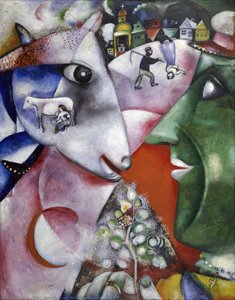
Chagall’s artistic development was significantly shaped by the Symbolist movement, which championed emotion and imagination over realistic representation. Artists like Gustave Moreau and Edvard Munch served as important inspirations, encouraging him to delve into psychological landscapes and explore themes of spirituality and mythology. His early paintings—such as *I and the Village* (1911)—demonstrate this influence vividly. The village isn’t rendered realistically but as a fragmented collection of recollections, imbued with symbolic meaning. Recurring motifs like birds, apples, and windows reflect Chagall's preoccupation with themes of flight, fertility, and transcendence—concepts central to Jewish mysticism and folklore. These images are not merely decorative; they convey profound emotional resonance, capturing the essence of memory and experience.Cubism and Surrealism: Bridging Formal Movements
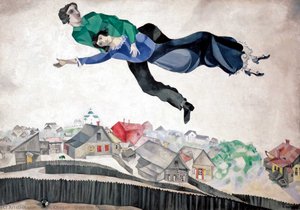
While Chagall resisted categorization into any single artistic movement, he skillfully incorporated elements of Cubism and Surrealism into his oeuvre. He embraced Picasso’s pioneering approach to fractured perspectives and geometric abstraction, adapting it to his own expressive style. Simultaneously, he explored the dreamlike imagery and irrational juxtapositions characteristic of Surrealist art—influenced by artists like Dalí and Magritte. This fusion of styles resulted in canvases that defy conventional logic while retaining a palpable sense of emotional intensity. Works like *Over Vitebsk* (1920-1922) exemplify this synthesis, presenting a fantastical depiction of his hometown bathed in luminous colors—a testament to Chagall’s ability to transform personal experience into universal themes.Mature Years and International Recognition
The 1930s witnessed Chagall's ascent to international fame. He established himself as a celebrated artist in Paris, where he continued to produce monumental paintings that captivated audiences worldwide. The outbreak of World War II forced him to flee occupied France for the United States, seeking refuge in New York City—a period marked by profound emotional upheaval and artistic experimentation. During his time in America, Chagall created some of his most iconic works, including *White Crucifixion* (1938), a haunting meditation on suffering and faith that powerfully captured the anxieties of the era. He returned to France after the war, receiving numerous prestigious commissions—including the ceiling of the Paris Opera—and cementing his legacy as one of the greatest artists of the 20th century. His stained glass windows for Jerusalem’s Hadassah Hebrew University Medical Center synagogue stand as a testament to his enduring vision and artistic prowess. Chagall's influence on subsequent generations of artists is undeniable; he bridged the gap between European modernism and Jewish cultural identity, becoming known as “the quintessential Jewish artist of the twentieth century.” His ability to synthesize personal experience, folklore, and universal themes continues to resonate with audiences worldwide. He left behind a body of work that is both deeply personal and universally accessible, inviting viewers to lose themselves in a world painted with dreams and illuminated by hope.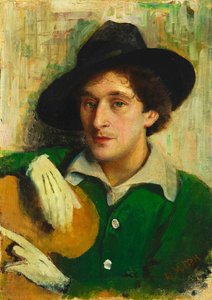
Marc Chagall
1887 - 1985 , Belorusko
Rychlé fakta
- Artistic Movement Or Style: Modernismus, Kubismus
- Artists Or Movements Influenced By This Artist:
- Surrealismus
- Moderní umělci
- Artists Who Influenced This Artist:
- Bakst
- Delaunay
- Borovikovsky
- Date Of Birth: 6 července 1887
- Date Of Death: 28. března 1985
- Full Name: Marc Chagall
- Nationality: Rusko (nyní Bělorus)
- Notable Artworks:
- I a vesnice
- Nad Vitebskem
- Bílá křížová cesta
- Place Of Birth: Liozna, Belarus
Související články
Marc Chagall: Top 25 děl umělce a inspirace pro váš domov | OriginalUniqueArt.cz
Prozkoumejte 25 nejlepších děl Marca Chagalla – snové krajiny, barevné obrazy a židovská témata. Objevte příběhy za ikonickými díly expresionismu a surrealismu. Reprodukce obrazů v muzeální kvalitě na OriginalUniqueArt.com.
Claude Monet: 25 mistrovských děl impresionismu pro váš domov | OriginalUniqueArt.com
Prozkoumejte 25 ikonických děl Claude Moneta – mistra impresionismu. Obdivujte vodní lilie, krajiny a secesní obrazy plné světla a barev. Najděte inspiraci pro váš interiér s reprodukcemi nejvyšší kvality na OriginalUniqueArt.com

Deset ikonických obrazů v odstínech šedé modré: Umění a inspirace pro váš domov
Objevte deset ikonických obrazů v odstínech šedé modré od Van Gogha, Moneta a dalších mistrů. Ponořte se do příběhů umění, technik a inspirace pro váš interiér. Reprodukce obrazů nejvyšší kvality na OriginalUniqueArt.com.

Paul Cézanne: 25 mistrovských děl a revoluce v moderním umění | OriginalUniqueArt.cz
Prozkoumejte 25 ikonických děl Paula Cézanna – průkopníka moderního umění a impresionismu. Obdivujte jeho still life, krajiny a portréty. Reprodukce obrazů v nejvyšší kvalitě na OriginalUniqueArt.com. Inspirace pro váš interiér!
Top 10 uměleckých děl oslavujících barvu – inspirace pro váš interiér
Objevte 10 ikonických uměleckých děl oslavujících barvu! Prozkoumejte příběhy Van Gogha, Moneta a dalších mistrů. Inspirace pro váš interiér s reprodukcemi obrazů nejvyšší kvality na OriginalUniqueArt.com.