
 Náhled v interiéru
 Sdílet
 Sdílet
 Podrobnosti o díle
 Průvodce

 Stáhnout
 Podobné položky
 Rentgenové snímky
 Slideshow
 Otázky a odpovědi
 Statistiky
Cain and Abel

- 79.0 x 79.0 cm


 Zobrazit více
Získejte soubor připravený k tisku, který svou kvalitou výrazně převyšuje webový náhled. Každý prodávaný digitální obraz pochází z vysokorozlišeného originálu v naší databázi – obvykle o šířce 5 000 až 15 000 pixelů – díky čemuž můžete tisknout ve velkém formátu, provádět těsný střih nebo si s jistotou užít i ty nejjemnější detaily.
Žádný soubor neopustí naše studio bez úprav. Digitální expert kontroluje barvy v porovnání s původním malířským dílem a v případě potřeby je upravuje, poté pomocí profesionálních nástrojů pro retuš zvyšuje ostrost a detailnost — přičemž vždy zůstává věrný tahům štětcem a stylu umělce. Výsledkem je obraz, který vypadá jako malba, nikoliv jako naskenovaný snímek s filtrem.
Schvalování před dokončením: náš expert vám do 72 hodin zašle obraz e-mailem k revizi. Nejsste spokojeni? Můžete požádat o úpravy či opravy, nebo si můžete vyžádat vrácení peněz, pokud kvalita neodpovídá vašim očekáváním.
Tuto kvalitu využívají vydavatelství, designová studia, galerie i tiskárny.
Digitální obrazy
Stáhněte si soubor ve vysokém rozlišení pro osobní prohlížení, tisk nebo kreativní projekty. ( Přepnout na tisk Koupit ručně malovaný obraz)
Součást každé objednávky digitálního obrazu
Profesionální digitální doručení, zaručené
Když si vyberete OriginalUniqueArt.com, nezískáváte pouze obrázek – získáváte digitální umělecké dílo s profesionálně vylepšenými detaily, zpracované s precizností a podpořené zárukou za spokojenost. Zde je vše, co vaše objednávka automaticky obsahuje:

Rychlé doručení e-mailem
Váš digitální obraz ve vysokém rozlišení vám bude zaslán e-mailem do 72 hodin od objednávky – připraven k okamžitému použití.

Digitální soubor s využitím AI
Vaše umělecké dílo je profesionálně optimalizováno pomocí pokročilých nástrojů umělé inteligence a manuální úpravy, což zajišťuje maximální úroveň detailu, ostrosti a přesnosti barev.

Doživotní bezplatné znovuodeslání digitálních obrazů
Soubor jste omylem smazali nebo ztratili? Žádný problém – kdykoliv vám ho znovu zašleme zcela zdarma.

Bez poplatků za dovoz – navždy
Užijte si své umělecké dílo okamžitě bez celních poplatků, daní nebo nákladů na dopravu – digitální stažení je vždy bez daňových povinností.

Záruka přesnosti barev
Díky profesionálním nástrojům a správě barev zajišťujeme, aby váš digitální obraz odrážel původní barvy co nejvěrněji.

100dená záruka spokojenosti
Pokud nebudete s digitálním obrázkem spokojeni, provedeme jeho revizi nebo vám vrátíme 100% platby do 100 dnů – bez jakýchkoliv dotazů.

100% záruka vrácení peněz
Nespokojeni? Získejte plnou náhradu peněz do 100 dnů od obdržení digitálního souboru – bez zbytečných dotazů.

Slevy při hromadných objednávkách
Koupě 3 obrazů ušetří 10% – Koupě 5 obrazů ušetří 15% – Koupě 10+ obrazů ušetří 20%. Ideální pro kreativní projekty, galerie a agentury.
Lorenzo Ghiberti’s Gates of Paradise: A Symphony in Bronze
The Florence Baptistery’s Gates of Paradise—officially known as Porta Nuova—stand as an unparalleled testament to Renaissance artistic genius, spearheaded by Lorenzo Ghiberti. Completed between 1425 and 1452, these monumental bronze doors represent more than just architectural embellishment; they embody the humanist ideals that defined Florence during its golden age and continue to inspire awe centuries later. Commissioned by Archbishop Giovanni Pier Paolo Carafa, Cardinal Domenico Giuliano della Pergola, and Pope Nicholas V, Ghiberti’s undertaking was ambitious in scope—a collaborative effort involving numerous artisans—yet he alone conceived and executed the overarching vision for this iconic masterpiece.- Style: The Gates exemplify Early Renaissance sculpture, characterized by a renewed interest in classical ideals of proportion and harmony. However, Ghiberti’s approach transcends mere imitation; he infused his work with profound psychological depth and emotional resonance—a hallmark of humanist art.
- Technique: Ghiberti pioneered innovative casting methods utilizing the lost wax technique, pushing the boundaries of metallurgical craftsmanship. This meticulous process ensured exceptional detail and surface finish, capturing the textures and nuances of human anatomy and drapery with breathtaking accuracy.
- Historical Context: Constructed during a period of fervent artistic patronage—fueled by papal ambition and civic pride—the Gates stand as a symbol of Florence’s cultural ascendancy. They reflect the humanist spirit prevalent at the time, emphasizing human dignity and intellectual curiosity alongside religious piety.
Panel No. 2: Cain and Abel – A Narrative of Jealousy and Divine Justice
The second panel depicting Cain and Abel is arguably the most emotionally charged segment of the Gates’ narrative cycle. Ghiberti skillfully captures the pivotal moment of fratricide—the brutal slaying of Abel by his brother Cain—transforming it into a powerful visual allegory. The composition emphasizes the stark contrast between the righteous Abel, depicted in serene repose with his flock, and Cain, consumed by rage and driven to violence.- Symbolism: Ghiberti’s depiction utilizes symbolic gestures and facial expressions to convey profound psychological states—jealousy, remorse, and despair. The knife held aloft by Cain represents the destructive impulse of envy, while Abel's gaze conveys unwavering faith and moral integrity.
- Composition: The artist employs a pyramidal structure to create visual stability and heighten dramatic tension. Careful attention to detail—particularly in rendering Abel’s face—underscores Ghiberti’s mastery of anatomical realism and expressive portraiture.
Beyond Imitation: Ghiberti's Innovation and Legacy
While deeply rooted in classical tradition, Ghiberti’s Gates transcend mere stylistic homage. He achieved a breakthrough in perspective—a technique previously unexplored in sculpture—creating an illusion of depth that dramatically enhances the visual impact of the panels. This pioneering innovation demonstrates Ghiberti’s intellectual curiosity and his commitment to advancing artistic boundaries.- Influence: The Gates of Paradise profoundly influenced subsequent generations of sculptors, establishing a new standard for realism and expressive power. Michelangelo himself famously declared that Ghiberti had “made the stone speak.”
- Enduring Relevance: Today, reproductions of Ghiberti’s masterpiece continue to captivate audiences worldwide—serving as reminders of Florence's artistic heritage and inspiring contemplation on themes of morality, justice, and human vulnerability.
Exploring the Emotional Landscape
The Gates of Paradise are not merely aesthetically impressive; they evoke a visceral response in viewers—a confrontation with fundamental questions about human nature and divine providence. Ghiberti’s masterful portrayal of Cain and Abel compels us to grapple with the destructive consequences of envy and the importance of unwavering moral conviction. As you gaze upon this enduring symbol of Renaissance artistry, allow yourself to be transported back to Florence's vibrant cultural milieu—a testament to the transformative power of art and its ability to illuminate the human condition.Otázky a odpovědi
Kde mohu koupit print díla „Cain and Abel“ od Lorenzo Ghiberti?
Pokud si chcete pořídit tisk díla „Cain and Abel“ od Lorenzo Ghiberti, stačí si jej objednat přímo na jeho stránce Kvalitní umělecký tisk: umělecký tisk na bavlněném plátně nebo archivním plátnovém papíře.
Kdo vytvořil "Cain and Abel"?
Autorem díla „Cain and Abel“ je Lorenzo Ghiberti. Práce je v katalogu uvedena pod jménem Lorenzo Ghiberti.
Je pro dílo „Cain and Abel“ k dispozici stažení?
Digitální obraz díla „Cain and Abel“ od Lorenzo Ghiberti si můžete stáhnout na stránce s k dispozici pro stažení Stažení digitální verze: stažení digitálního obrazu ve vysokém rozlišení.
Biografie umělce
A Florentine Renaissance Forged in Bronze: The Life and Legacy of Lorenzo Ghiberti
Lorenzo Ghiberti, born in 1378 near Florence, Italy, wasn’t simply a sculptor; he was a crucible where the burgeoning spirit of the Renaissance first began to truly solidify. His early life, steeped in the practical artistry of goldsmithing under his stepfather, Bartolo di Michele – a craftsman known for his skill and experience – laid the foundation for a career that would forever alter the course of Florentine art. This initial training instilled within him an unparalleled mastery of metalwork, a deep understanding of form and texture, and a meticulous attention to detail that would become hallmarks of his distinctive style. However, Ghiberti’s ambitions stretched far beyond the confines of the workshop; he possessed a restless intellectual curiosity and a desire to explore the broader currents of artistic innovation sweeping across Italy. Formal painting lessons from Gherardo Starnina broadened his horizons, introducing him to the principles of perspective and composition – skills that would prove invaluable in his later sculptural endeavors. A brief sojourn in Rimini, assisting Carlo I Malatesta with frescoes during a devastating plague outbreak in 1400, exposed him to diverse artistic influences and honed his ability to work under pressure, shaping his approach to large-scale projects. Little did he realize that these formative experiences were preparing him for the monumental competition that would catapult him into the annals of art history.The Baptistery Doors: A Triumph of Skill and Vision
In 1401, Florence held a contest of unparalleled significance – a competition to select an artist to create new bronze doors for the city’s magnificent Baptistery. This commission was considered the most prestigious in the entire region, a testament to the artistic prowess of those chosen to adorn this sacred space. Lorenzo Ghiberti, a young but exceptionally talented sculptor, entered this arena alongside some of the era's most formidable minds, including the towering figure of Filippo Brunelleschi – an architect and engineer whose innovative designs were reshaping the city’s skyline. The challenge was daunting: to depict the *Sacrifice of Isaac* in relief on the doors, a biblical narrative rich with symbolism and theological significance. Ghiberti’s panel wasn't merely a demonstration of technical skill; it was a revelation – a breathtaking display of innovation, grace, and emotional depth. His innovative approach, characterized by remarkably graceful figures, a sophisticated understanding of perspective, and an almost palpable sense of movement, secured his victory with astonishing speed. This triumph wasn’t simply about winning a commission; it was a declaration of a new artistic sensibility, a bold assertion that Florence was on the cusp of a revolutionary era in sculpture. He began work immediately on the North Doors, a project that would consume over two decades and fundamentally transform the Baptistery into a showcase for Renaissance artistry – a space where beauty, skill, and spiritual contemplation converged.The “Gates of Paradise”: A Masterpiece Unveiled
Following the resounding success of the North Doors, Ghiberti was entrusted with an even more ambitious undertaking: the creation of a second set of doors for the Baptistery’s east entrance – doors that would ultimately become known as the *Gates of Paradise*. Completed in 1452, these magnificent panels represent the pinnacle of Ghiberti's artistic achievement and cemented his reputation as one of the greatest sculptors of all time. Each panel depicts scenes from the Old Testament with an unprecedented level of realism, detail, and emotional depth – a testament to Ghiberti’s mastery of bronze casting and relief sculpture. The panels aren’t merely representations of biblical stories; they are immersive narratives brought to life through meticulous attention to anatomy, drapery, and spatial relationships. He pioneered the use of perspective to create a sense of depth and realism that was revolutionary for his time, drawing inspiration from classical antiquity while simultaneously forging a distinctly Renaissance style. The nickname “Gates of Paradise,” bestowed upon these doors by none other than Michelangelo, speaks volumes about their beauty and splendor – a testament to Ghiberti’s ability to capture the ethereal quality of divine grace within the confines of bronze.Style, Influences, and Lasting Impact
Ghiberti's artistic style represents a beautiful synthesis of Gothic elegance and the emerging principles of Renaissance humanism. While rooted in the traditions of medieval craftsmanship – his early training instilled a deep respect for established techniques and materials – he embraced classical antiquity, incorporating elements of Roman art and sculpture into his work. This fusion created a unique aesthetic that was both refined and emotionally resonant. He wasn’t simply imitating the past; he was reinterpreting it through a distinctly Renaissance lens, imbuing ancient forms with new life and meaning. Beyond his technical brilliance, Ghiberti possessed an exceptional understanding of human psychology and emotion – qualities that are evident in the expressive faces and gestures of his figures. His work wasn’t merely decorative; it sought to evoke contemplation, inspire awe, and convey profound spiritual truths. Furthermore, Ghiberti's legacy extends beyond his artistic achievements through *Commentarii*, an autobiographical treatise on art history, theory, and technique – one of the earliest examples of its kind by an artist. This meticulously documented account provides invaluable insights into the Renaissance mindset and offers a unique perspective on the development of Western art.A Legacy Cast in Bronze
Lorenzo Ghiberti’s contributions were instrumental in establishing Florence as a leading artistic center during the Renaissance, and the “Gates of Paradise” remain an enduring symbol of Florentine civic pride and artistic achievement. His innovations paved the way for masters like Leonardo da Vinci and Michelangelo, solidifying his place as a pivotal figure in Western art history. Ghiberti’s meticulous attention to detail, his mastery of perspective, and his ability to imbue his sculptures with emotional depth set a new standard for artistic excellence. *His legacy continues to inspire artists and art lovers alike,* reminding us of the power of human creativity and the enduring beauty of Renaissance artistry.- Major Works: North Doors & East Doors (Gates of Paradise) – Florence Baptistery, Bronze Statues for Orsanmichele.
- Key Influences: Gothic Art, Classical Antiquity, Renaissance Humanism.
- Artistic Style: Blending Gothic elegance with emerging Renaissance principles; naturalistic depictions, innovative use of perspective.
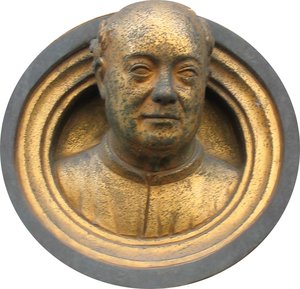
Lorenzo Ghiberti
1378 - 1455 , Itálie
Stručné informace
- Artistic Movement Or Style: Renesanční humanismus
- Artists Or Movements Influenced By This Artist:
- Donatello
- Masolino
- Artists Who Influenced This Artist:
- Bartolo di Michele
- Gherardo Starnina
- Date Of Birth: 1378
- Date Of Death: 1455
- Full Name: Lorenzo Ghiberti
- Nationality: Italista
- Notable Artworks:
- Brány Nejsvětějšího Svatého
- Brány Nordsvěte
- Place Of Birth: Florence, Itálie