
 Náhled v interiéru
 Sdílet
 Sdílet
 Podrobnosti o díle
 Průvodce

 Stáhnout
 Podobné položky
 Rentgenové snímky
 Slideshow
 Q&A
Q&A Statistiky
Violin and Guitar

- 60.0 x 81.0 cm


 Zobrazit více
Giclée / Umělecký tisk
Giclée nebo plátěný tisk muzeální kvality s rychlou výrobou a širokou nabídkou povrchových úprav. ( Koupit ručně malovaný obraz Přepnout na digitální obraz)




P118B Kč10

P118H Kč10

P118W Kč10

P438Z Kč10

P508JH Kč12

P508YH Kč12

P805H Kč10

P805Z Kč10

P919BZ Kč10

P919G Kč10

P919XJ Kč10

P959ZH Kč10

P968JZ Kč12

W106C Kč8

W218G Kč10

W218JH Kč8

W218Y Kč10

W307PJ Kč10

W316G Kč10

W316PJ Kč8

W316Y Kč10

W398PJ Kč8

W4111J Kč10

W500HY Kč15

W500JH Kč15

W692G Kč12

W849H Kč8

W940BG Kč15

W953PJ Kč8




Vyberte si z našich přednastavených velikostí, které odpovídají původním proporcím díla.

Zadejte šířku a výšku, které potřebujete pro váš rám nebo stěnu. Tisk lze pouze oříznout, nikdy však nelze zvětšit obraz nad jeho původní rozměr, proto při výběru jiného formátu dochází ke ztrátě části obrazu. Před samotným tiskem vám zašleme digitální náhled k schválení. Obraz zobrazený na této stránce nenabízí skutečný výřez — ten uvidíte pouze v náhledu.
Celosvětové doručení () do 2 týdnů namísto standardních 4/5 týdnů. (2 listopad)

Zdarma celosvětová expresní doprava

Vysoce kvalitní lněné plátno

Kompletní pojištění přepravy

Záruka vrácení celního poplatku

Záruka věrného barevného souladu

100dení lhůta pro vrácení zboží (pouze při vadách výroby)

100% záruka vrácení peněz

Sleva při více objednávkách
 Skleněná varianta je dostupná pouze u rozměrů menších než 110 cm

Violin and Guitar
Giclée / Umělecký tisk
Rozměry reprodukce
-


Celková cena za vybrané možnosti reprodukcí
Kč 1737
A Fragmented Harmony: Juan Gris’s “Violin and Guitar”
Juan Gris’s “Violin and Guitar,” painted in 1913, isn't merely a still life; it’s a meticulously constructed exploration of perception and the very nature of representation. Emerging from the fertile ground of early Cubism, this work embodies the movement’s revolutionary shift away from traditional perspective and towards a fractured, multi-faceted view of reality. More than just depicting musical instruments, Gris offers us a glimpse into his innovative approach to visual language – a deliberate dismantling and reassembling of form that speaks volumes about the artist's intellectual rigor and artistic vision.
The canvas is dominated by the assertive presence of a guitar and violin, rendered with an almost startling degree of realism despite their fragmented composition. However, these recognizable objects are not presented in a straightforward manner. Instead, they’re broken down into geometric planes – sharp angles, interlocking rectangles, and subtly curved lines—that suggest multiple viewpoints simultaneously. This is the hallmark of Synthetic Cubism, where elements from various perspectives are layered upon one another to create an illusion of depth and volume within a flattened space. The background, hinted at through a suggestion of a window and curtain, further reinforces this sense of spatial ambiguity, inviting the viewer to actively participate in constructing the image.
The Language of Cubism: Deconstruction and Reconstruction
Gris’s approach is deeply rooted in the principles pioneered by Picasso and Braque. He embraced the analytical cubist method – a process of dissecting objects into their constituent parts, analyzing them from multiple angles, and then reconstructing them on the canvas. Yet, “Violin and Guitar” marks a significant departure from the purely analytical style. It’s a prime example of Synthetic Cubism, where pre-existing elements—fragments of color, texture, and form—are collaged together to create a new, unified image. The use of *papier collé*, or pasted paper, is subtly present in the background, adding another layer of complexity and visual interest.
Noticeably absent is the dense, monochromatic palette often associated with early Cubism. Instead, Gris employs a vibrant and carefully considered color scheme – cool blues and grays juxtaposed against warm reds and greens. These colors aren’t merely decorative; they contribute to the overall sense of dynamism and visual tension within the composition. The deliberate use of contrasting hues draws attention to specific areas of the painting, guiding the viewer's eye through the intricate network of lines and shapes.
Symbolism and Emotional Resonance
While “Violin and Guitar” is undeniably a formal masterpiece, it also carries a subtle layer of symbolic meaning. Music itself has long been associated with harmony, emotion, and creativity. The instruments depicted—the violin and guitar—represent these concepts in tangible form. The fragmentation of the objects can be interpreted as reflecting the complexities of human experience – the way we perceive reality through multiple lenses and the challenges of integrating disparate elements into a cohesive whole.
Furthermore, the painting’s overall mood is one of quiet contemplation. The muted colors, the fragmented forms, and the sense of spatial ambiguity create an atmosphere of detachment and introspection. It's not a celebratory or overtly emotional work; rather, it invites the viewer to engage in a process of careful observation and interpretation. The deliberate lack of strong shadows contributes to this feeling of flatness and abstraction, emphasizing the painting’s formal qualities over its representational ones.
A Legacy of Innovation
“Violin and Guitar” stands as a pivotal work in Juan Gris's artistic development and a cornerstone of Cubist innovation. It demonstrates his mastery of geometric form, his innovative use of color, and his ability to create complex visual narratives through seemingly simple compositions. Gris’s unique approach—combining rigorous analytical study with a poetic sensibility—established him as one of the most influential artists of the 20th century, leaving an indelible mark on the development of modern art.
Otázky a odpovědi
Kdo je autorem díla "Violin and Guitar" a z jakého roku pochází?
Juan Gris vytvořil/a „Violin and Guitar“ v roce 1913.
Jaká je převládající barva díla „Violin and Guitar“ od Juan Gris?
Dominantní odstín díla „Violin and Guitar“ od Juan Gris je Green to Violet Spectrum. Tento odstín tvoří základní tón celé palety.
Jaká velikost a orientace se doporučují pro tisk díla „Violin and Guitar“ od Juan Gris?
Velikost Medium, orientace Portrait: toto je doporučená konfigurace tisku pro dílo „Violin and Guitar“ od Juan Gris.
Biografie umělce
A Spanish Visionary of Cubism: The Life and Art of Juan Gris
José Victoriano González-Pérez (23. března 1887, Madrid, Španělsko – 11. května 1927, Boulogne-Billancourt, Francie), známější jako Juan Gris, byl španělský malíř a sochař. Většinu života strávil ve Francii. Jeho dílo je úzce spjato s kubismem, hned poté se stává klíčovým představitelem syntetického kubismu. Jeho tvorba je charakteristická neobvyklou kombinací geometrie a barev, která ztělesňuje moderní vnímání prostoru a formy.Život a rané roky
Narodil se v Madridu, kde mezi lety 1902 a 1904 studoval technické kreslení na Escuela de Artes y Manufacturas (škola umění a řemesel). Během této doby kreslil do místních novin. Od roku 1904 do 1905 se věnoval malířství pod vedením akademického malíře José Maria Carbonera, což mu poskytlo pevné základy v tradičních technikách. V roce 1905 si zvolil pseudonym Juan Gris, který zněl více osobně a odpovídal jeho rostoucímu uměleckému záměru. V téže době se přestěhoval do Paříze, kde začal navštěvovat galerie a setkávat s dalšími umělci. V roce 1906 se Gris rozhodl pro život v Paříži, což bylo klíčové pro jeho pozdější umělecký rozvoj. Zde se stal součástí živé pařírské umělecké scény, kde navštěvoval galerie, setkával s významnými osobnostmi a začal experimentovat s novými směry v malířství. Mezi jeho přátele patřili Henri Matisse, Georges Braque a Fernand Léger – tito muži se stali inspirací pro jeho budoucí tvorbu. V roce 1909 se stal otcem, když Lucie Belin porodila jeho syna George Gonzalez-Gris. Rodina žila v Bateau-Lavoir, známém pařížském uměleckém sídle, až do roku 1922.Parisian Awakening a Embracing Cubism
V roce 1906 se Gris rozhodl pro život v Paříži, což bylo klíčové pro jeho pozdější umělecký rozvoj. Zde se stal součástí živé pařírské umělecké scény, kde navštěvoval galerie, setkával s významnými osobnostmi a začal experimentovat s novými směry v malířství. V roce 1910 se Gris začal vážně věnovat malbě, odklánějíc se od satirického ilustrování a zaměřujíc se na formování vlastního kubistického stylu. Jeho rané práce byly charakterizovány odklonem od tradiční reprezentace, s důrazem na abstrakci jako prostředek k zachycení podstaty tvaru a prostoru. Jeho vliv byl silně ovlivněn Pablem Picassovým dílem, který se stal jeho blízkým přítelem a mentorem.The Geometry of Perception: Style and Key Works
Juan Gris’s artistic output is characterized by an exceptional clarity and intellectual rigor. He didn't simply deconstruct objects; he reconstructed them with deliberate precision, emphasizing geometric forms and a carefully considered palette. This approach led to what became known as his “crystal period,” exemplified in masterpieces like *Still Life Before an Open Window* (1915) and *Place Ravignan* (1915). These works showcase a remarkable interplay of planes and angles, creating a sense of depth and solidity while simultaneously challenging conventional notions of perspective. Gris se nejprve soustředil na analytický kubismus, který byl v té době novým a inovativním směrem v umění. Později se však přikláněl k syntetickému kubismu, ve kterém začal používat papír koláž (papier collé), čímž integroval do svých děl reálné materiály, jako jsou novinové výstřižky a textury. Tato technika přidala další vrstvu složitosti a taktnosti jeho dílům. Mezi klíčová díla z této doby patří *Guitar in front of the sea* (1925), který demonstruje jeho zjednodušené tvary a dodržování kubistických principů, a *Homage à Pablo Picasso* (1912), které signalizovaly jeho rostoucí uznání v avantgardním uměleckém světě. Gris se snažil zachytit realitu ne pouze jako reprezentaci, ale i jako strukturu, kterou lze rozkládat a znovu sestavovat pomocí geometrických tvarů a barev.Influence and Legacy
Juan Gris byl klíčovou postavou kubismu, který ovlivnil mnoho umělců po celém světě. Jeho práce se stala inspirací pro Puristický styl, který propagoval Amédée Ozenfant a Charles Edouard Jeanneret (Le Corbusier). Grisova preference pro jasné a uspořádané formy, harmonické barevné palety a integrace každodenních objektů do jeho umění z něj udělala významnou postavu v 20. století. Jeho dílo se stalo symbolem moderního umění a jeho vliv je patrný dodnes. Jeho práce zůstává důkazem síly kubismu a vizionářského génia Juana Grise – španělského mistra, který přetvořil naše chápání vnímání a reprezentace.
Juan Gris
1887 - 1927 , Španělsko
Rychlé informace o umělci
- Artistic Movement Or Style: Kubismus, Syntetický kubismus
- Artists Or Movements Influenced By This Artist:
- Puristé
- Ozenfant
- Le Corbusier
- Artists Who Influenced This Artist:
- Picasso
- Matisse
- Braque
- Date Of Birth: 23. března 1887
- Date Of Death: 11. května 1927
- Full Name: José Victoriano González-Pérez
- Nationality: Španělský
- Notable Artworks:
- Snídaně
- Hommage à Pablo Picasso
- Miller
- Place Of Birth: Madrid, Španělsko
Související články
Redefining Nature: A Collector's Guide to the Geometric Beauty of Cubist Landscapes
Explore the revolutionary world of Cubist landscapes. Discover how masters like Picasso and Braque redefined nature through geometric beauty, and learn expert tips for curating these transformative masterpieces in your modern home collection.

Geometrická abstrakce: 10 mistrovských děl, které změnily umění | OriginalUniqueArt.cz
Prozkoumejte 10 ikonických děl geometrické abstrakce od Mondriana, Maleviče a Kandinského. Objevte příběhy umělců, techniky a historii tohoto revolučního hnutí. Najděte inspiraci pro moderní dekorace a luxusní reprodukce obrazů na OriginalUniqueArt.com.
Cubist Expression: A Professional Guide to Integrating Geometric Abstraction into Modern Hospitality Design
Elevate hospitality interiors with Cubist art. Our expert guide explores integrating geometric abstraction into hotel design through high-quality, large-scale oil reproductions and custom multi-panel commissions tailored for professional designers and procurement managers.
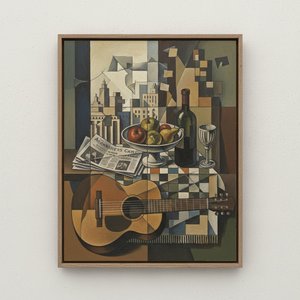
Juan Gris: Cubist Deconstruction & Synthesis – A Comprehensive Exploration
Explore the revolutionary art of Juan Gris – a master of Cubism. Discover his unique approach to deconstruction, vibrant Synthetic Cubist works, and lasting influence on modern art. Expert analysis for collectors.
Deconstructing Identity: A Comprehensive Exploration of Cubist Portraiture
Explore the revolutionary world of Cubist portraiture with our comprehensive guide. Discover Picasso, Braque, Gris & the movement's impact on modern art. Expert analysis for collectors and enthusiasts.


