Text size

() ·

A painting made for you, by hand

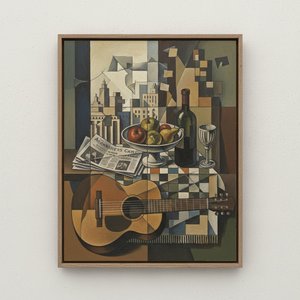
Violin and Guitar

Ručně malovaná olejová reprodukce

Rukou malované olejné plátno v libovolném rozměru i s rámem, vyrobené našimi umělci na zakázku. ( Přepnout na tisk Přepnout na digitální obraz)

Popis sbírného předmětu

Explore Juan Gris’s ‘Violin and Guitar’ (1913), a groundbreaking Cubist still life. Geometric forms, cool tones & layered glazes define this iconic piece – a must-see for art collectors.

Biografie umělce

Juan Gris (1887-1927) – španělský kubista známý pro geometrické kompozice, inovativní použití koláže a vliv na moderní umění. Objevte jeho díla!

from ·

Chapter 1

How large should it be?

Slide to change the size; the picture on the left shows the frame at its real width. The proportions of the original are kept.

Standardní velikost
na zakázku
CM
INCH

Vyberte si z našich přednastavených velikostí, které odpovídají původním proporcím díla.

šířka
výška

Zadejte šířku a výšku, které potřebujete pro váš rám nebo stěnu. Protože se jedná o ruční malbu, při výběru jiného formátu může umělec kolem obrazu domalovat o něco více, nebo jej mírně oříznout — rozhodnete si vy. Před zahájením malby vám zašleme digitální náhled ke schválení. Obraz zobrazený na této stránce neodpovídá skutečnému výsledku — pouze digitální náhled jej zobrazuje.

Chapter 2

How should it arrive?

Choose the edges of the stretched canvas

Choose your frame

Corner sample of the WhiteWrap canvas edge finish, stretched on masivní dřevo bars
White Kč1
Corner sample of the BlurSideWrap canvas edge finish, stretched on masivní dřevo bars
Blurside Kč1
Corner sample of the ExtendedWrap canvas edge finish, stretched on masivní dřevo bars
Extended Kč1
Corner sample of the P118B picture frame: tvarovaný polystyren, 5 cm wide and 3 cm thick
P118B Kč10
Corner sample of the P118H picture frame: tvarovaný polystyren, 5 cm wide and 3 cm thick
P118H Kč10
Corner sample of the P118W picture frame: tvarovaný polystyren, 5 cm wide and 3 cm thick
P118W Kč10
Corner sample of the P438Z picture frame: tvarovaný polystyren, 5.5 cm wide and 3.5 cm thick
P438Z Kč10
Corner sample of the P508JH picture frame: tvarovaný polystyren, 7 cm wide and 3.5 cm thick
P508JH Kč12
Corner sample of the P508YH picture frame: tvarovaný polystyren, 7 cm wide and 3.5 cm thick
P508YH Kč12
Corner sample of the P805H picture frame: tvarovaný polystyren, 5 cm wide and 3.5 cm thick
P805H Kč10
Corner sample of the P805Z picture frame: tvarovaný polystyren, 5 cm wide and 3.5 cm thick
P805Z Kč10
Corner sample of the P919BZ picture frame: tvarovaný polystyren, 7 cm wide and 3.5 cm thick
P919BZ Kč10
Corner sample of the P919G picture frame: tvarovaný polystyren, 7 cm wide and 3.5 cm thick
P919G Kč10
Corner sample of the P919XJ picture frame: tvarovaný polystyren, 7 cm wide and 3.5 cm thick
P919XJ Kč10
Corner sample of the P959ZH picture frame: tvarovaný polystyren, 5 cm wide and 3 cm thick
P959ZH Kč10
Corner sample of the P968JZ picture frame: tvarovaný polystyren, 6 cm wide and 4 cm thick
P968JZ Kč12
Corner sample of the W106C picture frame: masivní dřevo, 5 cm wide and 3 cm thick
W106C Kč8
Corner sample of the W218G picture frame: masivní dřevo, 5 cm wide and 3 cm thick
W218G Kč10
Corner sample of the W218JH picture frame: masivní dřevo, 5 cm wide and 3 cm thick
W218JH Kč8
Corner sample of the W218Y picture frame: masivní dřevo, 5 cm wide and 3 cm thick
W218Y Kč10
Corner sample of the W307PJ picture frame: masivní dřevo, 6 cm wide and 3 cm thick
W307PJ Kč10
Corner sample of the W316G picture frame: masivní dřevo, 6 cm wide and 3 cm thick
W316G Kč10
Corner sample of the W316PJ picture frame: masivní dřevo, 6 cm wide and 3 cm thick
W316PJ Kč8
Corner sample of the W316Y picture frame: masivní dřevo, 6 cm wide and 3 cm thick
W316Y Kč10
Corner sample of the W398PJ picture frame: masivní dřevo, 5 cm wide and 3 cm thick
W398PJ Kč8
Corner sample of the W4111J picture frame: masivní dřevo, 6.5 cm wide and 3.5 cm thick
W4111J Kč10
Corner sample of the W500HY picture frame: masivní dřevo, 7 cm wide and 5 cm thick
W500HY Kč15
Corner sample of the W500JH picture frame: masivní dřevo, 7 cm wide and 5 cm thick
W500JH Kč15
Corner sample of the W692G picture frame: masivní dřevo, 8 cm wide and 4 cm thick
W692G Kč12
Corner sample of the W849H picture frame: masivní dřevo, 5 cm wide and 3 cm thick
W849H Kč8
Corner sample of the W940BG picture frame: masivní dřevo, 7.5 cm wide and 4.5 cm thick
W940BG Kč15
Corner sample of the W953PJ picture frame: masivní dřevo, 6 cm wide and 3.5 cm thick
W953PJ Kč8
Corner sample of the H24-GOLD picture frame: řezané dřevo s gessu, 10 cm wide and 6 cm thick
H24-GOLD Kč30
Corner sample of the H24-SILVER picture frame: řezané dřevo s gessu, 10 cm wide and 6 cm thick
H24-SILVER Kč30
Corner sample of the H36-GOLD picture frame: řezané dřevo s gessu, 15 cm wide and 6.5 cm thick
H36-GOLD Kč45
Corner sample of the H36-SILVER picture frame: řezané dřevo s gessu, 15 cm wide and 6.5 cm thick
H36-SILVER Kč45

Moulding: . Overall size with the frame: .

Chapter 3

Who paints it, and should anything change?

Examples of what can be changed: Replace face with customer photo; Add pet (e.g., replace cat with dog); Include hidden message in background; Change background landscape or elements.
After order, OriginalUniqueArt.com team will email client for instructions and provide a mockup preview

Celosvětová doprava () za 3–4 týdny namísto standardních 5 týdnů. (2 listopad). Bez kompromisů v kvalitě.

Chapter 4

The finishing touches

A nameplate, as in a museum?

Detaily ryté bronzové plakety

This elegant plaque features the artist's name and the title of the artwork, finely engraved for a timeless presentation.

It is made from bronze with a refined, elegant finish. The text is precisely laser-engraved for a sharp and permanent result. Measuring 9x2 cm, the plaque is compact yet easy to read. It's built to be durable and scratch-resistant, offering a professional, museum-quality look. Mounting is simple thanks to the included adhesive backing.

Detaily průhledné akrylové desky

The plaque includes essential engraved details such as the artist's name, the title of the artwork, the date it was created, the type of media used-like oil on canvas or watercolor-a brief description of the piece, and a QR code that links to the complete artwork information.

It is crafted from clear acrylic, offering a sleek, modern appearance. The text is UV-engraved in black to ensure strong visual contrast. With a size of 10x15 cm, it ensures optimal readability. It comes equipped with two metal hooks for secure wall mounting. The plaque is designed to be weather-resistant, making it suitable for various environments, and it includes interactive features that work seamlessly with smartphone scanning.

Detaily černé akrylové destičky

This elegant plaque includes engraved information such as the artist's name, the title of the artwork, the date it was created, the type of media used (like oil on canvas or watercolor), a short description of the artwork, and a QR code for quick access to more information.

The plaque itself is made from refined black acrylic with a premium finish. The text is laser-engraved in white for high contrast and readability. Its size is 10x15 cm, designed to be easy to read. It comes with two metal hooks for professional mounting. The design is sleek and fits any interior style. It is also weather-resistant and durable, with built-in digital integration for mobile compatibility.

A protective varnish?

When do you need it?

Chapter 5

Your painting, as you ordered it

Violin and Guitar

Technika reprodukce

Rozměry reprodukce

-

Vybraní mistři umění

Vyšší míra detailu, jemnosti a delší doba výroby

-

Možnosti rámování reprodukcí

-

-

U děl nebo reprodukcí, u nichž je jakákoliv strana větší než 105 cm (přibližně 41 palců), bude rám dodán jako sestava v rozloženém stavu. Tato metoda zajišťuje bezpečné doručení a chrání dílo před poškozením během přepravy.

Vyžaduje se odborná montáž – nejedná se o produkt pro svépomocnou realizaci (DIY).
Sestava musí být složena a plátno napnuto zkušeným profesionálním rámovačem s použitím dřevěného lepidla (není součástí balení), kleští na napínání plátna a svorek pro udržení pravých úhlů křížů během schnutí lepidla. Nesprávná montáž nebo nerovnoměrné napnutí plátna může způsobit trvalé poškození uměleckého díla, které není kryto naší zárukou.

  • Jsou zahrnuty všechny lišty z masivního dřeva, přesně na míru nařezané.

  • Sestavuje se pomocí součástí balení (šroubů), plus dřevěného lepidla na rohové spoje, které není součástí balení a musí jej zajistit váš rámovač.

  • Vyžaduje se profesionální nářadí, které není součástí sady: kleště na napínání plátna a svorky pro udržení kolmosti příček během schnutí lepidla.

Důležité:
Spoje v rozích vyžadují lepidlo na dřevo, tyčinky musí být přichyceny pomocí svorek, dokud lepidlo zcela neuschne, a pro napnutí plátna na sestavený rám je zapotřebí kleští na natahování plátna. Žádný z těchto náčiní není součástí sady. Před objednáním této velikosti prosím zajistěte zkušeného profesionálního rámovače.

Popisek díla

-

-

Ochranný lak

Lesklý lak (zvýrazňuje barvy, chrání před světlem a vlhkostí)

-

Přizpůsobit své umělecké dílo

Příklady možných úprav: nahrazení obličeje fotografií zákazníka; přidání domácího mazlíčka (např. výměna kočky za psa); vložení skrytého vzkazu do pozadí; změna krajiny nebo prvků v pozadí.

-

Prioritní doručení

Celosvětové doručení () za 3–4 týdny namísto standardních 5 týdnů. (2 listopad). Bez kompromisů v kvalitě.

-

Expresní doručení

Celosvětová doprava () do 5 týdnů. (9 listopad).

V ceně

Celková cena za vybrané možnosti reprodukcí

Kč 6515

Celková cena Kč 6515

Skleněná varianta je dostupná pouze u rozměrů menších než 110 cm

Included with every order

  • Zdarma celosvětová expresní doprava
  • Vysoce kvalitní lněné plátno
  • Kompletní pojištění přepravy
  • Záruka vrácení celního poplatku
  • Záruka věrného barevného souladu
  • 100dení lhůta pro vrácení zboží (pouze při vadách výroby)
  • 100% záruka vrácení peněz
  • Sleva při více objednávkách

A Fragmented Harmony: Juan Gris’s “Violin and Guitar”

Juan Gris’s “Violin and Guitar,” painted in 1913, isn't merely a still life; it’s a meticulously constructed exploration of perception and the very nature of representation. Emerging from the fertile ground of early Cubism, this work embodies the movement’s revolutionary shift away from traditional perspective and towards a fractured, multi-faceted view of reality. More than just depicting musical instruments, Gris offers us a glimpse into his innovative approach to visual language – a deliberate dismantling and reassembling of form that speaks volumes about the artist's intellectual rigor and artistic vision.

The canvas is dominated by the assertive presence of a guitar and violin, rendered with an almost startling degree of realism despite their fragmented composition. However, these recognizable objects are not presented in a straightforward manner. Instead, they’re broken down into geometric planes – sharp angles, interlocking rectangles, and subtly curved lines—that suggest multiple viewpoints simultaneously. This is the hallmark of Synthetic Cubism, where elements from various perspectives are layered upon one another to create an illusion of depth and volume within a flattened space. The background, hinted at through a suggestion of a window and curtain, further reinforces this sense of spatial ambiguity, inviting the viewer to actively participate in constructing the image.

The Language of Cubism: Deconstruction and Reconstruction

Gris’s approach is deeply rooted in the principles pioneered by Picasso and Braque. He embraced the analytical cubist method – a process of dissecting objects into their constituent parts, analyzing them from multiple angles, and then reconstructing them on the canvas. Yet, “Violin and Guitar” marks a significant departure from the purely analytical style. It’s a prime example of Synthetic Cubism, where pre-existing elements—fragments of color, texture, and form—are collaged together to create a new, unified image. The use of *papier collé*, or pasted paper, is subtly present in the background, adding another layer of complexity and visual interest.

Noticeably absent is the dense, monochromatic palette often associated with early Cubism. Instead, Gris employs a vibrant and carefully considered color scheme – cool blues and grays juxtaposed against warm reds and greens. These colors aren’t merely decorative; they contribute to the overall sense of dynamism and visual tension within the composition. The deliberate use of contrasting hues draws attention to specific areas of the painting, guiding the viewer's eye through the intricate network of lines and shapes.

Symbolism and Emotional Resonance

While “Violin and Guitar” is undeniably a formal masterpiece, it also carries a subtle layer of symbolic meaning. Music itself has long been associated with harmony, emotion, and creativity. The instruments depicted—the violin and guitar—represent these concepts in tangible form. The fragmentation of the objects can be interpreted as reflecting the complexities of human experience – the way we perceive reality through multiple lenses and the challenges of integrating disparate elements into a cohesive whole.

Furthermore, the painting’s overall mood is one of quiet contemplation. The muted colors, the fragmented forms, and the sense of spatial ambiguity create an atmosphere of detachment and introspection. It's not a celebratory or overtly emotional work; rather, it invites the viewer to engage in a process of careful observation and interpretation. The deliberate lack of strong shadows contributes to this feeling of flatness and abstraction, emphasizing the painting’s formal qualities over its representational ones.

A Legacy of Innovation

“Violin and Guitar” stands as a pivotal work in Juan Gris's artistic development and a cornerstone of Cubist innovation. It demonstrates his mastery of geometric form, his innovative use of color, and his ability to create complex visual narratives through seemingly simple compositions. Gris’s unique approach—combining rigorous analytical study with a poetic sensibility—established him as one of the most influential artists of the 20th century, leaving an indelible mark on the development of modern art.

Otázky a odpovědi

Kdo je autorem díla "Violin and Guitar" a z jakého roku pochází?

Juan Gris vytvořil/a „Violin and Guitar“ v roce 1913.

Jaká je převládající barva díla „Violin and Guitar“ od Juan Gris?

Dominantní odstín díla „Violin and Guitar“ od Juan Gris je Green to Violet Spectrum. Tento odstín tvoří základní tón celé palety.

Jaká velikost a orientace se doporučují pro tisk díla „Violin and Guitar“ od Juan Gris?

Velikost Medium, orientace Portrait: toto je doporučená konfigurace tisku pro dílo „Violin and Guitar“ od Juan Gris.

More about this painting

Náhled v interiéru Náhled v AR Přepnout na tisk Přepnout na digitální obraz Sdílet
Podrobnosti o díle Průvodce Přidat do oblíbených Stáhnout Podobné položky Rentgenové snímky Slideshow Q&A Statistiky

In numbers

  • 1913the year it was painted
  • 29frames to choose from
  • standard sizes, in its own proportions
  • 5weeks to paint and deliver it
Juan Gris

Juan Gris

1887 - 1927, Španělsko

Quick facts about Juan Gris

  • Artistic Movement Or Style: Kubismus, Syntetický kubismus
  • Artists Or Movements Influenced By This Artist:
    • Puristé
    • Ozenfant
    • Le Corbusier
  • Artists Who Influenced This Artist:
    • Picasso
    • Matisse
    • Braque
  • Date Of Birth: 23. března 1887
  • Date Of Death: 11. května 1927
  • Full Name: José Victoriano González-Pérez
  • Nationality: Španělský
  • Notable Artworks:
    • Snídaně
    • Hommage à Pablo Picasso
    • Miller
  • Place Of Birth: Madrid, Španělsko

Biografie umělce

A Spanish Visionary of Cubism: The Life and Art of Juan Gris

José Victoriano González-Pérez (23. března 1887, Madrid, Španělsko – 11. května 1927, Boulogne-Billancourt, Francie), známější jako Juan Gris, byl španělský malíř a sochař. Většinu života strávil ve Francii. Jeho dílo je úzce spjato s kubismem, hned poté se stává klíčovým představitelem syntetického kubismu. Jeho tvorba je charakteristická neobvyklou kombinací geometrie a barev, která ztělesňuje moderní vnímání prostoru a formy.

Život a rané roky

Narodil se v Madridu, kde mezi lety 1902 a 1904 studoval technické kreslení na Escuela de Artes y Manufacturas (škola umění a řemesel). Během této doby kreslil do místních novin. Od roku 1904 do 1905 se věnoval malířství pod vedením akademického malíře José Maria Carbonera, což mu poskytlo pevné základy v tradičních technikách. V roce 1905 si zvolil pseudonym Juan Gris, který zněl více osobně a odpovídal jeho rostoucímu uměleckému záměru. V téže době se přestěhoval do Paříze, kde začal navštěvovat galerie a setkávat s dalšími umělci. V roce 1906 se Gris rozhodl pro život v Paříži, což bylo klíčové pro jeho pozdější umělecký rozvoj. Zde se stal součástí živé pařírské umělecké scény, kde navštěvoval galerie, setkával s významnými osobnostmi a začal experimentovat s novými směry v malířství. Mezi jeho přátele patřili Henri Matisse, Georges Braque a Fernand Léger – tito muži se stali inspirací pro jeho budoucí tvorbu. V roce 1909 se stal otcem, když Lucie Belin porodila jeho syna George Gonzalez-Gris. Rodina žila v Bateau-Lavoir, známém pařížském uměleckém sídle, až do roku 1922.

Parisian Awakening a Embracing Cubism

V roce 1906 se Gris rozhodl pro život v Paříži, což bylo klíčové pro jeho pozdější umělecký rozvoj. Zde se stal součástí živé pařírské umělecké scény, kde navštěvoval galerie, setkával s významnými osobnostmi a začal experimentovat s novými směry v malířství. V roce 1910 se Gris začal vážně věnovat malbě, odklánějíc se od satirického ilustrování a zaměřujíc se na formování vlastního kubistického stylu. Jeho rané práce byly charakterizovány odklonem od tradiční reprezentace, s důrazem na abstrakci jako prostředek k zachycení podstaty tvaru a prostoru. Jeho vliv byl silně ovlivněn Pablem Picassovým dílem, který se stal jeho blízkým přítelem a mentorem.

The Geometry of Perception: Style and Key Works

Juan Gris’s artistic output is characterized by an exceptional clarity and intellectual rigor. He didn't simply deconstruct objects; he reconstructed them with deliberate precision, emphasizing geometric forms and a carefully considered palette. This approach led to what became known as his “crystal period,” exemplified in masterpieces like *Still Life Before an Open Window* (1915) and *Place Ravignan* (1915). These works showcase a remarkable interplay of planes and angles, creating a sense of depth and solidity while simultaneously challenging conventional notions of perspective. Gris se nejprve soustředil na analytický kubismus, který byl v té době novým a inovativním směrem v umění. Později se však přikláněl k syntetickému kubismu, ve kterém začal používat papír koláž (papier collé), čímž integroval do svých děl reálné materiály, jako jsou novinové výstřižky a textury. Tato technika přidala další vrstvu složitosti a taktnosti jeho dílům. Mezi klíčová díla z této doby patří *Guitar in front of the sea* (1925), který demonstruje jeho zjednodušené tvary a dodržování kubistických principů, a *Homage à Pablo Picasso* (1912), které signalizovaly jeho rostoucí uznání v avantgardním uměleckém světě. Gris se snažil zachytit realitu ne pouze jako reprezentaci, ale i jako strukturu, kterou lze rozkládat a znovu sestavovat pomocí geometrických tvarů a barev.

Influence and Legacy

Juan Gris byl klíčovou postavou kubismu, který ovlivnil mnoho umělců po celém světě. Jeho práce se stala inspirací pro Puristický styl, který propagoval Amédée Ozenfant a Charles Edouard Jeanneret (Le Corbusier). Grisova preference pro jasné a uspořádané formy, harmonické barevné palety a integrace každodenních objektů do jeho umění z něj udělala významnou postavu v 20. století. Jeho dílo se stalo symbolem moderního umění a jeho vliv je patrný dodnes. Jeho práce zůstává důkazem síly kubismu a vizionářského génia Juana Grise – španělského mistra, který přetvořil naše chápání vnímání a reprezentace.

Rychlé informace

  • Dimensions: 60 x 81 cm
  • Location: Museo Reina Sofia
  • Artist: Juan Gris
  • Year: 1913
  • Medium: Oil on canvas
  • Notable elements: Geometric shapes,

Artový kvíz

U každé otázky je pouze jedna správná odpověď.

Otázka 1:
What artistic movement is ‘Violin and Guitar’ primarily associated with?
Otázka 2:
In ‘Violin and Guitar’, what is a key characteristic of the depiction of the objects?
Otázka 3:
Which of the following best describes Juan Gris’s approach to Cubism as seen in this work?
Otázka 4:
The use of ‘papier collé’ (collage) in ‘Violin and Guitar’ primarily serves to:
Otázka 5:
What does the fragmented spatial representation in ‘Violin and Guitar’ suggest about Gris's artistic approach?