Menu
Text size

() ·

A painting made for you, by hand

Ručně malovaná olejová reprodukce

Rukou malované olejné plátno v libovolném rozměru i s rámem, vyrobené našimi umělci na zakázku. ( Přepnout na tisk Přepnout na digitální obraz)

Popis sbírného předmětu

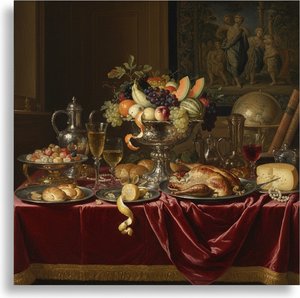
Admire Joris van Son's 'Still-Life,' a meticulously rendered 1650 masterpiece showcasing vibrant fruits, elegant composition & rich detail from The Hermitage Museum.

Biografie umělce

Discover joris van son, a Dutch Golden Age painter from Antwerp (1542-1601). Explore his portraits & historical scenes, influenced by Delft's school & teacher to Rembrandt.

from ·

Chapter 1

How large should it be?

Slide to change the size; the wall on the left shows it at its real scale. The proportions of the original are kept.

Standardní velikost
na zakázku
CM
INCH

Vyberte si z našich přednastavených velikostí, které odpovídají původním proporcím díla.

šířka
výška

Zadejte šířku a výšku, které potřebujete pro váš rám nebo stěnu. Protože se jedná o ruční malbu, při výběru jiného formátu může umělec kolem obrazu domalovat o něco více, nebo jej mírně oříznout — rozhodnete si vy. Před zahájením malby vám zašleme digitální náhled ke schválení. Obraz zobrazený na této stránce neodpovídá skutečnému výsledku — pouze digitální náhled jej zobrazuje.

Chapter 2

How should it arrive?

Choose the edges of the stretched canvas

Choose your frame

Corner sample of the WhiteWrap canvas edge finish, stretched on masivní dřevo bars
White Kč1
Corner sample of the BlurSideWrap canvas edge finish, stretched on masivní dřevo bars
Blurside Kč1
Corner sample of the ExtendedWrap canvas edge finish, stretched on masivní dřevo bars
Extended Kč1
Corner sample of the P118B picture frame: tvarovaný polystyren, 5 cm wide and 3 cm thick
P118B Kč10
Corner sample of the P118H picture frame: tvarovaný polystyren, 5 cm wide and 3 cm thick
P118H Kč10
Corner sample of the P118W picture frame: tvarovaný polystyren, 5 cm wide and 3 cm thick
P118W Kč10
Corner sample of the P438Z picture frame: tvarovaný polystyren, 5.5 cm wide and 3.5 cm thick
P438Z Kč10
Corner sample of the P508JH picture frame: tvarovaný polystyren, 7 cm wide and 3.5 cm thick
P508JH Kč12
Corner sample of the P508YH picture frame: tvarovaný polystyren, 7 cm wide and 3.5 cm thick
P508YH Kč12
Corner sample of the P805H picture frame: tvarovaný polystyren, 5 cm wide and 3.5 cm thick
P805H Kč10
Corner sample of the P805Z picture frame: tvarovaný polystyren, 5 cm wide and 3.5 cm thick
P805Z Kč10
Corner sample of the P919BZ picture frame: tvarovaný polystyren, 7 cm wide and 3.5 cm thick
P919BZ Kč10
Corner sample of the P919G picture frame: tvarovaný polystyren, 7 cm wide and 3.5 cm thick
P919G Kč10
Corner sample of the P919XJ picture frame: tvarovaný polystyren, 7 cm wide and 3.5 cm thick
P919XJ Kč10
Corner sample of the P959ZH picture frame: tvarovaný polystyren, 5 cm wide and 3 cm thick
P959ZH Kč10
Corner sample of the P968JZ picture frame: tvarovaný polystyren, 6 cm wide and 4 cm thick
P968JZ Kč12
Corner sample of the W106C picture frame: masivní dřevo, 5 cm wide and 3 cm thick
W106C Kč8
Corner sample of the W218G picture frame: masivní dřevo, 5 cm wide and 3 cm thick
W218G Kč10
Corner sample of the W218JH picture frame: masivní dřevo, 5 cm wide and 3 cm thick
W218JH Kč8
Corner sample of the W218Y picture frame: masivní dřevo, 5 cm wide and 3 cm thick
W218Y Kč10
Corner sample of the W307PJ picture frame: masivní dřevo, 6 cm wide and 3 cm thick
W307PJ Kč10
Corner sample of the W316G picture frame: masivní dřevo, 6 cm wide and 3 cm thick
W316G Kč10
Corner sample of the W316PJ picture frame: masivní dřevo, 6 cm wide and 3 cm thick
W316PJ Kč8
Corner sample of the W316Y picture frame: masivní dřevo, 6 cm wide and 3 cm thick
W316Y Kč10
Corner sample of the W398PJ picture frame: masivní dřevo, 5 cm wide and 3 cm thick
W398PJ Kč8
Corner sample of the W4111J picture frame: masivní dřevo, 6.5 cm wide and 3.5 cm thick
W4111J Kč10
Corner sample of the W500HY picture frame: masivní dřevo, 7 cm wide and 5 cm thick
W500HY Kč15
Corner sample of the W500JH picture frame: masivní dřevo, 7 cm wide and 5 cm thick
W500JH Kč15
Corner sample of the W692G picture frame: masivní dřevo, 8 cm wide and 4 cm thick
W692G Kč12
Corner sample of the W849H picture frame: masivní dřevo, 5 cm wide and 3 cm thick
W849H Kč8
Corner sample of the W940BG picture frame: masivní dřevo, 7.5 cm wide and 4.5 cm thick
W940BG Kč15
Corner sample of the W953PJ picture frame: masivní dřevo, 6 cm wide and 3.5 cm thick
W953PJ Kč8
Corner sample of the H24-GOLD picture frame: řezané dřevo s gessu, 10 cm wide and 6 cm thick
H24-GOLD Kč30
Corner sample of the H24-SILVER picture frame: řezané dřevo s gessu, 10 cm wide and 6 cm thick
H24-SILVER Kč30
Corner sample of the H36-GOLD picture frame: řezané dřevo s gessu, 15 cm wide and 6.5 cm thick
H36-GOLD Kč45
Corner sample of the H36-SILVER picture frame: řezané dřevo s gessu, 15 cm wide and 6.5 cm thick
H36-SILVER Kč45

Moulding: . Overall size with the frame: .

Chapter 3

Who paints it, and should anything change?

Examples of what can be changed: Replace face with customer photo; Add pet (e.g., replace cat with dog); Include hidden message in background; Change background landscape or elements.
After order, OriginalUniqueArt.com team will email client for instructions and provide a mockup preview

Celosvětová doprava () za 3–4 týdny namísto standardních 5 týdnů. (29 říjen). Bez kompromisů v kvalitě.

Chapter 4

The finishing touches

A nameplate, as in a museum?

Detaily ryté bronzové plakety

This elegant plaque features the artist's name and the title of the artwork, finely engraved for a timeless presentation.

It is made from bronze with a refined, elegant finish. The text is precisely laser-engraved for a sharp and permanent result. Measuring 9x2 cm, the plaque is compact yet easy to read. It's built to be durable and scratch-resistant, offering a professional, museum-quality look. Mounting is simple thanks to the included adhesive backing.

Detaily průhledné akrylové desky

The plaque includes essential engraved details such as the artist's name, the title of the artwork, the date it was created, the type of media used-like oil on canvas or watercolor-a brief description of the piece, and a QR code that links to the complete artwork information.

It is crafted from clear acrylic, offering a sleek, modern appearance. The text is UV-engraved in black to ensure strong visual contrast. With a size of 10x15 cm, it ensures optimal readability. It comes equipped with two metal hooks for secure wall mounting. The plaque is designed to be weather-resistant, making it suitable for various environments, and it includes interactive features that work seamlessly with smartphone scanning.

Detaily černé akrylové destičky

This elegant plaque includes engraved information such as the artist's name, the title of the artwork, the date it was created, the type of media used (like oil on canvas or watercolor), a short description of the artwork, and a QR code for quick access to more information.

The plaque itself is made from refined black acrylic with a premium finish. The text is laser-engraved in white for high contrast and readability. Its size is 10x15 cm, designed to be easy to read. It comes with two metal hooks for professional mounting. The design is sleek and fits any interior style. It is also weather-resistant and durable, with built-in digital integration for mobile compatibility.

A protective varnish?

When do you need it?

Chapter 5

Your painting, as you ordered it

Still-Life

Technika reprodukce

Rozměry reprodukce

-

Vybraní mistři umění

Vyšší míra detailu, jemnosti a delší doba výroby

-

Možnosti rámování reprodukcí

-

-

U děl nebo reprodukcí, u nichž je jakákoliv strana větší než 105 cm (přibližně 41 palců), bude rám dodán jako sestava v rozloženém stavu. Tato metoda zajišťuje bezpečné doručení a chrání dílo před poškozením během přepravy.

Vyžaduje se odborná montáž – nejedná se o produkt pro svépomocnou realizaci (DIY).
Sestava musí být složena a plátno napnuto zkušeným profesionálním rámovačem s použitím dřevěného lepidla (není součástí balení), kleští na napínání plátna a svorek pro udržení pravých úhlů křížů během schnutí lepidla. Nesprávná montáž nebo nerovnoměrné napnutí plátna může způsobit trvalé poškození uměleckého díla, které není kryto naší zárukou.

  • Jsou zahrnuty všechny lišty z masivního dřeva, přesně na míru nařezané.

  • Sestavuje se pomocí součástí balení (šroubů), plus dřevěného lepidla na rohové spoje, které není součástí balení a musí jej zajistit váš rámovač.

  • Vyžaduje se profesionální nářadí, které není součástí sady: kleště na napínání plátna a svorky pro udržení kolmosti příček během schnutí lepidla.

Důležité:
Spoje v rozích vyžadují lepidlo na dřevo, tyčinky musí být přichyceny pomocí svorek, dokud lepidlo zcela neuschne, a pro napnutí plátna na sestavený rám je zapotřebí kleští na natahování plátna. Žádný z těchto náčiní není součástí sady. Před objednáním této velikosti prosím zajistěte zkušeného profesionálního rámovače.

Popisek díla

-

-

Ochranný lak

Lesklý lak (zvýrazňuje barvy, chrání před světlem a vlhkostí)

-

Přizpůsobit své umělecké dílo

Příklady možných úprav: nahrazení obličeje fotografií zákazníka; přidání domácího mazlíčka (např. výměna kočky za psa); vložení skrytého vzkazu do pozadí; změna krajiny nebo prvků v pozadí.

-

Prioritní doručení

Celosvětové doručení () za 3–4 týdny namísto standardních 5 týdnů. (29 říjen). Bez kompromisů v kvalitě.

-

Expresní doručení

Celosvětová doprava () do 5 týdnů. (5 listopad).

V ceně

Celková cena za vybrané možnosti reprodukcí

Kč 6460

Celková cena Kč 6460

Skleněná varianta je dostupná pouze u rozměrů menších než 110 cm

Included with every order

  • Zdarma celosvětová expresní doprava
  • Vysoce kvalitní lněné plátno
  • Kompletní pojištění přepravy
  • Záruka vrácení celního poplatku
  • Záruka věrného barevného souladu
  • 100dení lhůta pro vrácení zboží (pouze při vadách výroby)
  • 100% záruka vrácení peněz
  • Sleva při více objednávkách

The Still Life’s Silent Symphony: Joris Van Son's 1650 Masterpiece

Joris Van Son’s “Still-Life,” painted in 1650, isn’t merely a depiction of fruit and objects; it’s a carefully orchestrated tableau brimming with the quiet elegance and meticulous observation characteristic of Flemish Baroque art. Housed within the venerable halls of The Hermitage Museum in St. Petersburg, this oil on canvas offers a captivating glimpse into a world where beauty was painstakingly rendered, and symbolism whispered beneath the surface of everyday abundance. Measuring 118 x 140 cm, the painting invites prolonged contemplation, revealing layers of artistic skill and historical context with each studied glance.

  • A Table Laden with Treasures: The composition centers around a richly draped table, its surface a stage for an array of carefully chosen items. A prominent orange, bursting with vibrant color, immediately draws the eye – a symbol of wealth, vitality, and even mortality in 17th-century still life traditions. Adjacent to it lie two apples, one ruby red and the other a crisp green, representing temptation, knowledge, and the duality of nature’s gifts.
  • The Lobster's Bold Presence: Dominating the center is a magnificent lobster, its claws dramatically open as if caught mid-movement. This creature, often associated with luxury and indulgence, speaks to the opulence of the era and hints at the fleeting pleasures of life. The inclusion of such an exotic item underscores Van Son’s access to – or awareness of – goods from distant lands.
  • A Symphony of Textures and Light: Notice the masterful rendering of textures—the velvety smoothness of the peaches, the glistening sheen of the grapes, the rough surface of the pewter plate. Van Son expertly manipulated light and shadow, creating a sense of depth and volume that brings the objects to life. The subtle gradations of color contribute to this effect, enhancing the realism and tactile quality of the scene.

The Hand of the Master: Technique and Style

Van Son’s style is deeply rooted in the traditions of Flemish painting, yet he possesses a distinctive voice. He clearly learned from Jan Davidsz de Heem, evident in his penchant for lavish arrangements and vibrant color palettes. However, Van Son departs from his mentor with a greater emphasis on atmospheric perspective and a more restrained use of impasto—the visible application of paint—allowing the details to shine through with remarkable clarity. The painting’s surface is remarkably smooth, achieved through meticulous layering and blending techniques. The artist's attention to detail is breathtaking; one can almost feel the weight of the fruit and the coolness of the pewter.

Technically, Van Son employed a thin, white chalk ground before applying his paint, creating a luminous base that enhanced the colors’ brilliance. He utilized translucent glazes—thin layers of diluted color—to build up depth and create subtle variations in tone, particularly noticeable in the shadows and highlights. The use of pentimenti – small changes made during the painting process – further reveals the artist's creative journey and his willingness to refine his work.

A Window into 17th-Century Symbolism

Beyond its aesthetic beauty, “Still-Life” is rich in symbolic meaning. The abundance of fruit represents prosperity and fertility, but also serves as a poignant reminder of the transience of earthly pleasures – a concept central to Vanitas paintings, which often included skulls or decaying objects alongside beautiful items. The lobster, with its association with luxury and indulgence, can be interpreted as a symbol of mortality, reminding viewers of the fleeting nature of life’s joys. The inclusion of elements like the pewter plate and the draped cloth speaks to the material world and the importance of earthly possessions.

Bringing Van Son's Vision Home: Reproductions Available

A reproduction of “Still-Life” by Joris Van Son offers a remarkable opportunity to bring this masterpiece into your home or office. Handmade oil painting reproductions, meticulously crafted by skilled artisans, capture the essence of the original while providing an affordable and accessible way to appreciate its beauty. These reproductions are available in various sizes and framing options, allowing you to select a piece that perfectly complements your décor. Explore the collection at https://OriginalUniqueArt.com and discover the timeless allure of Joris Van Son’s “Still-Life.”

Otázky a odpovědi

Pro jaké místo a za jakým účelem se doporučuje dílo "Still-Life"?

Dílo „Still-Life“ od Joris Van Son se doporučuje pro Neutral, ideálně do Living Room. Způsob využití a prostor společně určují, kam se reprodukce hodí.

Mohu si objednat olejnou reprodukci díla "Still-Life"?

„Still-Life“ je dostupná jako ručně malovaná olejová reprodukce na lněném plátně. Objednávku můžete zadat na její stránce Ručně malovaná reprodukce, kde si můžete vybrat z různých rozměrů.

Jakou techniku bylo použito pro dílo „Still-Life“ od Joris Van Son?

Joris Van Son pro dílo „Still-Life“ použil/a techniku Oil On Canvas. Tato technika definuje materiální podstatu originálního díla.

In numbers

  • 1650the year it was painted
  • 29frames to choose from
  • standard sizes, in its own proportions
  • 5weeks to paint and deliver it
Joris Van Son

Joris Van Son

1542 - 1601, Belgium

Rychlé informace o umělci

  • Artistic Movement Or Style: Miniaturist, Topographical drawing
  • Artists Or Movements Influenced By This Artist: ['Netherlandish painters']
  • Artists Who Influenced This Artist: ['Hans Holbein the Younger']
  • Date Of Birth: 1542
  • Date Of Death: 1601
  • Full Name: Joris Hoefnagel
  • Nationality: Flemish
  • Notable Artworks:
    • The Ambassadors
    • Floral Still Lifes
  • Place Of Birth: Antwerp, Belgium

Biografie umělce

Joris Hoefnagel: A Pioneer of Naturalism and Manuscript Illumination

Joris Hoefnagel, born in Antwerp around 1542 and tragically dying in Vienna in 1601, stands as a pivotal figure bridging the late Renaissance and the burgeoning Baroque periods. More than simply a painter or illustrator, he was a meticulous observer of nature, a skilled miniaturist, and a crucial contributor to the development of topographical drawing – a field that would profoundly influence generations of artists. His legacy lies not just in his individual works but also in the techniques and approaches he pioneered, shaping the visual language of his time.

Hoefnagel’s early life was steeped in mercantile activity. The son of Jacob Hoefnagel, a diamond dealer and tapestry merchant, he received an unusually comprehensive education, encompassing humanist studies alongside artistic training. While speculation persists regarding his apprenticeship under Hans Bol – a prominent Antwerp painter – the precise details remain elusive. Regardless, this formative period undoubtedly instilled within him a rigorous approach to observation and representation, qualities that would become hallmarks of his later work. His travels through France and Spain exposed him to diverse artistic influences, particularly in the realm of decorative arts and manuscript illumination, experiences which significantly broadened his creative horizons.

The World Within Manuscript Pages

Hoefnagel’s most celebrated contributions reside within the intricate world of illuminated manuscripts. He served as a highly sought-after illuminator for wealthy patrons across Europe, producing breathtakingly detailed illustrations for religious texts and scholarly works. His style was characterized by an almost scientific precision – he meticulously documented flora, fauna, and architectural details with remarkable accuracy. This wasn’t merely decorative; it reflected a genuine fascination with the natural world, anticipating the rise of botanical illustration and proto-scientific inquiry.

His work for the *Speculum Humanae Salvationis*, an enormous theological manuscript commissioned by Emperor Charles V, is particularly noteworthy. Within its pages, Hoefnagel rendered hundreds of illustrations – from exotic animals and plants to intricate architectural designs and detailed depictions of courtly life. These images weren’t simply embellishments; they were integral components of the text, providing visual commentary and enriching the reader's understanding. He developed innovative techniques for rendering textures, light, and shadow, pushing the boundaries of manuscript illumination and establishing a new standard for detail and realism.

A Master of Detail: Drawing and Topographical Observation

Beyond his work in illuminated manuscripts, Hoefnagel was a remarkably skilled draftsman. His drawings are characterized by an astonishing level of precision and observation – he captured the nuances of light, texture, and form with unparalleled accuracy. He moved beyond traditional portraiture, developing a unique approach to topographical drawing, meticulously documenting landscapes and architectural structures. This focus on detailed representation foreshadowed the rise of landscape painting as a distinct genre in the Netherlands.

His drawings of Antwerp, for example, are considered groundbreaking. They weren’t merely scenic views; they were carefully constructed representations that captured the city's layout, buildings, and atmosphere with remarkable detail. Hoefnagel’s meticulous approach to observation influenced a generation of artists, including his nephew, Jacob Hoefnagel, who continued to develop and refine these techniques.

Influence and Legacy

Joris Hoefnagel's impact on the course of art history is profound. He bridged the gap between late Gothic artistic traditions and the emerging Renaissance style, incorporating Italian influences while retaining a distinctly Northern European sensibility. His meticulous attention to detail, his pioneering work in topographical drawing, and his contributions to manuscript illumination established new standards for realism, accuracy, and visual storytelling.

Furthermore, Hoefnagel’s detailed botanical illustrations played a crucial role in the development of natural history as a scientific discipline. His images served as models for later generations of artists and scientists, contributing to the burgeoning field of botany and influencing the way nature was depicted and understood. Though his life was tragically cut short, Joris Hoefnagel’s legacy endures as a testament to the power of observation, meticulous craftsmanship, and artistic innovation.

Rychlé informace

  • Title: Still-Life
  • Subject or theme: Still life composition
  • Year: 1650
  • Medium: Oil on canvas
  • Movement: Flemish Art
  • Location: The Hermitage, St. Petersburg

Artový kvíz

U každé otázky je pouze jedna správná odpověď.

Otázka 1:
What is the primary subject matter of Joris Van Son’s ‘Still-Life’?
Otázka 2:
In which museum is Joris Van Son’s ‘Still-Life’ currently housed?
Otázka 3:
What century did Joris Van Son create ‘Still-Life’?
Otázka 4:
The painting utilizes a technique of layering paint to create depth and realism. Which term best describes this approach?
Otázka 5:
What is the significance of the lobster in ‘Still-Life’?

More about this painting

Náhled v interiéru Náhled v AR Přepnout na tisk Přepnout na digitální obraz Sdílet
Podrobnosti o díle Průvodce Přidat do oblíbených Stáhnout Podobné položky Rentgenové snímky Slideshow Q&A Statistiky