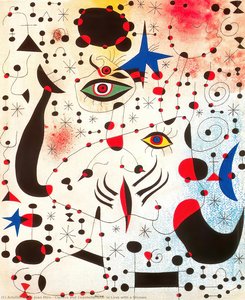
Náhled v interiéru
 Sdílet
 Sdílet
 Podrobnosti o díle
 Průvodce

 Stáhnout
 Podobné položky
 Rentgenové snímky
 Slideshow
 Statistiky
Salome Dancing before Herod
 Akryl na plátně
- Obrazová tvorba na stěnu
- Surrealist Abstract
 87.0 x 86.0 cm
 Zobrazit více
Umělecké dílo zobrazené na této stránce je chráněno autorským zákonem, což znamená, že nemůžeme legálně vytvářet ani prodávat jeho identickou reprodukci. Tato ochrana je vymáhána na základě mezinárodních dohod, jako například Berberská úmluva a národními zákony, včetně těch stanovených v Americký autorský zákon – Díl 17. Všechna práva vyhrazena.
Tato metoda je plně v souladu s autorským právem, protože nezahrnuje kopírování ani duplikování chráněného díla. Jde o kreativní reinterpretaci – nový obraz, který je inspirován originálem, ale není s ním identický.
Giclée / Umělecký tisk
Giclée nebo plátěný tisk muzeální kvality s rychlou výrobou a širokou nabídkou povrchových úprav. ( Koupit ručně malovaný obraz Přepnout na digitální obraz)




P118B Kč10

P118H Kč10

P118W Kč10

P438Z Kč10

P508JH Kč12

P508YH Kč12

P805H Kč10

P805Z Kč10

P919BZ Kč10

P919G Kč10

P919XJ Kč10

P959ZH Kč10

P968JZ Kč12

W106C Kč8

W218G Kč10

W218JH Kč8

W218Y Kč10

W307PJ Kč10

W316G Kč10

W316PJ Kč8

W316Y Kč10

W398PJ Kč8

W4111J Kč10

W500HY Kč15

W500JH Kč15

W692G Kč12

W849H Kč8

W940BG Kč15

W953PJ Kč8




Vyberte si z našich přednastavených velikostí, které odpovídají původním proporcím díla.

Zadejte šířku a výšku, které potřebujete pro váš rám nebo stěnu. Tisk lze pouze oříznout, nikdy však nelze zvětšit obraz nad jeho původní rozměr, proto při výběru jiného formátu dochází ke ztrátě části obrazu. Před samotným tiskem vám zašleme digitální náhled k schválení. Obraz zobrazený na této stránce nenabízí skutečný výřez — ten uvidíte pouze v náhledu.
Celosvětové doručení () do 2 týdnů namísto standardních 4/5 týdnů. (25 říjen)

Zdarma celosvětová expresní doprava

Vysoce kvalitní lněné plátno

Kompletní pojištění přepravy

Záruka vrácení celního poplatku

Záruka věrného barevného souladu

100dení lhůta pro vrácení zboží (pouze při vadách výroby)

100% záruka vrácení peněz

Sleva při více objednávkách
 Skleněná varianta je dostupná pouze u rozměrů menších než 110 cm

Salome Dancing before Herod
Giclée / Umělecký tisk
Rozměry reprodukce
-


Celková cena za vybrané možnosti reprodukcí
Kč 1711
A Banquet of Shadows: Unveiling Joan Miró’s ‘Salome Dancing before Herod’
Joan Miró's ‘Salome Dancing before Herod’, rendered in oil on canvas and measuring 87 x 86 cm, is a captivating departure from the artist’s typically vibrant and abstract compositions. While not immediately recognizable as a work by the master of playful forms and bold colors, this piece reveals a fascinating exploration of narrative and symbolism within Miró's evolving artistic language. The painting depicts a scene steeped in historical and biblical drama – Salome’s fateful dance for Herod, a moment fraught with tension, desire, and impending tragedy. Rather than a literal depiction, however, Miró presents us with an enigmatic gathering around a long table, populated by figures that seem to exist between worlds, their medieval attire hinting at a timeless quality of myth and legend.
Deciphering the Scene: Symbolism and Narrative
The composition is densely packed with individuals, thirteen in total, engaged in what appears to be a lavish, yet unsettling banquet. Their stillness, despite the implied energy of Salome’s dance (though she herself is absent from the scene), creates an atmosphere of expectant dread. The table itself becomes a focal point – laden with bowls, cups, and utensils, it symbolizes both abundance and potential corruption. A solitary cat, positioned in the lower left corner, adds a layer of intrigue; often associated with mystery, independence, and even witchcraft, its gaze draws the viewer into the painting’s hidden depths. The absence of Salome herself is crucial. Miró doesn't show us the act of seduction, but rather its aftermath – or perhaps, the anticipation *of* it. We are left to imagine her movements, her power, and the consequences that will unfold. The work subtly alludes to the biblical story from Matthew 14:3-12 and Mark 6:17-29, where Salome’s dance pleases Herod so much that he promises her anything she asks for, leading to the beheading of John the Baptist.
A Shift in Style: Miró's Exploration of Form and History
While Miró is celebrated for his biomorphic shapes and dreamlike landscapes, ‘Salome Dancing before Herod’ demonstrates a willingness to engage with historical subject matter and more traditional figuration. This painting appears as an intriguing anomaly within his oeuvre, suggesting a period of experimentation where he grappled with narrative representation. The figures are not rendered in the simplified forms we often associate with Miró; instead, they possess a degree of anatomical detail, albeit stylized and somewhat haunting. The color palette is restrained compared to his later works, favoring muted tones that enhance the painting’s somber mood. This stylistic choice underscores the gravity of the subject matter and invites contemplation rather than immediate visual delight. It's as if Miró deliberately subdued his characteristic exuberance to convey a sense of foreboding and moral ambiguity.
The Enduring Legacy: A Reproduction for the Discerning Eye
For those seeking to bring a piece of art history into their homes, a hand-painted reproduction of ‘Salome Dancing before Herod’ offers a unique opportunity. This is not merely a decorative object; it's a window into Miró’s intellectual and artistic journey – a moment where he confronted the weight of historical narrative and explored the darker aspects of human desire. The painting’s complex symbolism and subtle emotional power make it an ideal focal point for any interior, sparking conversation and inviting viewers to delve into its mysteries. A high-quality reproduction faithfully captures the nuances of Miró's brushwork and color palette, ensuring that the artwork’s evocative atmosphere is preserved for generations to come. It stands as a testament to Miró’s versatility and his enduring ability to challenge our perceptions of art and reality.
Otázky a odpovědi
Jaký je doporučený formát a orientace pro tisk díla "Salome Dancing before Herod"?
Velikost Velký formát, orientace Čtverec: toto je doporučená konfigurace tisku pro dílo „Salome Dancing before Herod“ od Joan Miró.
Kde si mohu koupit ručně malovanou reprodukci díla „Salome Dancing before Herod“ od Joan Miró?
„Salome Dancing before Herod“ je dostupná jako ručně malovaná olejová reprodukce na lněném plátně. Objednávku můžete zadat na její stránce Ručně malovaná reprodukce, kde si můžete vybrat z různých rozměrů.
Jaké jsou skutečné rozměry díla „Salome Dancing before Herod“ od Joan Miró?
Původní rozměry díla "Salome Dancing before Herod" jsou 87 x 86 cm. Původní rozměry slouží jako užitečný vodítko při výběru velikosti reprodukce.
Biografie umělce
A Catalan Visionary: The Life and Art of Joan Miró
Joan Miró i Ferrà, born in Barcelona in 1893, stands as one of the most significant figures in 20th-century art. His journey was not merely a progression through styles but an exploration of inner worlds, translating dreams, memories, and Catalan identity onto canvas with a uniquely poetic visual language. From humble beginnings marked by illness and initial parental reservations about his artistic pursuits, Miró persevered, driven by an innate need to express the intangible—the emotions, sensations, and subconscious currents that lie beneath the surface of reality. His early life was steeped in the traditions of Barcelona, a city brimming with architectural marvels thanks to Antoni Gaudí, whose organic forms would subtly influence Miró’s later abstractions. The goldsmithing profession of his father instilled an appreciation for meticulous craftsmanship, while the rugged Catalan landscape became a recurring motif and source of inspiration throughout his career.Early Influences and the Path to Surrealism
Miró's formal artistic training began at La Llotja in Barcelona, where he honed his skills in traditional techniques. However, it was exposure to the avant-garde movements sweeping through Paris that truly ignited his creative evolution. The vibrant colors of Fauvism and the fragmented forms of Cubism resonated deeply, prompting him to move to Paris in 1920. This period proved pivotal as he encountered artists like Pablo Picasso and began experimenting with increasingly abstract compositions. Yet, Miró didn’t simply adopt these styles; he synthesized them, forging a path toward his own distinctive aesthetic. He sought to distill forms to their essence, stripping away representational details in favor of symbolic shapes and evocative colors. This exploration led him to the Surrealist group in 1924, aligning him with artists such as Max Ernst and Salvador Dalí. While embracing the Surrealist interest in the subconscious, Miró maintained a unique sensibility—his work was less about shocking imagery or Freudian symbolism than it was about creating a world of playful forms and poetic suggestion. He believed that art should transcend rational thought and tap into the realm of dreams and intuition.The Catalan Landscape and Artistic Roots
Miró’s formative years were profoundly shaped by his surroundings. Growing up in Barcelona, he absorbed the influence of Gaudí's architectural innovations—the undulating curves and organic textures of Sagrada Familia and Parc Güell—which instilled within him a fascination for natural forms and patterns. The Catalan landscape—characterized by pine forests, rocky mountains, and azure seas—became a constant source of inspiration for his paintings and prints. These elements would reappear throughout his oeuvre, symbolizing resilience, freedom, and the enduring spirit of Catalan culture. His father’s profession as a goldsmith instilled in him an appreciation for precision and craftsmanship, shaping his artistic approach and contributing to his meticulous attention to detail.Key Works: A Surrealist Universe
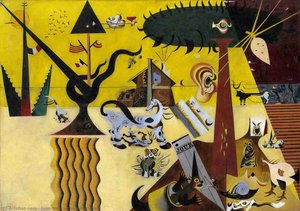
Miró's artistic output spanned decades, encompassing painting, sculpture, ceramics, printmaking, and collage—each medium serving as a vehicle for exploring his distinctive vision. The Farm (1922) stands as a seminal achievement, embodying the artist’s synthesis of Fauvist color palettes with Cubist fragmentation. It depicts a stylized Catalan landscape populated by fantastical creatures—birds, snails, and amorphous shapes—creating a dreamlike atmosphere that reflects Miró's preoccupation with subconscious imagery. The series *Dutch Interiors (1928)* demonstrated his ability to reinterpret the Old Masters through a modernist lens, transforming familiar domestic scenes into abstracted compositions infused with Surrealist symbolism. His collaborative efforts with Max Ernst on *Grattage* canvases—particularly *The Elephant Bird*—marked an important stage in his artistic experimentation and showcased his innovative techniques for revealing textures beneath layers of paint. Painting (1933) exemplifies Miró’s commitment to simplifying forms and prioritizing color, resulting in striking images that convey a sense of immediacy and emotional intensity.Legacy and Enduring Influence
Joan Miró's contribution to modern art is undeniable. He challenged conventional artistic norms and championed abstraction as a means of expressing inner experience—a legacy that continues to inspire artists today. His unwavering belief in the power of imagination and his refusal to compromise on his artistic vision solidified his place among the most influential figures of the 20th century. Miró established two foundations—the Fundació Joan Miró in Barcelona (1975) and the Fundació Pilar i Joan Miró in Palma de Mallorca (1981)—ensuring that his artistic legacy would endure, fostering creativity and promoting dialogue between art and society. His work remains a testament to the transformative potential of art—a vibrant celebration of Catalan identity and an enduring symbol of Surrealist innovation.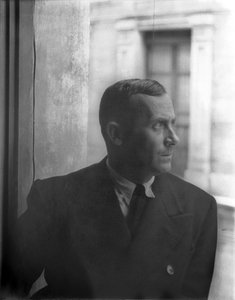
Joan Miró
1893 - 1983 , Španělsko
Rychlé informace o umělci
- Artistic Movement Or Style: Surrealismo
- Artists Or Movements Influenced By This Artist: ['Fauvismus']
- Artists Who Influenced This Artist:
- Pablo Picasso
- Cézanne
- Date Of Birth: 20 aprile 1893
- Date Of Death: 25 dicembre 1983
- Full Name: Joan Miró i Ferrà
- Nationality: Spagnolo
- Notable Artworks:
- La Poetisa
- Dům s palmy
- Tanečník s zrcadlem
- Place Of Birth: Barcelona, Spagna
Související články

Geometrická abstrakce: 10 mistrovských děl, které změnily umění | OriginalUniqueArt.cz
Prozkoumejte 10 ikonických děl geometrické abstrakce od Mondriana, Maleviče a Kandinského. Objevte příběhy umělců, techniky a historii tohoto revolučního hnutí. Najděte inspiraci pro moderní dekorace a luxusní reprodukce obrazů na OriginalUniqueArt.com.
Joan Miró: 25 mistrovských děl katalánského surrealismu pro váš domov | OriginalUniqueArt
Prozkoumejte 25 ikonických děl Joana Miró – katalánského mistra surrealismu. Objevte příběhy za abstraktními kompozicemi, živými barvami a jedinečným stylem. Reprodukce obrazů pro váš interiér na OriginalUniqueArt.com
Surrealismus v umění: Top 10 děl, které změnily pohled na realitu | OriginalUniqueArt.cz
Prozkoumejte 10 ikonických děl surrealismu od Dalího, Magrittea a dalších. Objevte příběhy za obrazy, techniky a inspiraci pro váš interiér s OriginalUniqueArt.cz – luxusní reprodukce umění online.

Wassily Kandinsky: Top 25 mistrovských děl abstrakce pro váš interiér | OriginalUniqueArt.com
Prozkoumejte 25 ikonických děl Wassily Kandinského – průkopníka abstraktního umění a expresionismu. Objevte příběhy za barevnými kompozicemi, Bauhaus styl a inspirujte se pro váš interiér s reprodukcemi nejvyšší kvality na OriginalUniqueArt.com.

Top 10 mistrovských děl abstraktního expresionismu | Umění a dekorace s OriginalUniqueArt.com
Prozkoumejte 10 ikonických děl abstraktního expresionismu od Pollocka, Rothka a dalších. Objevte příběhy za obrazy, techniky a barevné palety tohoto revolučního uměleckého hnutí. Reprodukce obrazů s OriginalUniqueArt.com – luxusní dekorace pro váš interiér. Prozkoumejte celou kolekci online!