Náhled
 Sdílet
 Sdílet
 Podrobnosti o díle

 Stáhnout
 Podobné položky
 Rentgenové snímky
 Slideshow
 Statistiky
Pasted Paper


 Zobrazit více
Giclée / Umělecký tisk
Giclée nebo plátěný tisk muzeální kvality s rychlou výrobou a flexibilními možnostmi povrchové úpravy. ( Koupit ručně malovaný obraz Přepnout na digitální obraz)




P118B $10

P118H $10

P118W $10

P438Z $10

P508JH $12

P508YH $12

P805H $10

P805Z $10

P919BZ $10

P919G $10

P919XJ $10

P959ZH $10

P968JZ $12

W106C $8

W218G $10

W218JH $8

W218Y $10

W307PJ $10

W316G $10

W316PJ $8

W316Y $10

W398PJ $8

W4111J $10

W500HY $15

W500JH $15

W692G $12

W849H $8

W940BG $15

W953PJ $8




Vyberte si z našich přednastavených velikostí, které odpovídají původním proporcím díla.

Můžete zadat vlastní rozměry tak, aby výtvor odpovídal konkrétnímu rámu nebo prostoru. Pokud zvolená velikost nebude odpovídat poměru stran původního obrazu, dílo buď ořížeme, nebo obraz rozšíříme pomocí zrcadlového efektu či jednobarevného okraje. Před zahájením výroby vám bude zaslán digitální náhled k schválení.
Mějte prosím na paměti, že náhled na obrazovce neodráží skutečné oříznutí nebo rozšíření. Pouze digitální náhled přesně zobrazí finální kompozici.
Ačkoliv jsou k dispozici i vlastní rozměry, pro zachování původních proporcí doporučujeme vybrat si rozměr z předdefinovaného seznamu.
Celosvětové doručení () do 2 týdnů namísto standardních 4/5 týdnů. (12 září)

Zdarma celosvětová expresní doprava

Vysoce kvalitní lněné plátno

Kompletní přepravní pojištění

Záruka vrácení celního poplatku

Záruka přesného barevného shodu

100dená lhůta pro vrácení zboží (pouze při vadách)

100% garance vrácení peněz

Sleva při hromadné objednávce
 Skleněná varianta je dostupná pouze u rozměrů menších než 110 cm

Pasted Paper
Giclée / Umělecký tisk
Rozměry reprodukce
-


Celková cena za výběr
$ 80
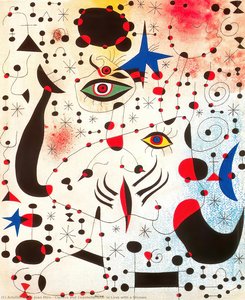
A Universe Within Circles: Decoding Joan Miró’s *Papier collé*
Joan Miró's *Papier collé* is not merely an artwork; it’s a portal into the artist’s deeply personal and playfully enigmatic world. Created during a pivotal period in his artistic evolution, this piece exemplifies Miró’s masterful ability to distill complex emotions and subconscious thoughts into deceptively simple forms. The composition—two circles dominating the canvas, one larger and bearing an intriguing aperture, the other suggesting a whimsical hat—immediately draws the viewer into a realm of abstract contemplation. It's a work that invites not analysis, but *feeling*, a direct connection to the artist’s inner landscape.
The Birth of a Visual Language
To understand *Papier collé* is to appreciate its place within Miró’s broader artistic journey. Born in Barcelona in 1893, Miró was initially influenced by the Post-Impressionists like Van Gogh and Cézanne, absorbing their expressive use of color and form. However, his move to Paris in the 1920s proved transformative. He became increasingly involved with the Surrealist movement, though he always maintained a unique artistic voice that resisted strict categorization. *Papier collé* emerges from this fertile ground—a period where Miró was actively exploring automatism and the power of the subconscious. The technique itself – “pasted paper” in French – reflects a deliberate rejection of traditional painting methods, embracing chance and spontaneity. It’s as if Miró is dismantling the conventions of representation to reveal something more primal and authentic.
Symbolism and the Subconscious
The symbolism within *Papier collé* is deliberately ambiguous, allowing for multiple interpretations. The larger circle, punctured by a void, can be seen as representing wholeness disrupted, perhaps alluding to the fragility of existence or the inherent incompleteness of human understanding. The lines etched upon its surface—resembling equations or diagrams—hint at an underlying order attempting to make sense of chaos. Meanwhile, the smaller circle, playfully resembling a hat, introduces a touch of whimsy and personification. Is it a self-portrait in disguise? A symbol of identity? Miró rarely offered definitive explanations for his symbols, preferring instead to let them resonate with viewers on an individual level. This deliberate ambiguity is key to the work’s enduring power; it's not about *what* the shapes mean, but *how* they make you feel.
A Legacy of Playful Innovation
Miró’s influence on 20th-century art is undeniable. He paved the way for generations of artists to explore abstraction, symbolism, and the boundless possibilities of the imagination. *Papier collé*, though seemingly simple in its execution, embodies this spirit of playful innovation. It's a testament to Miró’s belief that art should be accessible, joyful, and deeply personal. Owning a reproduction of this work isn’t simply acquiring a beautiful object; it’s inviting a piece of Miró’s vibrant universe into your space—a constant reminder to embrace the unexpected, celebrate individuality, and find beauty in the abstract.
Biografie umělce
A Catalan Visionary: The Life and Art of Joan Miró
Joan Miró i Ferrà, born in Barcelona in 1893, stands as one of the most significant figures in 20th-century art. His journey was not merely a progression through styles but an exploration of inner worlds, translating dreams, memories, and Catalan identity onto canvas with a uniquely poetic visual language. From humble beginnings marked by illness and initial parental reservations about his artistic pursuits, Miró persevered, driven by an innate need to express the intangible—the emotions, sensations, and subconscious currents that lie beneath the surface of reality. His early life was steeped in the traditions of Barcelona, a city brimming with architectural marvels thanks to Antoni Gaudí, whose organic forms would subtly influence Miró’s later abstractions. The goldsmithing profession of his father instilled an appreciation for meticulous craftsmanship, while the rugged Catalan landscape became a recurring motif and source of inspiration throughout his career.Early Influences and the Path to Surrealism
Miró's formal artistic training began at La Llotja in Barcelona, where he honed his skills in traditional techniques. However, it was exposure to the avant-garde movements sweeping through Paris that truly ignited his creative evolution. The vibrant colors of Fauvism and the fragmented forms of Cubism resonated deeply, prompting him to move to Paris in 1920. This period proved pivotal as he encountered artists like Pablo Picasso and began experimenting with increasingly abstract compositions. Yet, Miró didn’t simply adopt these styles; he synthesized them, forging a path toward his own distinctive aesthetic. He sought to distill forms to their essence, stripping away representational details in favor of symbolic shapes and evocative colors. This exploration led him to the Surrealist group in 1924, aligning him with artists such as Max Ernst and Salvador Dalí. While embracing the Surrealist interest in the subconscious, Miró maintained a unique sensibility—his work was less about shocking imagery or Freudian symbolism than it was about creating a world of playful forms and poetic suggestion. He believed that art should transcend rational thought and tap into the realm of dreams and intuition.The Catalan Landscape and Artistic Roots
Miró’s formative years were profoundly shaped by his surroundings. Growing up in Barcelona, he absorbed the influence of Gaudí's architectural innovations—the undulating curves and organic textures of Sagrada Familia and Parc Güell—which instilled within him a fascination for natural forms and patterns. The Catalan landscape—characterized by pine forests, rocky mountains, and azure seas—became a constant source of inspiration for his paintings and prints. These elements would reappear throughout his oeuvre, symbolizing resilience, freedom, and the enduring spirit of Catalan culture. His father’s profession as a goldsmith instilled in him an appreciation for precision and craftsmanship, shaping his artistic approach and contributing to his meticulous attention to detail.Key Works: A Surrealist Universe
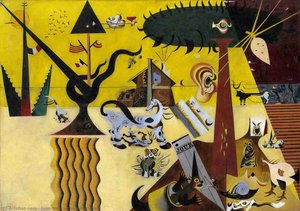
Miró's artistic output spanned decades, encompassing painting, sculpture, ceramics, printmaking, and collage—each medium serving as a vehicle for exploring his distinctive vision. The Farm (1922) stands as a seminal achievement, embodying the artist’s synthesis of Fauvist color palettes with Cubist fragmentation. It depicts a stylized Catalan landscape populated by fantastical creatures—birds, snails, and amorphous shapes—creating a dreamlike atmosphere that reflects Miró's preoccupation with subconscious imagery. The series *Dutch Interiors (1928)* demonstrated his ability to reinterpret the Old Masters through a modernist lens, transforming familiar domestic scenes into abstracted compositions infused with Surrealist symbolism. His collaborative efforts with Max Ernst on *Grattage* canvases—particularly *The Elephant Bird*—marked an important stage in his artistic experimentation and showcased his innovative techniques for revealing textures beneath layers of paint. Painting (1933) exemplifies Miró’s commitment to simplifying forms and prioritizing color, resulting in striking images that convey a sense of immediacy and emotional intensity.Legacy and Enduring Influence
Joan Miró's contribution to modern art is undeniable. He challenged conventional artistic norms and championed abstraction as a means of expressing inner experience—a legacy that continues to inspire artists today. His unwavering belief in the power of imagination and his refusal to compromise on his artistic vision solidified his place among the most influential figures of the 20th century. Miró established two foundations—the Fundació Joan Miró in Barcelona (1975) and the Fundació Pilar i Joan Miró in Palma de Mallorca (1981)—ensuring that his artistic legacy would endure, fostering creativity and promoting dialogue between art and society. His work remains a testament to the transformative potential of art—a vibrant celebration of Catalan identity and an enduring symbol of Surrealist innovation.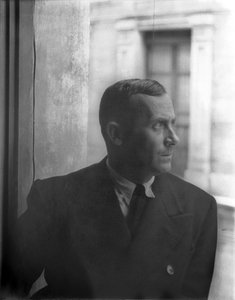
Joan Miró
1893 - 1983 , Španělsko
Rychlé fakta
- Artistic Movement Or Style: Surrealismo
- Artists Or Movements Influenced By This Artist: ['Fauvismus']
- Artists Who Influenced This Artist:
- Pablo Picasso
- Cézanne
- Date Of Birth: 20 aprile 1893
- Date Of Death: 25 dicembre 1983
- Full Name: Joan Miró i Ferrà
- Nationality: Spagnolo
- Notable Artworks:
- La Poetisa
- Dům s palmy
- Tanečník s zrcadlem
- Place Of Birth: Barcelona, Spagna
Související články

Top 10 mistrovských děl abstraktního expresionismu | Umění a dekorace s OriginalUniqueArt.com
Prozkoumejte 10 ikonických děl abstraktního expresionismu od Pollocka, Rothka a dalších. Objevte příběhy za obrazy, techniky a barevné palety tohoto revolučního uměleckého hnutí. Reprodukce obrazů s OriginalUniqueArt.com – luxusní dekorace pro váš interiér. Prozkoumejte celou kolekci online!

Surrealismus v umění: Top 10 děl, které změnily pohled na realitu | OriginalUniqueArt.cz
Prozkoumejte 10 ikonických děl surrealismu od Dalího, Magrittea a dalších. Objevte příběhy za obrazy, techniky a inspiraci pro váš interiér s OriginalUniqueArt.cz – luxusní reprodukce umění online.
Joan Miró: 25 mistrovských děl katalánského surrealismu pro váš domov | OriginalUniqueArt
Prozkoumejte 25 ikonických děl Joana Miró – katalánského mistra surrealismu. Objevte příběhy za abstraktními kompozicemi, živými barvami a jedinečným stylem. Reprodukce obrazů pro váš interiér na OriginalUniqueArt.com
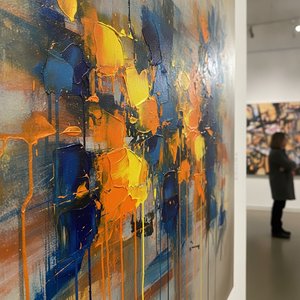
Beyond the Lines: Mastering the High-Impact World of Contemporary Abstraction
Master the high-impact world of contemporary abstraction. Discover how bold colors, textures, and modern movements like Abstract Expressionism can transform your space with premium, high-energy art curated for the design-conscious professional.

Geometrická abstrakce: 10 mistrovských děl, které změnily umění | OriginalUniqueArt.cz
Prozkoumejte 10 ikonických děl geometrické abstrakce od Mondriana, Maleviče a Kandinského. Objevte příběhy umělců, techniky a historii tohoto revolučního hnutí. Najděte inspiraci pro moderní dekorace a luxusní reprodukce obrazů na OriginalUniqueArt.com.