Zobrazit v interiéru
 Odeslat
 Sdílet
 Podrobnosti
 Průvodce

 Stáhnout obrázek
 Podobné kousky
 Rentgenové snímky
 Slideshow
 Statistiky
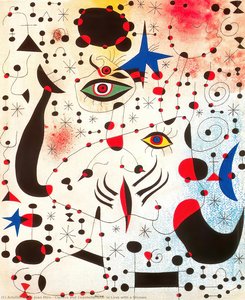
Constellation: Toward the Rainbow
 Acrylic On Paper
- Surrealist Expressionism
 1941
1941- Early Medieval
 46.0 x 38.0 cm
 Přečíst si více
Umělecké dílo zobrazené na této stránce je chráněno autorským zákonem, což znamená, že nemůžeme legálně vytvářet ani prodávat jeho identickou reprodukci. Tato ochrana je vymáhána na základě mezinárodních dohod, jako například Berberská úmluva a národními zákony, včetně těch stanovených v Americký autorský zákon – Díl 17. Všechna práva vyhrazena.
Tato metoda je plně v souladu s autorským právem, protože nezahrnuje kopírování ani duplikování chráněného díla. Jde o kreativní reinterpretaci – nový obraz, který je inspirován originálem, ale není s ním identický.
Giclée / Umělecký tisk
Giclée nebo plátěný tisk muzeální kvality s rychlou výrobou a širokou nabídkou povrchových úprav. ( Objednat ručně malovanou reprodukci Přepnout na digitální verzi obrazu)




P118B Kč10

P118H Kč10

P118W Kč10

P438Z Kč10

P508JH Kč12

P508YH Kč12

P805H Kč10

P805Z Kč10

P919BZ Kč10

P919G Kč10

P919XJ Kč10

P959ZH Kč10

P968JZ Kč12

W106C Kč8

W218G Kč10

W218JH Kč8

W218Y Kč10

W307PJ Kč10

W316G Kč10

W316PJ Kč8

W316Y Kč10

W398PJ Kč8

W4111J Kč10

W500HY Kč15

W500JH Kč15

W692G Kč12

W849H Kč8

W940BG Kč15

W953PJ Kč8




Vyberte si z našich přednastavených velikostí, které odpovídají původním proporcím díla.

Type the width and the height you need, to fit your frame or your wall. A print can only be cut, never made bigger than the picture, so a size with a different shape loses a part of the image. We send you a digital mockup to approve before we print anything. The picture shown on this page does not show the real cut — only the mockup does.
Celosvětové doručení () do 2 týdnů namísto standardních 4/5 týdnů. (15 říjen)

Zdarma celosvětová expresní doprava

Vysoce kvalitní lněné plátno

Úplné pojištění přepravy

Záruka vrácení celního poplatku

Záruka věrného barevného shodu

100dení lhůta pro vrácení zboží (pouze při vadách výroby)

100% garance vrácení peněz

Sleva při více objednávkách
 Skleněná varianta je dostupná pouze u rozměrů menších než 110 cm

Constellation: Toward the Rainbow
Giclée / Umělecký tisk
Velikost reprodukce
-


Celková cena
Kč 1685
A Celestial Dance: Exploring Joan Miró’s “Constellation: Toward the Rainbow”
Joan Miró's "Constellation: Toward the Rainbow," painted in 1941, isn’t merely a depiction of stars; it’s an immersion into the artist’s subconscious, a vibrant echo of his escape from the turmoil of World War II. Created during a period of profound personal and historical upheaval, this gouache on paper offers a glimpse into Miró's uniquely poetic vision – one that seamlessly blends dreamscape imagery with a deeply rooted connection to Catalan identity and the rhythms of nature.
The painting immediately captivates with its riotous color palette. Deep blues and greens intertwine with fiery reds and ochres, creating an atmosphere both unsettling and strangely comforting. Miró’s signature style is powerfully evident: a constellation of amorphous shapes – hourglasses, circles, triangles, and crescent moons – dominates the composition. These aren't precise representations but rather intuitive symbols, each imbued with personal meaning for the artist. The thin black lines that connect them evoke the intricate latticework of a wrought-iron screen or perhaps even a fantastical map charting the course through an imagined cosmos.
The Language of Symbols and Surrealism
Miró’s work is inextricably linked to the Surrealist movement, yet he developed a distinct vocabulary that transcended rigid categorization. “Constellation: Toward the Rainbow” exemplifies this – it's less about replicating reality and more about expressing an internal state. The recurring face-like shape in the lower left corner isn’t a literal portrait but rather a primal symbol of recognition, perhaps representing the artist himself or a fragment of memory surfacing from the depths of his imagination. The abundance of eyes scattered throughout the piece suggests a heightened awareness, a constant observation of the unseen and the intuitive.
Interestingly, Miró’s own words shed light on this process. He described how music and the night, coupled with the stars, became crucial elements in shaping his work during this period. This wasn't simply an artistic response to war; it was a deliberate act of self-preservation – a retreat into a realm where logic dissolved and imagination reigned supreme. The painting can be interpreted as a visual manifestation of that inner sanctuary, a testament to the power of art as a means of psychological survival.
Craftsmanship and Context: A Window into Miró’s Process
Each “Constellation” gouache took approximately a month to complete, reflecting the painstaking care with which Miró approached his work. The meticulous layering of color and the deliberate placement of each shape demonstrate a remarkable level of control despite the seemingly chaotic nature of the composition. The choice of gouache – a medium known for its luminous quality and ability to blend seamlessly – further enhances the painting’s ethereal atmosphere.
Painted in Palma de Mallorca after Miró's return from France, “Constellation: Toward the Rainbow” represents a pivotal moment in his artistic evolution. It stands as a bridge between his earlier explorations of Catalan folklore and his later, more abstract works. The piece offers a poignant reminder that even amidst darkness and uncertainty, art can provide solace, inspiration, and a pathway to inner peace – a sentiment powerfully conveyed through Miró’s vibrant and enduring vision.
Bringing the Cosmos Home: Reproduction Details
OriginalUniqueArt is proud to offer meticulously crafted hand-painted reproductions of Joan Miró's “Constellation: Toward the Rainbow.” Our artists replicate the original’s rich colors, intricate details, and evocative atmosphere with exceptional precision. Available in a range of sizes – from 46 x 38 cm to larger formats – this artwork is perfect for collectors, interior designers, or anyone seeking to infuse their space with Miró's distinctive poetic sensibility. Each reproduction is created using archival-quality materials, ensuring its longevity and beauty for generations to come. Explore our collection today and bring a piece of the cosmos into your home.
Otázky a odpovědi
Hangi tónem se "Constellation: Toward the Rainbow" sklání?
Dílo „Constellation: Toward the Rainbow“ od Joan Miró je protknuto Amber to Saffron odstínem.
Kolik let bylo Joan Miró, když v roce 1941 vytvořil(a) dílo „Constellation: Toward the Rainbow"?
Když bylo dílo „Constellation: Toward the Rainbow“ vytvořeno v roce 1941, měl/a Joan Miró – narozen/a 1893 – 48 let.
K jaké fázi kariéry Joan Miró odpovídá datum vzniku díla „Constellation: Toward the Rainbow“ z roku 1941?
Vzhledem k datování z roku 1941 spadá dílo „Constellation: Toward the Rainbow“ do Late Period umělce Joan Miró.
Biografie umělce
A Catalan Visionary: The Life and Art of Joan Miró
Joan Miró i Ferrà, born in Barcelona in 1893, stands as one of the most significant figures in 20th-century art. His journey was not merely a progression through styles but an exploration of inner worlds, translating dreams, memories, and Catalan identity onto canvas with a uniquely poetic visual language. From humble beginnings marked by illness and initial parental reservations about his artistic pursuits, Miró persevered, driven by an innate need to express the intangible—the emotions, sensations, and subconscious currents that lie beneath the surface of reality. His early life was steeped in the traditions of Barcelona, a city brimming with architectural marvels thanks to Antoni Gaudí, whose organic forms would subtly influence Miró’s later abstractions. The goldsmithing profession of his father instilled an appreciation for meticulous craftsmanship, while the rugged Catalan landscape became a recurring motif and source of inspiration throughout his career.Early Influences and the Path to Surrealism
Miró's formal artistic training began at La Llotja in Barcelona, where he honed his skills in traditional techniques. However, it was exposure to the avant-garde movements sweeping through Paris that truly ignited his creative evolution. The vibrant colors of Fauvism and the fragmented forms of Cubism resonated deeply, prompting him to move to Paris in 1920. This period proved pivotal as he encountered artists like Pablo Picasso and began experimenting with increasingly abstract compositions. Yet, Miró didn’t simply adopt these styles; he synthesized them, forging a path toward his own distinctive aesthetic. He sought to distill forms to their essence, stripping away representational details in favor of symbolic shapes and evocative colors. This exploration led him to the Surrealist group in 1924, aligning him with artists such as Max Ernst and Salvador Dalí. While embracing the Surrealist interest in the subconscious, Miró maintained a unique sensibility—his work was less about shocking imagery or Freudian symbolism than it was about creating a world of playful forms and poetic suggestion. He believed that art should transcend rational thought and tap into the realm of dreams and intuition.The Catalan Landscape and Artistic Roots
Miró’s formative years were profoundly shaped by his surroundings. Growing up in Barcelona, he absorbed the influence of Gaudí's architectural innovations—the undulating curves and organic textures of Sagrada Familia and Parc Güell—which instilled within him a fascination for natural forms and patterns. The Catalan landscape—characterized by pine forests, rocky mountains, and azure seas—became a constant source of inspiration for his paintings and prints. These elements would reappear throughout his oeuvre, symbolizing resilience, freedom, and the enduring spirit of Catalan culture. His father’s profession as a goldsmith instilled in him an appreciation for precision and craftsmanship, shaping his artistic approach and contributing to his meticulous attention to detail.Key Works: A Surrealist Universe
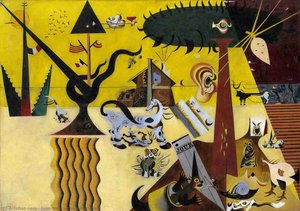
Miró's artistic output spanned decades, encompassing painting, sculpture, ceramics, printmaking, and collage—each medium serving as a vehicle for exploring his distinctive vision. The Farm (1922) stands as a seminal achievement, embodying the artist’s synthesis of Fauvist color palettes with Cubist fragmentation. It depicts a stylized Catalan landscape populated by fantastical creatures—birds, snails, and amorphous shapes—creating a dreamlike atmosphere that reflects Miró's preoccupation with subconscious imagery. The series *Dutch Interiors (1928)* demonstrated his ability to reinterpret the Old Masters through a modernist lens, transforming familiar domestic scenes into abstracted compositions infused with Surrealist symbolism. His collaborative efforts with Max Ernst on *Grattage* canvases—particularly *The Elephant Bird*—marked an important stage in his artistic experimentation and showcased his innovative techniques for revealing textures beneath layers of paint. Painting (1933) exemplifies Miró’s commitment to simplifying forms and prioritizing color, resulting in striking images that convey a sense of immediacy and emotional intensity.Legacy and Enduring Influence
Joan Miró's contribution to modern art is undeniable. He challenged conventional artistic norms and championed abstraction as a means of expressing inner experience—a legacy that continues to inspire artists today. His unwavering belief in the power of imagination and his refusal to compromise on his artistic vision solidified his place among the most influential figures of the 20th century. Miró established two foundations—the Fundació Joan Miró in Barcelona (1975) and the Fundació Pilar i Joan Miró in Palma de Mallorca (1981)—ensuring that his artistic legacy would endure, fostering creativity and promoting dialogue between art and society. His work remains a testament to the transformative potential of art—a vibrant celebration of Catalan identity and an enduring symbol of Surrealist innovation.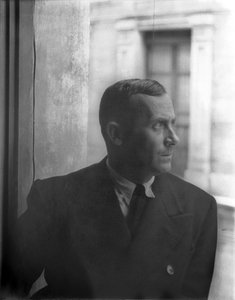
Joan Miró
1893 - 1983 , Španělsko
Rychlé informace
- Artistic Movement Or Style: Surrealismo
- Artists Or Movements Influenced By This Artist: ['Fauvismus']
- Artists Who Influenced This Artist:
- Pablo Picasso
- Cézanne
- Date Of Birth: 20 aprile 1893
- Date Of Death: 25 dicembre 1983
- Full Name: Joan Miró i Ferrà
- Nationality: Spagnolo
- Notable Artworks:
- La Poetisa
- Dům s palmy
- Tanečník s zrcadlem
- Place Of Birth: Barcelona, Spagna
Související články
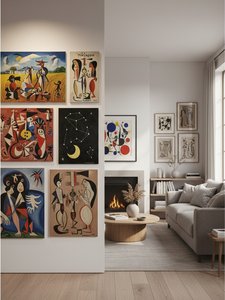
Joan Miró: 25 mistrovských děl katalánského surrealismu pro váš domov | OriginalUniqueArt
Prozkoumejte 25 ikonických děl Joana Miró – katalánského mistra surrealismu. Objevte příběhy za abstraktními kompozicemi, živými barvami a jedinečným stylem. Reprodukce obrazů pro váš interiér na OriginalUniqueArt.com
Surrealismus v umění: Top 10 děl, které změnily pohled na realitu | OriginalUniqueArt.cz
Prozkoumejte 10 ikonických děl surrealismu od Dalího, Magrittea a dalších. Objevte příběhy za obrazy, techniky a inspiraci pro váš interiér s OriginalUniqueArt.cz – luxusní reprodukce umění online.

The Gilded Age Reimagined: Exploring the Aesthetic Principles & Enduring Legacy of Art Deco
Explore the captivating world of Art Deco! Discover its origins, defining features, cultural impact & enduring legacy. Expert insights for collectors and design enthusiasts. Shop handmade reproductions at OriginalUniqueArt.
Top 10 surrealistických děl, která definovala umělecký proud – obrazy a dekorace s OriginalUniqueArt
Prozkoumejte 10 ikonických surrealistických děl od Dalího, Magritta a dalších. Objevte příběhy za obrazy plnými snů a podvědomí. Reprodukce obrazů nejvyšší kvality pro váš interiér na OriginalUniqueArt.com – inspirace a luxusní dekorace online!

The Gleaming Geometry of Desire: Exploring Art Deco's Enduring Influence on Visual Culture
Explore the captivating world of Art Deco! Discover its history, key characteristics, enduring influence on design & collecting with expert insights from OriginalUniqueArt.com.