
 Náhled v interiéru
 Sdílet
 Sdílet
 Podrobnosti o díle
 Průvodce

 Stáhnout
 Podobné položky
 Rentgenové snímky
 Slideshow
 Otázky a odpovědi
 Statistiky
Wheat Fields

- 100.0 x 130.0 cm


 Zobrazit více
Giclée / Umělecký tisk
Giclée nebo plátěný tisk muzeální kvality s rychlou výrobou a širokou nabídkou povrchových úprav. ( Koupit ručně malovaný obraz Přepnout na digitální obraz)




P118B Kč10

P118H Kč10

P118W Kč10

P438Z Kč10

P508JH Kč12

P508YH Kč12

P805H Kč10

P805Z Kč10

P919BZ Kč10

P919G Kč10

P919XJ Kč10

P959ZH Kč10

P968JZ Kč12

W106C Kč8

W218G Kč10

W218JH Kč8

W218Y Kč10

W307PJ Kč10

W316G Kč10

W316PJ Kč8

W316Y Kč10

W398PJ Kč8

W4111J Kč10

W500HY Kč15

W500JH Kč15

W692G Kč12

W849H Kč8

W940BG Kč15

W953PJ Kč8




Vyberte si z našich přednastavených velikostí, které odpovídají původním proporcím díla.

Zadejte šířku a výšku, které potřebujete pro váš rám nebo stěnu. Tisk lze pouze oříznout, nikdy však nelze zvětšit obraz nad jeho původní rozměr, proto při výběru jiného formátu dochází ke ztrátě části obrazu. Před samotným tiskem vám zašleme digitální náhled k schválení. Obraz zobrazený na této stránce nenabízí skutečný výřez — ten uvidíte pouze v náhledu.
Celosvětové doručení () do 2 týdnů namísto standardních 4/5 týdnů. (11 listopad)

Zdarma celosvětová expresní doprava

Vysoce kvalitní lněné plátno

Kompletní pojištění přepravy

Záruka vrácení celního poplatku

Záruka věrného barevného souladu

100dení lhůta pro vrácení zboží (pouze při vadách výroby)

100% záruka vrácení peněz

Sleva při více objednávkách
 Skleněná varianta je dostupná pouze u rozměrů menších než 110 cm

Wheat Fields
Giclée / Umělecký tisk
Rozměry reprodukce
-


Celková cena za vybrané možnosti reprodukcí
Kč 1763
Jacob van Ruisdael’s “Wheat Fields”: A Symphony of Light and Landscape
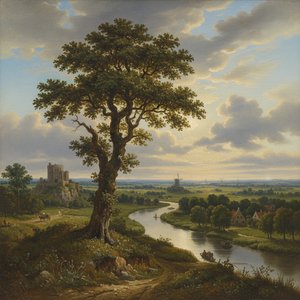
“Wheat Fields,” painted circa 1670 by Jacob Jansz van Ruisdael, stands as arguably the most arresting depiction of Dutch pastoralism from the Golden Age. More than just a scenic vista, it's a masterful orchestration of atmospheric perspective and compositional dynamism—a painting that continues to resonate with viewers centuries later. Examining its intricacies reveals not only Van Ruisdael’s technical prowess but also his profound understanding of conveying emotion through visual language.A Masterclass in Atmospheric Perspective
Van Ruisdael's signature style is characterized by a deliberate flattening of depth, achieved through subtle gradations of color and tonal variation. The distant wheat field recedes into hazy blues and greens—a technique known as atmospheric perspective—creating an illusion of vastness and conveying the serenity of rural life. Unlike many contemporaries who prioritized detailed realism, Ruisdael prioritized capturing the essence of a landscape rather than meticulously recreating every blade of grass. This approach aligns perfectly with the prevailing philosophical currents of the time, where contemplation and reflection on nature held considerable sway. The artist skillfully uses light—particularly diffused sunlight filtering through clouds—to sculpt the forms of the field and its inhabitants, imbuing the scene with an ethereal quality.Compositional Drama: Figures Amidst Vastness
The inclusion of two figures—a man carrying a bag and a woman accompanied by a child—adds a crucial element of narrative complexity to the landscape. Their placement at the forefront draws the eye inward, anchoring the viewer’s gaze amidst the expansive expanse of wheat and sky. The figures aren't merely decorative additions; they serve as symbols of human presence within the natural world, prompting contemplation about our relationship with the environment. Furthermore, Van Ruisdael employs a dynamic diagonal line that bisects the canvas, guiding the eye across the scene and enhancing its visual impact. This compositional device contributes to the painting’s dramatic tension—the subtle interplay between light and shadow emphasizing the contours of the landscape and the figures alike.Symbolism Rooted in Dutch Identity
“Wheat Fields” embodies the spirit of the Dutch Golden Age, reflecting a fascination with idealized representations of national identity. The wheat field itself symbolizes fertility and prosperity—themes central to Dutch agricultural traditions and economic success during this period. The inclusion of livestock reinforces these associations, grounding the scene in tangible realities while simultaneously elevating it to a realm of symbolic significance. Van Ruisdael’s depiction of the sky—dominated by swirling clouds illuminated by sunlight—suggests both beauty and vulnerability—a motif that resonates with broader anxieties about the unpredictable forces of nature.Emotional Resonance: Tranquility and Reflection
Ultimately, “Wheat Fields” succeeds in evoking a profound sense of tranquility and contemplation. The muted palette—primarily blues, greens, and browns—creates an atmosphere of calm repose, inviting viewers to immerse themselves in the stillness of the countryside. Yet, beneath this surface serenity lies a subtle undercurrent of drama—the interplay of light and shadow hinting at hidden complexities. As Gavin Finney eloquently describes it, Ruisdael “picks the moment you’d want to press the shutter on a camera,” capturing not just what is seen but also what is felt—a testament to Van Ruisdael's ability to transform visual observation into emotionally resonant art.- Artist: Jacob Jansz van Ruisdael
- Date: Circa 1670
- Medium: Oil on Canvas
- Dimensions: 39 3/8 x 51 1/4 in. (100 x 130.2 cm)
Otázky a odpovědi
Jakou atmosféru do interiéru přináší „Wheat Fields“ od Jacob Isaakszoon van Ruisdael?
Dílo „Wheat Fields“ od Jacob Isaakszoon van Ruisdael má Serene atmosféru a doporučujeme jej do Living Room. Nálada představuje to, co dílo vnáší do okolního prostoru.
Jak si mohu stáhnout obrázek díla „Wheat Fields“ od Jacob Isaakszoon van Ruisdael?
Pro dílo „Wheat Fields“ je k dispozici stažení: na stránce Stažení digitální verze si můžete pořídit stažení digitálního obrazu ve vysokém rozlišení.
Jakou luminanci má dílo „Wheat Fields“ od Jacob Isaakszoon van Ruisdael?
Luminance zaznamenaná pro dílo „Wheat Fields“ od Jacob Isaakszoon van Ruisdael je Gentle Luminance.
Biografie umělce
Raný život, rodina a výchova
Jacob Isaackszoon Van Ruisdael se narodil v roce 1628 v nizozemském Haarlemu do světa, kde bylo umění rodinným řemeslem. Jako syn Isaacka van Ruisdaela a Maycken Cornelisdochter vyrůstal v prostředí plném zručných tvůrců. Jeho dědeček, Jacob de Goyer, pracoval jako nábytkář, čímž v domácnosti vytvořil atmosféru definovanou řemeslnou precizností a technickou dokonalostí. Tento dědictví tvořivosti položilo pevné základy pro jeho budoucí život plný oddanosti vizuálním uměním.
Směr jeho uměleckého vývoje byl pravděpodobně ovlivněn těmi nejblížšími mu lidmi. Byl synovcem Salomona van Ruysdaela, významného krajináře své éry. Velmi se věří, že Jacob Isaackszoon Van Ruisdael získal svou formální výchovu právě pod vedením svého strýce, čímž skrze přímé učení nasál všechny nuance nizozemské krajiny. Toto rodinné spojení mu nabídlo víc než jen pouhou výuku; poskytlo mu přímou vazbu na ugruntované tradice haarlemské školy.
Do roku 1648 bylo jeho profesní postavení oficiálně potvrzeno, když se stal členem haarlemské cechu malířů. Tato členství znamenalo jeho přechod od žáka rodinného řemesla k uznávanému uměleckému praktikovi, který si vybudoval vlastní jméno. Svá raná léta strávil budováním své přítomnosti v tomto soutěživém uměleckém centru a připravoval se na širší kariéru, která ho nakonec odvede daleko od jeho rodného města.
Život a kariéra v Amsterdamu
Přechod z klidných zákoutí Haarlemu do pulzujícího obchodního centra Amsterdamu představoval v životě umělce, kterým byl Jacob Isaackszoon Van Ruisdael, zásadní zlom. Do metropole se přestěhoval kolem roku 1656 nebo 1657 za účelem hledání širších příležitostí, které nabízelo obchodní srdce Nizozemské republiky. Toto období stěhování bylo doprovíženo i osobními milníky, jako bylo jeho křestní ustanovení 17. června 1657 v Ankeveenu nedaleko Naarden. Jakmile se v novém prostředí usadili, zůstal v Amsterdamu po zbytek svého života a postupně se stal nepostraditelnou součástí městské krajiny, kterou později tak vášnivě dokumentoval na svých plátnech.
Jeho profesní působení v metropoli bylo charakteristické neustálým tvůrčím výstupem nespočetné množství námětů, které sahaly od rozlehlých městských panoramat až po jemné detaily života u kanálu Damrak. S postupným dozráváním se zdálo, že jeho zájmy přesahují samotné hranice malířského plátna. O jeho pozdějších letech se říká, že praktikoval jako lékař, což naznačuje život plný intelektuální rozmanitosti, která se doplňovala k jeho vizuálnímu vnímání světa. Tato dvojí existence v srdci velkoměsta odráží mnohostrannou povahu muže, který byl hluboce zapleten do sociální i profesní tkáně nizozemského Zlatého věku.
Technika a umělecký styl
Jacob Isaackszoon Van Ruisdael přistupoval k plátnu s neustálou, až znepokojivou všestranností. Nikdy se nenechal svázat jediným stylem, ale místo toho vytvořil bohaté dílo, které plynule přecházelo od tichých venkovských scén až k hrdinským, nesmírně rozlehlým krajinám. Jeho technická preciznost byla postavena na trpělivém pokládání tenkých vrstev olejových glazur. Tato metoda mu umožnila dosáhnout jemných přechodů barvy a tónu, čímž vybudoval pocit hloubky, který nepůsobí pouze jako namalovaný, ale jako skutečně prožitý prostor. Díky této metodě mistrovsky ovládl atmosférickou perspektivu a využíval mlhavou kvalitu vzduchu k tomu, aby vzdálené kopce a lesy posunul do měkkého, stříbřitého pozadí.
Nálada jeho děl však často nesla váhu, která přesahovala pouhou topografickou přesnost. Jacob Isaackszoon Van Ruisdael disponoval zvláštním darem vdechnout svým kompozicím poetickou, někdy až melancholickou nebo tragickou kvalitu. Toho dosáhl díky mistrovskému ovládnutí světla a stínu. Místo aby spoléhal na ostré a drastické kontrasty, využíval světlo k utváření emocionální teploty scény. Jeho kompozice byly často dramatické a využívaly nesmírný rozmach nebes využívající k tomu, aby zmenšily pozemské prvky pod nimi. V mnoha svých pozdějších dílech zabírá nebe významnou část rámce a působí jako hlavní motor vnitřního napětí a atmosféry celého díla.
Významná a klíčová díla
Raná tvorba jeho kariéry odhaluje malíře, který již tehdy byl hluboce pohltěn texturami nizozemského venkova. V roce 1646 vytvořil Glade in a Wood a Landscape with a Village in the Distance, díla, která potvrdila jeho schopnost organizovat přírodní prvky do koherentních a atmosférických scén. Do roku 1649 se jeho pozornost přesunula k specifické topografii jeho rodinného regionu, což dokazuje například dílo The Thicket (Path in the Haarlem Dunes). Tyto rané roky byly charakterizovány rostoucím mistrovstvím v zachycování hry světla a stínu v hustém podrostu i v rozlehlých výhledech.
S dozráváním jeho technické zdatnosti se jeho náměty rozšířily o dramatičtější a rozmanitější prostředí. Rok 1650 se ukázal jako obzvláštětě plodný, když vznikla díla jako The Cloister a bouřlivější Rough Sea at a Jetty. V tomto období prozkoumával také průnik lidské činnosti a divoké přírody v obraze Two Watermills and an Open Sluice near Singraven a zachytil tichou samotu krajiny v díle Landscape with a Traveller. Tyto kompozice demonstrují sofistikované porozumění měřítku a způsobu, jakým světlo definuje konkrétní okamžik v čase.
Jeho pozdější kompozice často zdůrazňovaly strukturální krásu přirozeného světa. V roce 1656 Edge of a Forest with a Grainfield představilo jeho schopnost vyvážit těžkou přítomnost lesa s otevřeností zemědělské půdy. Jeho schopnost vykreslit tyto proměnlivé perspektivy pomohla definovat vizuální jazyk nizozemského Zlatého věku.
- Glade in a Wood (1646)
- Landscape with a Village in the Distance (1646)
- The Thicket (Path in the Haarlem Dunes) (1649)
- The Cloister (1650)
- Rough Sea at a Jetty (1650)
- Two Watermills and an Open Sluice near Singraven (1650)
Dědictví a vliv
Dosah vizionářského pohledu, který měl Jacob Isaackszoon Van Ruisdael, sahá daleko za hranice Nizozemska a zasahuje až do samotných základů pozdějších krajinářských tradic. Byl romantikem ještě před vznikem romantismu; obaloval přírodní svět pocitem morální váhy a temnou, poetickou náladou, která předvídala emocionální intenzitu nastalých století. Tato schopnost vdechnout scéně specifickou psychologickou atmosféru způsobila, že jeho díla rezonovala s uměleckými proudy dlouho po jeho smrti. Jeho vliv pomohl formovat anglické romantiky i francouzskou Barbizonskou školu a jeho odkaz překročil Atlantik, když ovlivnil vznik školy Hudson River v USA.
Ve své vlastní zemi inspiroval celé generace nizozemských krajinářů a nastavil standard pro to, jak lze venkov interpretovat prostřednictvím hry světla a stínu. Jeho přístup k přírodě nebyl nikdy pouze topografický; usiloval o zachycení samotné podstaty země, často využívající dramatická nebe a husté textury k vyjádření pocitu vznešenosti. Tento důraz na atmosférické kvality přírody zajistil, že jeho stylistické volby se staly kamenným základem pro všechny ty, kteří kráčeli po jeho stopách.
Kde dnes spatřídat jeho díla
Fyzická přítomnost jeho pláten zůstává rozptýlena v nejvýznamnějších sbírkách evropského i amerického umění. V Nizozemsku si Rijksmuseum v Amsterdamu udržuje významnou kolekci jeho tvorby, která nabízí soustředěný pohled na jeho umělecký vývoj. Nedaleko odtud, v Haagu, sídlí také Mauritshuis, které uchovává několik jeho obrazů a nabízí okno do krajin, jež definovaly jeho kariéru. Jeho odkaz sahá až do National Gallery v Londýně, kde jsou jeho díla vystavena společně s dalšími významnými nizozemskými mistry.
Mimo hranice Nizozemska je jeho vliv patrný v trvalých sbírkách několika mezinárodních institucí. Louvre v Paříži i Ermitáž v Petrohradě obsahují jeho díla, což zaručuje, že jeho vizuální jazyk zůstává součástí globálního uměleckého kanonu. Ve Spojených státech si své obrazy uchovává Metropolitan Museum of Art v New Yorku, což umožňuje pokračovat v neustálém zkoumání jeho mistrovského přístupu k světlu a atmosféře.
- Krajina s vodopádem, kolem roku 1668
- Větrný mlýn ve Wijk bij Duurstede, 1670
- Pohled na Haarlem s bielicími poli, 1675
- Damské náměstí v Amsterdamu (detail), 1670

Jacob Isaakszoon van Ruisdael
1628 - 1682 , Nizozemsko
Rychlé informace o umělci
- Artistic Movement Or Style: Zlatý věk nizozemského malířství
- Artists Or Movements Influenced By This Artist:
- Angličtí romantici
- Barbizonská škola
- Škola Hudson River
- Artists Who Influenced This Artist:
- Cornelis Vroom
- Allart van Everdingen
- Full Name: Jacob Isaackszoon Van Ruisdael
- Nationality: Nizozemská
- Notable Artworks:
- Lesní m\'azy
- Krajina s vesnicí v dálce
- Hustý křoví
- Klášter
- Bouřlivé moře u molu
- Dva vodní mlýny a otevřená hráz
- Krajina s poutníkem
- Venkov
- Okraj lesa s obojem
- Lesní scéna s jezerem
- Lesní potok
- Vodopád v skalnaté krajině
- Krajina s pastýři a sedláky
- Obojí
- Rozlehlá krajina s ruinou hradu
- Krajina s kostelem a vesnicí
- Vodopád
- Krajina s vodopádem
- Větrný mlýn ve Wijk bij Duurstede
- Krajina s ruinou hradu a kostelem
- Zimní krajina
- Pšeničná pole
- Spěruv", "Horský potok", "Kaple u vodopádu", "Pohled na pláž", "Pohled na Haarlem s bielicími polemi", "Pohled na Dam a Damrak"], "Place of birth":
- Haarlem, Nizozemsko
- {'Date of birth': '1628', 'Date of death': '1682'}
Související články

The Golden Harvest: Examining Vincent van Gogh’s Wheat Field Landscapes from Saint-Rémy
Explore the vibrant textures and colors of Van Gogh's Saint-Rémy wheat fields. Dive into this expert analysis of Post-Impressionist mastery.
Jacob van Ruisdael: Master of Dutch Landscape & the Evocation of National Identity
Explore the life & work of Jacob van Ruisdael, the preeminent Dutch landscape painter. Discover his technical brilliance, symbolic depth, and lasting influence on art history. Learn about collecting Ruisdael's masterpieces.

Dutch Golden Age Landscapes: The Art of Atmospheric Realism and the Pastoral Ideal
Explore the mastery of Dutch Golden Age landscapes and atmospheric realism. Discover the secrets of these 17th-century masters now.

Jan van Goyen: Master of Dutch Landscape & Atmospheric Perspective
Discover Jan van Goyen, the master of Dutch landscape painting. Explore his subtle technique, atmospheric realism & lasting influence on art history. Learn about this 17th-century pioneer at OriginalUniqueArt.

Top 10 mistrovských děl holandského baroka – obrazy a umělci | OriginalUniqueArt.cz
Objevte 10 ikonických děl holandského baroka! Prozkoumejte příběhy Rembrandta, Vermeera a dalších mistrů. Repliky obrazů nejvyšší kvality pro váš interiér na OriginalUniqueArt.cz – inspirace a umělecké reprodukce online.


