Text size

() ·

A painting made for you, by hand

The Love Letter

Ručně malovaná olejová reprodukce

Rukou malované olejné plátno v libovolném rozměru i s rámem, vyrobené našimi umělci na zakázku. ( Přepnout na tisk Přepnout na digitální obraz)

Popis sbírného předmětu

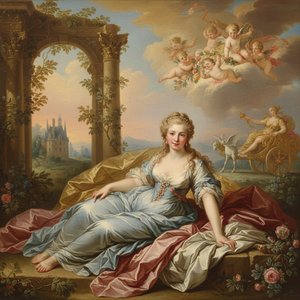
Experience 'The Love Letter' by François Boucher – a captivating Rococo masterpiece depicting two women sharing a secret moment in a serene forest setting. A romantic portrait brimming with elegance and intimacy.

Biografie umělce

François Boucher (1703-1770): mistr rokokové malby! Objevte jeho smyslné obrazy – mytologie, portréty & idylické krajiny definující francouzské umění 18. století.

from ·

Chapter 1

How large should it be?

Slide to change the size; the picture on the left shows the frame at its real width. The proportions of the original are kept.

Standardní velikost
na zakázku
CM
INCH

Vyberte si z našich přednastavených velikostí, které odpovídají původním proporcím díla.

šířka
výška

Zadejte šířku a výšku, které potřebujete pro váš rám nebo stěnu. Protože se jedná o ruční malbu, při výběru jiného formátu může umělec kolem obrazu domalovat o něco více, nebo jej mírně oříznout — rozhodnete si vy. Před zahájením malby vám zašleme digitální náhled ke schválení. Obraz zobrazený na této stránce neodpovídá skutečnému výsledku — pouze digitální náhled jej zobrazuje.

Chapter 2

How should it arrive?

Choose the edges of the stretched canvas

Choose your frame

Corner sample of the WhiteWrap canvas edge finish, stretched on masivní dřevo bars
White Kč1
Corner sample of the BlurSideWrap canvas edge finish, stretched on masivní dřevo bars
Blurside Kč1
Corner sample of the ExtendedWrap canvas edge finish, stretched on masivní dřevo bars
Extended Kč1
Corner sample of the P118B picture frame: tvarovaný polystyren, 5 cm wide and 3 cm thick
P118B Kč10
Corner sample of the P118H picture frame: tvarovaný polystyren, 5 cm wide and 3 cm thick
P118H Kč10
Corner sample of the P118W picture frame: tvarovaný polystyren, 5 cm wide and 3 cm thick
P118W Kč10
Corner sample of the P438Z picture frame: tvarovaný polystyren, 5.5 cm wide and 3.5 cm thick
P438Z Kč10
Corner sample of the P508JH picture frame: tvarovaný polystyren, 7 cm wide and 3.5 cm thick
P508JH Kč12
Corner sample of the P508YH picture frame: tvarovaný polystyren, 7 cm wide and 3.5 cm thick
P508YH Kč12
Corner sample of the P805H picture frame: tvarovaný polystyren, 5 cm wide and 3.5 cm thick
P805H Kč10
Corner sample of the P805Z picture frame: tvarovaný polystyren, 5 cm wide and 3.5 cm thick
P805Z Kč10
Corner sample of the P919BZ picture frame: tvarovaný polystyren, 7 cm wide and 3.5 cm thick
P919BZ Kč10
Corner sample of the P919G picture frame: tvarovaný polystyren, 7 cm wide and 3.5 cm thick
P919G Kč10
Corner sample of the P919XJ picture frame: tvarovaný polystyren, 7 cm wide and 3.5 cm thick
P919XJ Kč10
Corner sample of the P959ZH picture frame: tvarovaný polystyren, 5 cm wide and 3 cm thick
P959ZH Kč10
Corner sample of the P968JZ picture frame: tvarovaný polystyren, 6 cm wide and 4 cm thick
P968JZ Kč12
Corner sample of the W106C picture frame: masivní dřevo, 5 cm wide and 3 cm thick
W106C Kč8
Corner sample of the W218G picture frame: masivní dřevo, 5 cm wide and 3 cm thick
W218G Kč10
Corner sample of the W218JH picture frame: masivní dřevo, 5 cm wide and 3 cm thick
W218JH Kč8
Corner sample of the W218Y picture frame: masivní dřevo, 5 cm wide and 3 cm thick
W218Y Kč10
Corner sample of the W307PJ picture frame: masivní dřevo, 6 cm wide and 3 cm thick
W307PJ Kč10
Corner sample of the W316G picture frame: masivní dřevo, 6 cm wide and 3 cm thick
W316G Kč10
Corner sample of the W316PJ picture frame: masivní dřevo, 6 cm wide and 3 cm thick
W316PJ Kč8
Corner sample of the W316Y picture frame: masivní dřevo, 6 cm wide and 3 cm thick
W316Y Kč10
Corner sample of the W398PJ picture frame: masivní dřevo, 5 cm wide and 3 cm thick
W398PJ Kč8
Corner sample of the W4111J picture frame: masivní dřevo, 6.5 cm wide and 3.5 cm thick
W4111J Kč10
Corner sample of the W500HY picture frame: masivní dřevo, 7 cm wide and 5 cm thick
W500HY Kč15
Corner sample of the W500JH picture frame: masivní dřevo, 7 cm wide and 5 cm thick
W500JH Kč15
Corner sample of the W692G picture frame: masivní dřevo, 8 cm wide and 4 cm thick
W692G Kč12
Corner sample of the W849H picture frame: masivní dřevo, 5 cm wide and 3 cm thick
W849H Kč8
Corner sample of the W940BG picture frame: masivní dřevo, 7.5 cm wide and 4.5 cm thick
W940BG Kč15
Corner sample of the W953PJ picture frame: masivní dřevo, 6 cm wide and 3.5 cm thick
W953PJ Kč8
Corner sample of the H24-GOLD picture frame: řezané dřevo s gessu, 10 cm wide and 6 cm thick
H24-GOLD Kč30
Corner sample of the H24-SILVER picture frame: řezané dřevo s gessu, 10 cm wide and 6 cm thick
H24-SILVER Kč30
Corner sample of the H36-GOLD picture frame: řezané dřevo s gessu, 15 cm wide and 6.5 cm thick
H36-GOLD Kč45
Corner sample of the H36-SILVER picture frame: řezané dřevo s gessu, 15 cm wide and 6.5 cm thick
H36-SILVER Kč45

Moulding: . Overall size with the frame: .

Chapter 3

Who paints it, and should anything change?

Examples of what can be changed: Replace face with customer photo; Add pet (e.g., replace cat with dog); Include hidden message in background; Change background landscape or elements.
After order, OriginalUniqueArt.com team will email client for instructions and provide a mockup preview

Celosvětová doprava () za 3–4 týdny namísto standardních 5 týdnů. (1 listopad). Bez kompromisů v kvalitě.

Chapter 4

The finishing touches

A nameplate, as in a museum?

Detaily ryté bronzové plakety

This elegant plaque features the artist's name and the title of the artwork, finely engraved for a timeless presentation.

It is made from bronze with a refined, elegant finish. The text is precisely laser-engraved for a sharp and permanent result. Measuring 9x2 cm, the plaque is compact yet easy to read. It's built to be durable and scratch-resistant, offering a professional, museum-quality look. Mounting is simple thanks to the included adhesive backing.

Detaily průhledné akrylové desky

The plaque includes essential engraved details such as the artist's name, the title of the artwork, the date it was created, the type of media used-like oil on canvas or watercolor-a brief description of the piece, and a QR code that links to the complete artwork information.

It is crafted from clear acrylic, offering a sleek, modern appearance. The text is UV-engraved in black to ensure strong visual contrast. With a size of 10x15 cm, it ensures optimal readability. It comes equipped with two metal hooks for secure wall mounting. The plaque is designed to be weather-resistant, making it suitable for various environments, and it includes interactive features that work seamlessly with smartphone scanning.

Detaily černé akrylové destičky

This elegant plaque includes engraved information such as the artist's name, the title of the artwork, the date it was created, the type of media used (like oil on canvas or watercolor), a short description of the artwork, and a QR code for quick access to more information.

The plaque itself is made from refined black acrylic with a premium finish. The text is laser-engraved in white for high contrast and readability. Its size is 10x15 cm, designed to be easy to read. It comes with two metal hooks for professional mounting. The design is sleek and fits any interior style. It is also weather-resistant and durable, with built-in digital integration for mobile compatibility.

A protective varnish?

When do you need it?

Chapter 5

Your painting, as you ordered it

The Love Letter

Technika reprodukce

Rozměry reprodukce

-

Vybraní mistři umění

Vyšší míra detailu, jemnosti a delší doba výroby

-

Možnosti rámování reprodukcí

-

-

U děl nebo reprodukcí, u nichž je jakákoliv strana větší než 105 cm (přibližně 41 palců), bude rám dodán jako sestava v rozloženém stavu. Tato metoda zajišťuje bezpečné doručení a chrání dílo před poškozením během přepravy.

Vyžaduje se odborná montáž – nejedná se o produkt pro svépomocnou realizaci (DIY).
Sestava musí být složena a plátno napnuto zkušeným profesionálním rámovačem s použitím dřevěného lepidla (není součástí balení), kleští na napínání plátna a svorek pro udržení pravých úhlů křížů během schnutí lepidla. Nesprávná montáž nebo nerovnoměrné napnutí plátna může způsobit trvalé poškození uměleckého díla, které není kryto naší zárukou.

  • Jsou zahrnuty všechny lišty z masivního dřeva, přesně na míru nařezané.

  • Sestavuje se pomocí součástí balení (šroubů), plus dřevěného lepidla na rohové spoje, které není součástí balení a musí jej zajistit váš rámovač.

  • Vyžaduje se profesionální nářadí, které není součástí sady: kleště na napínání plátna a svorky pro udržení kolmosti příček během schnutí lepidla.

Důležité:
Spoje v rozích vyžadují lepidlo na dřevo, tyčinky musí být přichyceny pomocí svorek, dokud lepidlo zcela neuschne, a pro napnutí plátna na sestavený rám je zapotřebí kleští na natahování plátna. Žádný z těchto náčiní není součástí sady. Před objednáním této velikosti prosím zajistěte zkušeného profesionálního rámovače.

Popisek díla

-

-

Ochranný lak

Lesklý lak (zvýrazňuje barvy, chrání před světlem a vlhkostí)

-

Přizpůsobit své umělecké dílo

Příklady možných úprav: nahrazení obličeje fotografií zákazníka; přidání domácího mazlíčka (např. výměna kočky za psa); vložení skrytého vzkazu do pozadí; změna krajiny nebo prvků v pozadí.

-

Prioritní doručení

Celosvětové doručení () za 3–4 týdny namísto standardních 5 týdnů. (1 listopad). Bez kompromisů v kvalitě.

-

Expresní doručení

Celosvětová doprava () do 5 týdnů. (8 listopad).

V ceně

Celková cena za vybrané možnosti reprodukcí

Kč 6518

Celková cena Kč 6518

Skleněná varianta je dostupná pouze u rozměrů menších než 110 cm

Included with every order

  • Zdarma celosvětová expresní doprava
  • Vysoce kvalitní lněné plátno
  • Kompletní pojištění přepravy
  • Záruka vrácení celního poplatku
  • Záruka věrného barevného souladu
  • 100dení lhůta pro vrácení zboží (pouze při vadách výroby)
  • 100% záruka vrácení peněz
  • Sleva při více objednávkách

The Enigmatic Embrace: Deconstructing "The Love Letter" by François Boucher

François Boucher’s “The Love Letter,” painted in 1750 for the discerning marquise de Pompadour, is more than a charming pastoral scene; it's a meticulously crafted embodiment of Rococo ideals – a delicate dance between sensuality, allegory, and aristocratic leisure. The painting captures a moment of quiet intimacy within a verdant forest setting, depicting two young women seated on the ground, lost in conversation amidst scattered sheep, creating an atmosphere of serene beauty and subtle intrigue. Boucher masterfully employs a palette of soft pastels – blush pinks, pale blues, and creamy greens – to evoke a sense of ethereal light and dreamlike tranquility. The figures themselves are rendered with exquisite detail, their clothing flowing and luxurious, hinting at the wealth and privilege of their world. The sheep, strategically placed throughout the composition, serve not merely as decorative elements but also as symbols of innocence and pastoral virtue, anchoring the scene within a traditional Arcadia – an idealized realm of shepherds and shepherdesses.

Rococo Refinement: Boucher’s Artistic Language

Boucher was a pivotal figure in establishing the Rococo style, characterized by its emphasis on ornamentation, grace, and playful eroticism. Unlike the grand narratives of his predecessors, Boucher frequently focused on intimate scenes of courtship and leisure, often populated with idealized figures and fantastical elements. “The Love Letter” exemplifies this approach perfectly. The composition is carefully balanced, utilizing a pyramidal structure to draw the eye towards the central figures. Boucher’s brushwork is remarkably smooth and fluid, creating an illusion of depth and movement. He expertly utilizes *sfumato*, a technique borrowed from Leonardo da Vinci, to soften edges and create a hazy atmosphere, contributing to the painting's overall sense of dreaminess. The meticulous rendering of fabrics – the satin gowns, the delicate lace collars – demonstrates Boucher’s exceptional skill in depicting textures and materials, adding layers of visual richness to the scene.

A Marquise’s Secret: Context and Patronage

The painting's creation was intrinsically linked to the patronage of Madame de Pompadour, Louis XV’s influential mistress. She was a passionate art collector and a significant force in shaping the artistic landscape of France during the 18th century. Boucher, as her favored artist, received considerable commissions from her, often tasked with creating decorative panels for her lavish residences, particularly at Bellevue. “The Love Letter” was originally intended to adorn an *chambre doré* (gilded room) within this estate, a space designed to evoke the beauty and tranquility of the countryside. The painting’s intimate setting and subtle eroticism were likely chosen to reflect Pompadour's own sophisticated tastes and her desire for a private sanctuary away from the pressures of court life. The inclusion of the messenger, holding a letter, immediately establishes a narrative of romantic correspondence and secret affections – themes that resonated deeply with the marquise’s personal life.

Symbolism and Emotional Resonance

Beyond its surface beauty, “The Love Letter” is rich in symbolic meaning. The two women represent an idealized vision of feminine companionship and mutual affection. Their relaxed posture and engaged gazes suggest a deep connection and shared understanding. The forest setting itself symbolizes fertility, abundance, and the restorative power of nature. The scattered sheep further reinforce this association with pastoral innocence and tranquility. However, there’s also a subtle undercurrent of melancholy – a hint that this idyllic scene is fleeting and ephemeral. Boucher masterfully captures a moment of suspended time, inviting viewers to contemplate the complexities of love, desire, and the passage of time. The painting's enduring appeal lies in its ability to evoke a sense of nostalgia for a bygone era—a world of refined elegance, secret passions, and timeless beauty.

This reproduction offers an exceptional opportunity to bring Boucher’s masterpiece into your home or office, capturing the essence of Rococo artistry with stunning detail and vibrant color. It's more than just a painting; it’s a portal to a world of refined pleasure and romantic intrigue.

Otázky a odpovědi

Jakou náladu by do prostoru přineslo dílo "The Love Letter"?

S svou Romantic atmosférou je dílo „The Love Letter“ ideální volbou do Hotel Lobby.

Je dílo „The Love Letter“ od François Boucher spíše světlé, nebo tmavé?

„The Love Letter“ má celkovou jasnost deep_shadow a jeho luminanci je Dark.

Jakou barvu v kompozici díla „The Love Letter“ od François Boucher dominuje?

Barvou, která v díle „The Love Letter“ nejvíce vyniká, je Black (#100e0e). Dominantní barva je užitečná při sladění uměleckého díla s interiérem.

More about this painting

Náhled v interiéru Náhled v AR Přepnout na tisk Přepnout na digitální obraz Sdílet
Podrobnosti o díle Průvodce Přidat do oblíbených Stáhnout Podobné položky Rentgenové snímky Slideshow Q&A Statistiky

In numbers

  • 1750the year it was painted
  • 29frames to choose from
  • standard sizes, in its own proportions
  • 5weeks to paint and deliver it
François Boucher

François Boucher

1703 - 1770, Francie

Quick facts about François Boucher

  • Artistic Movement Or Style: Rokoko
  • Artists Or Movements Influenced By This Artist: ['Neoklasicismus']
  • Artists Who Influenced This Artist:
    • François Lemoyne
    • Jean-François Cars
  • Date Of Birth: 29. září 1703
  • Date Of Death: 30. května 1770
  • Full Name: François Boucher
  • Nationality: Francouzský
  • Notable Artworks:
    • Rinaldo a Armida
    • Snídaně
    • Triumf Veny
    • Vulcan a Venuše
  • Place Of Birth: Paříž, Francie

Biografie umělce

François Boucher: The Painter of Rococo Dreams

François Boucher (1703–1770) remains one of the most captivating and enduring figures in the history of French art. More than just a painter, he was a master orchestrator of beauty, a conduit for the aristocratic sensibilities of his time, and a pivotal architect of the Rococo style. His canvases shimmer with pastel hues, overflow with mythological grace, and whisper tales of pleasure, leisure, and an idealized world – a realm where elegance reigned supreme.

Early Years and Artistic Foundations

Born in Paris on September 29th, 1703, François Boucher’s artistic journey began not within the hallowed halls of a prestigious academy, but under the watchful eye of his father, Jean Boucher, a skilled embroiderer and painter of decorative patterns. This early exposure to craftsmanship instilled in him a meticulous attention to detail and an appreciation for refined aesthetics. At seventeen, he secured an apprenticeship with François Lemoyne, a leading painter at the Louvre, gaining invaluable experience in fresco painting – a demanding discipline that honed his technical skills and understanding of composition. Crucially, he also studied under Jean-François Cars, a renowned engraver, which significantly influenced his later work, particularly his use of line and detail.

The Grand Prix de Rome and Italian Influence

A defining moment in Boucher’s career arrived in 1720 when he won the prestigious Grand Prix de Rome. This competition, established by Pope Benedict XIV to encourage French artists to study in Italy, provided Boucher with a rare opportunity to immerse himself in the artistic treasures of Rome. He spent several years absorbing the influence of masters like Caravaggio and Tiepolo, particularly their dramatic use of light and shadow, and their ability to imbue religious subjects with intense emotion. The experience profoundly shaped his style, introducing him to new techniques and inspiring a shift towards a more dynamic and expressive approach – though he retained the delicate elegance characteristic of Rococo.

Ascension at Court: Madame de Pompadour and Royal Patronage

Upon his return to France in 1727, Boucher was immediately admitted to the Académie Royale de Peinture et de Sculpture. His debut work, “Rinaldo and Armida” (1734), a grand historical painting depicting a legendary love story, instantly established him as a rising star. However, it was his association with Madame de Pompadour, Louis XV’s influential mistress, that truly propelled him to the pinnacle of artistic fame. She became his most devoted patron, commissioning numerous works – portraits, mythological scenes, and decorative panels – that adorned her lavish estate at Versailles. Boucher's ability to capture the essence of aristocratic elegance and create a world of refined beauty made him indispensable to the court.

A World of Myth and Grace: Key Works and Themes

Boucher’s oeuvre is remarkably diverse, encompassing a wide range of subjects while consistently maintaining his signature style. His paintings frequently depict scenes from classical mythology – “The Triumph of Venus” (1740-1751) stands as a particularly dazzling example of his mastery in this genre, showcasing a multitude of nude figures amidst lush landscapes. He also excelled at portraiture, capturing the beauty and charm of noblewomen like Madame de Pompadour herself. Beyond these subjects, Boucher created numerous idyllic pastoral scenes – “The Breakfast” (1739) is a delightful example of domestic tranquility – and even ventured into landscape painting, producing works such as "The Setting of the Sun," characterized by their lyrical beauty and evocative atmosphere. Throughout his work, recurring themes include love, beauty, leisure, and an idealized vision of nature.

Legacy and Lasting Influence

François Boucher’s influence extended far beyond his own paintings. He designed costumes and sets for the theater, created elaborate tapestries for the Beauvais workshops, and collaborated with the Gobelins Manufactory, shaping the visual language of the French court and contributing significantly to the development of decorative arts. Despite facing criticism later in his career – some critics accused him of prioritizing superficial beauty over genuine emotion – Boucher’s impact on subsequent generations of artists is undeniable. He profoundly influenced figures like Jean-Honoré Fragonard, and his style helped pave the way for Neoclassicism through the work of his students. Today, François Boucher remains a celebrated figure in art history, remembered as the quintessential painter of Rococo – a master of elegance, grace, and the pursuit of beauty.

Rychlé informace

  • Title: The Love Letter
  • Influences:
    • Watteau
    • Rubens
  • Notable elements: Pastoral scene
  • Location: National Gallery, London
  • Year: 1750

Artový kvíz

U každé otázky je pouze jedna správná odpověď.

Otázka 1:
What is the primary subject depicted in ‘The Love Letter’?
Otázka 2:
Which artistic movement is ‘The Love Letter’ most closely associated with?
Otázka 3:
François Boucher was known for his paintings featuring which of the following themes?
Otázka 4:
In what year was ‘The Love Letter’ painted?
Otázka 5:
What is the approximate size of ‘The Love Letter’?
Prozkoumejte umělecká díla uspořádaná podle témat, stylů a charakteristik.