

 Zobrazit v interiéru
 Odeslat
 Sdílet
 Podrobnosti
 Průvodce

 Stáhnout obrázek
 Podobné kousky
 Rentgenové snímky
 Slideshow
 Statistiky
Přerušený spánek
 Olej na plátně
- Obrazová tvorba na stěnu
- Rococo Elegance
 1750
1750- – Raná modernita
 82.0 x 75.0 cm
 Metropolitní muzeum umění
 Přečíst si více
Ručně malovaná olejová reprodukce
Ručně malované olejné plátno v libovolném rozměru i s rámem, vyrobené našimi umělci na zakázku. ( Přepnout na tiskové verze Přepnout na digitální verzi obrazu)




P118B Kč10

P118H Kč10

P118W Kč10

P438Z Kč10

P508JH Kč12

P508YH Kč12

P805H Kč10

P805Z Kč10

P919BZ Kč10

P919G Kč10

P919XJ Kč10

P959ZH Kč10

P968JZ Kč12

W106C Kč8

W218G Kč10

W218JH Kč8

W218Y Kč10

W307PJ Kč10

W316G Kč10

W316PJ Kč8

W316Y Kč10

W398PJ Kč8

W4111J Kč10

W500HY Kč15

W500JH Kč15

W692G Kč12

W849H Kč8

W940BG Kč15

W953PJ Kč8




Vyberte si z našich přednastavených velikostí, které odpovídají původním proporcím díla.

Zadejte šířku a výšku, které potřebujete pro váš rám nebo stěnu. Protože se jedná o ruční malbu, při výběru jiného formátu může umělec kolem obrazu domalovat o něco více, nebo jej mírně oříznout — rozhodnete si vy. Před zahájením malby vám zašleme digitální náhled ke schválení. Obraz zobrazený na této stránce neodpovídá skutečnému výsledku — pouze digitální náhled jej zobrazuje.
Po přijetí objednávky vám tým OriginalUniqueArt.com zašle e-mail s pokyny a poskytne náhledovou verzi.
Celosvětová doprava () za 3–4 týdny namísto standardních 5 týdnů. (22 říjen). Bez kompromisů v kvalitě.

Zdarma celosvětová expresní doprava

Vysoce kvalitní lněné plátno

Úplné pojištění přepravy

Záruka vrácení celního poplatku

Záruka věrného barevného shodu

100dení lhůta pro vrácení zboží (pouze při vadách výroby)

100% garance vrácení peněz

Sleva při více objednávkách
 Skleněná varianta je dostupná pouze u rozměrů menších než 110 cm

Přerušený spánek
Technika provedení
Velikost reprodukce
-


Celková cena
Kč 6422
François Boucher: Mistral de l’Élégance Rococo et Éveil Idéal
François Boucher (1703–1770) demeure une figure emblématique du mouvement rococo français, reconnu comme l'un des peintres les plus célébrés de cette époque artistique dominante. Son œuvre incarne l'élégance raffinée, la sensualité délicate et le charme ludique caractéristiques de ce style influent, qui marquera profondément les arts décoratifs et picturaux du XVIIIe siècle. Il est bien plus qu’une simple représentation visuelle; il est une fenêtre ouverte sur les valeurs esthétiques et morales de son temps. ### Composition et Style : Une Symphonie Visuelle dans la Nature Idyllicienne La toile "Le Sommeil interrompu" mesure 82 x 75 cm et offre au spectateur une expérience sensorielle remarquable. Boucher maîtrise parfaitement la composition, utilisant des diagonales convergentes pour créer une dynamique visuelle captivante qui guide l’œil à travers la scène. Cette approche artistique est typique du rococo, où les lignes courbes dominent et où la recherche de beauté et d'harmonie est omniprésente. Les personnages sont placés dans un paysage forestier serein et lumineux, évoquant une atmosphère paisible et pleine de promesses. La présence des chiens et des oiseaux renforce cette ambiance naturelle et ajoute une touche de spontanéité à l’ensemble. L’utilisation subtile de couleurs vives et chaleureuses contribue à renforcer l'effet émotionnel de la peinture. ### Technique et Détails Obsessionnels : Une Maîtrise du Couleurs et de la Lumière La peinture est réalisée avec une précision remarquable, témoignant de la maîtrise technique de Boucher. Il utilise une palette riche et variée pour capturer les nuances subtiles de lumière et d'ombre dans le paysage et sur les personnages. Les détails sont traités avec une attention extrême aux faits observés, notamment la texture des feuilles et des robes, créant une illusion de réalisme trompeur. Cette technique est caractéristique du rococo, où l’objectif était de reproduire fidèlement la beauté naturelle tout en lui insufflant une certaine élégance artificielle. L'utilisation de la peinture à l'huile permet une grande richesse chromatique et une luminosité exceptionnelle. ### Contexte Historique : Un Éloge de l'Amour et du Luxe dans les Intérieurs Royalistes "Le Sommeil interrompu" faisait partie d’une paire d’œuvres destinées à décorer le Château Bellevue, résidence privée de Madame de Pompadour, épouse officielle du roi Louis XV. Cette décoration intérieure reflète les goûts raffinés de la noblesse française et témoigne de l'influence artistique du rococo dans les milieux privilégiés. Comme beaucoup d’autres œuvres de cette époque, elle partageait le même souci esthétique qu'une œuvre italienne comme "La Cascade" par Jean-Honoré Fragonard, où une atmosphère douce et rêveuse était obtenue grâce à une maîtrise exceptionnelle des couleurs et de la lumière. Cette peinture est un symbole du luxe et de l’amour dans les palais royaux français. ### Symbolisme : Éveil Sensuel et Réaffirmation des Valeurs Élégantes Au-delà de sa beauté esthétique, "Le Sommeil interrompu" porte en lui une signification symbolique profonde. Le sommeil interrompu représente la fragilité de l'amour et la difficulté à maintenir une certaine innocence dans les relations humaines. Cependant, il évoque également le désir ardent et la passion qui sont au cœur du rococo. La jeune femme réveillée par le jeune homme incarne la beauté féminine et la jeunesse renouvelée, tandis que le jeune homme représente la force masculine et l’énergie vitale. Cette œuvre est une célébration des valeurs élégantes et raffinées qui étaient considérées comme essentielles dans la société française du XVIIIe siècle. Elle rappelle les œuvres italiennes de cette époque où la beauté était considérée comme un signe de vertu et d'harmonie intérieure.Otázky a odpovědi
Jaký tvar a rozměry má dílo „Přerušený spánek“ od François Boucher?
Formát díla „Přerušený spánek“ je Čtverec a originál měří 82 x 75 cm. Obě informace jsou užitečné při plánování reprodukce.
Patří dílo „Přerušený spánek“ do volného užití?
Co se týče autorských práv, dílo "Přerušený spánek" spadá do patří do volného užití – autorská práva vypršela.
Jaký je doporučený formát a orientace pro tisk díla "Přerušený spánek"?
Pro dílo „Přerušený spánek“ doporučujeme tisk ve velikosti Střední velikost v orientaci Čtverec.
Biografie umělce
François Boucher: The Painter of Rococo Dreams
François Boucher (1703–1770) remains one of the most captivating and enduring figures in the history of French art. More than just a painter, he was a master orchestrator of beauty, a conduit for the aristocratic sensibilities of his time, and a pivotal architect of the Rococo style. His canvases shimmer with pastel hues, overflow with mythological grace, and whisper tales of pleasure, leisure, and an idealized world – a realm where elegance reigned supreme.
Early Years and Artistic Foundations
Born in Paris on September 29th, 1703, François Boucher’s artistic journey began not within the hallowed halls of a prestigious academy, but under the watchful eye of his father, Jean Boucher, a skilled embroiderer and painter of decorative patterns. This early exposure to craftsmanship instilled in him a meticulous attention to detail and an appreciation for refined aesthetics. At seventeen, he secured an apprenticeship with François Lemoyne, a leading painter at the Louvre, gaining invaluable experience in fresco painting – a demanding discipline that honed his technical skills and understanding of composition. Crucially, he also studied under Jean-François Cars, a renowned engraver, which significantly influenced his later work, particularly his use of line and detail.
The Grand Prix de Rome and Italian Influence
A defining moment in Boucher’s career arrived in 1720 when he won the prestigious Grand Prix de Rome. This competition, established by Pope Benedict XIV to encourage French artists to study in Italy, provided Boucher with a rare opportunity to immerse himself in the artistic treasures of Rome. He spent several years absorbing the influence of masters like Caravaggio and Tiepolo, particularly their dramatic use of light and shadow, and their ability to imbue religious subjects with intense emotion. The experience profoundly shaped his style, introducing him to new techniques and inspiring a shift towards a more dynamic and expressive approach – though he retained the delicate elegance characteristic of Rococo.
Ascension at Court: Madame de Pompadour and Royal Patronage
Upon his return to France in 1727, Boucher was immediately admitted to the Académie Royale de Peinture et de Sculpture. His debut work, “Rinaldo and Armida” (1734), a grand historical painting depicting a legendary love story, instantly established him as a rising star. However, it was his association with Madame de Pompadour, Louis XV’s influential mistress, that truly propelled him to the pinnacle of artistic fame. She became his most devoted patron, commissioning numerous works – portraits, mythological scenes, and decorative panels – that adorned her lavish estate at Versailles. Boucher's ability to capture the essence of aristocratic elegance and create a world of refined beauty made him indispensable to the court.
A World of Myth and Grace: Key Works and Themes
Boucher’s oeuvre is remarkably diverse, encompassing a wide range of subjects while consistently maintaining his signature style. His paintings frequently depict scenes from classical mythology – “The Triumph of Venus” (1740-1751) stands as a particularly dazzling example of his mastery in this genre, showcasing a multitude of nude figures amidst lush landscapes. He also excelled at portraiture, capturing the beauty and charm of noblewomen like Madame de Pompadour herself. Beyond these subjects, Boucher created numerous idyllic pastoral scenes – “The Breakfast” (1739) is a delightful example of domestic tranquility – and even ventured into landscape painting, producing works such as "The Setting of the Sun," characterized by their lyrical beauty and evocative atmosphere. Throughout his work, recurring themes include love, beauty, leisure, and an idealized vision of nature.
Legacy and Lasting Influence
François Boucher’s influence extended far beyond his own paintings. He designed costumes and sets for the theater, created elaborate tapestries for the Beauvais workshops, and collaborated with the Gobelins Manufactory, shaping the visual language of the French court and contributing significantly to the development of decorative arts. Despite facing criticism later in his career – some critics accused him of prioritizing superficial beauty over genuine emotion – Boucher’s impact on subsequent generations of artists is undeniable. He profoundly influenced figures like Jean-Honoré Fragonard, and his style helped pave the way for Neoclassicism through the work of his students. Today, François Boucher remains a celebrated figure in art history, remembered as the quintessential painter of Rococo – a master of elegance, grace, and the pursuit of beauty.

François Boucher
1703 - 1770 , Francie
Rychlé informace
- Artistic Movement Or Style: Rokoko
- Artists Or Movements Influenced By This Artist: ['Neoklasicismus']
- Artists Who Influenced This Artist:
- François Lemoyne
- Jean-François Cars
- Date Of Birth: 29. září 1703
- Date Of Death: 30. května 1770
- Full Name: François Boucher
- Nationality: Francouzský
- Notable Artworks:
- Rinaldo a Armida
- Snídaně
- Triumf Veny
- Vulcan a Venuše
- Place Of Birth: Paříž, Francie
Související články
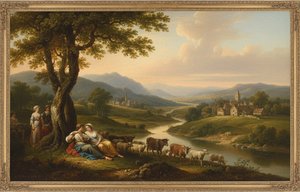
Idyllic Visions: Exploring the Pastoral Tradition in Western Art – Themes, Techniques & Enduring Appeal
Explore the rich history of pastoral art from classical Arcadia to contemporary interpretations. Discover key artists, themes & collecting tips at OriginalUniqueArt.

Idyllic Visions: Exploring Pastoral Scenes in Art History – From Arcadia to Modern Interpretations
Explore the captivating history of pastoral art, from classical Arcadia to 19th-century masterpieces. Discover key artists like Millet & Cole and find serene landscape paintings for your home at OriginalUniqueArt.

The Rococo Aesthetic: Opulence, Rebellion & the Pursuit of Pleasure in 18th-Century Art
Explore the opulent world of Rococo art! Discover its origins, key artists like Watteau & Boucher, and lasting influence on design. Expert insights for collectors & enthusiasts.

Top 10 mistrovských děl rokokového umění | OriginalUniqueArt.cz
Prozkoumejte 10 ikonických děl rokokového umění – Fragonard, Boucher a další. Objevte příběhy mistrů, techniky a pastelové barvy tohoto elegantního stylu. Reprodukce obrazů nejvyšší kvality na OriginalUniqueArt.cz!

Idyllic Visions: Exploring the Pastoral Scene in Art History – From Arcadia to Modern Interpretations
Explore the captivating history of pastoral art from classical Arcadia to modern masterpieces. Discover key artists like Millet & Cole at OriginalUniqueArt. Find serene landscape paintings for your home.

