Portrét Louis Anquetin

53 nejslavnějších obrazů autora Louis Anquetin, každý naprosto unikátní

Aktualizováno listopad 2026 · seřazeno podle našeho skóre popularity (vyhledávání, návštěvy a objednávky u každého díla) · 56 děl umělce Louis Anquetin v našem katalogu

Stručně řečeno

The Peasant (1886) je obraz autora Louis Anquetin, který přitahuje nejvíce pohledů. Poté se zrak přesouvá k Girl Reading a Newspaper (1890) a Woman at the Champs-Élysées by Night (1891). Z 56 děl umělce Louis Anquetin v našem katalogu je těchto 53 těch nejznámějších; každé z nich je unikátním originálem s uvedením roku vzniku, muzea a důvodu jeho nesmrtelnosti.

1861 – 1932, Étrépagny Impressionism Nejvíce děl: Musée d'Orsay

Top 10 obrazů autora Louis Anquetin podle výběru galerie

1
The Peasant (1886) od Louis Anquetin

The Peasant

1886 · Oil On Canvas

An elderly man occupies the center of this oil on canvas work, positioned against a backdrop of a grassy field and a single tree trunk. He faces the viewer directly, his figure anchored by the verticality of the tree to his left. The man holds a cane, a detail that suggests his advanced age. At his feet, several apples are scattered across the ground, indicating an orchard or garden setting.…

2
Girl Reading a Newspaper (1890) od Louis Anquetin

Girl Reading a Newspaper

1890 · Pastel · Tate Gallery, Londýn

In this intimate portrait, titled Girl Reading a Newspaper, the artist Louis Anquetin captures a quiet moment of private contemplation. The subject appears in profile, her gaze cast downward as she engages with her newspaper and her own reflection. There is a sense of stillness in her posture, a pause in the rush of daily life that invites the viewer to wonder what thoughts occupy her mind. The scene feels…

3
Woman at the Champs-Élysées by Night (1891) od Louis Anquetin

Woman at the Champs-Élysées by Night

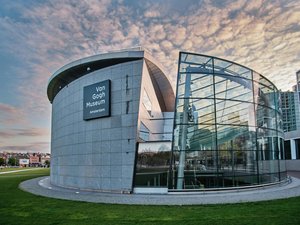
1891 · Oil · Van Goghovo muzeum, Amsterdam

Louis Anquetin captures a solitary moment in the nocturnal pulse of Paris in his work, Woman at the Champs-Élysées by Night. Created about 1890 - 1891, the painting fixes a single figure within the urban shadows. An extravagantly dressed lady moves through the scene, her presence defined by the artificial glow of streetlights. She walks alone along the grand boulevard, a quiet silhouette against the city's evening light.

4
Portrait of Madeleine Bernard (1892) od Louis Anquetin

Portrait of Madeleine Bernard

1892 · Oil On Canvas · Rhode Island School of Design Museum of Art, Providence

The gaze of the viewer meets the quiet presence of Portrait of Madeleine Bernard, a work that captures a singular moment of stillness. Painted by Louis Anquetin, this oil on canvas presents a woman who seems to exist in a space of soft shadows and muted tones. The subject, Madeleine Bernard, looks toward us with an expression that remains poised and enigmatic, her features emerging from a dark, textured environment.

5
Self-portrait with a Smoking Pipe (1892) od Louis Anquetin

Self-portrait with a Smoking Pipe

1892 · Oil On Canvas

In "Self-portrait with a Smoking Pipe" by Louis Anquetin, the artist presents himself in a medium close-up that captures the head and shoulders of a man with a full brown beard. He sits slightly off-center, meeting the viewer's gaze with a slight smile while holding a smoking pipe in his mouth. A bright white top hat rests upon his head, decorated with a cluster of red berries and green leaves…

6
Le Pont Neuf, Paris (1889) od Louis Anquetin

Le Pont Neuf, Paris

1889 · Oil On Canvas

In this work, titled Le Pont Neuf, Paris, we encounter a significant piece from 1889 by the French painter Louis Anquetin. The canvas presents a view of the historic bridge, rendered with a specific intensity that marks a departure from the more traditional landscape approaches of the era. It is a work that captures a particular moment in the development of a highly individualistic style.

7
The Theatre Foyer (1892) od Louis Anquetin

The Theatre Foyer

1892 · Oil

In "The Theatre Foyer" by Louis Anquetin, a crowded assembly of elegantly dressed figures gathers within the dim confines of a café or theater. The composition feels tight and slightly chaotic, pressing the subjects into a dense, intimate arrangement. People lean toward one another in quiet conversation or remain still, observing the movement of the crowd. This social intersection creates a sense of shared, fleeting moments caught in a shallow…

8
Woman with Lilacs (1892) od Louis Anquetin

Woman with Lilacs

1892 · Oil On Canvas

In Woman with Lilacs by Louis Anquetin, the composition centers on a seated young woman who occupies the majority of the frame. She is positioned amidst a large bouquet of white lilies that act as a secondary focal point within the arrangement. The subject matter focuses on the intersection of femininity and nature, utilizing the lilies as emblems of purity and innocence. The arrangement of the flowers and the posture…

9
Portrait of a Yvette Guilbert (1893) od Louis Anquetin

Portrait of a Yvette Guilbert

1893 · Oil · Musée Toulouse-Lautrec, Albi

In this 1893 oil portrait, Louis Anquetin captures the likeness of Yvette Guilbert. She was a French cabaret singer and actress of the Belle Époque, a figure of the Parisian stage. The canvas holds her in a moment of quietude, a departure from the bright lights of the music halls. Her presence is a study in stillness.

10
Avenue de Clichy Five O'Clock in the Evening (1887) od Louis Anquetin

Avenue de Clichy Five O'Clock in the Evening

1887 · Oil · Wadsworth Atheneum, Hartford

In the heart of late nineteenth-century Paris, amidst the gaslit streets and the rhythmic pulse of urban expansion, Louis Anquetin captured a fleeting moment of metropolitan life in Avenue de Clichy Five O'Clock in the Evening. This work acts as a window into a world caught between the fading light of day and the burgeoning energy of the night. Rendered in a striking monochromatic palette, the painting strips away the…

Slavná díla umělce Louis Anquetin, čísla 11 až 53

Slavná díla Louis Anquetin podle jednotlivých období

Motivy, které zaujaly Louis Anquetin

Čtyři témata, která se v těchto originálech nejčastěji objevují, z nichž každé má svůj nejlepší příklad.

Muzea, v nichž jsou vystavena originálna umělce Louis Anquetin

8 muzea, v nichž je umístěno nejvíce obrazů z této stránky.

Muzeum Město Díla autora Louis Anquetin Obrazy z tohoto seznamu
Musée d'Orsay, PařížMusée d'Orsay Paříž 2 Henri Samary, FEMME DANS LA RUE
Tate Gallery, LondýnTate Gallery Londýn 1 Girl Reading a Newspaper
Van Goghovo muzeum, AmsterdamVan Goghovo muzeum Amsterdam 1 Woman at the Champs-Élysées by Night
Rhode Island School of Design Museum of Art, ProvidenceRhode Island School of Design Museum of Art Providence 1 Portrait of Madeleine Bernard
Musée Toulouse-Lautrec, AlbiMusée Toulouse-Lautrec Albi 1 Portrait of a Yvette Guilbert
Wadsworth Atheneum, HartfordWadsworth Atheneum Hartford 1 Avenue de Clichy Five O'Clock in the Evening
Art Institute of Chicago, ChicagoArt Institute of Chicago Chicago 1 The Elegant Profile of Bal Mabille
National Gallery, LondýnNational Gallery Londýn 1 Two Studies for 'The Three Graces'

Louis Anquetin napříč desetiletími: jeden unikátní originál pro každou dekádu

Díla podle dekád

Vyberte si dekádu a prohlédněte si originál, který ji definuje.

Obrazy umělce Louis Anquetin: dotazy pro galerii

Kterým nejznámějším dílem je Louis Anquetin?Odhalit odpověď

The Peasant (1886). Následují Girl Reading a Newspaper (1890) a Woman at the Champs-Élysées by Night (1891).

V jakém věku vytvořil(a) Louis Anquetin dílo The Peasant?Odhalit odpověď

25 let: dílo The Peasant pochází z roku 1886 a Louis Anquetin se narodil/a v roce 1861.

Kterých deset obrazů autora Louis Anquetin je nejznámějších?Odhalit odpověď

The Peasant, Girl Reading a Newspaper, Woman at the Champs-Élysées by Night, Portrait of Madeleine Bernard, Self-portrait with a Smoking Pipe, Le Pont Neuf, Paris, The Theatre Foyer, Woman with Lilacs, Portrait of a Yvette Guilbert a Avenue de Clichy Five O'Clock in the Evening. Hodnocení výše uvádí rok a muzeum pro každé z nich.

Kolik známých děl má autor Louis Anquetin?Odhalit odpověď

Náš katalog obsahuje 56 děl umělce Louis Anquetin z let 1880 až 1932.

Kde lze vidět nejznámější originály umělce Louis Anquetin?Odhalit odpověď

Většinou v Musée d'Orsay (Paříž), Tate Gallery (Londýn) a Van Goghovo muzeum (Amsterdam). V tabulce muzeí výše jsou vypsány všechny.

V jakém období vytvořil(a) Louis Anquetin svá nejznámější obrazy?Odhalit odpověď

V období 1890s: 20 z celkem 53 děl na této stránce vzniklo právě tehdy, z toho Girl Reading a Newspaper z nich.

Který slavný obraz od Louis Anquetin je nejstarší a který nejnovější?Odhalit odpověď

Na této stránce je nejstarší dílo z Henri Samary (1880) a nejnovější z Village (1932).

Jakým tématům se Louis Anquetin věnoval/a nejčastěji?Odhalit odpověď

Woman (7), Women (4) a Parisian scene (3) napříč 53 díly na této stránce.

Jaké materiály používal(a) Louis Anquetin nejčastěji?Odhalit odpověď

Oil On Canvas, u 5 z 53 děl na této stránce.

K kterému směru patří dílo umělce Louis Anquetin?Odhalit odpověď

Impressionism a Post-impressionism, podle originálů na této stránce.

Jaká originální díla Louis Anquetin mohu vidět v Musée d'Orsay?Odhalit odpověď

Henri Samary a FEMME DANS LA RUE: muzeum Musée d'Orsay, Paříž má v obsluze 2 děl z této stránky.

Louis Anquetin: portrét umělce

Vize architekt formy: Život a odkaz Louisa Anquetina

Narodila se v pobřežní atmosféře Etretat v Normandii v roce 1861 a Louis Émile Anquetin se vyvinul jako jedinečná síla v bouřlivé krajině francouzského malířství konce devatenáctého století. Jeho umělecká cesta nebyla nikdy pouhou snahou o imitaci; byla to spíše hluboká explorace toho, jak lze tradici rozložit a znovu sestavit skrze moderní hledisko. Ačkoliv jeho raná léta byla dotknuta rozkvétajícím světlem impresionismu, Anquetin disponoval vrozeným neklidem, který ho tlačil za hranice pomíjivých atmosférických jevů směrem k něčemu strukturálnějšímu, trvalejšímu a hluboce symbolickému. Vedle svého současníka Henriho de Toulouse-Lautreca se pohyboval v živých, často chaotických uměleckých kruzích Paříže, formovaný mentorstvím Fernanda Cormona, přesto si vždy udržel stylistickou nezávislost, která nakonec měla redefinovat hranice moderní kompozice.

Nejrevolučnější kapitola Anquetinovy kariéry přišla s narozením cloisonnismu, techniky, kterou pilotoval ve spolupráci s Émilem Bernardem. Toto hnutí se snažilo odmítnout měkké, rozmazané okraje impresionismu ve prospěší odvážné, grafické jasnosti inspirované ostrými kontury vitráží a elegantní jednoduchostí japonských tisků ukiyo-e. Použitím plochých oblastí s nasycenou barvou ohraničených těžkými černými kontury Anquetin vytvářel díla, která disponovala téměř sochařskou váhou. Tato metoda dělala víc než jen zachycování scény; destilovala realitu do jejích nejzákladnějších, symbolických prvků a vytvářela vizuální jazyk, který působil současně i starobyle i avantgardně. Skrze tento filtr se plátno stalo prostorem záměrného designu, nikoliv pouhým oknem do přírody.

Syntéza velkoleposti a modernity

Jak jeho kariéra dozrávala, Anquetinova estetika prošla fascinující metamorfózou, kdy se odklonila od plochých rovinn cloisonnismu směrem k hluboké úctě k rubensovské tradici. Tento posun představoval návrat k velkoleposti starých mistrů, charakterizovaný přijetím komplexních alegorických narativů a pečlivou pozorností k anatomickým a kompozice detailům. Začal proplétat strukturální odvážnost svých dřívějších experimentů s mohutnou, svalovitou energií Petra Paula Rubense. V dílech jako „Rinaldo a Armida“ lze spatřit tuto dechberoucí syntézu: emocionální hloubku a klasické drama barokní éry setávající se s moderním smyslem malíře, který rozuměl síle linie.

Anquetinova schopnost pohybovat se mezi těmito odlišnými světy – pomíjivou energií pařížského pouličního života a nadčasovou váhou historického mýtu – je tím, co mu zajišťuje místo v dějinách umění. Jeho díla často zachycují tep měnícího se světa, jako je evokativní „Avenue de Clichy: Pět hodin večer“*, kde je bujná noční energie Paříže vykreslena s elegantní, téměř filmovou grácií. Ať už skrze intimní, jemné ztvárnění „Portrétu mladé ženy s dlouhými vlasy“ nebo skrze odvážnou, grafickou sílu svých experimentálnějších děl, Anquetinovo dílo zůstává svědectvím o síle stylistické evoluce. Zůstává klíčovou postavou pro každého sběratele, který usiluje o pochopení mostu mezi klasickou minulostí a úsvitem modernismu.