
 Преглед в реален мащаб
 Изпрати
 Сподели
 Детайли
 Ръководство

 Изтегляне
 Подобни артикули
 Рентгенова снимка
 Слайдшоу
 Q&A
Q&A Статистика
Florence

- 66.0 x 91.0 cm


 Прочети повече
Изкуството, представено на тази страница, е защитено от законите за авторско право, което означава, че не можем законно да създаваме или продаваме идентични репродукции. Тази защита се прилага съгласно международни споразумения като Бернска конвенция и от националното законодателство, включително разпоредбите на Закон за авторското право на САЩ – Раздел 17.
Този метод е напълно съвместим с законите за авторско право, тъй като не включва копиране или дублиране на защитеното произведение. Вместо това става въпрос за творческа реинтерпретация – нова картина, която е вдъхновена от оригинала, но не е идентична с него.
Жикле / Художествен принт
Giclée печат или принт върху платно с музейно качество, бързо производство и гъвкави опции за завършен вид. ( Купете ръчно рисувана картина Превключване към дигитално изображение)




P118B €10

P118H €10

P118W €10

P438Z €10

P508JH €12

P508YH €12

P805H €10

P805Z €10

P919BZ €10

P919G €10

P919XJ €10

P959ZH €10

P968JZ €12

W106C €8

W218G €10

W218JH €8

W218Y €10

W307PJ €10

W316G €10

W316PJ €8

W316Y €10

W398PJ €8

W4111J €10

W500HY €15

W500JH €15

W692G €12

W849H €8

W940BG €15

W953PJ €8




Изберете от нашите предварително зададени размери, които съответстват на оригиналните пропорции на произведението.

Въведете необходимата ширина и височина, за да паснат на вашата рамка или стена. Принтовете могат само да се изрязват, но никога не могат да бъдат по-големи от оригиналната картина, така че при размер с различен формат част от изображението ще бъде загубена. Преди да започнем печат, ще ви изпратим дигитален мок업 за одобрение. Изображението, показано на тази страница, не показва реалното изрязване — само мок업ът го показва.
Доставка по целия свят () в рамките на 2 седмици вместо стандартните 4/5 седмици. (2 Ноември)

Безплатна експресна доставка по целия свят

Висококачествено ленено платно

Пълно застраховане на доставката

Гаранция за възстановяване на митнически такси

Гаранция за пълно съответствие на цветовете

Политика за връщане в рамките на 100 дни (само при дефекти)

100% Гаранция за връщане на сумата

Оферта за отстъпка при поръчка на повече бройки
 Опцията със стъкло е налична само за размери под 110 см

Florence
Жикле / Художествен принт
Размер на репродукцията
-


Обща цена
€ 71
The Heart of Tuscany Captured: An Exploration of Gillies’ “Florence”
William George Gillies' "Florence," painted in 1924, isn’t merely a depiction of an Italian city; it’s a vibrant distillation of its spirit – a testament to the enduring beauty and bustling life of one of Europe’s most historically significant urban centers. This captivating canvas transports us directly to the heart of Tuscany, offering a glimpse into a world brimming with energy, commerce, and artistic resonance. The painting immediately draws the eye towards the graceful bridge that dominates the composition, its arched form acting as a visual anchor amidst the dynamic scene below. This isn’t a photographic representation; rather, Gillies employs a masterful blend of observation and imagination to create an atmosphere thick with movement and light.
Gillies, a key figure in the 1922 Group – a collective dedicated to promoting modern art in Scotland – was deeply influenced by both the Impressionists and the burgeoning Cubist movement. His early travels to Paris and Italy exposed him to these revolutionary styles, which he skillfully integrated into his own distinctive approach. “Florence” showcases this evolution; while retaining elements of traditional landscape painting, it’s imbued with a sense of fractured perspective and flattened planes reminiscent of Cubism, particularly in the treatment of the buildings lining the riverbank. The careful layering of color and brushstrokes creates an illusion of depth, inviting the viewer to lose themselves within the bustling cityscape.
A Symphony of Color and Light
The painting’s palette is remarkably rich and evocative. Gillies masterfully utilizes a range of warm ochres, deep blues, and vibrant reds to capture the essence of Florentine light. The sun, though not explicitly depicted, casts a golden glow across the scene, illuminating the reflections shimmering on the river's surface. Notice how he employs broken color – small dabs and strokes of contrasting hues – to suggest texture and form, particularly in the details of the buildings and boats. This technique adds a dynamic quality to the composition, preventing it from feeling static or overly formal.
- Dominant Colors: Warm ochres, deep blues, vibrant reds, and touches of green.
- Light & Shadow: Gillies expertly utilizes light and shadow to create a sense of depth and atmosphere.
- Brushwork: Loose, expressive brushstrokes contribute to the painting’s dynamic feel.
Symbolism and Historical Context
Beyond its aesthetic qualities, “Florence” is steeped in historical significance. The city itself represents a pivotal moment in Western civilization – the birthplace of the Renaissance, a period marked by an unprecedented flourishing of art, science, and culture. The bridge, a recurring motif in Gillies’ work, symbolizes connection and transition, linking the past with the present. The numerous boats navigating the river evoke the importance of trade and commerce to Florence's prosperity during this era. Furthermore, the painting subtly references the city’s architectural grandeur – the imposing buildings lining the riverbank are reminiscent of the palaces and churches that define Florence’s iconic skyline.
Painted in 1924, “Florence” reflects a period of renewed interest in classical art and culture following World War I. Gillies' work embodies a spirit of optimism and renewal, capturing the vibrant energy of a city poised to embrace the future while honoring its rich heritage. The painting’s enduring appeal lies not only in its technical brilliance but also in its ability to transport us back in time and evoke the timeless beauty of Florence.
Bringing “Florence” Home: A Reproduction for Your Space
OriginalUniqueArt offers meticulously crafted, hand-painted reproductions of William George Gillies’ "Florence," ensuring that you can experience the full impact of this remarkable artwork within your own home. Our skilled artisans use traditional techniques and high-quality materials to faithfully recreate Gillies' unique style and color palette. Whether you are an art collector, a design enthusiast, or simply someone seeking to add a touch of timeless elegance to your space, our reproduction of “Florence” is the perfect choice. It’s more than just a print; it’s a window into the heart of Tuscany, capturing the spirit and beauty of one of the world's most beloved cities.
Въпроси и отговори
Какво определя правния статус на „Florence“ на Уилям Джордж Гилис по отношение на авторското право?
„Florence“ на Уилям Джордж Гилис е в все още е защитено с авторско право. Срокът на авторското право се изчислява от годината на смъртта на художника, която е през 1973.
Каква е формата на „Florence“ на Уилям Джордж Гилис и какви са размерите му?
„Florence“ на Уилям Джордж Гилис е Landscape композиция с оригинални размери 66 x 91 cm.
Коя е датата на създаване на „Florence“ на Уилям Джордж Гилис?
„Florence“ на Уилям Джордж Гилис е създадена през 1924.
Биография на художника
Early Life and Artistic Beginnings
Sir William George Gillies, a name synonymous with the evocative beauty of Scottish landscapes and poignant still lifes, was born in Haddington, East Lothian, in 1898. His early life, steeped in the traditions of his coastal town, provided a fertile ground for his artistic sensibilities to take root. Initially enrolled at the Edinburgh College of Art, Gillies’ academic pursuits were abruptly interrupted by the exigencies of World War I, where he served with distinction as an engineer within the Royal Engineers. This experience, marked by both hardship and camaraderie, undoubtedly shaped his perspective and informed the themes that would later permeate his work. Following the war's conclusion, he returned to complete his education at the Edinburgh College of Art, ultimately securing a position as a dedicated teacher there for over four decades – a role that profoundly impacted not only his artistic development but also the careers of countless aspiring artists.A Journey Through Modernism: Cubism and Beyond
Gillies’ artistic trajectory began with an enthusiastic exploration of Cubism after studying under the influential André Lhote in Paris during 1923, and a subsequent journey to Italy in 1924. His early works, such as “Two Pots, Saucer and Fruit” (1933), vividly demonstrate this initial influence – a clear echo of Cézanne’s structured arrangements combined with the understated color palettes characteristic of Braque and Picasso. However, a pivotal moment arrived in 1934 when he encountered the work of Paul Klee, an encounter that fundamentally altered his artistic approach. Klee's imaginative use of colour and childlike quality ignited within Gillies a desire to infuse his compositions with greater emotional depth and spontaneity. Gradually, he moved away from the strict confines of Cubism, forging a distinctive style deeply rooted in Scottish landscape traditions and still life practices – a style that would become instantly recognizable as uniquely his own.The 1922 Group: A Hub for Innovation
In 1922, Gillies played a crucial role in establishing the “1922 Group,” alongside fellow artists including William Crozier, William Geissler, and William MacTaggart. This collective endeavor represented more than just an exhibition society; it served as a vital incubator for emerging Scottish talent, providing a platform for their work to be showcased at the New Gallery in Edinburgh for a decade. The 1922 Group fostered a remarkable sense of community and collaborative spirit within the burgeoning Scottish art scene – a period marked by experimentation, innovation, and a shared commitment to pushing artistic boundaries. Gillies’ leadership was instrumental in nurturing this environment, solidifying his position as a key figure in shaping the direction of modern Scottish art.Themes and Artistic Expressions: Scotland's Soul
Gillies’ oeuvre is predominantly defined by two recurring themes: the breathtaking landscapes of Scotland and the intimate still lifes that often featured ceramics crafted by his younger sister, Emma Smith Gillies – whose untimely death in 1936 profoundly impacted him, imbuing his work with a poignant sense of loss and remembrance. His depictions of the Lothian, Fife, and Border regions are celebrated for their sensitivity and ability to capture the essence of these iconic Scottish landscapes. He possessed an extraordinary eye for detail, meticulously rendering the textures of stone, the shifting light on water, and the subtle nuances of color that define the Scottish countryside. Simultaneously, his still lifes – frequently incorporating Emma’s ceramics – offered a deeply personal reflection on family, memory, and the passage of time. Beyond these central themes, Gillies also experimented with portraiture early in his career, but ultimately focused on the landscapes and still lifes which became his signature style.Recognition and Legacy
Throughout his distinguished career, Sir William George Gillies received numerous accolades recognizing his artistic merit and contributions to Scottish art. He was elected as an Associate of the Royal Scottish Academy (RSA) in 1940 and subsequently a full Academician in 1947. In 1957, he was awarded the Commander of the Order of the British Empire (CBE), followed by knighthood in 1970 – testament to his enduring influence and respect within the art world. His legacy extends far beyond his paintings; he served as Principal of the Edinburgh College of Art from 1959 until his retirement in 1966, shaping the artistic landscape for generations of students. Today, Gillies’ work is held in prestigious collections across Scotland and internationally, ensuring that his unique vision continues to inspire and captivate audiences worldwide. He died peacefully at his home in Temple in 1973, leaving behind a body of work that remains both deeply personal and universally resonant.
Уилям Джордж Гилис
1898 - 1973 , Великобритания
Бърза информация
- Artistic Movement Or Style: Кубизъм, Шотландски колоризм
- Artists Or Movements Influenced By This Artist: ['Шотландски колоризм']
- Artists Who Influenced This Artist:
- Андре Лото
- Кле
- Пикасо
- Цезен
- Date Of Birth: 1898
- Date Of Death: 1973
- Full Name: Sir William George Gillies
- Nationality: Шотландец
- Notable Artworks:
- Два саксии, поднос и плод
- Медитерански пейзаж с облачно небе
- Композиция с керамика
- Place Of Birth: Haddington, Великобритания
Свързани статии

Топ 25 шедьовъра на Джон Констабъл: Английски пейзажи за вашия дом | OriginalUniqueArt.com
Открийте топ 25 шедьовъра на Джон Констабъл – английски пейзажи, романтизъм и красотата на природата. Репродукции с музейно качество за вашия дом! Разгледайте пълната колекция онлайн на OriginalUniqueArt.com.

Топ 10 шедьовъра на Художественото движение "Речна школа на Хъдсън" – Вдъхновение за Вашия Дом
Открийте 10 шедьовъра на "Речната школа на Хъдсън" – Томас Коул, Чърч и Биърщадт. Разгледайте американския романтизъм, пейзажи и историческа живопис. Луксозни репродукции за Вашия дом! Explore the full collection on OriginalUniqueArt.com
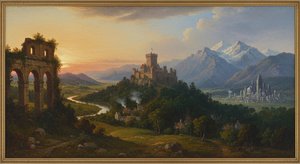
Evocations of Place: A Historical Journey Through Landscape Art
Explore the rich history of landscape art with OriginalUniqueArt. Discover renowned artists, movements like Impressionism & tonalism, and expert guidance for collecting timeless pieces. Find your perfect serene escape today!

Evocations of Place: A Historical Journey Through Landscape Art
Explore the rich history of landscape art with OriginalUniqueArt. Discover renowned artists, movements like Impressionism & Romanticism, and expert guidance for collecting timeless pieces. Find your perfect serene escape today!

Топ 10 шедьовъра на Романтичния пейзаж: Изкуство за вашия дом от OriginalUniqueArt.com
Открийте 10 шедьовъра на Романтичния пейзаж – Фридрих, Търнър и други! Разгледайте историите зад картините, техниките и емоциите. Репродукции с музейно качество от OriginalUniqueArt.com. Вдъхновете се за вашия дом!


