

 Преглед в реален мащаб
 Сподели
 Сподели
 Подробности
 Ръководство

 Изтегляне
 Подобни артикули
 Рентгенова снимка
 Слайдшоу
 Статистика
Concrete Cabin
 Oil On Canvas
- WallArt
- Magic Realism
 1992
1992 201.0 x 241.0 cm
 New Walk Museum - Art Gallery
 Разгърни целия текст
Жикле / Художествен принт
Giclée печат или принт върху платно с музейно качество, бързо производство и гъвкави опции за завършен вид. ( Поръчайте ръчно рисувано репродукция на този колекционерски предмет Превключване към дигитално изображение)




P118B $10

P118H $10

P118W $10

P438Z $10

P508JH $12

P508YH $12

P805H $10

P805Z $10

P919BZ $10

P919G $10

P919XJ $10

P959ZH $10

P968JZ $12

W106C $8

W218G $10

W218JH $8

W218Y $10

W307PJ $10

W316G $10

W316PJ $8

W316Y $10

W398PJ $8

W4111J $10

W500HY $15

W500JH $15

W692G $12

W849H $8

W940BG $15

W953PJ $8




Изберете от нашите предварително зададени размери, които съответстват на оригиналните пропорции на произведението.

Можете да въведете собствени размери, за да паснат на конкретна рамка или пространство. Ако избраният от Вас размер не съвпада с пропорциите на оригиналното изображение, ние ще изрежем произведението или ще разширим изображението с огледален или едноцветен ръб. Дигитален макет ще бъде изпратен за Ваше одобрение преди започването на производството.
Моля, имайте предвид, че предпрегледът на екрана не отразява реалното изрязване или разширяване. Само макетът ще покаже точно финалната композиция.
Въпреки че са налични персонализирани размери, препоръчваме да изберете размер от предварително дефинирания списък, за да запазите оригиналните пропорции.
Доставка по целия свят () в рамките на 2 седмици вместо стандартните 4/5 седмици. (26 Септември)

Безплатна експресна доставка по целия свят

Висококачествено ленено платно

Пълно застраховане на доставката

Гаранция за възстановяване на митнически такси

Гаранция за пълно съответствие на цветовете

Политика за връщане в рамките на 100 дни (само при дефекти)

100% Гаранция за връщане на сумата

Отстъпка при поръчка на повече произведения
 Опцията със стъкло е налична само за размери под 110 см

Concrete Cabin
Жикле / Художествен принт
Размер на репродукцията
-


Крайна цена
$ 80
Concrete Cabin: A Landscape of Memory and Modernity
Peter Doig’s "Concrete Cabin," painted in 1992, is more than just a depiction of a forest scene; it's an exploration of memory, the interplay between nature and human intervention, and the subtle anxieties of modernity. The canvas presents a dense woodland, rendered with a distinctive looseness that evokes both the vibrancy of Impressionism and the unsettling ambiguity of Magic Realism. Towering trees, their trunks twisted and gnarled like ancient sentinels, dominate the foreground, painted in deep browns and blacks punctuated by hints of decay – a visual testament to the relentless passage of time and the forces of nature. The background dissolves into a tapestry of greens, suggesting an impenetrable canopy that stretches far beyond the viewer's gaze. This isn’t merely a representation of a forest; it’s a feeling—a sense of being enveloped by something vast, ancient, and slightly unknowable.The Intrusion of the Man-Made
What truly sets "Concrete Cabin" apart is its unexpected element: a stark concrete structure nestled amongst the trees. This isn't a rustic log cabin blending seamlessly into its surroundings; it’s a blocky, almost brutalist form that clashes with the organic curves and textures of the forest. The contrast is deliberate, highlighting the uneasy relationship between humanity and the natural world. It speaks to our tendency to impose order and structure onto landscapes, often at the expense of their inherent wildness. Is this a refuge? A symbol of isolation? Or perhaps a commentary on the encroachment of modern life upon pristine environments? Doig offers no easy answers, leaving the interpretation open to the viewer's own experiences and anxieties. The concrete itself is rendered with more rigid lines and solid blocks of color than the surrounding foliage, emphasizing its artificiality and further amplifying the sense of discord.Doig’s Technique: Evoking Atmosphere Through Paint
Doig’s artistic technique plays a crucial role in conveying the painting's emotional weight. He employs a distinctive layering of paint, allowing brushstrokes to remain visible—a hallmark of his style. This isn’t about meticulous detail; it’s about capturing the *essence* of the scene through texture and color. The loose application of paint creates a sense of movement and vitality, as if the forest itself is breathing. Light filters through the canopy in dappled patterns, adding depth and dimension to the composition. Doig's use of color isn't purely representational; he manipulates hues to evoke specific moods—the somber browns and blacks conveying a sense of mystery and introspection, while the vibrant greens suggest both life and an underlying tension. The overall effect is one of atmospheric immersion – drawing the viewer into the heart of this enigmatic landscape.A Landscape Rooted in Memory and Place
Born in Edinburgh but shaped by his experiences living in Trinidad and Canada, Doig’s work often draws upon personal memories and a sense of displacement. "Concrete Cabin" can be seen as reflecting these themes—a meditation on the places that linger within us long after we've left them. The painting isn't necessarily about a specific location; it's about the feeling of being both connected to and alienated from one’s surroundings. It resonates with a broader sense of unease about our place in the world, particularly as we grapple with the consequences of environmental change and the relentless march of progress. Ultimately, "Concrete Cabin" is a powerful and evocative work that invites us to contemplate the complex relationship between humanity, nature, and memory—a timeless theme rendered with remarkable skill and sensitivity by one of contemporary art's most compelling voices.Биография на художника
Peter Doig - A Life Painted in Memory
Peter Doig (/ˈdɔɪɡ/; born April 17, 1959) is a British painter who has lived and worked between England, Scotland, Trinidad, Canada, the USA and Germany. His work resonates with a quiet power—a haunting beauty that stems from the delicate balance between memory, landscape, and the evocative potential of paint itself. His life has been one of constant relocation, a nomadic existence that profoundly shaped his artistic vision. Early moves took him from Scotland to Trinidad in 1962, followed by Canada in 1966, each shift imprinting upon his developing sensibility a sense of displacement and a fascination with the way places linger within us long after we’ve left them. These weren’t fleeting visits; they were immersive experiences that instilled a deep connection to diverse cultural landscapes—the lush tropicality of Trinidad, the stark, snowy vistas of Canada—both becoming recurring motifs in his art. This early exposure fostered an ability to see beyond the literal, to perceive the emotional weight and psychological resonance embedded within a place. Doig’s formal artistic training began in London, attending Wimbledon School of Art, Saint Martin’s School of Art, and finally Chelsea School of Art where he earned his MA. These years were supplemented by practical work, including a period as a dresser at the English National Opera, experiences that undoubtedly broadened his understanding of performance, narrative, and visual storytelling.Early Life and Influences
Born in Edinburgh, Scotland, Peter Doig’s father was a shipping merchant, necessitating the Doig family travel frequently. This itinerant upbringing instilled in him a profound awareness of movement and change—a formative experience that would become central to his artistic sensibility. He spent his childhood moving between Scotland, Trinidad, and Canada, absorbing diverse cultural influences from each location. These journeys cultivated an acute sensitivity to visual detail and a fascination with capturing fleeting moments of beauty. Doig’s artistic development was significantly shaped by exposure to the works of Edvard Munch, Caspar David Friedrich, Claude Monet, Gustav Klimt, and H.C. Westermann—artists whose explorations of landscape and emotion served as inspiration for his own distinctive style. He particularly admired the expressive brushwork of Westermann, recognizing its ability to convey psychological depth and immediacy. Doig’s initial artistic inclinations leaned towards abstraction, influenced by Minimalist painters like Agnes Martin and Ellsworth Kelly, but he quickly gravitated toward figurative painting, prioritizing meticulous observation and rendering of natural forms.The Emergence of Landscape Painting
Doig's breakthrough as a painter began in 1990, while pursuing his MA at Chelsea School of Art. He established himself as one of the foremost landscape painters working today, blending abstraction with realism to create images that are both visually arresting and emotionally resonant. His canvases frequently depict snowy forests and frozen lakes—scenes reminiscent of his childhood in Canada—infused with an unsettling quality—a hint of mystery that prevents them from becoming overly sentimental. Doig’s technique is characterized by complex layering of paint and color, creating a sense of depth and atmosphere. He skillfully blends abstraction and figuration, allowing forms to dissolve into washes of color or emerge from textured surfaces. As Doig explained, “There exists a tension…between the often generic representation of a pastoral scene and the investment in my own experiences of the landscape.” This approach allows him to tap into a deeper level of psychological truth, creating landscapes that are not merely seen but *felt*. He draws inspiration from photographs, newspaper clippings, film stills, and record album covers—elements he combines to create a unique visual vocabulary.Recognition and Artistic Legacy
Doig’s talent was recognized early in his career, culminating in winning the prestigious Whitechapel Artist Prize in 1991 and securing a solo exhibition at the Whitechapel Art Gallery. His work gained international acclaim, establishing him as one of the most celebrated contemporary painters. In 2007, Doig achieved monumental success when “White Canoe” sold at Sotheby’s for $11.3 million—a record for a living European artist at the time—solidifying his position at the forefront of the art world. Major solo exhibitions have been held at Tate Britain, Musée d’Art Moderne de la Ville de Paris, Schirn Kunsthalle Frankfurt, Dallas Museum of Art, and the Scottish National Gallery, demonstrating the global reach of his influence. Doig continues to live and work in Trinidad, maintaining a studio at the Caribbean Contemporary Arts Centre and teaching painting at the School of Art in Düsseldorf, Germany—ensuring his ongoing exploration of memory, landscape, and figuration will continue to shape the course of art history for years to come. His distinctive style—characterized by dreamlike imagery and meticulous attention to detail—has inspired a new generation of artists to embrace experimentation and emotional honesty.
Петър Дойг
1959 - , Великобритания
Бързи факти
- Artistic Movement Or Style: Figurative painting
- Artists Who Influenced This Artist:
- Edvard Munch
- Caspar David Friedrich
- Claude Monet
- Date Of Birth: 1959
- Full Name: Peter Doig
- Nationality: Scottish
- Notable Artworks:
- White Canoe
- Ski Jacket
- Border House
- Place Of Birth: Edinburgh, UK
Свързани статии

Evocations of Place: A Historical Journey Through Landscape Art
Explore the rich history of landscape art with OriginalUniqueArt. Discover renowned artists, movements like Impressionism & Romanticism, and expert guidance for collecting timeless pieces. Find your perfect serene escape today!

Romantic Realism's Finest: 10 Masterpieces for Your Home | OriginalUniqueArt
Explore 10 defining masterpieces of Romantic Realism! Discover Courbet, Millet & Daumier's powerful paintings—capturing emotion and social realities. Find museum-quality reproductions for your home at OriginalUniqueArt.com.
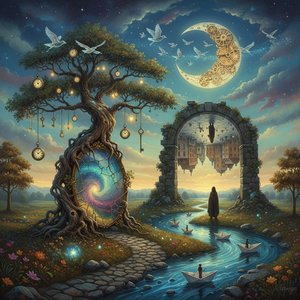
The Enigmatic Realm of Magic Realism: Exploring Subconscious Narratives & Reality's Edge
Explore the captivating world of Magic Realism! Discover its origins, key artists like García Márquez & Colunga Marín, and how it blends reality with the fantastical. Expert insights & high-quality art reproductions at OriginalUniqueArt.

Топ 10 шедьовъра на Романтичния пейзаж: Изкуство за вашия дом от OriginalUniqueArt.com
Открийте 10 шедьовъра на Романтичния пейзаж – Фридрих, Търнър и други! Разгледайте историите зад картините, техниките и емоциите. Репродукции с музейно качество от OriginalUniqueArt.com. Вдъхновете се за вашия дом!

Magic Realism Explained: Navigating the Enigmatic Intersection of Reality and the Extraordinary
Explore the profound depths of Magic Realism. Discover how this captivating movement blends everyday reality with the extraordinary through an expert art-historical lens. Perfect for collectors and enthusiasts seeking to understand the masters of the enigmatic.
