Academic Realism
Flowers (Ото Еерлман)
Ото Еерлман (1839–1926) създаде Flowers. Това произведение принадлежи към движението Academic Realism. Изdelano е от Oil On Canvas.
- Oil On Canvas

 Преглед в реален мащаб

 Ръчно изработена маслена картина
 Изпрати
 Сподели
 Информационен лист


 Изтегляне
 Подобни артикули
 Рентгенова снимка
 Слайдшоу
 Въпроси и отговори

 Статистика
Flowers накратко
- Заглавие
- Flowers
- Художник
- Ото Еерлман (1839–1926)
- Роден в
- Гронинген, Нидерландия
- Техника
- Oil On Canvas
- Движение
- Academic Realism
- Епоха
- 19th Century
- Предмет
- floral arrangement, dutch golden age, botanical art, still life, roses, peonies
Какво е изобразено в Flowers?
The Subject and Artist of Flowers
Flowers is a painting by the Dutch artist Otto Erelman. This work focuses on a botanical arrangement, presenting a collection of blossoms and foliage. The subject matter consists of a central white peony surrounded by pink roses, pansies, and various smaller floral forms. These elements are positioned against a dark, textured grey-green background, which provides a tonal contrast to the lighter petals of the arrangement.
Otto Erelman was born in 1839 in Groningen, Netherlands. He remained connected to this region throughout his life, eventually passing away in Groningen in 1926. His training included studies at the Academie Minerva and the Royal Academy of Fine Arts in Antwerp. He also received private instruction from Lawrence Alma-Tadema, which influenced his approach to light and color in his various compositions.
While Erelman is frequently associated with the depiction of animals, specifically dogs and horses, this particular work demonstrates his ability to render still life subjects. The composition centers on the organic curves of the petals and the irregular shapes of the leaves. He utilized a layered application of paint to establish the volume and physical presence of the botanical elements within the frame.
Visual Composition and Subject Matter
This still life painting presents a botanical arrangement centered on a large, prominent white peony. The peony occupies the middle of the composition, acting as the primary focal point. Surrounding this central flower are pink roses, pansies, and various smaller blossoms. Green foliage and additional botanical elements are interspersed among the petals, filling the spaces between the larger blooms.
The arrangement is set against a dark, textured grey-green background. This muted backdrop provides a steady contrast to the lighter tones of the white peony and the pink hues of the roses. The composition remains focused on the immediate foreground, utilizing a relatively shallow perspective that emphasizes the physical presence of the floral grouping. The organic lines of the subject follow the natural curves of the petals and the irregular shapes of the leaves.
Artistic Technique and Materials
The work is executed in oil paints on canvas, utilizing a technique of meticulous layering to establish form and texture. This method builds volume within the petals and foliage, creating a sense of physical depth. The style adheres to academic realism, focusing on the precise rendering of botanical structures. Soft brushstrokes define the edges of the white peony and the surrounding pink roses, avoiding harsh lines in favor of gradual transitions.
A muted color palette governs the arrangement, relying on subtle shifts in tone rather than high-contrast hues. The background consists of a dark, textured grey-green surface that provides a steady contrast to the lighter floral elements. Lighting appears soft and diffused across the composition, suggesting an indoor setting where a single light source illuminates the arrangement from above. This controlled light creates gentle shading that defines the rounded shapes of the blossoms and the irregular forms of the leaves.
Изображения с висока резолюция на Flowers
Обществено достояние: художникът е починал през 1926 г.
Ото Еерлман, Flowers. Обществено достояние
Отговори на въпроси относно Flowers
С каква техника е изпълнено „Flowers“ на Ото Еерлман?
Ото Еерлман е използвал/а техниката Oil On Canvas за „Flowers“. Тази техника определя материалната природа на оригиналното произведение.
Каква е темата на "Flowers"?
Темите, представени в „Flowers“ на Ото Еерлман, включват floral arrangement, dutch golden age, botanical art, still life, roses, peonies, muted colors, delicate beauty. Заедно те обобщават съдържанието на произведението.
Намира ли се „Flowers“ на Ото Еерлман в обществено достояние?
„Flowers“ на Ото Еерлман е в в обществено достояние – авторското право е изтекло. Този статус определя как може да бъде репродуцирано изображението на произведението.
Кой е създал "Flowers"?
„Flowers“ се приписва на Ото Еерлман.
Към кой стил принадлежи "Flowers"?
„Flowers“ е произведение от Academic Realism. Това направление определя художествената традиция, към която принадлежи творбата.
На кой период от кариерата на Ото Еерлман принадлежи „Flowers“?
"Flowers" представлява Mature Period на Ото Еерлман.
Намира ли се произведението „Flowers“ на Ото Еерлман в общественото достояние и защо?
Статусът на авторското право върху "Flowers" - в обществено достояние – авторското право е изтекло - се определя от годината на смъртта на художника – 1926.
Как се вписва „Flowers“ в цялостното творчество на Ото Еерлман?
"Flowers" принадлежи към творчеството на Ото Еерлман в рамките на Academic Realism, чиито утвърдени теми включват eerelman's signature style, detailed botanical studies, refined academic technique, 18th-century still life, dutch golden age masters, classical composition, floral symbolism (love), vanitas elements (mortality).
Как се позиционира „Flowers“ сред често срещаните теми в творчеството на Ото Еерлман?
Сред утвърдените теми на Ото Еерлман – eerelman's signature style, detailed botanical studies, refined academic technique, 18th-century still life, dutch golden age masters, classical composition, floral symbolism (love), vanitas elements (mortality) – „Flowers“ привнося собствен фокус върху floral arrangement, dutch golden age, botanical art, still life, roses, peonies, muted colors, delicate beauty.
За художника Ото Еерлман
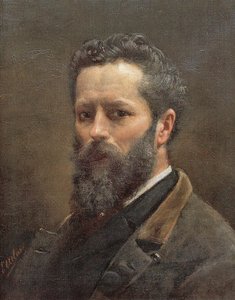
1839–1926, Нидерландия
Ото Еерлман
Ото Еерлман: Холандският майстор на анималистичния портрет Ото Еерлман (1839-1926) се издига като значима фигура в холандското изкуство на XIX век, прочут най-вече със своите майсторски изображения на кучета и коне — теми, които резонираха дълбоко с чувствителността на неговото време. Роден в Гронинген, Нидерландия, той притежава вродения артистичен талант, подхранван от ролята на баща му като църковник в der Aa-kerk, и въпреки родителските очаквания, решава да потърси формално обучение в Academie Minerva през 1860 г. Този формиращ опит му вдъхва фундаментално разбиране за художествените принципи и затвърждава неговата отдаденост на визуалното представяне. Ранни влияния: Артистичното пътешествие на Еерлман започва под наставничеството на J.H.
Други творби на Ото Еерлман
 Portrait of Cornelisje Eerelman-Pluimker, wife of Samuel Eerelman, mother of the painter1859
 Portrait of Anna Frederica Braak, wife of the painter1881
 Portrait of Fokje van Griffen, wife of Rudolph Jacob Schierbeek1869
 Portrait of Samuel Eerelman, husband of Cornelisje Eerelman-Pluimker, father of the artist1861
Есеи по темата Flowers
 25 Essential Artworks at Musée de l'Orangerie: Monet’s Water Lilies and BeyondExplore 25 iconic works from Musée de l'Orangerie, including Monet's Water Lilies. Discover the full collection online at OriginalUniqueArt…
 Botanical Precision: The Enduring Nuance of Floral Still LifeExplore the mastery of Dutch and Victorian floral still life through expert analysis. Discover the beauty of botanical art history today.
 The Language of Flowers: A Comprehensive History of Floral Still Life Art and Its Symbolic DepthExplore the deep symbolism and history of floral still life art from Egypt to the Dutch Golden Age. Discover the secrets behind the blooms.