
 Преглед в реален мащаб
 Изпрати
 Сподели
 Детайли
 Ръководство

 Изтегляне
 Подобни артикули
 Рентгенова снимка
 Слайдшоу
 Въпроси и отговори
 Статистика
Summer Scene (Bathers)

 Прочети повече
Жикле / Художествен принт
Giclée печат или принт върху платно с музейно качество, бързо производство и гъвкави опции за завършен вид. ( Купете ръчно рисувана картина Превключване към дигитално изображение)




P118B €10

P118H €10

P118W €10

P438Z €10

P508JH €12

P508YH €12

P805H €10

P805Z €10

P919BZ €10

P919G €10

P919XJ €10

P959ZH €10

P968JZ €12

W106C €8

W218G €10

W218JH €8

W218Y €10

W307PJ €10

W316G €10

W316PJ €8

W316Y €10

W398PJ €8

W4111J €10

W500HY €15

W500JH €15

W692G €12

W849H €8

W940BG €15

W953PJ €8




Изберете от нашите предварително зададени размери, които съответстват на оригиналните пропорции на произведението.

Въведете необходимата ширина и височина, за да паснат на вашата рамка или стена. Принтовете могат само да се изрязват, но никога не могат да бъдат по-големи от оригиналната картина, така че при размер с различен формат част от изображението ще бъде загубена. Преди да започнем печат, ще ви изпратим дигитален мок업 за одобрение. Изображението, показано на тази страница, не показва реалното изрязване — само мок업ът го показва.
Доставка по целия свят () в рамките на 2 седмици вместо стандартните 4/5 седмици. (5 Ноември)

Безплатна експресна доставка по целия свят

Висококачествено ленено платно

Пълно застраховане на доставката

Гаранция за възстановяване на митнически такси

Гаранция за пълно съответствие на цветовете

Политика за връщане в рамките на 100 дни (само при дефекти)

100% Гаранция за връщане на сумата

Оферта за отстъпка при поръчка на повече бройки
 Опцията със стъкло е налична само за размери под 110 см

Summer Scene (Bathers)
Жикле / Художествен принт
Размер на репродукцията
-


Обща цена
€ 72
A Moment of Provençal Bliss: Jean Frédéric Bazille’s "Summer Scene (Bathers)"
Jean Frédéric Bazille's “Summer Scene (Bathers)” captures a quintessential moment of leisure and joy, transporting the viewer to the sun-drenched landscapes of Provence. Painted in 1873, just months before his untimely death at the age of thirty-two, this work represents a pivotal point in Bazille’s artistic development and exemplifies the burgeoning Impressionist style that would soon revolutionize the art world. The scene unfolds with remarkable realism – yet imbued with an ethereal quality characteristic of the movement – depicting a group of individuals enjoying a carefree afternoon by the water's edge. It is a painting brimming with light, color, and a palpable sense of serenity.
Subject Matter and Composition
- The central focus is undeniably the group of bathers, both men and women, engaged in various activities – swimming, sunbathing, and simply relaxing.
- Bazille masterfully employs a pyramidal composition, drawing the eye upwards from the figures at the bottom to the shaded umbrella providing respite above.
- The inclusion of details like the scattered chairs and the carefully placed umbrella adds to the sense of domestic tranquility and reinforces the theme of an idyllic summer day.
Impressionist Technique and Color Palette
Bazille’s technique is a hallmark of Impressionism, prioritizing the immediate sensation of light and color over meticulous detail. He utilizes broken brushstrokes – short, choppy strokes of pure pigment – to capture the shimmering reflections on the water and the dappled sunlight filtering through the trees. The palette is dominated by vibrant greens, blues, and yellows, creating a luminous effect that evokes the warmth of the Provençal sun. Note the subtle gradations in color, particularly in the rendering of the figures’ skin tones, which contribute to the painting's overall sense of realism.
Historical Context and Artistic Influences
"Summer Scene (Bathers)" was created during a period of immense artistic experimentation. Bazille was deeply influenced by the works of Gustave Courbet, whose commitment to depicting everyday life with honesty and naturalism paved the way for Impressionist innovation. However, unlike Courbet’s often stark realism, Bazille infused his paintings with a delicate lyricism and an emphasis on capturing fleeting moments of beauty. The painting reflects the broader artistic trends of the time – a move away from academic conventions towards a more subjective and expressive approach to art.
Symbolism and Emotional Impact
Beyond its technical brilliance, “Summer Scene (Bathers)” resonates with profound emotional depth. The scene evokes a sense of nostalgia for simpler times, a longing for connection with nature, and the joy of shared experiences. The figures’ relaxed postures and expressions suggest a state of blissful contentment. Bazille's ability to capture this intangible quality – the feeling of warmth, light, and tranquility – is what elevates this painting beyond mere representation and transforms it into a timeless meditation on the beauty of life.
Въпроси и отговори
Какво настроение изразява „Summer Scene (Bathers)“ на Жан Фредерик Базиел в рамките на Impressionist Movement?
"Summer Scene (Bathers)" предава Romantic емоционален тон в рамките на движението Impressionist Movement.
Какво приложение и какво пространство се препоръчват за „Summer Scene (Bathers)“ на Жан Фредерик Базиел?
„Summer Scene (Bathers)“ е предложена за Statement, а препоръчителното пространство е Living Room.
Какво ниво на контраст притежава „Summer Scene (Bathers)“ на Жан Фредерик Базиел?
Светло-тъмният контраст на „Summer Scene (Bathers)“ е определен като Bold. Контрастът описва доколко силно се различават светлите и тъмните зони.
Биография на художника
Jean Frédéric Bazille: A Fleeting Radiance in the Dawn of Impressionism
Jean Frédéric Bazille, a name perhaps less familiar than those of Monet or Renoir, nevertheless holds a crucial place in the genesis of Impressionism. Born in Montpellier, France, on December 6th, 1841, into a family deeply rooted in the wine trade and Protestant traditions, his life was tragically cut short at just 28 years old during the Franco-Prussian War. Yet, within those brief years, Bazille’s artistic vision blossomed, leaving behind a legacy of luminous landscapes and intimate portraits that captured the essence of light and friendship – qualities that would become hallmarks of the Impressionist movement.Early Influences and Parisian Awakening
Bazille's upbringing in Montpellier instilled in him a deep appreciation for the natural world and a keen eye for color, nurtured by his family’s connection to the Languedoc region. However, it was his relocation to Paris in 1862 that truly ignited his artistic journey. Driven by a desire to pursue both medicine and painting – a compromise dictated by his parents – he enrolled at Charles Gleyre's studio, a hub for young artists eager to break free from the rigid constraints of academic art. It was here, amidst the vibrant atmosphere of Parisian studios, that Bazille encountered the giants of Impressionism: Claude Monet, Pierre-Auguste Renoir, and Alfred Sisley. These encounters proved transformative, exposing him to new techniques and a radical approach to painting – *en plein air*, or working outdoors directly from nature. He was profoundly influenced by Eugène Delacroix’s expressive use of color, yet he skillfully synthesized this influence with the burgeoning Impressionist ideals, forging his own distinctive style.A Synthesis of Figure and Landscape
Bazille's artistic approach distinguished itself through a unique integration of figure painting and landscape. Unlike some of his contemporaries who primarily focused on capturing fleeting atmospheric effects, Bazille frequently placed human figures within carefully considered landscapes, imbuing the scenes with emotional resonance. His masterpiece, *Family Reunion* (1867-1868), exemplifies this approach. The painting isn’t merely a depiction of a familial gathering; it's a study in light filtering through the trees, animating the scene and evoking a sense of warmth and intimacy. He demonstrated an ability to capture not just what he *saw*, but also how he *felt* – the emotional impact of color, form, and light. His palette was often richer and more vibrant than that of some other Impressionists, reflecting his connection to the sun-drenched landscapes of his native Languedoc.The Tragedy and Lasting Legacy
Tragically, Bazille’s promising career was abruptly curtailed by the outbreak of the Franco-Prussian War in 1870. Driven by a sense of patriotic duty, he enlisted in the Zouave regiment just months before the conflict erupted. On November 28th, 1870, he fell in action at Beaune-la-Rolande, a young man with immense potential cut short. His untimely death sent shockwaves through the artistic community, depriving them of a generous benefactor and a talented artist. For many years, Bazille’s work remained relatively obscure, overshadowed by the more celebrated figures of Monet and Renoir. However, in recent decades, his contributions have been increasingly recognized and appreciated. Today, his paintings are proudly displayed in prestigious museums like the Musée d'Orsay in Paris, allowing art lovers worldwide to experience the beauty and innovation of his vision. Beyond his artistic output, Bazille embodies the spirit of youthful idealism, unwavering dedication, and the enduring power of friendship – qualities that continue to resonate with audiences today. He remains a poignant reminder of the potential lost, yet also a testament to the lasting impact of a brief but brilliant career.Key Works
- The Pink Dress (c. 1864): A quintessential Impressionist work showcasing Bazille’s ability to capture fleeting moments and the effects of light, featuring his cousin Therese des Hours in a serene landscape setting.
- Family Reunion (1867-1868): Demonstrates Bazille's masterful integration of figure painting and landscape, capturing the warmth and intimacy of a familial gathering through evocative use of light and color.
- Studio in Rue de Furstenberg (c. 1867): A portrait of Bazille’s friend, Édouard Manet, reflecting the artist's interest in capturing personality and atmosphere.
- Bathers (Summer Scene) (c. 1869-1870): An example of Bazille’s ability to capture the beauty of nature and the joy of leisure, showcasing his mastery of light and color.

Жан Фредерик Базиел
1841 - 1870 , Франция
Бърза информация
- Artistic Movement Or Style: Импресионизъм
- Artists Or Movements Influenced By This Artist: ['Импресионизъм']
- Artists Who Influenced This Artist: ['Делакроа']
- Date Of Birth: 6 декември 1841
- Date Of Death: 28 ноември 1870
- Full Name: Jean Frédéric Bazille
- Nationality: Френски
- Notable Artworks:
- Розова рокля
- Семейство
- Place Of Birth: Монпеллье, Франция
Свързани статии
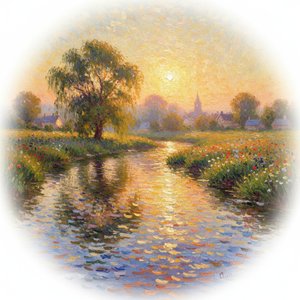
Capturing Light: A Masterclass in the Ethereal Beauty of Impressionistic Landscapes
Explore the ethereal beauty of Impressionist landscapes. Discover how masters like Monet captured fleeting light through color and texture, and learn to curate these timeless, luminous masterpieces for your home collection.

Топ 10 шедьоври на импресионизма: Пейзажи, променили изкуството | OriginalUniqueArt.com
Разгледайте топ 10 шедьоври на импресионизма и открийте красотата на пейзажите от Моне, Реноар и други известни художници. Вдъхновете се за вашия дом с репродукции на картини в OriginalUniqueArt.com! Разгледайте пълната колекция онлайн.

Топ 10 шедьовъра на импресионизма: Пейзажи, променили изкуството | OriginalUniqueArt.bg
Разгледайте топ 10 шедьовъра на импресионизма – Моне, Реноар и други! Открийте историите зад известните пейзажи и техния принос към изкуството. Купете висококачествени репродукции на картини за вашия дом в OriginalUniqueArt.bg

Топ 10 шедьовъра на Романтичния пейзаж: Изкуство за вашия дом от OriginalUniqueArt.com
Открийте 10 шедьовъра на Романтичния пейзаж – Фридрих, Търнър и други! Разгледайте историите зад картините, техниките и емоциите. Репродукции с музейно качество от OriginalUniqueArt.com. Вдъхновете се за вашия дом!

Evocations of Place: A Historical Journey Through Landscape Art
Explore the rich history of landscape art with OriginalUniqueArt. Discover renowned artists, movements like Impressionism & Romanticism, and expert guidance for collecting timeless pieces. Find your perfect serene escape today!

