Dutch Golden Age · 1632
Heraklith (Герит Доу, 1632)
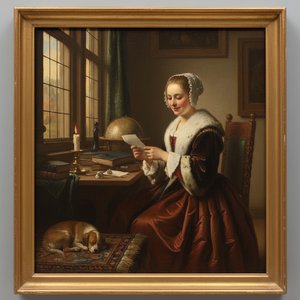
Герит Доу (1613–1675) създаде Heraklith. Датира от 1632. Това произведение принадлежи към движението Dutch Golden Age. Изdelano е от Oil On Canvas. Експонира се в Държавен музей „Ермитаж“ в Санкт Петербург, Русия. Размерите са 61 × 51 cm.
- 1632
- Oil On Canvas
- 61 × 51 cm
- Държавен музей „Ермитаж“, Санкт Петербург

 Преглед в реален мащаб

 Ръчно изработена маслена картина
 Изпрати
 Сподели
 Информационен лист


 Изтегляне
 Подобни артикули
 Рентгенова снимка
 Слайдшоу
 Въпроси и отговори

 Статистика
Heraklith накратко
- Заглавие
- Heraklith
- Художник
- Герит Доу (1613–1675)
- Роден в
- Лайден, Нидерландия
- Дата
- 1632
- Техника
- Oil On Canvas
- Размери
- 61 × 51 cm
- Къде може да се види
- Държавен музей „Ермитаж“, Санкт Петербург, Русия
- Движение
- Dutch Golden Age
- Епоха
- Early Modern
- Предмет
- portrait, scholar, globe, knowledge, wisdom, age
Какво е изобразено в Heraklith?
Heraklith: A Portrait of Scholarly Reflection
“Heraklith,” painted in 1632 by Gerrit Dou, stands as a testament to the Dutch Golden Age’s fascination with realism and psychological depth. More than just a depiction of an elderly man—likely a scholar or astronomer—it's a carefully constructed tableau designed to convey wisdom, contemplation, and the profound influence of knowledge.
- Subject Matter: The artwork portrays a dignified gentleman seated at a table before him, illuminated by candlelight. His gaze is downward, focused on a globe – a potent symbol representing exploration, scientific inquiry, and an awareness of the vastness of the universe.
- Style & Technique: Dou’s signature ‘fijnschilder’ style—characterized by meticulous detail and masterful chiaroscuro—is evident throughout. The artist employs subtle shading to sculpt the man's face and torso, creating a palpable sense of volume and texture. This technique elevates the portrait beyond mere representation, imbuing it with emotional resonance.
- Composition & Perspective: The oval frame lends an air of formality to the scene, while the shallow perspective draws the viewer’s eye directly to the central figure. Lines delineate facial features and clothing folds, guiding the gaze and reinforcing the composition's balance.
- Color Palette: Dominated by muted browns, creams, and dark reds, the color palette contributes to an atmosphere of solemn dignity. The subdued hues underscore the subject’s intellectual pursuits and evoke a feeling of quiet contemplation.
Exploring Dou’s Mastery of Light & Shadow
Gerrit Dou's unparalleled skill in chiaroscuro—the dramatic interplay between light and shadow—is arguably his most distinctive achievement. As seen prominently in “Heraklith,” this technique isn’t merely decorative; it serves to heighten the emotional impact of the portrait. The candlelight casts a soft glow upon the man’s face, highlighting wrinkles and emphasizing the contours of his features – details that reveal not only physical appearance but also the passage of time and experience.
- Symbolism: Beyond its aesthetic qualities, “Heraklith” carries significant symbolic weight. The globe represents intellectual curiosity and a desire to understand the world around us. It speaks to Dou’s belief in the transformative power of knowledge and invites viewers to consider the profound implications of scientific discovery.
- Historical Context: Painted during the Dutch Golden Age, “Heraklith” reflects the era's burgeoning interest in humanist ideals and its celebration of intellectual achievement. Dou’s work aligns with a broader artistic movement that sought to capture human psychology and emotion with unprecedented accuracy.
A Legacy of Detail & Emotion
"Heraklith" exemplifies Gerrit Dou’s dedication to capturing the essence of his subjects—both physically and psychologically. The artist's meticulous brushwork ensures that every nuance is rendered faithfully, creating a portrait that transcends mere likeness. It’s a piece that invites viewers to pause and contemplate the complexities of human experience, reminding us of the enduring beauty found in quiet reflection and intellectual pursuit.
- Collecting & Inspiration: Reproductions of “Heraklith” offer an opportunity to appreciate Dou's artistic genius and bring a touch of Dutch Golden Age elegance into any interior space. Explore similar artworks at WikiArt.org for further inspiration!
В кой музей се намира Heraklith?
Държавен музей „Ермитаж“
Санкт Петербург, Русия
Произход и история на Държавен музей „Ермитаж“ Историята на Държавен музей „Ермитаж“ започва през 1764 г., когато основите му се полагат чрез придобиването на колекция от 225 картини от берлинския търговец Йохан Ернст Гоцковски. Именно Екатерина Велика инициира събирането на тази колекция, утвърждавайки присъствието на музея в Санкт Петербург, Русия. Тези първоначални придобивания се превръщат в ядрото на това, което по-къде ще стане необятно съкровище на западно европейско изкуство.


Изображения с висока резолюция на Heraklith

Обществено достояние: художникът е починал през 1675 г.
Други размери, кадриране и цитиране →Герит Доу, Heraklith (1632), Държавен музей „Ермитаж“. Обществено достояние
Отговори на въпроси относно Heraklith
В кой музей се намира оригиналът на "Heraklith"?
Оригиналът на „Heraklith“ на Герит Доу се съхранява в Държавен музей „Ермитаж“, Санкт Петербург, Русия. Репродукцията позволява произведението да бъде изложено у дома.
С каква техника е изпълнено „Heraklith“ на Герит Доу?
Какви са размерите на оригиналния „Heraklith“ на Герит Доу?
Какво изобразява „Heraklith“ на Герит Доу?
Обектите на "Heraklith" са portrait, scholar, globe, knowledge, wisdom, age, reflection, chiaroscuro.
Може ли изображението на „Heraklith“ на Герит Доу да се репродуцира свободно?
Към кое художествено течение принадлежи „Heraklith“ на Герит Доу?
„Heraklith“ е произведение от Dutch Golden Age. Това направление определя художествената традиция, към която принадлежи творбата.
За художника Герит Доу

1613–1675, Нидерландия
Герит Доу
Ранен живот, семейство и обучение Геррит Доу е роден на 7 април 1613 г. в Лейден, Нидерландия. Той израства в дом, в който светлината и стъклото са централни елементи на ежедневието, тъй като баща му е работил като стъклоделец и гравирач на стъкло. Тази ранна експозиция към деликатната манипулация на светлината през стъкло вероятно е оформирала неговото развиващо се зрение.
Други творби на Герит Доу
 Съпругата на рибаря1653
 Self-Portrait1640
 An Evening School1655
 Portrait of an old woman reading1635

Есеи по темата Heraklith
 Master of Shadows: The Top 25 Iconic Artworks by Gustave DoréExplore Gustave Doré's legendary engravings and dark Romanticism. Discover all masterpieces on OriginalUniqueArt.com.
 Master of Emotion: The 25 Greatest Artworks by Rogier van der WeydenImmerse yourself in the profound emotion of Rogier van der Weyden. Explore 25 iconic Early Netherlandish masterpieces, from intricate textu…
 Gerrit Dou: Intimacy & Light in the Dutch Golden AgeExplore the exquisite world of Gerrit Dou, a master of Dutch Golden Age painting. Discover his intimate genre scenes, signature use of ligh…