
 Преглед в реален мащаб
 Изпрати
 Сподели
 Детайли
 Ръководство

 Изтегляне
 Подобни артикули
 Рентгенова снимка
 Слайдшоу
 Въпроси и отговори
 Статистика
Les Buveurs


 Прочети повече
Жикле / Художествен принт
Giclée печат или принт върху платно с музейно качество, бързо производство и гъвкави опции за завършен вид. ( Купете ръчно рисувана картина Превключване към дигитално изображение)




P118B €10

P118H €10

P118W €10

P438Z €10

P508JH €12

P508YH €12

P805H €10

P805Z €10

P919BZ €10

P919G €10

P919XJ €10

P959ZH €10

P968JZ €12

W106C €8

W218G €10

W218JH €8

W218Y €10

W307PJ €10

W316G €10

W316PJ €8

W316Y €10

W398PJ €8

W4111J €10

W500HY €15

W500JH €15

W692G €12

W849H €8

W940BG €15

W953PJ €8




Изберете от нашите предварително зададени размери, които съответстват на оригиналните пропорции на произведението.

Въведете необходимата ширина и височина, за да паснат на вашата рамка или стена. Принтовете могат само да се изрязват, но никога не могат да бъдат по-големи от оригиналната картина, така че при размер с различен формат част от изображението ще бъде загубена. Преди да започнем печат, ще ви изпратим дигитален мок업 за одобрение. Изображението, показано на тази страница, не показва реалното изрязване — само мок업ът го показва.
Доставка по целия свят () в рамките на 2 седмици вместо стандартните 4/5 седмици. (9 Ноември)

Безплатна експресна доставка по целия свят

Висококачествено ленено платно

Пълно застраховане на доставката

Гаранция за възстановяване на митнически такси

Гаранция за пълно съответствие на цветовете

Политика за връщане в рамките на 100 дни (само при дефекти)

100% Гаранция за връщане на сумата

Оферта за отстъпка при поръчка на повече бройки
 Опцията със стъкло е налична само за размери под 110 см

Les Buveurs
Жикле / Художествен принт
Размер на репродукцията
-


Обща цена
€ 72
A Quiet Moment in the Heart of France
In the soft, hazy light of an afternoon that feels both fleeting and eternal, Émile Friant’s 1884 masterpiece, Les Buveurs, invites us to pause. This evocative oil on canvas is far more than a mere depiction of two men sharing a drink; it is a profound window into the soul of late 19th-century French life. As we gaze upon the scene, we find ourselves seated alongside these figures, caught in a moment of quiet camaraderie that transcends the decades. The painting captures a specific, palpable atmosphere—the warmth of the sun, the subtle haze of smoke, and the comfortable silence shared between companions. It is an intimate slice of Parisian society, rendered with such sincerity that the viewer feels less like an observer and more like a silent participant in this humble, beautiful ritual.
The composition centers on two men resting upon the earth, their presence grounded and unpretentious. One man, shielded by the brim of his hat, offers a sense of respite from the sun’s glare, while his companion, characterized by a rugged beard, engages in the rhythmic, everyday act of smoking a cigarette. Around them, the world continues its slow, rhythmic dance; a dog lingers nearby, and the distant presence of horses and other figures adds layers of depth to this outdoor setting. Friant masterfully uses these elements to create a sense of genre painting—a genre dedicated to capturing the everyday lives of ordinary people with dignity and grace. For the collector or interior designer, this piece offers a sense of grounded tranquility, making it an ideal focal point for spaces that value warmth, history, and a connection to the human experience.
The Mastery of Realism and Light
Technically, Les Buveurs is a triumph of Friant’s unique ability to blend the meticulous precision of the Beaux-Arts tradition with the atmospheric sensibilities of Impressionism. Influenced by his mentor Louis-Théological Devilly, Friant employed a technique rooted in direct observation. This is evident in the way he renders the textures of the scene: the coarse fabric of a sleeve, the weathered skin of a face, and the subtle interplay of light on the ground. His palette is a sophisticated arrangement of earthy tones—rich ochres, deep browns, and muted greens—which work in harmony to evoke a sense of organic warmth and intimacy.
What truly elevates the work, however, is Friant’s use of paint layering to capture the ephemeral quality of light. While his subjects are rendered with anatomical and structural accuracy, there is an Impressionistic softness to the atmosphere that prevents the realism from feeling clinical. The way the sunlight filters through the haze creates a dreamlike quality, suggesting that while the men are physically present in a tangible world, the moment itself is a precious, vanishing fragment of time. This duality—the solid and the fleeting—is what gives the painting its enduring emotional resonance. It serves as a poignant reminder to cherish the quiet, unadorned moments of our own lives, making it a deeply moving addition to any curated art collection.
A Legacy of French Identity
To understand the depth of Les Buveurs, one must consider the historical landscape from which it emerged. Painted during the Belle Époque, a period of relative peace and cultural flourishing in France, the work also carries the subtle weight of Friant’s personal history. Having experienced the displacement caused by the Franco-Prussian War as a child, Friant’s dedication to capturing the essence of French life can be seen as an act of cultural preservation. His art celebrates the resilience and simple joys of the French people, finding beauty in the mundane and dignity in the common.
For those looking to bring a piece of history into their homes, this reproduction offers more than just aesthetic beauty; it offers a narrative of identity and endurance. The painting’s ability to evoke psychological depth—hinting at the unspoken thoughts and shared histories between the two men—ensures that it remains a conversation piece for years to come. Whether placed in a sunlit study or a sophisticated living area, Les Buveurs brings with it an aura of timelessness, inviting all who view it to slow down, breathe, and appreciate the quiet beauty found in the simplest of connections.
Въпроси и отговори
Къде се препоръчва да бъде изложена творбата "Les Buveurs" във формат Square?
Форматът Square на произведението „Les Buveurs“ на Емил Фриант е препоръчителен за Living Room. Форматът и пространството заедно служат като ориентир при поставянето на репродукцията.
Къде мога да купя принт на „Les Buveurs“ на Емил Фриант?
Принт на „Les Buveurs“ на Емил Фриант може да бъде поръчан директно от неговата страница Художествен принт: художествен принт върху памучно платно или архивен канвас хартия.
Кой е създал "Les Buveurs" и кога?
Емил Фриант създава „Les Buveurs“ през 1884 г.
Биография на художника
Émile Friant - A Life Rooted in Realism: The World of Émile Friant
Émile Friant, born April 16th, 1863 in Dieuze, France, emerged as a pivotal figure bridging the gap between 19th-century realism and the burgeoning artistic movements of the early 20th century. His life story is one deeply intertwined with the political and social upheavals of his time—the Franco-Prussian War profoundly shaping his formative years and instilling in him a sense of displacement that arguably fueled his unwavering dedication to portraying the essence of French identity within his art. Though initially drawn towards scientific pursuits, Friant’s innate artistic talent swiftly asserted itself, nurtured first by private tutors and subsequently under the guidance of Louis-Théodore Devilly in Nancy—a partnership that would prove instrumental in shaping his distinctive style: a realism imbued with palpable emotional depth and astute psychological insight. Even a youthful self-portrait, “Le Petit Friant,” at just fifteen years old, garnered considerable acclaim and secured him permission to pursue formal studies in Paris—marking the commencement of his ascent within the art world’s hierarchy.Early Years and Artistic Formation
Friant's childhood was indelibly marked by the Franco-Prussian War (1870–1871), during which his family fled to Nancy, then part of France, seeking refuge from Prussian occupation. This relocation instilled in him a formative experience—a confrontation with instability and loss—that arguably underpinned his lifelong preoccupation with capturing human emotion and portraying the complexities of everyday life. Recognizing Friant’s prodigious artistic aptitude early on, Devilly championed his ambition to dedicate himself entirely to painting, securing him a scholarship from the city of Nancy that facilitated his enrollment at the École des Beaux-Arts in Paris. Amidst the Parisian artistic landscape—characterized by both stimulating intellectual discourse and competitive pressures—Friant cultivated friendships with fellow artists—Aimé Morot, Victor Prouvé, and Jules Bastien-Lepage—who shared his passion for naturalism and encouraged him to prioritize direct observation as a cornerstone of artistic practice. Notably, Friant’s formative years were enriched by encounters with influential figures like Auguste Parisot, who fostered in him a deep appreciation for humanist values and instilled in him the conviction that art should serve as a conduit for conveying profound human truths.Salon Successes and Parisian Influences
Friant's artistic trajectory gained momentum upon his arrival in Paris, where he honed his skills under Alexandre Cabanel—a celebrated academic painter whose atelier system emphasized meticulous technique and adherence to established conventions. Despite acknowledging the importance of mastering traditional methods, Friant persistently sought a more personal expressive voice—one that transcended rigid stylistic boundaries. He actively engaged with the artistic currents circulating within Parisian society—particularly Impressionism—absorbing inspiration from luminaries like Claude Monet and Pierre-Auguste Renoir, whose innovative use of light and color challenged prevailing aesthetic norms. Simultaneously, Friant cultivated enduring connections with actors Ernest and Benoit Coquelin—relationships that yielded a series of captivating portrait commissions—solidifying his reputation as one of France’s foremost artists of his era. His early Salon submissions—including “The Prodigal Son” and “Studio Interior”—demonstrated a burgeoning talent for narrative painting and an unparalleled ability to convey nuanced emotional states—establishing him as a prominent voice within the artistic discourse of the Belle Époque.Nancy and Naturalism: Defining His Artistic Vision
Returning to Nancy, Friant continued his artistic pursuits while maintaining close ties with the École de Nancy—a vibrant artistic community that championed naturalism as its dominant aesthetic philosophy. Under Devilly’s tutelage, Friant perfected his technique—employing meticulous observation and painstaking detail—resulting in canvases imbued with remarkable realism and psychological insight. His unwavering commitment to portraying the human experience—particularly the lives of ordinary individuals—became a hallmark of his oeuvre—a testament to his conviction that art should illuminate the complexities of daily existence and capture the essence of human emotion. Friant’s artistic vision was profoundly shaped by encounters with Dutch Masters during his travels in Belgium and Holland—experiences that instilled in him an appreciation for tonal harmony and compositional balance—influencing his stylistic choices throughout his career.Legacy and Recognition
Émile Friant achieved international acclaim during his lifetime—winning the Second Rome Prize (1884) and securing a Gold Medal at the Exposition Universelle of 1889—establishing him as one of France’s most celebrated artists of the Belle Époque. His enduring legacy rests upon his unwavering dedication to realism—a style he championed while simultaneously transcending its limitations—resulting in canvases that continue to captivate audiences with their beauty, sensitivity, and profound psychological depth. Friant was awarded Commander in the Legion of Honor and elected to the Institut de France—the highest honors bestowed upon artists in France—acknowledging his unparalleled contribution to French art history. His tragic death in 1932—falling from a height in Paris—brought an abrupt end to a remarkable artistic journey, yet his paintings endure as timeless expressions of human emotion and unwavering fidelity to the principles of naturalism—affirming his place among the giants of late nineteenth-century art.
Емил Фриант
1863 - 1932 , Франция
Бърза информация
- Artistic Movement Or Style: Реализм
- Artists Or Movements Influenced By This Artist: ['Раннее 20 век']
- Artists Who Influenced This Artist:
- Луи-Теодор Деви
- Александр Кабанель
- Date Of Birth: April 16, 1863
- Date Of Death: June 9, 1932
- Full Name: Émile Friant
- Nationality: Франция
- Notable Artworks:
- La Toussaint
- Себепортрет
- Place Of Birth: Dijon, France
Свързани статии

Evocations of Place: A Historical Journey Through Landscape Art
Explore the rich history of landscape art with OriginalUniqueArt. Discover renowned artists, movements like Impressionism & tonalism, and expert guidance for collecting timeless pieces. Find your perfect serene escape today!

Топ 10 шедьовъра на Романтичния пейзаж: Изкуство за вашия дом от OriginalUniqueArt.com
Открийте 10 шедьовъра на Романтичния пейзаж – Фридрих, Търнър и други! Разгледайте историите зад картините, техниките и емоциите. Репродукции с музейно качество от OriginalUniqueArt.com. Вдъхновете се за вашия дом!

Evocations of Place: A Historical Journey Through Landscape Art
Explore the rich history of landscape art with OriginalUniqueArt. Discover renowned artists, movements like Impressionism & Romanticism, and expert guidance for collecting timeless pieces. Find your perfect serene escape today!
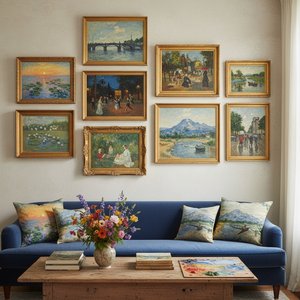
Топ 10 шедьоври на импресионизма: Пейзажи, променили изкуството | OriginalUniqueArt.com
Разгледайте топ 10 шедьоври на импресионизма и открийте красотата на пейзажите от Моне, Реноар и други известни художници. Вдъхновете се за вашия дом с репродукции на картини в OriginalUniqueArt.com! Разгледайте пълната колекция онлайн.

Топ 25 шедьовъра на Пол Сезан: Открийте вечния гений в изкуството и декора
Открийте 25 шедьовъра на Пол Сезан – импресионизъм, постимпресионизъм и революционен стил! Разгледайте историите зад картините, техниките и вдъхновението. Купете висококачествени репродукции за вашия дом на OriginalUniqueArt.com.

