
 Преглед в реален мащаб
 Изпрати
 Сподели
 Детайли
 Ръководство

 Изтегляне
 Подобни артикули
 Рентгенова снимка
 Слайдшоу
 Въпроси и отговори
 Статистика
Road near Galle, Ceylon

- 38.0 x 24.0 cm


 Прочети повече
Жикле / Художествен принт
Giclée печат или принт върху платно с музейно качество, бързо производство и гъвкави опции за завършен вид. ( Купете ръчно рисувана картина Превключване към дигитално изображение)




P118B €10

P118H €10

P118W €10

P438Z €10

P508JH €12

P508YH €12

P805H €10

P805Z €10

P919BZ €10

P919G €10

P919XJ €10

P959ZH €10

P968JZ €12

W106C €8

W218G €10

W218JH €8

W218Y €10

W307PJ €10

W316G €10

W316PJ €8

W316Y €10

W398PJ €8

W4111J €10

W500HY €15

W500JH €15

W692G €12

W849H €8

W940BG €15

W953PJ €8




Изберете от нашите предварително зададени размери, които съответстват на оригиналните пропорции на произведението.

Въведете необходимата ширина и височина, за да паснат на вашата рамка или стена. Принтовете могат само да се изрязват, но никога не могат да бъдат по-големи от оригиналната картина, така че при размер с различен формат част от изображението ще бъде загубена. Преди да започнем печат, ще ви изпратим дигитален мок업 за одобрение. Изображението, показано на тази страница, не показва реалното изрязване — само мок업ът го показва.
Доставка по целия свят () в рамките на 2 седмици вместо стандартните 4/5 седмици. (7 Ноември)

Безплатна експресна доставка по целия свят

Висококачествено ленено платно

Пълно застраховане на доставката

Гаранция за възстановяване на митнически такси

Гаранция за пълно съответствие на цветовете

Политика за връщане в рамките на 100 дни (само при дефекти)

100% Гаранция за връщане на сумата

Оферта за отстъпка при поръчка на повече бройки
 Опцията със стъкло е налична само за размери под 110 см

Road near Galle, Ceylon
Жикле / Художествен принт
Размер на репродукцията
-


Обща цена
€ 72
A Glimpse of Ceylon’s Soul: Edward Lear's “Road Near Galle, Ceylon”
Edward Lear’s “Road Near Galle, Ceylon,” painted in 1879, isn’t merely a depiction of a tropical landscape; it’s a carefully constructed window into the heart of late Victorian Sri Lanka. More than just a picturesque scene, this oil painting embodies a profound sense of observation and quiet contemplation – qualities deeply rooted in Lear's own life experiences and artistic sensibilities. The image transports us to a moment suspended in time, capturing not just the physical beauty of the region but also an atmosphere of gentle serenity and understated dignity. It’s a testament to Lear’s ability to distill complex emotions into a single, evocative composition.The Scene Unfolds: A Vibrant Tapestry of Life
The painting immediately draws the eye to a small group of figures traversing a dusty dirt road that snakes its way through a lush, palm-dominated landscape. These aren’t grand heroes or dramatic events; instead, they represent everyday life – men and women engaged in simple activities: some pausing for rest, others continuing their journey with purposeful strides. Their attire, rendered in warm, earthy tones, speaks to the practicality of rural existence while simultaneously hinting at a vibrant local culture. The backdrop is dominated by towering palm trees, their fronds reaching skyward, creating a sense of depth and scale that emphasizes the vastness of the Ceylon landscape. The light itself – a rich, golden hue – seems to bathe the scene in an eternal afternoon glow, lending it a timeless quality. Lear masterfully uses color to create a harmonious balance between the vibrant greens of the foliage and the warm browns and ochres of the road and figures, evoking a feeling of warmth and tranquility.Lear’s Technique: A Delicate Balance of Observation and Impression
Examining the painting's technique reveals Lear’s meticulous approach to capturing light and atmosphere. He employs a broken brushstroke style, layering thin washes of color to build up form and texture with remarkable subtlety. This method allows for a luminous quality, particularly evident in the dappled sunlight filtering through the palm fronds. The artist’s attention to detail is striking – from the individual folds of fabric on the figures' clothing to the intricate patterns of the foliage – yet he avoids overly precise rendering, instead favoring an impressionistic approach that captures the essence of the scene rather than a photographic likeness. The use of color is particularly noteworthy; Lear doesn’t shy away from bold hues but skillfully blends them to create a sense of depth and realism. The painting's overall effect is one of quiet beauty and understated elegance, reflecting Lear’s own artistic philosophy.Symbolism and Context: A Window into Victorian Sri Lanka
“Road Near Galle, Ceylon” offers more than just a visual pleasure; it provides a glimpse into the social and cultural context of late 19th-century Sri Lanka during the British colonial period. Lear’s depiction of everyday life—the simple routines of the villagers—reflects a nuanced understanding of the region's diverse population. The painting can be interpreted as a celebration of Ceylon’s natural beauty and its people, while subtly acknowledging the presence of foreign influence. Lear himself was a keen observer of human nature and a master of capturing fleeting moments of emotion in his art. His own experiences with illness and isolation likely informed his ability to imbue his paintings with a sense of melancholy and introspection. The painting’s title itself—"Road Near Galle, Ceylon"—suggests a deliberate focus on the journey, both literal and metaphorical, that defines human existence.Bringing Lear's Vision Home: Reproductions and Artistic Legacy
Today, “Road Near Galle, Ceylon” stands as a testament to Edward Lear’s artistic genius. High-quality reproductions offer an accessible way to experience the painting’s beauty and evoke its evocative atmosphere. Whether displayed in a living room, study, or gallery, this artwork invites contemplation and offers a connection to a bygone era. Consider framing options that complement the painting's rich colors and textures – a natural linen canvas would be particularly fitting, allowing the artwork to truly shine. Explore various sizes to find one that best suits your space and aesthetic preferences. By investing in a reproduction of “Road Near Galle, Ceylon,” you’re not simply acquiring an image; you’re inheriting a piece of art history—a window into the soul of Ceylon and the perceptive eye of Edward Lear.Въпроси и отговори
Кога е създадена и от кой стил е „Road near Galle, Ceylon“ на Едуард Лър?
"Road near Galle, Ceylon" е създадена през 1879 като произведение на течението Romanticism. Датата и художественото направление поставят творбата в контекста на историята на изкуството.
Кой е създал "Road near Galle, Ceylon" и в какъв стил е изработено?
Едуард Лър създава „Road near Galle, Ceylon“ в рамките на движението Romanticism.
Кой е създал "Road near Galle, Ceylon" и през коя година?
Едуард Лър създава „Road near Galle, Ceylon“ през 1879 г.
Биография на художника
A Life Painted in Nonsense and Light
Edward Lear, a name inextricably linked with whimsical verse and delightfully peculiar illustrations, was far more than simply the creator of limericks and fantastical creatures – he represented a radical shift in how we perceive art, literature, and the very nature of imagination. Born in 1812 in Holloway, North London, into a family teeming with twenty-one children, Lear’s early life was a complex tapestry woven from financial instability, artistic talent, and persistent personal challenges. His father, Jeremiah Lear, faced considerable hardship following the Napoleonic Wars, forcing young Edward to begin earning a living through his drawings at the tender age of fifteen. This early necessity, however, ignited a lifelong passion that would propel him across continents, capturing the world in vibrant hues and playful lines – a testament to the enduring power of human creativity even amidst adversity. The shadow of familial difficulty, coupled with recurring health issues – including epilepsy and periods of melancholic reflection he termed “the Morbids” – instilled within Lear a profound sense of gentle solitude and an inclination towards imaginative escape, qualities that are profoundly reflected in his art and writing.From Ornithological Precision to Landscape’s Embrace
Lear's artistic journey began with an astonishing level of technical precision. Initially employed by the Zoological Society, he honed his skills illustrating birds and animals, demonstrating a remarkable eye for detail and anatomical accuracy. This early work wasn’t merely observational; it was meticulously researched and rendered with a dedication to scientific realism that earned him recognition within the academic art world. His illustrations were sought after by prominent figures, including Edward Stanley, the 13th Earl of Derby, who commissioned Lear to document the exotic creatures residing within his private menagerie at Knowsley Hall. These years spent amongst lions, tigers, and parrots – a veritable menagerie of wild wonders – not only refined his draftsmanship but also fostered a deep and abiding connection with the natural world, a connection that would become a recurring theme in his later landscapes. However, the demanding nature of ornithological illustration, coupled with increasingly debilitating respiratory issues and failing eyesight, eventually led him away from this exacting field. He turned instead to landscape painting, embarking on extensive travels throughout Europe and beyond – a decision driven by both necessity and a yearning for respite and inspiration. Italy became a particular haven, offering not only a more temperate climate conducive to his health but also an abundance of breathtaking vistas that would profoundly influence his artistic vision. His landscapes are characterized by a unique blend of topographical accuracy and atmospheric sensitivity, often rendered in delicate watercolors that capture the subtle nuances of light and shadow – a testament to his mastery of color and composition.The Poet of Nonsense: A World Unbound
While celebrated as a painter, it is perhaps for his literary contributions that Edward Lear is most widely remembered. His “nonsense” poetry – particularly his limericks – revolutionized children’s literature and captivated audiences of all ages. *A Book of Nonsense*, published in 1846 under the pseudonym "Derry down Derry," introduced a world populated by owls and pussycats sailing in pea-green boats, dongs with luminous noses, and other delightfully absurd creations. These verses weren’t merely frivolous; they were imbued with a subtle melancholy and a playful subversion of conventional logic – a characteristic that distinguished Lear's work from simpler forms of nonsense verse. He didn’t simply invent nonsensical words; he crafted entire worlds governed by their own internal rules, inviting readers to suspend disbelief and embrace the joy of imagination. *The Owl and the Pussy-Cat*, arguably his most famous poem, remains a beloved classic, its enduring appeal stemming from its lyrical rhythm, evocative imagery, and underlying sense of wistful longing. Lear’s limericks often explored themes of loneliness, longing, and the absurdity of existence – subjects he addressed with a surprising degree of emotional depth, cloaked within a veneer of whimsicality. He was a master of creating miniature narratives filled with unexpected twists and turns, leaving readers pondering the deeper meanings hidden beneath the surface of his playful verses.Influences and Artistic Development
- Early Influences: Lear’s initial artistic training focused on scientific illustration, demanding precision and observation. This foundation shaped his meticulous approach to detail, even as he later embraced more expressive styles.
- Travel & Landscape Painting: His extensive travels through Italy, Greece, Egypt, and beyond profoundly influenced his landscape work. He absorbed the light, colors, and textures of these diverse regions, developing a distinctive style characterized by atmospheric perspective and delicate brushwork.
- Literary Inspiration: While he popularized the limerick, Lear was also inspired by earlier nonsense verse traditions – including the works of Father Browne. His unique contribution lay in his ability to imbue this form with emotional depth and lyrical beauty.
- Personal Experiences: Lear’s lifelong struggles with health issues and melancholy deeply informed his artistic vision. The sense of isolation and longing that permeates much of his work reflects his own personal experiences.
A Legacy of Innovation and Enduring Charm
Edward Lear's influence extends far beyond the realm of children's literature. He pioneered a new form of poetic expression, liberating verse from rigid structures and embracing playful experimentation. His landscapes, though often overshadowed by his poetry, demonstrate a keen artistic sensibility and a mastery of watercolor technique. He was a true polymath – artist, illustrator, musician (he composed musical settings for Tennyson’s poems), author, and poet – whose diverse talents converged to create a unique and enduring legacy. He challenged conventional boundaries, blurring the lines between art, literature, and music. His work continues to inspire artists, writers, and dreamers alike, reminding us of the power of imagination and the beauty of embracing the absurd. His paintings can be found in esteemed collections like The Ashmolean Museum, Oxford, a testament to his skill as a landscape artist. Lear’s life, marked by both personal struggles and creative triumphs, serves as a poignant reminder that even amidst darkness, there is always room for light, laughter, and the boundless possibilities of the human spirit.
Едуард Лър
1812 - 1888 , Великобритания
Бърза информация
- Artistic Movement Or Style: Нонсейнс, Викторианец
- Date Of Birth: 12 май 1812
- Date Of Death: 29 януари 1888
- Full Name: Edward Lear
- Nationality: Британски
- Notable Artworks:
- The Owl and the Pussy-Cat
- Dong с светлинен нос
- Илюстрации на папагали
- Place Of Birth: Лондон, Великобритания
Свързани статии

Топ 25 шедьовъра на Джон Констабъл: Английски пейзажи за вашия дом | OriginalUniqueArt.com
Открийте топ 25 шедьовъра на Джон Констабъл – английски пейзажи, романтизъм и красотата на природата. Репродукции с музейно качество за вашия дом! Разгледайте пълната колекция онлайн на OriginalUniqueArt.com.

Evocations of Place: A Historical Journey Through Landscape Art
Explore the rich history of landscape art with OriginalUniqueArt. Discover renowned artists, movements like Impressionism & Romanticism, and expert guidance for collecting timeless pieces. Find your perfect serene escape today!

Топ 10 шедьовъра на Романтичния пейзаж: Изкуство за вашия дом от OriginalUniqueArt.com
Открийте 10 шедьовъра на Романтичния пейзаж – Фридрих, Търнър и други! Разгледайте историите зад картините, техниките и емоциите. Репродукции с музейно качество от OriginalUniqueArt.com. Вдъхновете се за вашия дом!

Evocations of Place: A Historical Journey Through Landscape Art
Explore the rich history of landscape art with OriginalUniqueArt. Discover renowned artists, movements like Impressionism & tonalism, and expert guidance for collecting timeless pieces. Find your perfect serene escape today!
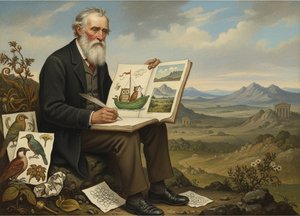
Edward Lear: A Life Beyond Nonsense – Landscape, Illustration & the Poetics of Isolation
Explore the life of Edward Lear beyond his nonsense poems. Discover his stunning landscape paintings, travel illustrations & the poignant themes of isolation in this expert art history analysis.
