التبديل إلى المطبوعات
 اقرأ المزيد







































 بالنسبة للأعمال الفنية أو النسخ المطبوعة التي يتجاوز طول أي من أضلاعها 105 سم (حوالي 41 بوصة)، سيتم شحن الإطار كمجموعة مفككة. تضمن هذه الطريقة سلامة التوصيل وتمنع حدوث أي أضرار أثناء النقل.


A Symphony of Color and Spirit
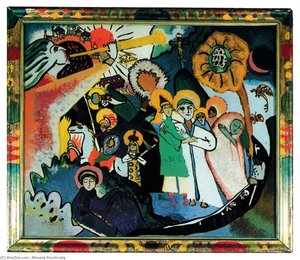
In the vast landscape of modern art, few works capture the raw, pulsating energy of the early twentieth century quite like Wassily Kandinsky’s “Orientalisches (Oriental).” Created in 1913 as a vital component of his monumental series, Klänge (Sounds), this masterpiece serves as a profound testament to the artist’s belief that color and form could communicate directly with the human soul, bypassing the constraints of rational thought. This woodcut print is not merely a depiction of figures; it is a rhythmic arrangement of visual notes, much like a musical composition, where every hue and line vibrates with its own unique frequency. For the discerning collector or interior designer, this piece offers more than just decoration; it provides a window into the very moment when art broke free from the physical world to explore the spiritual realm.
The visual language of “Oriental” is one of breathtaking dynamism and textured richness. At first glance, the composition presents a group of nine figures arranged against a textured backdrop, yet the true subject is the masterful manipulation of light and pigment. Kandinsky employs bold swathes of crimson and ochre—colors chosen with surgical precision to evoke feelings of passion, vitality, and warmth. These intense tones are balanced by delicate whispers of yellow and turquoise, creating a harmonious interplay that suggests both movement and deep contemplation. Drawing inspiration from the Japanese Ukiyo-e tradition, the artist utilizes flatness and tonal gradation rather than realistic depth, a stylistic choice that emphasizes the decorative power of the print and its ability to transform any modern space with its vibrant, rhythmic presence.
The Intersection of Tradition and Innovation
To understand the profound impact of this work, one must look toward the historical crucible of the Bauhaus movement. During his time in Weimar, Kandinsky was at the forefront of an artistic revolution that sought to unify art, craft, and technology. “Oriental” embodies this ethos perfectly, blending the ritualistic gestures of Eastern traditions with a burgeoning Western abstraction. The figures, engaged in what appear to be sacred or communal activities, reference a sense of universal spirituality that transcends cultural boundaries. This connection to the "other" and the exotic was a hallmark of Kandinsky’s early period, as he sought to find a visual language that could express the unseen, much like the soaring crescendos of a Wagnerian opera.
For those looking to elevate an interior with a piece of historical significance, “Orientalisches” offers an unparalleled emotional impact. It is a work that demands attention through its sheer vitality, yet invites long periods of quiet study through its intricate details and layered textures. Whether placed in a minimalist gallery setting or as a focal point in a richly textured living space, this reproduction brings with it the legacy of a pioneer. It stands as a symbol of the courage to innovate and the enduring power of the abstract to touch the very essence of our being, making it an essential acquisition for anyone devoted to the transformative power of fine art.
الأسئلة والأجوبة
ما هي إعدادات الطباعة المقترحة لـ "شرقي (Oriental)" للفنان واسللي كاندنسكي؟
يُنصح بطباعة "شرقي (Oriental)" للفنان واسللي كاندنسكي بحجم حجم صغير وبوضعية أفقي.
ما هي التقنية والأبعاد الخاصة بـ "شرقي (Oriental)" للفنان واسللي كاندنسكي؟
تعتمد تقنية العمل الفني "شرقي (Oriental)" للفنان واسللي كاندنسكي على الحفر على الخشب، وتبلغ أبعاده المسجلة 3 x 19 cm.
ما الذي يضفيه "شرقي (Oriental)" للفنان واسللي كاندنسكي على التصميم الداخلي؟
تتمتع لوحة "شرقي (Oriental)" للفنان واسللي كاندنسكي بأجواء هادئ ومسالم، ويُنصح بوضعها في غرفة المعيشة. والمقصود بالحالة المزاجية هو ما يضفيه العمل الفني على المساحة المحيطة به.
 معاينة الحجم الواقعي
 إرسال
إرسال مشاركة
 عرض التفاصيل
 دليل الأعمال الفنية للطلاب

 تحميل
تحميل
 قطع مشابهة
 الأشعة السينية
 عرض شرائح متتابع
 Q&A
Q&A الإحصائيات