التبديل إلى نسخة مطبوعة
 عرض المزيد







































 بالنسبة للأعمال الفنية أو النسخ المطبوعة التي يتجاوز طول أي من أضلاعها 105 سم (حوالي 41 بوصة)، سيتم شحن الإطار كمجموعة مفككة؛ حيث تضمن هذه الطريقة سلامة التوصيل وتمنع حدوث أي أضرار أثناء النقل.


Composition IX: A Symphony of Color Embodies Kandinsky's Vision
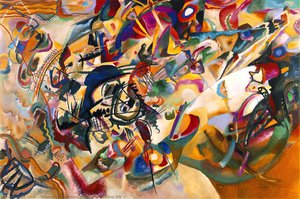
Wassily Wassilyevich Kandinsky’s *Composition IX*, created in 1936 during his formative years at the Bauhaus school, stands as a cornerstone of abstract art—a testament to its ability to transcend representational imagery and communicate directly with the viewer’s subconscious. More than just pigment on canvas; it's an exploration of fundamental principles of visual perception, reflecting Kandinsky’s profound conviction that color and form could express inner emotions and spiritual truths.
- Subject Matter: The artwork eschews recognizable objects or figures entirely, prioritizing instead a purely abstract landscape—a realm where geometric shapes dominate and colors intertwine in dynamic relationships.
- Style: Kandinsky’s style aligns squarely with early abstract expressionism, mirroring the influence of composers like Igor Stravinsky who sought to evoke emotional responses through musical composition. The piece embodies a deliberate rejection of traditional perspective and spatial representation.
- Technique: Employing oil paints on canvas, Kandinsky utilized layering techniques—applying multiple coats of paint—to build up texture and depth. Large areas of color are juxtaposed with smaller sections featuring textured surfaces created through varied brushstrokes and scraping methods.
The palette employed in *Composition IX* is remarkably bold – primarily dominated by yellows, reds, blues, greens, and purples—each hue carefully considered to generate harmonic resonance. These colors aren’t merely decorative; they are deliberately positioned to create visual tension and balance, mirroring the complexities of human experience.
Historical Context: Kandinsky's exploration into color theory and its connection to music coincided with a broader artistic movement aimed at liberating art from constraints imposed by realism. Bauhaus, under Josef Albers’ guidance, championed experimentation and abstraction as pathways toward achieving spiritual enlightenment—a philosophy that profoundly shaped Kandinsky’s artistic endeavors.
Symbolism & Emotional Impact: Viewing *Composition IX* invites contemplation on themes of harmony, movement, and vibration – concepts central to Kandinsky's belief system. The artwork’s energetic dynamism speaks to the artist’s desire to capture the essence of inner states—a visual manifestation of spiritual yearning.
Detailed Analysis of Color Relationships
Kandinsky meticulously crafted color harmonies within *Composition IX*, recognizing that hues could evoke specific emotions and sensations. Yellow, representing optimism and intellect, is balanced by red’s passion and vitality – creating a dynamic interplay that captures the spectrum of human feeling.
Exploring Texture & Surface Treatment
The artist's skillful manipulation of texture contributes significantly to the artwork’s overall impact. Thick impasto—the application of paint in thick layers—creates palpable surfaces, inviting viewers to engage with the materiality of the piece and experiencing a tactile connection to Kandinsky’s vision.
Bauhaus Influence & Artistic Innovation
Kandinsky's engagement with Bauhaus principles – prioritizing experimentation and abstraction – exemplifies the transformative spirit of the era. He sought to redefine artistic expression, rejecting conventional conventions in favor of pursuing new pathways toward conveying profound emotional and spiritual truths—a legacy that continues to inspire artists today.
الأسئلة والأجوبة
ما هي الغرفة المقترحة لـ "تكوين التاسع" للفنان واسللي كاندنسكي؟
تتناسب نسخة من "تكوين التاسع" بشكل رائع مع غرفة المعيشة.
ما هو الحجم المثالي لطباعة "تكوين التاسع" بما يتناسب مع غرفتي؟
التنسيق الموصى به لـ "تكوين التاسع" للفنان واسللي كاندنسكي: طباعة بمقاس كبير في غرفة المعيشة.
ما مدى تناغم الألوان في "تكوين التاسع" للفنان واسللي كاندنسكي؟
يتميز التناغم اللوني لـ "تكوين التاسع" بكونه لوحة ألوان ممتزجة بنعومة.
 معاينة الحجم الواقعي
 مشاركة
 مشاركة
 التفاصيل
 دليل
دليل

 تحميل الملف
 قطع مشابهة
 الأشعة السينية
 عرض شرائح
 الأسئلة والأجوبة
 الإحصائيات