
 معاينة الحجم الواقعي
 مشاركة
 مشاركة
 التفاصيل
 دليل
دليل

 تحميل الملف
 قطع مشابهة
 الأشعة السينية
 عرض شرائح
 الأسئلة والأجوبة
 الإحصائيات
Self Portrait with Camellia Branch


 عرض المزيد
طباعة جيلي / مطبوعات فنية
طباعة جيكلي أو كانفاس بجودة المتاحف، مع سرعة في التنفيذ وخيارات متنوعة للتشطيب. ( شراء لوحة مرسومة يدويًا الانتقال إلى الصورة الرقمية)




P118B E£10

P118H E£10

P118W E£10

P438Z E£10

P508JH E£12

P508YH E£12

P805H E£10

P805Z E£10

P919BZ E£10

P919G E£10

P919XJ E£10

P959ZH E£10

P968JZ E£12

W106C E£8

W218G E£10

W218JH E£8

W218Y E£10

W307PJ E£10

W316G E£10

W316PJ E£8

W316Y E£10

W398PJ E£8

W4111J E£10

W500HY E£15

W500JH E£15

W692G E£12

W849H E£8

W940BG E£15

W953PJ E£8




اختر من بين أحجامنا المُعدّة مسبقاً والتي تتوافق مع النسب الأصلية للعمل الفني.

أدخل العرض والارتفاع المطلوبين ليتناسب المقاس مع إطارك أو جدارك. يرجى الملاحظة أن المطبوعة يمكن قصها فقط ولا يمكن تكبيرها لتتجاوز أبعاد الصورة الأصلية، لذا فإن اختيار مقاس بأبعاد مختلفة سيؤدي إلى فقدان جزء من الصورة. سنرسل لك نموذجاً رقمياً تجريبياً لاعتماده قبل البدء في عملية الطباعة. الصورة المعروضة في هذه الصفحة لا توضح شكل القص الفعلي — النموذج التجريبي فقط هو ما يظهر ذلك بدقة.
توصيل عالمي إلى خلال أسبوعين بدلاً من المدة القياسية البالغة 4/5 أسابيع. (4 نوفمبر)

شحن سريع ومجاني لجميع أنحاء العالم

قماش كتان عالي الجودة

تأمين شامل على الشحن

ضمان استرداد الرسوم الجمركية

ضمان مطابقة الألوان الحقيقية

سياسة الإرجاع خلال 100 يوم (في حالات العيوب فقط)

ضمان استرداد نقدي بنسبة 100%

خصم عند طلب كميات
 خيار الزجاج متاح فقط للمقاسات التي تقل عن 110 سم

Self Portrait with Camellia Branch
طباعة جيلي / مطبوعات فنية
مقاس النسخة المطبوعة
-


إجمالي السعر النهائي
E£ 4237
A Quiet Revelation: The Soul of Expressionism
In the intimate realm of early twentieth-century modernism, few works possess the haunting, quiet power of Paula Modersohn-Becker’s Self Portrait with Camellia Branch. Painted between 1906 and 1907, this masterpiece serves as a profound meditation on the intersection of femininity, mortality, and the natural world. As one gazes upon the artist's likeness, there is an immediate sense of encountering a private moment of introspection. The painting does not merely capture a physical resemblance; it captures a state of being. Through her unflinching gaze, Becker invites the viewer into a space where the boundaries between the internal psyche and the external world begin to blur, making it an irresistible centerpiece for any collection dedicated to the emotional depth of the Expressionist movement.
The technique employed by Becker marks a radical departure from the polished academic traditions of her era. Eschewing the delicate, light-drenched idealism of Impressionism, she embraced the burgeoning tenets of Expressionism, prioritizing subjective feeling over objective accuracy. The canvas is characterized by a deliberate flattening of perspective and simplified, almost primal forms that direct the eye toward the raw emotion of the subject. Her palette—rich with deep blues and earthy greens—imbues the scene with a palpable, heavy atmosphere, creating a sense of weight and permanence. For the discerning collector or interior designer, this stylistic boldness offers a sophisticated textural element, providing a focal point that commands attention through its structural simplicity and tonal depth.
Symbolism and the Cycle of Life
Every element within this self-portrait is laden with a poetic, symbolic weight that rewards deep contemplation. The most striking feature, the camellia branch held by the artist, acts as a silent protagonist in this visual narrative. In the language of flowers, the camellia is often associated with mourning and remembrance, frequently appearing in funeral wreaths to signify purity and devotion. Yet, within Becker’s vision, the flower also embodies the concept of rebirth and regeneration. This duality—the tension between the inevitability of loss and the persistence of life—mirrors the artist's own awareness of her fleeting existence. The branch is not merely a decorative accessory but a memento mori that breathes life into the composition.
The emotional impact of the piece lies in this very vulnerability. Becker’s gaze, directed outward toward the viewer, possesses an unsettling honesty; it is a look that acknowledges mortality while simultaneously asserting her presence in the moment. This creates a profound psychological resonance, making the artwork much more than a mere portrait. It becomes a window into the human condition, exploring themes of resilience and the enduring beauty found within fragility. For those seeking to decorate a space with art that inspires thought and evokes empathy, this reproduction offers an unparalleled opportunity to bring a sense of historical gravity and soulful elegance into a modern living environment.
الأسئلة والأجوبة
إلى أي مرحلة من مسيرة باولا مودرسون-بيكر الفنية تنتمي لوحة "Self Portrait with Camellia Branch"؟
ينتمي العمل "Self Portrait with Camellia Branch" إلى الفترة Late Medieval من مسيرة باولا مودرسون-بيكر المهنية، مما يربط هذا العمل بمراحل تطور الفنان الفني.
أين يمكنني تحميل "Self Portrait with Camellia Branch" للفنان باولا مودرسون-بيكر؟
يمكنك تنزيل "Self Portrait with Camellia Branch": حيث توفر صفحة تحميل الصورة الرقمية الخاصة بالعمل الفني خيار تحميل صورة رقمية عالية الدقة.
ما مدى شهرة العمل الفني "Self Portrait with Camellia Branch" للفنان باولا مودرسون-بيكر؟
تُصنف لوحة "Self Portrait with Camellia Branch" على أنها Iconic.
السيرة الذاتية للفنان
A Pioneer of Inner Vision: The Life and Art of Paula Modersohn-Becker
Paula Modersohn-Becker, a name that resonates with quiet power in the annals of early modern art, was an artist who dared to look inward. Born Minna Hermine Paula Becker on February 8, 1876, in Dresden, Germany, her life was tragically short – she passed away November 30, 1907, in Worpswede – yet within those three decades, she forged a path of remarkable artistic innovation and personal courage. Her story isn’t one of immediate acclaim or widespread recognition during her lifetime; rather, it's a testament to the enduring strength of an individual voice that challenged conventions and explored the depths of human experience with unflinching honesty. From a relatively privileged upbringing in a family marked by a subtle shadow – her uncle had attempted to assassinate the King of Prussia – Paula’s artistic inclinations were nurtured, though not without societal expectations pressing upon them. She received early training in London and Berlin, but it was the atmosphere of Worpswede, an artists' colony north of Bremen, that truly ignited her creative spirit. There, amidst a community of like-minded individuals, she began to shed the constraints of academic tradition and embark on a journey toward a uniquely personal artistic language.The Path to Expression: Influences and Artistic Development
Modersohn-Becker’s artistic evolution was not linear; it was a process of constant questioning, experimentation, and refinement. Initially influenced by Impressionism, her early landscapes and portraits displayed a sensitivity to light and atmosphere, but she soon felt constrained by its limitations. A pivotal moment came with her travels to Paris in 1899 and subsequent visits in 1903 and 1905. Immersing herself in the vibrant art scene of the French capital, she encountered the works of Paul Cézanne, Paul Gauguin, Vincent van Gogh, and other Post-Impressionist masters. These artists liberated her from the pursuit of mere representation, encouraging her to explore the expressive potential of color, form, and composition. The influence of these painters is evident in her increasingly bold brushwork and simplified forms. However, Modersohn-Becker didn’t simply imitate; she synthesized these influences with her own deeply felt emotions and observations. Her encounters with artists like Emil Nolde and Franz Crumbach within the Worpswede circle further propelled her toward a more emotionally charged and subjective style. She began to focus intently on portraits, particularly those of women and mothers, seeking to capture not just their physical likeness but also their inner lives – their vulnerabilities, strengths, and complexities. She sought to depict the essence of her subjects, moving beyond superficial appearances to reveal the psychological depth beneath.Breaking Boundaries: Self-Portraits and the Exploration of Identity
Perhaps the most groundbreaking aspect of Modersohn-Becker’s oeuvre is her series of self-portraits, particularly those depicting herself nude or pregnant. These works were revolutionary for their time, challenging societal norms and artistic conventions that dictated how women should be represented – or rather, *not* represented in such a direct and unflinching manner. She wasn't presenting herself as an object of desire; instead, she was using her own body as a vehicle for exploring themes of identity, femininity, motherhood, and the human condition. Self-Portrait with Necklace, Self-Portrait on Her Sixth Wedding Anniversary, and numerous other self-representations are not merely studies in form and color; they are profound psychological investigations. They reveal a woman grappling with her own sense of self, questioning societal expectations, and asserting her artistic agency. These paintings were daring acts of self-expression, paving the way for future generations of female artists to explore their own identities and experiences through art. Her willingness to confront taboo subjects and challenge conventional notions of beauty cemented her position as a true pioneer. She looked at herself with an honesty rarely seen in portraiture, particularly from a female artist, creating images that were both vulnerable and powerfully self-possessed.Legacy and Lasting Impact
Paula Modersohn-Becker’s tragically short career yielded an astonishing body of work – over 700 paintings and 1,000 drawings. Despite limited recognition during her lifetime, her influence on the development of German Expressionism is now widely acknowledged. She is considered a key figure in bridging the gap between Impressionism and Expressionism, laying the groundwork for artists like Ernst Ludwig Kirchner and Emil Nolde. In 1927, a landmark event solidified her place in art history: the founding of the Paula Modersohn-Becker Museum in Bremen – the first museum dedicated solely to the work of a female artist. This act was not merely a tribute to her artistic achievements; it was a recognition of her significance as a woman artist and a symbol of progress for women in the arts. Her paintings continue to resonate with audiences today, offering timeless insights into the human condition, motherhood, identity, and the search for meaning. Her legacy extends beyond the realm of art history; she remains an inspiration to artists and individuals alike who strive to live authentically and express themselves fearlessly. She was a woman ahead of her time, whose artistic vision continues to challenge and inspire us today.Key Themes in Her Work
- Motherhood: Modersohn-Becker’s depictions of mothers and children are particularly poignant, capturing the complexities of maternal love, vulnerability, and societal expectations.
- Self-Portraiture: Her self-portraits represent a radical act of self-exploration and challenge traditional representations of women in art.
- Identity: The artist grappled with questions of identity throughout her life, exploring themes of femininity, marriage, and artistic independence.
- The Human Condition: Her work often reflects a deep empathy for the human experience, portraying subjects with honesty and psychological depth.
- Spiritual Seeking: A sense of spiritual yearning permeates much of her art, reflecting her search for meaning and connection in a rapidly changing world.

باولا مودرسون-بيكر
1876 - 1907 , أَلْمَانِيَا
حقائق سريعة
- الأعمال البارزة:
- بورتريه ذاتي بعقد
- أم مع طفل
- الاسم الكامل: Paula Modersohn-Becker
- الجنسية: ألمانية
- الحركة الفنية: التعبيرية
- الفنانون المؤثرون:
- بول سيزان
- بول غوغان
- فنسنت فان جوخ
- الفنانون المتأثرون: ['التعبيرية الألمانية']
- تاريخ الميلاد: 8 فبراير 1876
- تاريخ الوفاة: 30 نوفمبر 1907
- مكان الميلاد: درزدن، ألمانيا
مقالات ذات صلة

Slate Blue Masterpieces: 10 Iconic Paintings & Timeless Home Decor Ideas
Immerse yourself in the captivating world of slate blue! Explore 10 iconic paintings by Monet, Van Gogh & Renoir. Discover their stories, techniques & find museum-quality art reproductions for your home at .
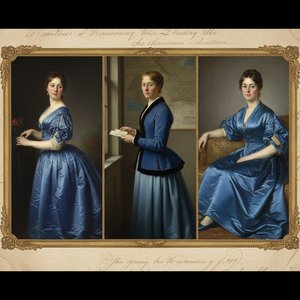
Azure Visions: Exploring Representations of the Blue Dress in Western Art History
Explore the rich history of the blue dress in Western art! Discover its symbolism, from Renaissance masterpieces to modern interpretations by artists like Martin & Schiele. Uncover cultural meanings and artistic techniques.

Serene Blue Backgrounds: Discover Soulful Art to Transform Your Space with Timeless Elegance
Transform your home with soulful blue art. From serene Monet impressions to modern textured sculptures, discover curated masterpieces designed to inspire calm. Explore expert art consultations and bespoke hand-painted reproductions to create your personal sanctuary.

The Allure of Azure: Exploring the Symbolic & Aesthetic Depths of Blue in Art History
Explore the rich history of blue in art! Discover its symbolism, from ancient pigments to modern masterpieces by Kandinsky & Seurat. Uncover the psychological impact and cultural meanings behind this captivating hue.

Paula Modersohn-Becker: Pioneering Expressionism & the Intimate Self
Explore the groundbreaking work of Paula Modersohn-Becker, a pioneer of Expressionism. Discover her intimate self-portraits & poignant depictions of motherhood – shaping early 20th-century art with emotional depth and innovation.