Introduction: The Enduring Allure of Blue
From the lapis lazuli adorning ancient Egyptian tombs to the celestial robes of Renaissance Madonnas, blue has consistently captivated humanity. More than a mere color, it embodies concepts of spirituality, nobility, and introspection. This fascination extends powerfully into the realm of portraiture, where the inclusion of blue – particularly in garments like dresses – transcends simple aesthetic choice, becoming a potent symbol laden with meaning. The seemingly straightforward depiction of a “blue dress” within Western art history reveals layers of social commentary, artistic innovation, and evolving perceptions of identity, inviting us to consider not just *what* is represented, but *why*. This exploration delves into the historical currents that shaped blue’s significance, tracing its journey through various periods and movements, ultimately revealing the enduring power of this evocative hue.
The Symbolism of Blue Throughout History: From Antiquity to the Renaissance
Initially, blue held a complex position in ancient cultures. While valued for its rarity – natural blue pigments were scarce – it wasn’t always as highly esteemed as other colors like red or gold. In ancient Egypt, blue represented the Nile and the heavens, associated with creation and rebirth. However, its use remained relatively limited compared to more readily available shades. The Romans initially favored reds and purples, associating blue with barbarians. It was during the medieval period that blue began its ascent in Europe, largely due to the increasing devotion to the Virgin Mary. Ultramarine, derived from lapis lazuli imported from Afghanistan, became synonymous with holiness and purity, adorning the robes of the Madonna in countless religious paintings. This association elevated blue’s status dramatically, linking it inextricably with piety and the divine.
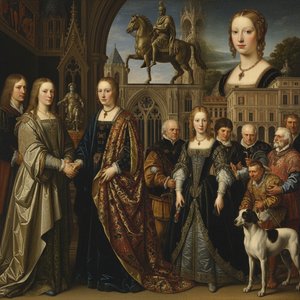
The Renaissance witnessed a continued reverence for blue, though its cost remained prohibitive for many artists. The development of cheaper alternatives like azurite broadened access to the color, but ultramarine retained its prestige. Portraits began incorporating blue as a subtle indicator of wealth and status – a glimpse of expensive fabric signifying the sitter’s position within society. Beyond mere display, however, blue also carried psychological weight. Its association with tranquility and contemplation lent itself to conveying inner character and spiritual depth.
Blue Dresses as Markers of Status and Identity in 18th & 19th Century Portraiture
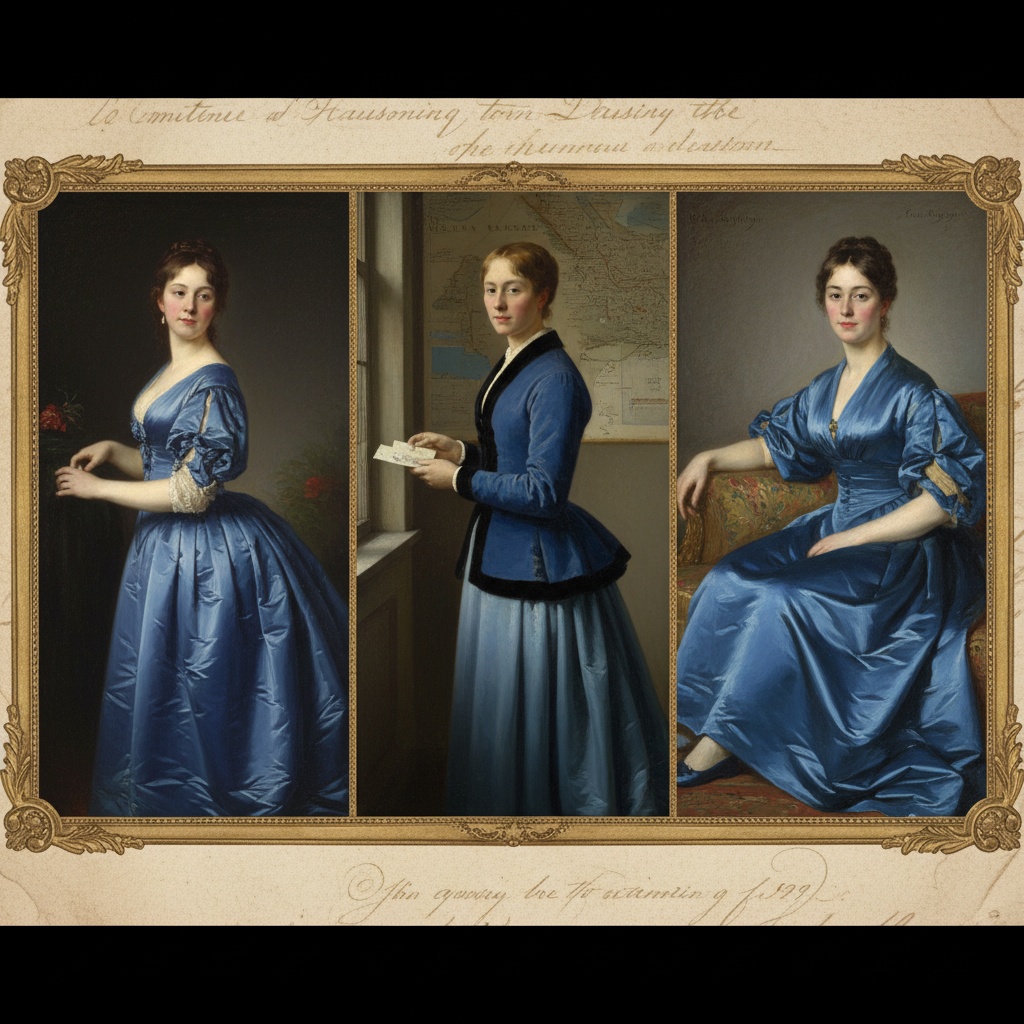
The 18th and 19th centuries saw a flourishing of portraiture, coinciding with advancements in textile production and the rise of a burgeoning middle class eager to display their affluence. The blue dress emerged as a particularly compelling symbol within this context. While fabrics like silk and velvet were universally associated with luxury, the *shade* of blue could further communicate specific nuances. Navy blues often signified sobriety and respectability, favored by those seeking to project an image of established wealth and moral character. Lighter shades, achieved through new dyeing techniques, hinted at a more fashionable sensibility and a willingness to embrace contemporary trends.
Consider the “Evening ensemble comprising dress and cape of navy blue worsted wool crepe with coq feathers” (1965 by Pauline Trigère). This isn’t simply a depiction of clothing; it's a statement about modern elegance, texture, and symbolic sophistication. The use of coq feathers adds an element of extravagance, while the choice of wool crepe suggests both quality and practicality. Portraits from this era often served as carefully constructed narratives, with every detail – including the color and fabric of a dress – contributing to the overall message conveyed about the sitter’s social standing, personality, and aspirations.
Modern Interpretations: Henri Martin, Egon Schiele, and Beyond
The 20th century witnessed a radical departure from traditional portraiture conventions. Artists began experimenting with form, color, and psychological depth, challenging established norms and exploring new modes of expression. Henri Martin’s “The Blue Dress” (1917), painted in the Divisionist style, exemplifies this shift. While still rooted in representational painting, Martin's work prioritizes the interplay of light and color over precise anatomical detail. The blue dress itself becomes a vehicle for exploring the effects of luminosity and atmospheric perspective, rather than solely serving as an indicator of status.
Egon Schiele’s “Standing Girl in a Blue Dress and Green Stockings, Back View” (1913) presents a starkly different interpretation. Schiele's raw, emotionally charged style eschews conventional beauty standards, focusing instead on the psychological vulnerability of his subject. The blue dress, while present, is rendered with an unsettling intensity, contributing to the overall sense of unease and alienation. This work reflects Schiele’s broader exploration of human anxieties and the complexities of identity in a rapidly changing world.
The Blue Dress as Self-Representation: Exploring Female Agency and Artistic Expression
Self-portraiture, or Autoportraiture is the field of art theory and history that studies the history, means of production, circulation, reception, forms, and meanings of self-portraits. Emerging in Antiquity and becoming popular from the Renaissance ...
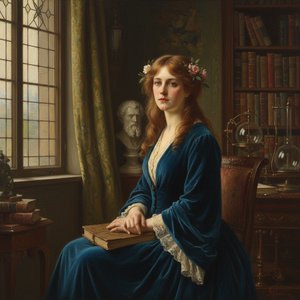
Throughout art history, women have often been depicted *by* men, their portraits serving as reflections of patriarchal ideals and societal expectations. However, artists like Dante Gabriel Rossetti offered more nuanced portrayals, exploring the inner lives and emotional complexities of their female muses. Rossetti’s “Blue Silk Dress (Jane Morris)” (1868) is a compelling example. Jane Morris wasn't merely a passive model; she was an intellectual and artistic force in her own right, influencing Rossetti’s work profoundly.
The Blue Silk Dress captures a sense of melancholy and introspection, inviting viewers to contemplate the sitter’s inner world. The fabric itself becomes symbolic of both luxury and confinement, hinting at the constraints placed upon women in Victorian society. Furthermore, the act of portraying Morris in such detail – focusing on her attire and expression – can be interpreted as an assertion of female agency, a reclaiming of self-representation within a traditionally male-dominated artistic landscape.
Conclusion: The Timeless Resonance of the Azure Form
The story of the blue dress in Western art is far more than a chronicle of fashion trends or technical innovations. It’s a testament to the enduring power of color as a symbol, reflecting evolving social values, artistic sensibilities, and perceptions of identity. From its initial association with divinity and nobility to its later use as a marker of status and self-expression, blue has consistently captivated artists and audiences alike. Whether rendered with meticulous detail or raw emotional intensity, the azure form continues to resonate across centuries, inviting us to contemplate the complexities of human experience and the enduring allure of beauty.
At OriginalUniqueArt.com, we celebrate this rich artistic heritage by offering high-quality reproductions of masterpieces from throughout history. Explore our collection today and discover the captivating world of art for yourself – or commission a custom painting to capture your own unique vision.