() ·

A painting made for you, by hand

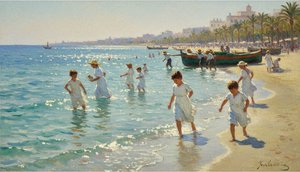
Swimmers, Jávea

نسخة زيتية مصنوعة يدوياً

لوحة زيتية مرسومة يدوياً على الكانفاس بالمقاس والإطار الذي تفضله، تُنفذ حسب الطلب على أيدي فنانينا. ( التبديل إلى المطبوعات التحويل إلى الصورة الرقمية)

وصف المقتنيات

Joaquin Sorolla's 'Swimmers, Jávea' (1905) captures the vibrant Mediterranean light and movement with stunning brushstrokes. Explore this iconic Spanish Impressionist masterpiece.

نبذة عن الفنان

خاكيْن سُورَلا: رسام إسباني عبقري يجسد النور واللون! استكشف لوحاته النابضة بالحياة ومشاهده الشاطئية التي تلتقط جوهر الحياة المتوسطية. اكتشف إرثه الفني اليوم!

from ·

Chapter 1

How large should it be?

Slide to change the size; the picture on the left shows the frame at its real width. The proportions of the original are kept.

مقاس قياسي
مخصص
CM
INCH

اختر من بين أحجامنا المُعدّة مسبقاً والتي تتوافق مع النسب الأصلية للعمل الفني.

العرض
الارتفاع

أدخل العرض والارتفاع اللذين تحتاجهما، ليتناسب العمل مع إطارك أو جدارك. وبما أن هذه اللوحة مرسومة يدوياً، ففي حال اختيار مقاس بشكل مختلف، يمكن للفنان رسم مساحة إضافية حول الصورة أو تقليصها قليلاً — الخيار لك. سنرسل لك نموذجاً رقمياً تجريبياً لاعتماده قبل البدء في الرسم. علماً بأن الصورة المعروضة في هذه الصفحة لا تعكس النتيجة النهائية الحقيقية — فالنموذج التجريبي هو الوحيد الذي يوضح ذلك بدقة.

Chapter 2

How should it arrive?

Choose the edges of the stretched canvas

Choose your frame

Corner sample of the WhiteWrap canvas edge finish, stretched on خشب طبيعي صلب bars
White E£1
Corner sample of the BlurSideWrap canvas edge finish, stretched on خشب طبيعي صلب bars
Blurside E£1
Corner sample of the ExtendedWrap canvas edge finish, stretched on خشب طبيعي صلب bars
Extended E£1
Corner sample of the P118B picture frame: بوليسترين مُشكّل, 5 cm wide and 3 cm thick
P118B E£10
Corner sample of the P118H picture frame: بوليسترين مُشكّل, 5 cm wide and 3 cm thick
P118H E£10
Corner sample of the P118W picture frame: بوليسترين مُشكّل, 5 cm wide and 3 cm thick
P118W E£10
Corner sample of the P438Z picture frame: بوليسترين مُشكّل, 5.5 cm wide and 3.5 cm thick
P438Z E£10
Corner sample of the P508JH picture frame: بوليسترين مُشكّل, 7 cm wide and 3.5 cm thick
P508JH E£12
Corner sample of the P508YH picture frame: بوليسترين مُشكّل, 7 cm wide and 3.5 cm thick
P508YH E£12
Corner sample of the P805H picture frame: بوليسترين مُشكّل, 5 cm wide and 3.5 cm thick
P805H E£10
Corner sample of the P805Z picture frame: بوليسترين مُشكّل, 5 cm wide and 3.5 cm thick
P805Z E£10
Corner sample of the P919BZ picture frame: بوليسترين مُشكّل, 7 cm wide and 3.5 cm thick
P919BZ E£10
Corner sample of the P919G picture frame: بوليسترين مُشكّل, 7 cm wide and 3.5 cm thick
P919G E£10
Corner sample of the P919XJ picture frame: بوليسترين مُشكّل, 7 cm wide and 3.5 cm thick
P919XJ E£10
Corner sample of the P959ZH picture frame: بوليسترين مُشكّل, 5 cm wide and 3 cm thick
P959ZH E£10
Corner sample of the P968JZ picture frame: بوليسترين مُشكّل, 6 cm wide and 4 cm thick
P968JZ E£12
Corner sample of the W106C picture frame: خشب طبيعي صلب, 5 cm wide and 3 cm thick
W106C E£8
Corner sample of the W218G picture frame: خشب طبيعي صلب, 5 cm wide and 3 cm thick
W218G E£10
Corner sample of the W218JH picture frame: خشب طبيعي صلب, 5 cm wide and 3 cm thick
W218JH E£8
Corner sample of the W218Y picture frame: خشب طبيعي صلب, 5 cm wide and 3 cm thick
W218Y E£10
Corner sample of the W307PJ picture frame: خشب طبيعي صلب, 6 cm wide and 3 cm thick
W307PJ E£10
Corner sample of the W316G picture frame: خشب طبيعي صلب, 6 cm wide and 3 cm thick
W316G E£10
Corner sample of the W316PJ picture frame: خشب طبيعي صلب, 6 cm wide and 3 cm thick
W316PJ E£8
Corner sample of the W316Y picture frame: خشب طبيعي صلب, 6 cm wide and 3 cm thick
W316Y E£10
Corner sample of the W398PJ picture frame: خشب طبيعي صلب, 5 cm wide and 3 cm thick
W398PJ E£8
Corner sample of the W4111J picture frame: خشب طبيعي صلب, 6.5 cm wide and 3.5 cm thick
W4111J E£10
Corner sample of the W500HY picture frame: خشب طبيعي صلب, 7 cm wide and 5 cm thick
W500HY E£15
Corner sample of the W500JH picture frame: خشب طبيعي صلب, 7 cm wide and 5 cm thick
W500JH E£15
Corner sample of the W692G picture frame: خشب طبيعي صلب, 8 cm wide and 4 cm thick
W692G E£12
Corner sample of the W849H picture frame: خشب طبيعي صلب, 5 cm wide and 3 cm thick
W849H E£8
Corner sample of the W940BG picture frame: خشب طبيعي صلب, 7.5 cm wide and 4.5 cm thick
W940BG E£15
Corner sample of the W953PJ picture frame: خشب طبيعي صلب, 6 cm wide and 3.5 cm thick
W953PJ E£8
Corner sample of the H24-GOLD picture frame: خشب منحوت مع الجبس, 10 cm wide and 6 cm thick
H24-GOLD E£30
Corner sample of the H24-SILVER picture frame: خشب منحوت مع الجبس, 10 cm wide and 6 cm thick
H24-SILVER E£30
Corner sample of the H36-GOLD picture frame: خشب منحوت مع الجبس, 15 cm wide and 6.5 cm thick
H36-GOLD E£45
Corner sample of the H36-SILVER picture frame: خشب منحوت مع الجبس, 15 cm wide and 6.5 cm thick
H36-SILVER E£45

Moulding: . Overall size with the frame: .

Chapter 3

Who paints it, and should anything change?

Examples of what can be changed: Replace face with customer photo; Add pet (e.g., replace cat with dog); Include hidden message in background; Change background landscape or elements.
After order, OriginalUniqueArt.com team will email client for instructions and provide a mockup preview

توصيل عالمي إلى خلال 3 إلى 4 أسابيع بدلاً من المدة المعتادة البالغة 5 أسابيع. (31 أكتوبر). جودة لا تهاون فيها.

Chapter 4

The finishing touches

A nameplate, as in a museum?

تفاصيل اللوحة البرونزية المحفورة

This elegant plaque features the artist's name and the title of the artwork, finely engraved for a timeless presentation.

It is made from bronze with a refined, elegant finish. The text is precisely laser-engraved for a sharp and permanent result. Measuring 9x2 cm, the plaque is compact yet easy to read. It's built to be durable and scratch-resistant, offering a professional, museum-quality look. Mounting is simple thanks to the included adhesive backing.

تفاصيل اللوحة الأكريليكية الشفافة

The plaque includes essential engraved details such as the artist's name, the title of the artwork, the date it was created, the type of media used-like oil on canvas or watercolor-a brief description of the piece, and a QR code that links to the complete artwork information.

It is crafted from clear acrylic, offering a sleek, modern appearance. The text is UV-engraved in black to ensure strong visual contrast. With a size of 10x15 cm, it ensures optimal readability. It comes equipped with two metal hooks for secure wall mounting. The plaque is designed to be weather-resistant, making it suitable for various environments, and it includes interactive features that work seamlessly with smartphone scanning.

تفاصيل اللوحة الأكريليكية السوداء

This elegant plaque includes engraved information such as the artist's name, the title of the artwork, the date it was created, the type of media used (like oil on canvas or watercolor), a short description of the artwork, and a QR code for quick access to more information.

The plaque itself is made from refined black acrylic with a premium finish. The text is laser-engraved in white for high contrast and readability. Its size is 10x15 cm, designed to be easy to read. It comes with two metal hooks for professional mounting. The design is sleek and fits any interior style. It is also weather-resistant and durable, with built-in digital integration for mobile compatibility.

A protective varnish?

When do you need it?

Chapter 5

Your painting, as you ordered it

Swimmers, Jávea

وسيط إعادة الإنتاج

مقاس النسخة المطبوعة

-

نخبة كبار الفنانين

دقة أكبر، ولمسات فنية أمتن، ووقت إضافي للإنتاج

-

إطار النسخة المطبوعة

-

-

بالنسبة للأعمال الفنية أو النسخ المطبوعة التي يتجاوز طول أي من أضلاعها 105 سم (حوالي 41 بوصة)، سيتم شحن الإطار كمجموعة مفككة. تضمن هذه الطريقة سلامة التوصيل وتمنع حدوث أي أضرار أثناء النقل.

يتطلب الأمر تجميعاً احترافياً - هذا المنتج ليس مخصصاً للتركيب الذاتي.
يجب تجميع المجموعة وشد القماش بواسطة فني إطارات محترف وخبير، باستخدام غراء الخشب (غير مرفق)، وكماشة شد القماش، وملاقط لتثبيت القضبان بشكل مستوٍ أثناء جفاف الغراء. إن التجميع غير الصحيح أو عدم توازن شد القماش قد يؤدي إلى تلف العمل الفني بشكل دائم، وهو أمر لا يغطيه الضمان الخاص بنا.

  • تتضمن المجموعة جميع القطع الخشبية الصلبة، والمقطعة بدقة لتناسب المقاسات المطلوبة.

  • يتم التجميع باستخدام البراغي المرفقة، بالإضافة إلى غراء الخشب للوصلات الزاوية، وهو غير مرفق ويجب توفيره من قبل فني التأطير الخاص بك.

  • تتطلب العملية استخدام أدوات احترافية غير مدرجة في المجموعة: مثل زرادية شد القماش (أداة شد) وملاقط لتثبيت القضبان بشكل مستوٍ أثناء جفاف الغراء.

تنبيه هام:
تتطلب الوصلات الزاوية استخدام غراء الخشب، كما يجب تثبيت القضبان باستخدام المشابك حتى يجف الغراء تماماً، ويتطلب شد القماش على الإطار المجمع استخدام كماشة شد القماش. لا تشتمل المجموعة على أي من هذه الأدوات؛ لذا يرجى التواصل مع فني تأطير محترف قبل طلب هذا المقاس.

لوحة التعريف

-

-

ورنيش حماية

ورنيش لامع (يُبرز الألوان ويحمي من الضوء والرطوبة)

-

تخصيص عملي الفني

أمثلة على التعديلات المتاحة: استبدال الوجه بصورة العميل؛ إضافة حيوان أليف (مثل استبدال قطة بكلب)؛ إدراج رسالة مخفية في الخلفية؛ تغيير المناظر الطبيعية أو العناصر في الخلفية.

-

عاجل

توصيل عالمي إلى خلال 3-4 أسابيع بدلاً من المدة المعتادة البالغة 5 أسابيع. (31 أكتوبر). جودة لا تضاهى.

-

شحن سريع ومميز

توصيل عالمي إلى خلال 5 أسابيع. (7 نوفمبر).

مُضمَّن

إجمالي السعر

E£ 15696

إجمالي السعر E£ 15696

خيار الزجاج متاح فقط للمقاسات التي تقل عن 110 سم

Included with every order

  • شحن سريع ومجاني لجميع أنحاء العالم
  • قماش كتان فاخر
  • تأمين شامل على الشحن
  • ضمان استرداد الرسوم الجمركية
  • ضمان دقة مطابقة الألوان
  • سياسة الإرجاع خلال 100 يوم (في حالات العيوب فقط)
  • ضمان استرداد نقدي بنسبة 100%
  • عرض خصم الكميات

Joaquín Sorolla’s “Swimmers, Jávea”: A Dance of Light and Movement

Joaquin Sorolla y Bastida's "Swimmers, Jávea," painted in 1905, isn’t merely a depiction of two women enjoying the Mediterranean Sea; it’s an exquisite distillation of light, movement, and the very essence of Spanish summer. Captured with his signature loose brushwork and vibrant palette, the canvas transports us to the sun-drenched coastline of Javea (Jávea), a region that profoundly influenced the artist's work during this period. Sorolla, deeply attuned to the ephemeral qualities of light and atmosphere, sought to capture not just what he saw, but how it *felt* – the warmth on skin, the shimmering heat haze above the water, and the joyous abandon of youth in its purest form.

The scene unfolds with a remarkable sense of immediacy. Sorolla masterfully employs *contre-jour*, placing the figures against a brilliant, almost blinding light source—likely the sun reflecting off the sea. This technique isn’t simply for dramatic effect; it serves to deconstruct the forms of the swimmers, dissolving their outlines into fragmented strokes of green, orange, blue, and purple. The water itself becomes an animated surface, fractured by the movement of the waves and the dappled light filtering through its depths. Notice how the artist doesn’t attempt a precise rendering of anatomy; instead, he prioritizes capturing the *impression* of form—the suggestion of bodies in motion, rather than their literal representation.

A Study in Color and Technique

Sorolla's technique is characterized by its remarkable speed and confidence. He worked outdoors, directly on the canvas, embracing the fleeting effects of natural light. This *plein air* approach resulted in a remarkably fresh and spontaneous quality to his paintings. The brushstrokes are loose and expressive, often applied with rapid, rhythmic movements—a testament to Sorolla’s ability to capture the dynamism of the scene. He utilized broken color – applying small strokes of pure pigment side-by-side rather than blending them together – creating a shimmering effect that mimics the way light reflects off water. The use of complementary colors – particularly the juxtaposition of orange and blue – intensifies the vibrancy and creates a sense of visual excitement.

The color palette is remarkably bright and optimistic, dominated by shades of turquoise, emerald green, and warm yellows and oranges. These hues evoke the intense heat of the Mediterranean sun and the dazzling beauty of the coastal landscape. Sorolla’s choice of colors isn't merely decorative; they contribute significantly to the painting’s overall mood—a feeling of carefree joy and boundless energy.

Symbolism and Context

While seemingly a simple depiction of swimmers, "Swimmers, Jávea" is imbued with symbolic resonance. Javea itself held a special significance for Sorolla, who spent several productive summers there in the early 1900s. The painting reflects his deep appreciation for the region’s natural beauty and its vibrant culture. The two women swimming represent not just leisure but also a celebration of youth, vitality, and the simple pleasures of life. They embody a sense of freedom and abandon—a feeling that is particularly poignant given Sorolla's own personal experiences with loss and hardship.

Furthermore, the painting can be viewed as an exploration of light itself – a central theme in Sorolla’s oeuvre. He was fascinated by the way light transforms surfaces, creating illusions of depth and movement. “Swimmers, Jávea” is therefore not just a landscape; it's a meditation on the ephemeral nature of beauty and the power of light to capture our senses.

A Timeless Masterpiece

"Swimmers, Jávea" remains one of Sorolla’s most celebrated works. Its vibrant colors, dynamic composition, and masterful handling of light continue to captivate viewers today. Reproductions of this painting offer a wonderful opportunity to bring the warmth and energy of the Spanish coast into any space. Whether you're an art collector seeking a piece of Spanish heritage or simply someone who appreciates beautiful artwork, "Swimmers, Jávea" is a timeless masterpiece that embodies the spirit of Sorolla’s artistic vision.

الأسئلة والأجوبة

ما هي الاستخدامات الموصى بها لنسخة مطبوعة من "Swimmers, Jávea" للفنان خوآكين سورولَا ي باستيدَا؟

الاستخدام المقترح لـ "Swimmers, Jávea" للفنان خوآكين سورولَا ي باستيدَا هو Accent، كما يمكن استخدامه لأغراض أخرى أيضاً.

أين يمكنني العثور على إحصائيات حول "Swimmers, Jávea" للفنان خوآكين سورولَا ي باستيدَا؟

تعرض صفحة الإحصائيات الخاصة بـ "Swimmers, Jávea" للفنان خوآكين سورولَا ي باستيدَا إحصائيات الزيارات العامة: عدد الزيارات الشهرية لهذا العمل الفني، ومقارنةً مع أكثر أعمال الفنان مشاهدةً، بالإضافة إلى المناطق التي يأتي منها الزوار.

ما هي المواد المستخدمة في صنع "Swimmers, Jávea"؟

تم تنفيذ "Swimmers, Jávea" باستخدام Oil On Canvas.

More about this painting

معاينة الحجم الواقعي معاينة بالواقع المعزز التبديل إلى المطبوعات التحويل إلى الصورة الرقمية إرسال
عرض التفاصيل دليل الأعمال الفنية للطلاب أضف إلى المفضلة تحميل قطع مشابهة الأشعة السينية عرض شرائح متتابع Q&A الإحصائيات

In numbers

  • 1905the year it was painted
  • 29frames to choose from
  • standard sizes, in its own proportions
  • 5weeks to paint and deliver it

Quick facts about خوآكين سورولَا ي باستيدَا

  • Artistic Movement Or Style: إمبراسيووني، لومينيسم
  • Artists Who Influenced This Artist:
    • فرانسيسكو برadilla
    • جيولس باستيان ليپاغ
    • أدولف فون مينزل
  • Date Of Birth: ٢٧ فبراير ١٨٦٣
  • Date Of Death: ١٠ أغسطس ١٩٢٣
  • Full Name: Joaquín Sorolla y Bastida
  • Nationality: إسبانية
  • Notable Artworks: ['مارجريت أخرى"، "جلب القارب"، "العائد من الصيد"، "الخادمة البيضاء"، "الأطفال على الشاطئ"، "تثبيت البساط']
  • Place Of Birth: فالنسيا، إسبانيا

نبذة عن الفنان

Joaquín Sorolla y Bastida: A Life Bathed in Light

Joaquín Sorolla y Bastida, a name synonymous with the radiant light and vibrant energy of Spain, was more than just a painter; he was a chronicler of his nation’s soul. Born in Valencia in 1863, Sorolla's early life was marked by tragedy. Orphaned at the tender age of two following a cholera epidemic that claimed both parents, young Joaquín and his sister were raised by their maternal aunt and uncle. This early experience with loss perhaps instilled within him a profound appreciation for the fleeting beauty of life – a sentiment that would permeate his art. Though hardship shadowed his beginnings, it did not dim the spark of artistic talent that quickly became apparent. He received initial instruction in Valencia, demonstrating an aptitude that led to studies under established artists like Cayetano Capuz and José Benlliure, eventually culminating in a four-year grant to study in Rome. It was there, amidst the classical grandeur of Italy, that Sorolla began to forge his unique artistic path, absorbing influences while simultaneously developing a style distinctly his own.

Early Life and Artistic Beginnings

Joaquín Sorolla’s formative years were shaped by profound loss and circumstance. Born into a modest Valencian family—his father a tradesman and his mother Concepción Bastida—the sudden demise of both parents at just two years old due to cholera irrevocably altered the trajectory of his life. He and his sister, Concha, found solace in the care of their maternal aunt and uncle, fostering within him an empathy for vulnerability and resilience – qualities that would inform his artistic vision throughout his career. Recognizing his exceptional talent from a young age, Sorolla pursued formal art education at Valencia’s School of Artisans, honing his skills under instructors like Cayetano Capuz and José Benlliure. This early exposure to artistic principles laid the groundwork for his subsequent explorations into diverse styles and mediums. At eighteen he travelled to Madrid where he studied master paintings in the Museo del Prado, absorbing the legacy of Velázquez and other titans of Spanish art.

Rome: The Crucible of Style

A pivotal moment arrived when Sorolla secured a prestigious grant enabling him to embark on a four-year residency in Rome—a pilgrimage to the heart of artistic innovation during the Belle Époque. Amidst the monumental sculptures and architectural splendor of the Italian capital, he encountered artists who championed Impressionism and Luminism – movements that profoundly impacted his aesthetic sensibilities. Notably influential were exhibitions featuring Jules Bastien-Lepage and Adolf von Menzel, whose works challenged academic conventions and embraced a more spontaneous approach to representation. Sorolla’s time in Rome solidified his commitment to capturing the ephemeral qualities of light and color—a stylistic hallmark that would define his oeuvre for decades to come. He diligently studied under José Benlliure and Emilio Sala, absorbing techniques and perspectives that broadened his artistic horizons.

From Historical Narratives to Sun-Drenched Realism

Sorolla’s initial artistic endeavors leaned toward the grand narratives of history and mythology—large-scale canvases depicting heroic figures and dramatic events. However, a transformative shift occurred upon his return to Spain as he turned his gaze towards the everyday lives of his countrymen—particularly those inhabiting the vibrant coastal region of Valencia. The intense Mediterranean sunlight, the shimmering sea, and the palpable energy of human interaction became Sorolla’s primary subjects—a deliberate rejection of academic formalism in favor of a more immediate and emotionally resonant aesthetic. This stylistic evolution culminated in masterpieces like Sad Inheritance (1899)—a poignant depiction of children afflicted by polio bathing in the sea—which garnered considerable acclaim but simultaneously revealed Sorolla's compassionate engagement with social issues. The painting powerfully conveyed empathy for those marginalized by circumstance, demonstrating Sorolla’s artistic commitment to portraying human experience with sensitivity and nuance.

The Luminist Vision: Light as Subject Matter

Sorolla’s technique became instantly recognizable—a bravura display of brushwork characterized by loose, energetic strokes that conveyed movement and atmosphere. He worked *en plein air* whenever possible, confronting the challenges of capturing fleeting light conditions head-on. This dedication to painting outdoors resulted in canvases brimming with life and immediacy—a stylistic decision that distinguished him from many of his contemporaries who favored studio settings. His beach scenes—perhaps his most iconic works—are not merely picturesque representations of leisure; they are studies in luminosity, reflections, and the joyful interaction between people and their environment. Paintings like Children on the Seashore and Sewing the Sail exemplify this mastery—figures bathed in golden light, rendered with a remarkable sense of spontaneity and vitality. Sorolla wasn’t interested in meticulous detail; rather, he sought to convey the *impression* of reality, prioritizing atmosphere and emotion over precise representation. This approach earned him comparisons to Impressionists like Monet and Renoir, but Sorolla's work possessed a unique Spanish character—a warmth, intensity, and emotional depth that set it apart. He achieved remarkable success in his early years, securing prestigious commissions and garnering widespread recognition for his artistic prowess. ## Major Achievements & Recognition
  • 1892: Gold medal at the National Exhibition in Madrid for Another Marguerite
  • 1894: Acclaimed for The Return from Fishing: Hauling the Boat, acquired by the Musée du Luxembourg
  • 1899: Grand Prix and medal of honor at the Universal Exhibition in Paris for Sad Inheritance
  • 1900-1923: Extensive exhibitions throughout Europe and the United States, establishing international recognition
  • 1912-1928: Commissioned to create Vision of Spain for the Hispanic Society of America (completed posthumously)
## Legacy & Enduring Influence Sorolla’s influence extended far beyond his lifetime—inspiring generations of artists who embraced his Luminist vision and championed a style characterized by bold brushwork and luminous color palettes. His paintings continue to captivate audiences today, serving as enduring reminders of the beauty of Spanish landscapes and the expressive power of art. Sorolla's legacy resides not only in his technical brilliance but also in his profound engagement with human experience—a painter whose work transcends time, resonating with viewers across cultures and eras. He remains a master of light, color, and emotion—a testament to the transformative potential of artistic creativity.

حقائق سريعة

  • Location: Private collection
  • Artistic style: Luminous, dynamic
  • Year: 1905
  • Subject or theme: Beach scene, swimmers
  • Notable elements: Light study, brushwork

اختبار المعلومات الفنية

لكل سؤال إجابة صحيحة واحدة فقط.

سؤال 1:
What is the primary subject of Joaquín Sorolla’s ‘Swimmers, Jávea’?
سؤال 2:
According to the description, what artistic technique did Sorolla employ to represent the swimmers’ bodies?
سؤال 3:
In what year was ‘Swimmers, Jávea’ painted?
سؤال 4:
The description highlights that Sorolla was fascinated by which element of the scene?
سؤال 5:
Joaquín Sorolla was known for his work in which artistic style?