Symbolist Expressionism · 1895
The Skeleton Painter (جيمس إنسور, 1895)
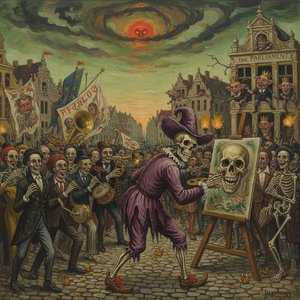
أبدع جيمس إنسور (1860–1949) في The Skeleton Painter. يعود تاريخها إلى 1895. تنتمي إلى حركة Symbolist Expressionism. صُنعت من Acrylic On Canvas. تُحفظ في المتحف الملكي للفنون الجميلة في أنتويرب في أنطويرب, بلجيكا.
- 1895
- Acrylic On Canvas
- المتحف الملكي للفنون الجميلة في أنتويرب, أنطويرب

 معاينة الحجم الواقعي

 لوحة زيتية مرسومة يدوياً
 مشاركة
 مشاركة
 ورقة الحقائق


 تحميل الملف
 قطع مشابهة
 الأشعة السينية
 عرض شرائح
 الأسئلة والأجوبة

 الإحصائيات
The Skeleton Painter باختصار
- العنوان
- The Skeleton Painter
- الفنان
- جيمس إنسور (1860–1949)
- تاريخ ميلاد الفنان
- أوستند, بلجيكا
- التاريخ
- 1895
- الوسيط الفني
- Acrylic On Canvas
- أين يمكن مشاهدتها
- المتحف الملكي للفنون الجميلة في أنتويرب, أنطويرب, بلجيكا
- الحركة
- Symbolist Expressionism
- الموضوع
- skeleton, artist, death, masks, paintings, room
ماذا يصور The Skeleton Painter؟
A Dance with Mortality: James Ensor’s “The Skeleton Painter”
James Ensor's "The Skeleton Painter," completed in 1895, is not merely a painting; it’s an unsettling plunge into the subconscious, a meticulously crafted tableau of morbidity and artistic obsession. The image, rendered with a distinctive and increasingly personal style, immediately confronts the viewer with a scene both bizarre and profoundly familiar – a room overflowing with art, dominated by a central figure: a skeleton diligently wielding a paintbrush. This isn’t a morbid spectacle intended to shock for shock's sake; rather, it’s a complex meditation on life, death, creativity, and the inescapable nature of artistic endeavor. Ensor, born in Ostend, Belgium, in 1860, cultivated an intensely individual vision, one deeply rooted in his upbringing amidst the vibrant chaos of a seaside resort town and fueled by a fascination with masks, disguise, and the theatricality of human experience.
The Artist’s Studio – A Realm of Shadows
The setting itself is crucial to understanding the painting's power. The room is crammed with canvases, each bearing witness to Ensor’s restless hand. A dining table, laden with objects—a clock, a partially consumed meal—suggests an interrupted life, a space where sustenance and creation intertwine. The presence of other skeletons, scattered amongst the chairs and leaning against walls, reinforces the pervasive theme of mortality. These aren't simply decorative elements; they are active participants in the scene, almost as if they’re observing or even contributing to the artist’s work. The inclusion of a cat, curled up near the left edge, adds an element of domesticity and perhaps a subtle critique – a creature of instinct and survival nestled within this world of intellectual pursuit.
Symbolism and Technique: A Palette of Unease
Ensor’s technique is immediately recognizable. He employed a thick, impasto application of paint, building up layers of color to create a tactile surface that seems almost sculptural. The palette is deliberately muted – browns, greys, ochres, and deep blues dominate—contributing to the painting's somber mood. The skeletal figure itself is rendered with remarkable detail, highlighting the fragility of bone while simultaneously conveying a sense of focused determination. Notice how Ensor uses strong diagonals – particularly in the arrangement of the chairs and paintings – to create a feeling of unease and instability. The use of color is not about beauty; it’s about evoking emotion, creating a visual atmosphere of melancholy and contemplation. His style evolved significantly throughout his career, moving away from academic influences towards a highly expressive, often unsettling, approach that anticipated the Symbolist movement.
Ensor's Exploration of Artistic Identity
"The Skeleton Painter" can be interpreted as an exploration of Ensor’s own artistic identity and his relationship to mortality. The skeleton artist represents not just death but also the inevitable end of creative endeavor, the fading of inspiration with time. It speaks to the paradox of the artist – someone who often seems detached from the everyday realities of life, yet is ultimately defined by their engagement with them. Ensor’s own struggles with artistic recognition and his rejection of traditional academic training likely fueled this preoccupation with themes of isolation and the ephemeral nature of existence. The painting isn't a celebration of art; it’s a questioning of its purpose and its ultimate significance in the face of oblivion. It invites us to consider what drives an artist to create, knowing that their work, like their own physical form, will eventually succumb to time.
OriginalUniqueArt offers exquisite, hand-painted reproductions of James Ensor’s “The Skeleton Painter,” allowing you to bring this haunting masterpiece into your home or office. Each reproduction is created with the same meticulous attention to detail and expressive technique as the original, capturing the painting's unique atmosphere and emotional depth. Explore our collection today and experience the unsettling beauty of Ensor’s vision.
أي متحف يضم The Skeleton Painter؟
المتحف الملكي للفنون الجميلة في أنتويرب
أنطويرب, بلجيكا
أصول المتحف وتاريخه العريق تضرب جذور المتحف الملكي للفنون الجميلة في أنتويرب في أعماق التاريخ، حيث تأسس في عام 1810، مستنداً في نشأته إلى الإرث الفني العظيم لـ "نقابة سانت لوك" في أنتويرب، تلك المؤسسة التي لعبت دوراً محورياً في المشهد الثقافي منذ أواخر القرن الرابع عشر وحتى عام 1773. وقد بدأت مجموعة المتحف الفنية من تلك الأعمال التي كانت تمتلكها النقابة، مما أوجد رابطاً مباشراً ووثيقاً بين الماضي التجاري المزدهر للمدينة وبين تطورها الفني المتنامي. تجسد مقتنيات المتحف امتداداً زمنياً واسعاً، حيث تحتضن روائع فنية تمتد من القرن الرابع عشر وصولاً إلى القرن العشرين، وهذا الاستمرار التاريخي يتيح للباحثين والمتأملين دراسة الإنتاج الفني في المنطقة عبر عدة قرون من الإبداع.


صور عالية الدقة لـ The Skeleton Painter

جيمس إنسور, The Skeleton Painter (1895), المتحف الملكي للفنون الجميلة في أنتويرب. ملك عام
أسئلة وإجابات حول The Skeleton Painter
أين يمكنني مشاهدة العمل الأصلي "The Skeleton Painter" للفنان جيمس إنسور؟
يمكنكم مشاهدة العمل الأصلي "The Skeleton Painter" في المتحف الملكي للفنون الجميلة في أنتويرب, أنطويرب, بلجيكا.
في أي عام أُبدعت "The Skeleton Painter" للفنان جيمس إنسور؟
يعود تاريخ "The Skeleton Painter" إلى عام 1895، وهو ما يضع العمل ضمن المسيرة المهنية لـ جيمس إنسور وفي سياق حقبته الزمنية.
ما هي التقنية المستخدمة في تنفيذ "The Skeleton Painter" للفنان جيمس إنسور؟
تعتمد التقنية المستخدمة في "The Skeleton Painter" للفنان جيمس إنسور على Acrylic On Canvas، وتهدف النسخ المطبوعة إلى محاكاة مظهر هذه التقنية.
ما هي الموضوعات التي يتناولها "The Skeleton Painter" للفنان جيمس إنسور؟
تتضمن الموضوعات المتضمنة في "The Skeleton Painter" للفنان جيمس إنسور كلاً من skeleton, artist, death, masks, paintings, room, cat, decay، والتي تلخص مجتمعةً فحوى العمل الفني.
هل العمل "The Skeleton Painter" ضمن الملكية العامة؟
أما بخصوص حقوق الطبع والنشر، فإن "The Skeleton Painter" تندرج ضمن ملك عام - انتهت مدة حماية حقوق الطبع والنشر الخاصة به.
من هو الفنان الذي يُنسب إليه العمل "The Skeleton Painter"؟
يُنسب العمل "The Skeleton Painter" إلى جيمس إنسور.
إلى أي أسلوب ينتمي "The Skeleton Painter"؟
ينتمي العمل "The Skeleton Painter" إلى مدرسة Symbolist Expressionism، وهي المدرسة التي تمثل التقليد الفني الذي يندرج ضمنه هذا العمل.
إلى أي مرحلة من مسيرة جيمس إنسور الفنية تنتمي لوحة "The Skeleton Painter"؟
ينتمي العمل "The Skeleton Painter" إلى الفترة Late Period من مسيرة جيمس إنسور المهنية، مما يربط هذا العمل بمراحل تطور الفنان الفني.
كم كان عمر جيمس إنسور عند إبداع "The Skeleton Painter"؟
عندما أُبدع العمل "The Skeleton Painter" في عام 1895، كان عمر الفنان جيمس إنسور - المولود في 1860 - هو 35 عاماً.
عن الفنان، جيمس إنسور

1860–1949, بلجيكا
جيمس إنسور
Early Life, Family and Artistic Training James Ensor was born on April 13, 1860, in Ostend, Belgium. His identity was shaped by a specific cultural intersection: his father, James Frederic Ensor, was born in Brussels to English parents, while his mother, Maria Catherina Haegheman, was Belgian. This dual heritage provided a foundation for a perspective that often sat outside the narrow confines of local tradition. Growing up, the artist lived within the walls of a souvenir shop operated by his parents in Ostend.
وأيضاً لـ جيمس إنسور
 دخول المسيح إلى بروكسل1888
 صورة ذاتية مع أقنعة1899
 الحمامات في أوستند
 هياكل عظمية تدفئ نفسها1889

مقالات حول The Skeleton Painter
 Beauty in Mortality: Capturing the Soul of the Skull through the Luminous Lens of Impressionist ArtExplore the profound beauty of mortality through Impressionism. Discover how masters like Monet and Renoir transformed the Memento Mori tra…
 علم نفس الصور المرحة: استكشاف اللوحات الفكاهية والخيالية كمحفزات للرفاه العاطفي والتواصل الاجتماعياستكشف علم نفس الصور المرحة! اكتشف كيف تعزز اللوحات الفكاهية والخيالية رفاهيتك العاطفية وتواصلك الاجتماعي. رؤى خبراء ونصائح قيمة لتحسين حيا…
 James Ensor's Grotesque Visions: Social Commentary & Artistic InnovationExplore the unsettling yet captivating world of James Ensor, a pioneer of Expressionism. Discover his satirical masterpieces, symbolic imag…