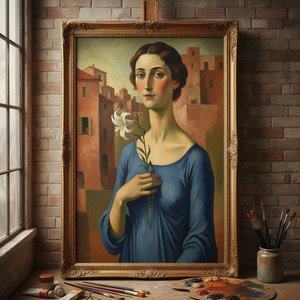
نسخة زيتية
 كل ما يخص De cavalier







































 بالنسبة للأعمال الفنية أو النسخ المطبوعة التي يتجاوز طول أي من أضلاعها 105 سم (حوالي 41 بوصة)، سيتم شحن الإطار كمجموعة مفككة؛ حيث تضمن هذه الطريقة سلامة التوصيل وتمنع حدوث أي أضرار أثناء النقل.


A Study in Shadow and Light
In this 1885 oil on canvas, we find ourselves in a quiet, intimate space with a young man. The composition is a medium close-up, focusing on the subject from the chest up, positioned slightly off-center to create a sense of natural, unposed presence. There is a profound stillness here. The lighting is directional, emerging from the upper left to carve the subject out of a deep, dark background. This technique of chiaroscuro leaves much of the face and body in shadow, while catching the contours of the nose, cheek, and hands. It is a deliberate use of light to create volume and a sense of three-dimensional depth.
The color palette is muted and somber, dominated by blacks and deep browns. This darkness is interrupted only by the warm, illuminated tones of the man's skin and a specific metallic, silvery sheen on his gorget. This piece of neck armor provides a sharp textural contrast to the matte darkness of his clothing. The surface of the work bears a fine craquelure, a delicate cracking that speaks to its age and history.
Technical Nuance and Composition
The artist employs a painterly approach where the lines are soft and blended. This is particularly evident in the transitions between light and shadow, which avoids harsh edges in favor of a smooth, gradual movement. The subject's expression is calm and contemplative, lending an emotional weight of quiet dignity to the portrait. To understand the physical presence of this work, one might consider:
- The medium of oil on canvas.
- The specific use of a silvery gorget to catch directional light.
- The muted, earthy tones that define the subject's attire.
- The subtle gradations of tone used to define the facial structure.
The Breton Influence
Flavien-Louis Peslin was deeply shaped by the atmosphere of Brittany. His training at the École des Beaux-Arts de Rennes under masters like Alexandre Cabanel provided him with a foundation in classical beauty and meticulous composition. However, his time in the Pont-Aven artistic colony allowed his style to move toward a more atmospheric realism. In De cavalier, we see this intersection of disciplined academic training and a more sensitive, observational approach to light. The work captures a moment of introspection, reflecting a style that seeks to find the soul of a subject through the careful management of shadow and texture.
الأسئلة والأجوبة
هل لوحة De cavalier مرسومة يدوياً أم مطبوعة؟
مرسومة يدوياً: يقوم رسام محترف بمحاكاة De cavalier بالألوان الزيتية على قماش الكتان.
ما الحجم الذي يجب أن أختاره لـ De cavalier؟
أبعاد العمل الأصلي هي 82.5 x 66.0cm. تتراوح المقاسات من 35.5 x 28.2 cm (E£10779) إلى 246.4 x 196.1 cm (E£95505)؛ ويوضح الجدول الموجود في هذه الصفحة الخطوات الأساسية وأسعارها.
كم تستغرق عملية التوصيل؟
تستغرق عملية التوصيل من 4 إلى 5 أسابيع، مع خدمة الشحن السريع المجاني لجميع أنحاء العالم؛ كما يتوفر خيار الإنتاج المستعجل في هذه الصفحة. يمكنك إرجاع العمل الفني خلال 100 يوم واسترداد كامل المبلغ دون أي شروط.
أين توجد النسخة الأصلية من De cavalier؟
النسخة الأصلية ضمن مجموعة Rijksmuseum في أمستردام.
ما هي الوسائط التي استخدمها Louis Mettling في عمله De cavalier؟
Oil On Canvas
 معاينة الحجم الواقعي

 مشاركة
 مشاركة
 التفاصيل
 ورقة الحقائق


 تحميل الملف
 قطع مشابهة
 الأشعة السينية
 عرض شرائح
 الأسئلة والأجوبة

 الإحصائيات