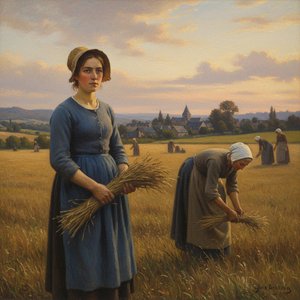
沃尔特·奥斯本

1859 - 1903

概览

  • Creative periods: mature period
  • Lifespan: 44 years
  • Also known as:
    • 沃尔特·弗雷德里克·奥斯本
    • 奥斯本
    • Walter Frederick Osborne
    • Osborne
  • Art period: 19世纪
  • Copyright status: Public domain
  • Born: 1859, 都柏林, 爱尔兰
  • Topics explored:
    • irish art
    • gardens and parks
  • Top 3 works:
    • Portrait of Stephen Gwynn (1864-1950), Author
    • Portrait of Violet Osborne (1866-1893), Artist's Sister
    • Apple Gathering, Quimperlé

Early Life and Artistic Foundations

Walter Frederick Osborne, born in Rathmines, Ireland, in 1859, emerged from a family deeply rooted in the artistic world. His father, William Osborne, was a successful animal painter, providing young Walter with an early immersion into the sights, smells, and techniques of a working artist’s life. This foundational exposure proved pivotal, nurturing a talent that would blossom into a significant contribution to Irish art. Osborne's formal training began at Rathmines School before progressing to the prestigious Royal Hibernian Academy (RHA) Schools in Dublin. His dedication and skill were quickly recognized; he garnered numerous prizes, culminating in the esteemed Taylor scholarship (£50) – a testament to his exceptional promise even in those early years. This financial support enabled him to broaden his horizons and seek further education abroad, setting the stage for a period of crucial artistic development.

European Influences and Artistic Development

Osborne’s journey took him to Antwerp in 1881, where he studied at the Académie Royale des Beaux-Arts under Charles Verlat. This experience immersed him in realist traditions, honing his technical skills and emphasizing meticulous observation. However, it was a subsequent sojourn to Brittany between 1883 and 1884 that proved transformative. Working in locations like Dinan, Pont-Aven, and Quimperlé, Osborne encountered the *plein air* style championed by Jules Bastien-Lepage. This marked a turning point, encouraging him to capture nature directly, responding to light and atmosphere with an immediacy previously absent from his work. The influence of Flemish master Rubens also lingered in his artistic consciousness, evident in his later compositions. These diverse influences – the realism of Verlat, the naturalism of Bastien-Lepage, and the compositional strength of Rubens – coalesced into a unique artistic voice that would define Osborne’s career. His time in England followed, working alongside artists like Nathaniel Hill and Augustus Burke, further refining his skills in landscape and genre scenes depicting rural life.

A Return to Dublin and Portraiture Success

Family circumstances prompted Osborne's return to Dublin in 1892, where he established a thriving portrait practice. While landscapes and genre scenes remained central to his artistic interests, the demand for portraits provided financial stability and recognition. He had already become a full member of the RHA in 1886, solidifying his position within the Irish art establishment. Osborne’s style continued to evolve during this period, gradually moving away from strict realism towards Impressionism. This shift manifested in looser brushwork, a more adventurous palette, and an increased emphasis on capturing fleeting moments of light and atmosphere. His portraiture gained considerable acclaim, culminating in the bronze medal awarded for “Mrs Noel Guinness and her Daughter Margaret” at the Exposition Universelle in 1900 – a significant international honor.

Themes, Legacy, and Lasting Impact

Walter Osborne’s artistic legacy rests on his sensitive and insightful depictions of everyday life, particularly his documentary portrayals of Dublin's working class. He possessed an exceptional ability to capture the dignity and resilience of ordinary people, offering a poignant glimpse into their world. Beyond these compelling social commentaries, he painted numerous evocative landscapes and genre scenes depicting rural Ireland and England. His notable works, including “Feeding the Chickens,” “Mother and Child,” “The Return Of The Flock”, "Small Girl With A Cat", and “Cherry Ripe,” showcase his mastery of light, color, and composition. Tragically, Osborne’s life was cut short by pneumonia in 1903 at the age of just 43, leaving many to speculate about the artistic heights he might have reached. Despite his premature death, he is now rightfully regarded as a major figure in Irish art history. His work provides invaluable insights into the social conditions and daily lives of late 19th-century Ireland, and his blend of realism and Impressionism continues to inspire subsequent generations of artists. He wasn’t part of any formal movement but his influence on later Irish painters is undeniable, a testament to the enduring power of his vision and skill.

趣味测试

每道题只有一个正确答案。

题目 1:
沃尔特·奥斯本最初是在哪个城市的皇家爱尔兰皇家学院 (RHA) 学校学习?
题目 2:
在布列塔尼期间,哪位艺术家对奥斯本的作品产生了重大影响,引导他走向户外写生(plein air)绘画?
题目 3:
沃尔特·奥斯本是在哪一年回到都柏林并建立肖像画创作实践的?
题目 4:
奥斯本最著名的描绘主题是什么?
题目 5:
沃尔特·奥斯本的哪件作品在1900年的世界博览会上获得了铜奖?

问答详情

沃尔特·奥斯本 的创作时期属于哪个历史阶段?

沃尔特·奥斯本 的创作活跃于 19世纪 时期,这一时期确立了艺术家在艺术史上的地位。

在哪里可以欣赏到 沃尔特·奥斯本 的画作?

您可以在 爱尔兰国家美术馆, 国家肖像美术馆 及 芬兰国家美术馆 欣赏到 沃尔特·奥斯本 的画作。

沃尔特·奥斯本 以哪些作品闻名?

沃尔特·奥斯本 以 沃尔特·奥斯本 最著名的画作中的作品而闻名。

沃尔特·奥斯本 的绘画风格是什么?

沃尔特·奥斯本 的绘画风格属于 Impressionism 流派,正如其他著名的 Impressionism 艺术家一样。

在哪里可以找到关于 沃尔特·奥斯本 的作品 Portrait of Stephen Gwynn (1864-1950), Author 的相关信息?

关于 Portrait of Stephen Gwynn (1864-1950), Author 的事实已汇编成一份可打印的学习指南。

可以按心情浏览 沃尔特·奥斯本 的作品吗?

查看按情绪分类的沃尔特·奥斯本作品集:每一件作品都根据其意境进行排列。

沃尔特·奥斯本 的作品是否属于公有领域?

是的。沃尔特·奥斯本逝世于1903年,其作品已进入公有领域。

沃尔特·奥斯本 的享寿是多少?

沃尔特·奥斯本 生于 1859 年,卒于 1903 年,享年约 44 岁。

沃尔特·奥斯本 出生于何时何地?

沃尔特·奥斯本 于 1859 出生于 都柏林。