1


更新于 November 2026 · 基于我们的流行度评分排名(每件作品的搜索量、访问量及订单量) · 18 件 Allen Jones 作品收录于我们的目录中
简而言之
在 Allen Jones 留下的所有原作中,最著名的作品是 Untitled (2)。 紧随其后的是 Hermaphrodite (1963) 和 Hatstand。 我们的目录收录了 Allen Jones 的 18 件作品;画廊完整保留了 18 件享誉世界的杰作,并为每一件作品详细标注了创作日期、馆藏机构及其背后的故事。

Allen Jones’s 1963 painting, "Hermaphrodite," is not merely a depiction of figures; it is an eloquent meditation on the very nature of identity, connection, and the boundaries we impose upon ourselves. The canvas captures a moment steeped in intimacy—a central couple locked in a tender embrace amidst what appears to be a lively gathering. Yet, the true focus remains on the merging forms at the heart of the composition. Jones…


这些原作中反复出现的四个主题,各有一个最杰出的范例。
收藏了本页中大部分画作的 1 家博物馆。
| 博物馆 | 城市 | Allen Jones 的作品 | 此列表中的画作 |
|---|---|---|---|
 利物浦国家博物馆 |
利物浦 | 1 | Hermaphrodite |
此精选系列中每件 Allen Jones 作品的创作年份均为 1963:以下按知名度排序。
选择年份以查看原作。
Allen Jones’s 1963 painting, "Hermaphrodite," is not merely a depiction of figures; it is an eloquent meditation on the very nature of identity, connection, and the boundaries we impose upon ourselves. The canvas captures a moment steeped in intimacy—a central couple locked in a tender embrace amidst what appears to be a lively gathering. Yet, the true focus remains on the merging forms at the heart of the composition. Jones…
Untitled (2)。紧随其后的是 Hermaphrodite (1963) 和 Hatstand。
Untitled (2), Hermaphrodite, Hatstand, Untitled, One way traffic, Chair, Right hand lady, Diva, Wet seal 及 Nudo ombra。上方排名显示了每件作品的创作年份及馆藏机构。
我们的目录中收录了 18 件 Allen Jones 的作品。
多见于 利物浦国家博物馆 (利物浦)。上方的博物馆列表列出了所有相关机构。
根据本页面的原作,Pop art
Born in the coastal city of Southampton in 1937, Allen Jones emerged as one of the most striking and controversial voices within the British Pop Art movement. His artistic journey was forged in the rigorous studios of the Hornsey College of Art and later the Royal College of Art, though his path was marked by a rebellious spirit that famously led to his expulsion from the latter institution. This early friction with authority did not stifle his creativity; rather, it acted as a catalyst, pushing him toward an aesthetic that challenged the very foundations of mid-century societal norms. As he transitioned from student to educator, teaching at institutions such as Croydon College of Art and later in Hamburg and California, Jones refined a visual language that would forever link the glossy allure of mass media with the unsettling depths of human psychology.
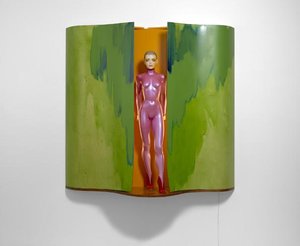
The essence of Jones’s work lies in its masterful, often jarring, juxtaposition of the organic and the artificial. He became renowned for a sculptural style that utilized smooth, hyper-realistic mannequins to explore the complexities of femininity and objectification. By placing these glossy, idealized figures within textured, geometric panels or alongside utilitarian objects like chairs and tables, he created a profound tension between the natural human form and the cold precision of industrial design. This technique allowed him to critique the pervasive influence of advertising and the way mass media constructs beauty standards, turning the viewer into an observer of both desire and artifice.
While his roots are firmly planted in the vibrant energy of Pop Art, Jones’s intellectual depth is heavily indebted to the traditions of Surrealism. He drew significant inspiration from the dreamlike, destabilizing works of René Magritte, seeking to use imagery that could bypass rational thought and strike directly at the subconscious. This influence is palpable in masterpieces such as “Diva,” where a mannequin is encased within an abstract, textured panel, creating a sense of beautiful decay and existential anxiety. His ability to blend the bright, commercial colors of the 1960s with the unsettling, irrational logic of dreams allowed him to create works that were simultaneously eye-catching and deeply disconcerting.
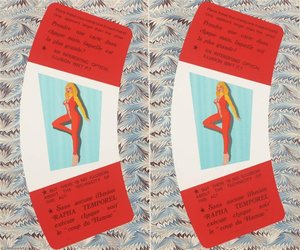
His explorations often delved into themes of identity and the fragmentation of the self. Through various mediums—including painting, lithography, and sculpture—Jones presented a world where figures are often disconnected from their surroundings or integrated into strange, mechanical structures. This is evident in works like “One Way Traffic,” a provocative collage that utilizes a surreal grid to present female figures, and “Untitled (2),” which uses dramatic lighting and bold lines to evoke the glamour of 1970s fashion photography. In doing so, he forced his audience to confront the thin line between the human subject and the commercial object.
The historical significance of Allen Jones extends far beyond the initial shock value of his mid-century provocations. He has been recognized as a pivotal figure in the evolution of contemporary British art, earning prestigious accolades such as the Prix des Jeunes Artistes at the 1963 Paris Biennale and becoming a Senior Academician at the Royal Academy of Arts. His career is marked by a relentless pursuit of new forms, moving from the bold, graphic statements of his early years to more complex, hyperrealistic sculptural explorations in later decades.
Today, the works of Allen Jones reside in some of the world's most esteemed institutions, ensuring his influence continues to resonate with new generations of artists and scholars. His legacy is defined by several key contributions:
Through his uncompromising vision, Jones transformed the medium of Pop Art into a powerful tool for social commentary, leaving behind a body of work that remains as challenging and vital today as it was during its inception.