The Weaver of Myth and Form: The Life of Rosemarie Beck Phelps
In the vibrant, turbulent landscape of the post-World War II American art scene, few voices resonated with as much intellectual depth and structural grandeur as Rosemarie Beck Phelps. Born in 1923 in Westchester County, New York, to Hungarian Jewish immigrants, her early life was steeped in a rich cultural heritage that would later serve as the bedrock for her profound explorations of human drama. Her journey into the heart of modernism began at Oberlin College, where she studied art history, providing her with a scholarly lens through which to view the evolution of visual language. This academic foundation, paired with her subsequent studies at Columbia University and the Art Students League, allowed her to navigate the shifting tides of 20th-century aesthetics with both grace and rigor.
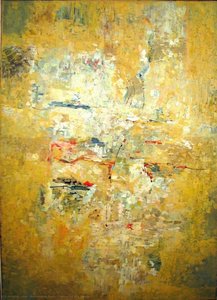
The early years of Beck’s career were marked by a profound connection to the New York School. Moving to Woodstock, New York, she found herself immersed in a community of giants; her neighbors included luminaries such as Philip Guston and Bradley Walker Tomlin, whose presence exerted a subtle yet powerful influence on her burgeoning style. During this era, she was recognized as a vital member of the second generation of Abstract Expressionists. Her canvases from this period were characterized by an intense, gestural energy, exhibiting her work in prestigious venues like the Stable and Peridot galleries. In these early works, one can sense the struggle for form within the void, a hallmark of the era's fascination with spontaneity and the subconscious.
A Transition to the Figurative Sublime
As the 1950s drew to a close, Beck underwent a transformative stylistic evolution that would define her enduring legacy. While many of her contemporaries remained tethered to pure abstraction, Beck began to reintroduce the human figure into her compositions, not as mere subjects, but as vessels for epic narrative and psychological tension. This shift toward Figurative Expressionism allowed her to synthesize the structural lessons of abstraction with the timeless weight of classical storytelling. She became a master of the multi-figure composition, creating expansive, monumental works that felt both physically imposing and emotionally intimate.
Her subject matter was deeply intertwined with her intellectual life; married to the writer and editor Robert Phelps, she drew immense inspiration from the literary giants of antiquity and the Renaissance. Her canvases became stages for the tragedies of Greek Mythology and the poetic complexities of Shakespeare. Through her brush, the characters of Sophocles, Euripides, and Ovid were resurrected, reimagined through a modern lens of power, gendered relationships, and oppression. Whether depicting the harrowing fate of Antigone or the magical transformations in Metamorphoses, Beck utilized color and form to breathe new life into ancient archetypes, making the distant past feel urgently present.
Legacy and Artistic Eminence
Beyond the canvas, Rosemarie Beck Phelps was a formidable educator and a guiding light for subsequent generations of artists. Her tenure at institutions such as Queens College, Vassar College, and the New York Studio School allowed her to pass on her rigorous approach to both technique and concept. She was admired not only for her technical mastery but also as a powerful role model, demonstrating how an artist could maintain a deeply personal, intellectual, and even autobiographical voice within the broader movements of contemporary art.
The historical significance of her work lies in its refusal to choose between the abstract and the representational. Instead, she achieved a rare equilibrium—what critics have described as a need for abstract structure satisfied by an execution that embodies raw energy. Her contributions are preserved in some of the world's most esteemed institutions, including:
- The Smithsonian American Art Museum, Washington, D.C.
- The Corcoran Gallery of Art, Washington, D.C.
- Vassar College Art Center, Poughkeepsie, NY
- The National Academy of Design, New York, NY
Today, the work of Rosemarie Beck Phelps stands as a testament to the enduring power of myth. Her paintings remain vibrant, breathing chronicles of the human condition, reminding us that even in the most modern of forms, the ancient stories of our shared existence continue to pulse with life.
问答详情
在哪里可以按氛围浏览 Rosemarie Beck 的作品?
艺术家的 情境空间 页面按氛围分类展示了 Rosemarie Beck 的艺术作品。
如何按年份顺序浏览 Rosemarie Beck 的作品?
Rosemarie Beck 的作品时间轴现已上线:在艺术家的 作品时间轴 页面中,所有作品均按创作日期排序。
Rosemarie Beck 出生于何时何地?
Rosemarie Beck 于 1923 出生于 Westchester County。
Rosemarie Beck 的艺术生涯是如何划分为不同时期的?
您可以在艺术家的 艺术历程 页面上查阅 Rosemarie Beck 作品的编年史,其作品按创作顺序分章节依次呈现。