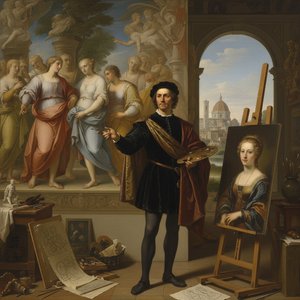
Plautilla Nelli: A Renaissance Nun-Artist
- Born: Florence, Italy (1524)
- Died: 1588
Early Life and Religious Vocation
Pulisena Margherita Nelli was born into a wealthy family in Florence. Her father, Piero di Luca Nelli, was a successful fabric merchant. At the age of fourteen, she became a nun at the Dominican convent of Santa Caterina da Siena, taking on the name Suor Plautilla. The convent was managed by the Dominican friars of San Marco, led by Savonarola, whose teachings emphasized devotional painting and drawing for religious women to combat idleness. This environment fostered artistic development within the convent walls.
Artistic Development and Influences
Despite lacking formal training, Plautilla Nelli became a prolific artist. She was heavily influenced by the teachings of Savonarola and the artwork of Fra Bartolomeo. She copied works by Agnolo Bronzino and Andrea del Sarto, but her primary inspiration came from Fra Bartolomeo’s style, reflecting the classicism promoted by Savonarola's artistic theories. After Fra Bartolomeo's death, his drawings were inherited by Plautilla Nelli, providing a valuable resource for her artistic development.
Style and Notable Works
Nelli’s work is characterized by religious themes and vivid portrayals of emotion on the characters' faces. Her style is distinguished by heightened sentiment compared to her influences. Some of her notable works include:
- Lamentation with Saints: Located in the San Marco Museum, Florence, this piece showcases her ability to depict raw emotional grief through expressive details like red eyes and visible tears.
- Saint Catherine Receiving the Stigmata and Saint Dominic Receiving the Rosary: Found at the Andrea del Sarto Last Supper Museum of San Salvi, these works demonstrate her skill in depicting religious narratives.
- Grieving Madonna: Also located at San Salvi, this painting is a copy of Alessandro Allori’s work on the same subject.
- Crucifixion: Exhibited in the Certosa di Galluzzo Monastery near Florence.
- The Last Supper: Located in the refectory of Santa Maria Novella (not open to the public), this is her only signed work and a significant achievement due to its size and subject matter.
Historical Significance
Plautilla Nelli holds a unique place in art history as the first-known female Renaissance painter of Florence. Her ability to produce large-scale works, typically reserved for male artists, was remarkable for her time. She is one of the few women mentioned by Giorgio Vasari in his "Lives of the Most Excellent Painters, Sculptors and Architects," solidifying her recognition within the artistic community. Her work represents a daring creative endeavor for a nun-artist, challenging societal norms and expanding the possibilities for female artists during the Renaissance. The recent rediscovery and restoration of her works have brought renewed attention to her talent and contribution to Florentine art.
问答详情
Plautilla Nelli 的作品受欢迎程度如何?
Plautilla Nelli 拥有一个 统计数据 页面,其中展示了该艺术家在 本站 上的作品统计数据。
Plautilla Nelli 属于哪些艺术流派?
您可以在Plautilla Nelli的全部流派页面上,按艺术流派浏览其作品。
可以按心情浏览 Plautilla Nelli 的作品吗?
您可以在艺术家 Plautilla Nelli 的 情境空间 页面上按心情浏览其作品,该页面已根据作品所传达的情绪进行了分类整理。