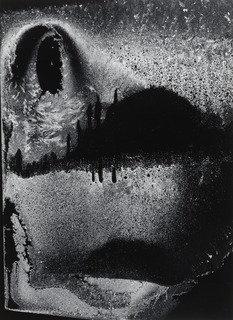
A Life Illuminated: The Photographic Vision of Minor White
Minor Martin White, born in Minneapolis in 1908, was more than a photographer; he was a visual philosopher who dedicated his life to exploring the spiritual and psychological depths accessible through the lens. His journey began with a simple Brownie camera gifted by his grandfather, sparking an enduring fascination that would evolve from youthful exploration into a profound artistic practice. White’s early life was marked by familial instability – separations and reconciliations between his parents shaped a sensitive disposition and fostered periods of introspection, experiences that subtly informed the emotional resonance within his later work. Initially pursuing botany at the University of Minnesota, he soon gravitated towards writing and photography, recognizing in these mediums a more potent means of expressing his burgeoning inner world. Even during these formative years, White began keeping “Memorable Fancies,” a personal journal revealing early explorations of sexuality and poetic reflections – a testament to a deeply private individual grappling with identity and desire.
From Documentary Roots to Spiritual Exploration
The late 1930s found White in Portland, Oregon, where he began his serious engagement with photography. Working for the Works Progress Administration’s Oregon Art Project, he documented historic buildings and created publicity shots for the Portland Civic Theater – practical assignments that honed his technical skills while providing a crucial foundation in composition and light. However, it was during this period that White's artistic vision truly began to crystallize. He wasn’t content with mere representation; he sought to imbue his photographs with meaning beyond the visible world. Influenced by the mastery of
Edward Weston and
Ansel Adams, particularly their command of form and tonal range, White nevertheless charted a unique course, one emphasizing subjective interpretation and spiritual exploration. His landscapes weren't simply depictions of place but rather evocative studies of inner states, imbued with a sense of
quiet contemplation. He began to see photography not as a mechanical process, but as a means of revealing hidden truths about the self and the universe.
A Legacy Forged in Education and Publication
Minor White’s impact extended far beyond his own photographic output. A pivotal moment arrived in 1952 with the co-founding of
Aperture magazine, a publication he tirelessly shaped as editor for many years.
Aperture quickly became *the* leading forum for photographic theory and criticism, showcasing both established masters and emerging talents while fostering a vibrant intellectual community. Simultaneously, White dedicated himself to teaching at institutions like the California School of Fine Arts,
Rochester Institute of Technology, and MIT. He wasn’t merely imparting technical skills; he was cultivating a way of *seeing* – encouraging students to look beyond surface appearances and discover deeper meaning within their subjects. His workshops and retreats emphasized conceptual thinking, personal expression, and the belief that photography could be a spiritual practice. His figure studies, often depicting men with whom he had relationships or taught, offer poignant glimpses into his private life and the challenges of navigating identity in mid-20th century America – images imbued with both tenderness and a subtle sense of longing.
The Enduring Significance of a Visionary
Today, Minor White is rightfully recognized as one of America’s most important photographers. He challenged conventional notions of objectivity, advocating for a more subjective and expressive approach to the medium. His legacy extends beyond his stunning photographs; it resides in the generations of artists he inspired through his teaching, writing, and editorship of
Aperture. His emphasis on “seeing” – truly *looking* at the world with intention and sensitivity – continues to resonate with photographers today. Furthermore, recent years have brought increased recognition to White’s exploration of personal identity and sexuality in his work, contributing to a broader understanding of LGBTQ+ history and artistic expression. He passed away in 1976, leaving behind a body of work that invites us not just to look *at* photographs, but to look *through* them – to glimpse the profound mysteries of existence and the hidden landscapes within ourselves.
Minor White’s contribution wasn't simply about capturing images; it was about revealing possibilities.