A Legacy in Likeness: The Life and Art of John Christen Johansen
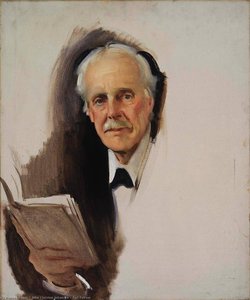
John Christen Johansen, born in 1876 and passing away in 1964, occupies a significant yet often understated position within the pantheon of Norwegian portraiture. He wasn’t a revolutionary iconoclast shattering artistic conventions; rather, he was a master craftsman who dedicated his life to capturing the essence of Norway's elite – its statesmen, financiers, and nobility – with an unwavering commitment to dignity and realism. His paintings are not merely representations of faces but windows into a specific era, reflecting the social values and aspirations of turn-of-the-century Norway and beyond. While biographical details remain somewhat sparse, the sheer volume and quality of his work speak volumes about his dedication and skill. He trained at the Royal Drawing School in Christiania (Oslo) and later under renowned portraitists in Europe, absorbing techniques that would define his signature style.
The Rise of a Portraitist: Technique and Early Influences
Johansen’s artistic development was deeply rooted in the academic tradition. He excelled in capturing anatomical accuracy and rendering textures with meticulous detail – qualities highly valued in portraiture during his time. His early works demonstrate a clear influence from 19th-centuryRealism, particularly evident in his careful observation of light and shadow to create depth and volume. However, he wasn’t simply a mimic; Johansen possessed an innate ability to imbue his subjects with personality. He moved beyond mere physical likeness, striving to reveal something of their character through subtle nuances in expression and posture. His palette was typically restrained, favoring earth tones and muted colors that lent gravitas to his compositions. This wasn’t a flamboyant style; it was one built on quiet confidence and technical precision. He studied the Old Masters, absorbing lessons from Rembrandt and Velázquez regarding composition and psychological insight. The influence of these giants is visible in his masterful handling of light and shadow, creating dramatic effects that draw the viewer's eye to the subject’s face.
Portraying a Nation: Subjects and Style
The core of Johansen’s oeuvre lies in his portraits of Norway’s leading figures. He became *the* portraitist for the nation’s power brokers, capturing their likenesses at a time of significant social and political change. His subjects weren't chosen randomly; they represented the pillars of Norwegian society – industrialists who fueled economic growth, politicians who shaped national policy, and members of the aristocracy whose lineage embodied tradition.
His portraits often depict his sitters in formal attire
He favored three-quarter length compositions
Backgrounds were typically simple and uncluttered
This deliberate stylistic choice served to emphasize the individual, stripping away distractions and focusing attention on their face and demeanor. He wasn’t interested in portraying his subjects as romantic heroes; he aimed for a sense of authenticity, capturing them as they were – complex individuals with strengths and weaknesses. This commitment to realism resonated with a society that valued integrity and pragmatism.
Beyond the Canvas: Historical Significance and Lasting Impact
John Christen Johansen’s historical significance lies not in groundbreaking innovation but in his ability to document an era through portraiture. His paintings provide invaluable insights into the appearance, values, and social standing of Norway's elite during a period of rapid modernization. He wasn’t merely painting faces; he was creating a visual record of a nation’s evolving identity. While portraiture as a genre experienced fluctuations in popularity throughout the 20th century, Johansen’s work has enjoyed renewed appreciation in recent years. His paintings are now recognized for their technical mastery, psychological depth, and historical importance. They offer a glimpse into a bygone era, reminding us of the individuals who shaped Norway's destiny. He left behind a substantial body of work that continues to be studied and admired by art historians and collectors alike, solidifying his place as a pivotal figure in Norwegian artistic heritage. His legacy is one of quiet dedication, unwavering skill, and a profound understanding of the power of likeness.
由 OriginalUniqueArt.com 编辑团队撰写
趣味测试
每道题只有一个正确答案。
题目 1:
John Christen Johansen was born in what country?
题目 2:
Johansen studied under which prominent American Realist painter?
题目 3:
Where did Johansen teach during his artistic career?
题目 4:
What style did Johansen primarily employ in his paintings?
题目 5:
Johansen's most famous portrait was of which U.S. President?
Explore the fascinating history of aristocratic status depicted through European art (16th-19th centuries). Discover how artists reflected—and shaped—societal hierarchies. Expert insights for discerning collectors.