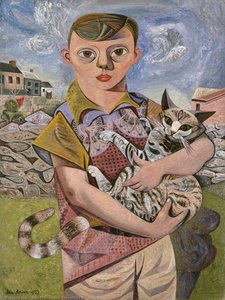
John Bowen: A Painter of Shropshire and Beyond
Born in Llanelli, South Wales, in 1914, John Bowen’s artistic journey began amidst the rolling hills and vibrant landscapes of his childhood home. His early education at Llanelli and Swansea Schools of Art laid a foundation for a career dedicated to capturing the essence of British countryside – particularly the evocative beauty of Shropshire and Dorset. Bowen wasn't merely a recorder of scenery; he possessed an uncanny ability to infuse his paintings with a sense of atmosphere, light, and mood, transforming familiar landscapes into deeply personal and emotionally resonant works.
Initially influenced by the Impressionists – Monet’s dappled sunlight and Renoir’s joyful brushstrokes served as key inspirations – Bowen gradually developed a distinctive style. He moved beyond simple representation, employing looser brushwork and a more expressive palette to convey not just what he saw, but also how he felt about it. This shift is particularly evident in his later works, where the colors become richer, the forms more fluid, and the overall effect imbued with a quiet sense of melancholy or serenity.
The Shropshire Landscape: A Core Subject
Shropshire formed the bedrock of Bowen’s artistic output for much of his career. He spent considerable time exploring its diverse terrains – from the dramatic cliffs of Winspit to the gentle folds of the Vale of Ercall and the rolling hills surrounding Shrewsbury. His paintings of these locations are not photographic reproductions; instead, they are imbued with a subjective interpretation, reflecting Bowen’s own emotional response to the landscape. He frequently depicted scenes at twilight or dawn, utilizing soft, diffused light to create an atmosphere of mystery and contemplation.
Bowen's meticulous attention to detail is another hallmark of his work. He painstakingly rendered every blade of grass, every ripple in a stream, every texture of stone – demonstrating a deep respect for the natural world. However, this precision never comes at the expense of spontaneity or feeling. His paintings are both technically proficient and emotionally engaging, inviting the viewer to lose themselves within their intricate details.
Influences Beyond Impressionism
While initially drawn to the techniques of the Impressionists, Bowen’s artistic vision expanded over time. He was particularly influenced by the work of Sir Stanley Spencer, whose depictions of rural life and religious themes resonated with Bowen's own interest in capturing the spirit of a place and its people. Furthermore, Bowen’s exploration of Orientalist painting – evident in works like “Low Tide at Evening” – reveals his fascination with exotic cultures and landscapes, reflecting a broader engagement with global artistic traditions.
The influence of Gwen John is also noticeable in Bowen's later work, particularly in his portraits. Like John, Bowen possessed a remarkable ability to capture the inner lives of his subjects, conveying their personalities through subtle gestures and expressions. His portraits are not merely likenesses; they are intimate studies of character.
Major Works and Legacy
Bowen’s oeuvre comprises over 80 paintings, many of which are held in public collections across the UK. Notable works include “Winspit,” a dramatic depiction of the iconic Shropshire landmark, and numerous landscapes of the Dorset coast, capturing the rugged beauty of its cliffs and beaches. His series of paintings depicting the village of Little Gaddesden in Buckinghamshire showcase his ability to capture the essence of rural life.
John Bowen’s legacy extends beyond his individual artworks. He was a dedicated teacher, shaping the artistic development of numerous students at Llanelli School of Art. His influence can be seen in the work of many contemporary landscape painters who continue to draw inspiration from his masterful depictions of British scenery. Bowen's paintings remain deeply evocative and emotionally resonant, offering viewers a profound connection to the beauty and tranquility of the natural world.
A Painter of Quiet Moments
Ultimately, John Bowen’s art is characterized by its quietness – a deliberate avoidance of grand gestures or dramatic compositions. He sought not to overwhelm the viewer with spectacle, but rather to invite them into a moment of contemplation, allowing them to experience the beauty and serenity of the landscape through his eyes. His paintings are testaments to the power of observation, sensitivity, and a deep appreciation for the simple pleasures of life.