Johan Richter 肖像

16 幅最著名的 Johan Richter 作品,每一件都独一无二

更新于 November 2026 · 基于我们的流行度评分排名(每件作品的搜索量、访问量及订单量) · 17 件 Johan Richter 作品收录于我们的目录中

简而言之

View of San Michele, Venice 是Johan Richter最受瞩目的画作。 随后,目光会移向 A capriccio with figures amongst ruins 和 View of the Giudecca Canal (1730)。 在 Johan Richter 的 17 件作品中,这 16 件最为闻名;每一件都是独一无二的原作,并附有创作年份、馆藏机构及其经久不衰的原因。

1665 – 1745, Stockholm Baroque 藏品最多:芬兰国家美术馆

画廊视角下的 Johan Richter 十大名作

1
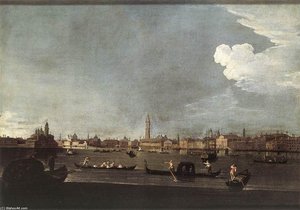
View of San Michele, Venice 作 Johan Richter

View of San Michele, Venice

Oil On Canvas

The scene unfolds across a wide, panoramic view of the Grand Canal, where the water meets the sky in a soft, diffused light. A large sailing boat occupies the left foreground, its presence grounding the viewer as the eye follows the movement of the canal into the distance. Scattered throughout the middle ground, several gondolas carry passengers and merchants, their silhouettes cutting through the gentle ripples of the water. In…

2
A capriccio with figures amongst ruins 作 Johan Richter

A capriccio with figures amongst ruins

Oil On Canvas

A single, massive column anchors the left side of the frame, its surface scarred by the slow erosion of centuries. Around it, the skeletal remains of Roman architecture rise against a pale, grey-blue sky. These are not merely stones; they are the heavy, terracotta-colored bones of a lost era. Sunlight filters through an overcast sky, casting a soft, diffused light that refuses to sharpen the edges of the crumbling arches.…

3
View of the Giudecca Canal (1730) 作 Johan Richter

View of the Giudecca Canal

1730 · Oil On Canvas

View of the Giudecca Canal is an oil painting by Johan Richter. The work dates to 1730. It captures a specific moment of Venetian life through the lens of a traveler who found a permanent home in the lagoon. The canvas holds the light of a city built upon water and stone.

4
The Bacino di San Marco (1740) 作 Johan Richter

The Bacino di San Marco

1740 · Oil On Canvas

The oil on canvas painting titled The Bacino di San Marco presents a view of the Venetian canal system. The composition is structured around strong horizontal lines formed by the architecture of the buildings and the surface of the water. These lines create a sense of depth, leading the eye toward the receding structures in the background. The water occupies the foreground and middle ground, acting as a mirror for…

5
View of Venice with San Michele in Isola (1715) 作 Johan Richter

View of Venice with San Michele in Isola

1715 · Oil On Canvas · 国家博物馆, 斯德哥尔摩

View of Venice with San Michele in Isola is a veduta painting by Johan Richter, executed about 1715. The work captures a specific moment within the Venetian cityscape, centering on the presence of San Michele in Isola. It belongs to the tradition of topographical views that document the architecture and the water of the lagoon with precision.

6
San Giorgio Maggiore, Venice, from the Canale della Grazia 作 Johan Richter

San Giorgio Maggiore, Venice, from the Canale della Grazia

Oil On Canvas

The water of the Canale della Grazia ripples with a soft, rhythmic motion, carrying small boats that glide through the hazy Venetian light. In this moment, the air feels heavy with salt and the stillness of a midday lull. The church of San Giorgio Maggiore rises from the lagoon, its pale facade catching the diffused glow of a sun filtered through a light mist. Everything feels suspended in a gentle,…

9
Venice, a view of the molo, looking west towards santa maria della salute and the palazzo ducale to the right 作 Johan Richter

Venice, a view of the molo, looking west towards santa maria della salute and the palazzo ducale to the right

Oil On Canvas

The scene unfolds with a certain stillness, capturing a moment of repose along the molo. Looking west, the eye is drawn through a hazy, atmospheric expanse toward the silhouette of Santa Maria della Salute. To the right, the architecture of the Palazzo Ducale provides a sturdy, rectangular counterpoint to the soft, receding lines of the horizon. The palette is restrained, relying on muted blues, earthy browns, and ochres to build…

10
Venice the Piazza San Marco looking north from the Piazzetta towards the Torre del'Orologio 作 Johan Richter

Venice the Piazza San Marco looking north from the Piazzetta towards the Torre del'Orologio

Oil On Canvas

The scene captures a wide view of the Piazzetta in Venice, looking north from the Molo toward the Torre del'Orologio. The composition is organized through receding planes that lead the eye from a populated foreground into the architectural depth of the square. In the immediate foreground, pedestrians, merchants, and tourists move across the stone surface, interspersed with dogs and pigeons. The middle ground is defined by the rhythmic repetition of…

Johan Richter 的名画,第 11 至 16 幅

令 Johan Richter 驻足的创作主题

这些原作中反复出现的四个主题,各有一个最杰出的范例。

收藏有 Johan Richter 原作的博物馆

收藏了本页大部分画作的 2 家博物馆。

博物馆 城市 Johan Richter 的作品 此列表中的画作
芬兰国家美术馆, 赫尔辛基芬兰国家美术馆 赫尔辛基 2 View from Venedig, View from Venedig
国家博物馆, 斯德哥尔摩国家博物馆 斯德哥尔摩 1 View of Venice with San Michele in Isola

跨越数十载的 Johan Richter:每一件皆为独一无二的原作

各年代作品统计

选择一个年代,探索定义该时代的原创杰作。

Johan Richter 的画作:画廊常见问题

Johan Richter 最著名的代表作是什么?揭晓答案

View of San Michele, Venice。紧随其后的是 A capriccio with figures amongst ruins 和 View of the Giudecca Canal (1730)。

Johan Richter 最著名的十幅画作是哪些?揭晓答案

View of San Michele, Venice, A capriccio with figures amongst ruins, View of the Giudecca Canal, The Bacino di San Marco, View of Venice with San Michele in Isola, San Giorgio Maggiore, Venice, from the Canale della Grazia, The Doge's Palace, Venice, with the Dogana and the Molo, from the Giudecca, The Isola di San Giorgio Maggiore, Venice, from the Bacino di San Marco, Venice, a view of the molo, looking west towards santa maria della salute and the palazzo ducale to the right 及 Venice the Piazza San Marco looking north from the Piazzetta towards the Torre del'Orologio。上方排名显示了每件作品的创作年份及馆藏机构。

已知 Johan Richter 有多少件作品?揭晓答案

我们的目录收录了 17 件 Johan Richter 的作品,创作年代从 1715 年至 1740 年。

在哪里可以欣赏到最著名的 Johan Richter 原作?揭晓答案

多见于 芬兰国家美术馆 (赫尔辛基) 及 国家博物馆 (斯德哥尔摩)。上方的博物馆列表列出了所有相关机构。

哪幅 Johan Richter 的名作创作年代最早,哪幅最晚?揭晓答案

在本页面中,最早的作品创作于 View of Venice with San Michele in Isola (1715),最晚的创作于 The Bacino di San Marco (1740)。

Johan Richter 偏好哪些题材?揭晓答案

Sky (11), Water (10) 及 Canal (9),共计 16 件作品。

Johan Richter 最常使用哪些材料进行创作?揭晓答案

Oil On Canvas,共计 12 件(本页共有 16 件作品)。

Johan Richter 的作品属于哪种艺术流派?揭晓答案

根据本页面的原作,Baroque

在 芬兰国家美术馆 可以看到哪些 Johan Richter 的原作?揭晓答案

View from Venedig 及 View from Venedig:芬兰国家美术馆, 赫尔辛基收藏了本页中 2 件作品。

Johan Richter:艺术家肖像

Johan Richter (Giovanni Richter): Venetian Visionary

Johan Richter, born in Stockholm around 1665, emerged as a prominent Swedish Baroque painter during the early 18th century, establishing himself as a significant figure within the artistic landscape of Venice. While biographical details remain somewhat sparse—records indicate he died in Venezia in 1745—his legacy rests firmly on his captivating Venetian vedute and landscapes, demonstrating an undeniable influence from Luca Carlevarijs and other contemporaries who championed the genre’s expressive potential.
  • Early Life & Training: Richter's formative years were spent honing his artistic skills in Stockholm, though precise details of his training remain elusive. He likely studied under Elias Dahlgren, a respected Swedish painter known for his portraits and landscapes.
  • Arrival in Venice (1717): Driven by an irresistible allure to the artistic fervor of Venice—a city brimming with innovation and patronage—Richter embarked on a journey south around 1717. This pivotal decision irrevocably altered his career trajectory, immersing him in the Venetian milieu and propelling him toward unparalleled creative heights.

Venetian Landscape Painting: A Synthesis of Style

Richter’s artistic output in Venice is characterized by a masterful blend of Swedish Baroque tradition with the burgeoning Venetian landscape style. He skillfully adopted techniques pioneered by Luca Carlevarijs, embracing atmospheric perspective and dramatic chiaroscuro to convey the grandeur and subtlety of the Venetian environment. His canvases depict iconic locations—St Mark's Square, the Grand Canal—rendered with meticulous detail and imbued with a palpable sense of movement and emotion. The artist’s compositions are not merely representations of scenery; they serve as conduits for conveying psychological states and capturing fleeting moments of beauty.
  • Notable Works: Among Richter's celebrated paintings are “Venice, a view of the Fondaco dei Turchi,” showcasing the bustling commercial heart of Venice alongside serene canal vistas; "Venice, a view of San Biagio and the church of San Biagio e Cataldo," capturing the spiritual atmosphere of a Venetian basilica; and “A capriccio with figures amongst ruins,” presenting an imaginative panorama infused with classical references.
  • Influence & Technique: Richter’s artistic approach—marked by careful observation, masterful brushwork, and a profound understanding of tonal gradation—established him as a cornerstone of Venetian landscape painting. His canvases exemplify the Baroque ideal of conveying emotion through visual form, cementing his place within art history.

Symbolism & Artistic Vision

Beyond mere topographical accuracy, Richter’s paintings resonate with symbolic meaning and reflect an artistically ambitious vision. The ruins depicted in “A capriccio” hark back to classical antiquity—a deliberate gesture intended to elevate the landscape beyond the purely descriptive realm—while simultaneously conveying themes of decay and regeneration. His canvases are imbued with a contemplative spirit, inviting viewers to contemplate the sublime beauty of nature alongside reflections on human existence. Richter’s oeuvre embodies the Baroque preoccupation with grandeur, emotion, and spiritual contemplation, solidifying his contribution to the artistic heritage of Sweden and Italy alike.

Legacy & Historical Significance

Johan Richter's Venetian landscapes continue to captivate audiences today, testifying to the enduring power of his artistic vision. His work stands as a testament to the transformative potential of artistic exchange—demonstrating how stylistic innovations can transcend national boundaries and achieve universal acclaim. Richter’s legacy extends beyond individual masterpieces; he represents an emblematic figure within the Baroque movement, embodying its commitment to expressive realism and elevating landscape painting to new heights of artistic sophistication. His paintings remain treasured examples of Venetian art history and continue to inspire artists and scholars alike.