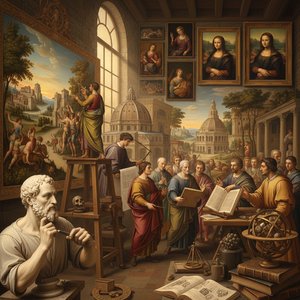
Johannes Pollack: Bridging Cultures in Renaissance Krakow
Johannes Pollack, born around 1435 in Krakow, Poland – a city at the crossroads of Germanic and Slavic traditions – stands as one of the most remarkable figures of Polish Renaissance art. His life’s journey intertwined with monastic devotion and artistic innovation, leaving an indelible mark on the visual landscape of his era and establishing him as a pivotal link between Northern European stylistic currents and the burgeoning humanist spirit of Krakow.- Early Life & Monastic Formation: Pollack entered the Benedictine monastery of St Florian in Krakow at a young age, marking the beginning of a life dedicated to prayer and scholarship. This formative experience profoundly shaped his artistic sensibilities, instilling within him a deep appreciation for religious iconography and fostering an unwavering commitment to conveying spiritual truths through visual representation.
- Artistic Training & Influences: While biographical details remain scarce, Pollack’s artistic training undoubtedly benefited from the vibrant intellectual environment of Krakow. The humanist ideals championed by scholars like Nicolaus Copernicus and Marcin Kromer – emphasizing observation, reason, and human dignity – permeated the city's cultural discourse, influencing artists like Pollack to adopt innovative techniques and explore new expressive possibilities.
The Flowering of Krakow’s Artistic Vision: Style & Technique
Pollack’s artistic style exemplifies the distinctive blend characteristic of Krakow’s Renaissance. Drawing inspiration from Flemish masters such as Rogier van der Weyden and Hugo van der Goes, he skillfully employed oil paint – a relatively new medium at the time – to achieve unprecedented levels of realism and luminosity. His meticulous attention to detail—evident in depictions of drapery folds, facial expressions, and anatomical accuracy—demonstrates a mastery of observation that aligns perfectly with humanist principles.Religious Iconography & Spiritual Expression
Pollack’s artistic output consistently prioritized conveying spiritual messages. His depictions of saints, biblical scenes, and liturgical figures are imbued with a palpable sense of reverence and contemplation—reflecting the Benedictine monastic ethos that underpinned his life's work. Through carefully crafted gestures, facial expressions, and drapery designs, Pollack succeeded in capturing the essence of Christian faith, inviting viewers to engage in a dialogue with divine grace.Legacy & Historical Significance
Johannes Pollack’s contribution to Polish Renaissance art transcends mere stylistic innovation. He served as a beacon of humanist ideals within Krakow's artistic community and elevated St Florian Monastery to prominence as a center of artistic excellence. His enduring influence can be discerned in subsequent generations of Polish painters—who embraced his meticulous technique and expressive vision—solidifying his place among the foremost artists of his time and ensuring that his legacy continues to inspire admiration for centuries to come.问答详情
在哪里可以按氛围浏览 Jan Polack 的作品?
艺术家的 情境空间 页面按氛围分类展示了 Jan Polack 的艺术作品。
Jan Polack 出生于何时何地?
Jan Polack 于 1440 出生于 Kraków。
Jan Polack 出生于哪个国家和城市?
Jan Polack 出生于 Poland 的 Kraków。