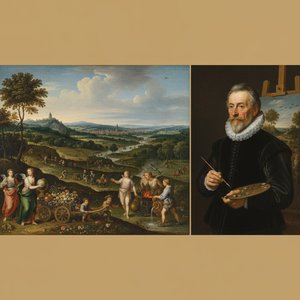
Jan Mandijn: A Dutch Renaissance Painter in Bosch's Shadow
- Born: Haarlem, Netherlands (c. 1500)
- Died: Antwerp (c. 1560)
Jan Mandijn, also known as Jan Mandyn, was a Dutch Renaissance painter who flourished in Antwerp after 1530. While his career remained somewhat overshadowed by the monumental figure of Hieronymus Bosch, Mandijn carved out a distinct niche within the artistic landscape of the Low Countries, influencing subsequent generations of painters.
Early Life and Training
Born around 1500 in Haarlem, Jan Mandijn received his initial training in his hometown. Details about his early education remain scarce, but it's evident that he developed a strong foundation in painting techniques during this period. Around 1530, he relocated to Antwerp, a burgeoning center of artistic activity and trade.
Artistic Style and Influences
- Boschian Echoes: Mandijn’s style is most readily recognized by its striking resemblance to that of Hieronymus Bosch. Like Bosch, Mandijn populated his canvases with fantastical creatures and nightmarish landscapes.
- Hybrid Demons: A hallmark of Mandijn's work is the depiction of hybrid demons—grotesque combinations of insects, amphibians, reptiles, and birds. These figures, while sharing a visual kinship with Bosch’s creations, often lack the harmonious color palette and compositional balance found in the earlier master’s paintings.
- Antwerp "Devil Pictures": Mandijn is associated with a series of Antwerp “devil pictures,” including The Temptation of Saint Christopher, which showcases his ability to evoke a sense of unease and otherworldly horror.
- Freer Style: While influenced by Bosch, Mandijn’s style exhibits a looser, more painterly quality. His brushwork is often less precise, contributing to a dynamic and somewhat chaotic visual effect.
Notable Works and Legacy
- The Temptation of Saint Anthony: This painting, housed in the Frans Hals Museum in Haarlem, is Mandijn’s only signed work and stands as a prime example of his artistic skill. It depicts Saint Anthony besieged by demonic figures, showcasing his talent for creating detailed and fantastical scenes.
- Teaching Influence: Mandijn's legacy extends beyond his own paintings; he served as a teacher to several notable artists, including Jan van der Elburcht, Gillis Mostaert, and Bartholomeus Spranger. The stylistic similarities observed in the works of these pupils suggest that Mandijn imparted valuable lessons in composition, color theory, and the depiction of fantastical subjects.
- Historical Significance: Although overshadowed by Bosch, Mandijn’s contribution to Dutch Renaissance painting is significant. His unique blend of Boschian imagery with a more accessible style helped popularize fantastical themes among a wider audience.
Later Years and Death
Jan Mandijn continued to work in Antwerp until his death around 1560. While his oeuvre remains relatively small compared to other Renaissance masters, his influence on subsequent generations of artists is undeniable. His paintings continue to be studied by art historians and appreciated by enthusiasts for their imaginative depictions of the supernatural and their unique interpretation of Bosch’s legacy.
问答详情
Jan Mandijn 出生于何时何地?
Jan Mandijn 于 1500 出生于 Haarlem。
在哪里可以按主题查看Jan Mandijn的作品分布?
Jan Mandijn 的 主题索引 旨在通过主题对艺术家的作品进行分类索引。
Jan Mandijn 的艺术风格是如何随时间演变的?
您可以在艺术家的 艺术历程 页面上查阅 Jan Mandijn 作品的编年史,其作品按创作顺序分章节依次呈现。