


1


更新于 November 2026 · 基于我们的流行度评分排名(每件作品的搜索量、访问量及订单量) · 10 件 James Leakey 作品收录于我们的目录中
简而言之
在 James Leakey 留下的所有原作中,最著名的当属收藏于 Exeter 皇家阿尔伯特纪念博物馆 的《John White Abbott (1763–1851) (1820)》。 紧随其后的是 The Palmer Family (1822) 和 Samuel Cousins (1843)。 我们的目录收录了 James Leakey 的 10 件作品;画廊完整保留了 10 件享誉世界的杰作,并为每一件作品详细标注了创作日期、馆藏机构及其背后的故事。


The painting The Mill at Berry Pomeroy, Devon is a beautiful representation of rural life in the 19th century. Created by James Leakey, an English landscape and portrait artist, this piece showcases the artist's skill in capturing the essence of the natural world. The painting measures 45 x 70 cm and is rendered in pen, giving it a unique and delicate quality. The Artist and His Work James Leakey was…

The painting Nadderwater, near Exeter, Devon by James Leakey is a stunning representation of the English countryside. Measuring 62 x 92 cm, this oil on canvas piece is housed in the Royal Albert Memorial Museum in Exeter, United Kingdom. The scene depicts a group of people riding horses in a valley surrounded by trees, with several horses visible in the foreground and background. The Artist's Style James Leakey was an…
收藏了本页中大部分画作的 4 家博物馆。
| 博物馆 | 城市 | James Leakey 的作品 | 此列表中的画作 |
|---|---|---|---|
 皇家阿尔伯特纪念博物馆 |
Exeter | 7 | John White Abbott (1763–1851), The Palmer Family, Landscape with Figures and Cattle, Sea in the Distance |
 国家肖像美术馆 |
伦敦 | 1 | Samuel Cousins |
 Royal Devon And Exeter Hospital |
Exeter | 1 | John Haddy James (1788–1869), Surgeon (1816–1855) |
 National Trust |
艾尔斯伯里 | 1 | Landscape with Travellers on a Road through a Cutting, with a Church Tower in the Distance |
从 1820 到 1843,James Leakey 创作了 24 年:本精选系列按年份追溯其漫长的艺术生涯,呈现其最杰出的原创佳作。
选择年份以查看原作。
John White Abbott (1763–1851) (1820),皇家阿尔伯特纪念博物馆, Exeter。紧随其后的是 The Palmer Family (1822) 和 Samuel Cousins (1843)。
45岁:John White Abbott (1763–1851)创作于1820年,James Leakey出生于1775年。
John White Abbott (1763–1851), The Palmer Family, Samuel Cousins, John Haddy James (1788–1869), Surgeon (1816–1855), Landscape with Figures and Cattle, Sea in the Distance, Devonshire Landscape, Outside the Church, Dawlish, Devon, Landscape with Travellers on a Road through a Cutting, with a Church Tower in the Distance, The Mill at Berry Pomeroy, Devon 及 Nadderwater, near Exeter, Devon。上方排名显示了每件作品的创作年份及馆藏机构。
我们的目录收录了 10 件 James Leakey 的作品,创作年代从 1820 年至 1843 年。
多见于 皇家阿尔伯特纪念博物馆 (Exeter), 国家肖像美术馆 (伦敦) 及 Royal Devon And Exeter Hospital (Exeter)。上方的博物馆列表列出了所有相关机构。
在本页面中,最早的作品创作于 John White Abbott (1763–1851) (1820),最晚的创作于 Samuel Cousins (1843)。
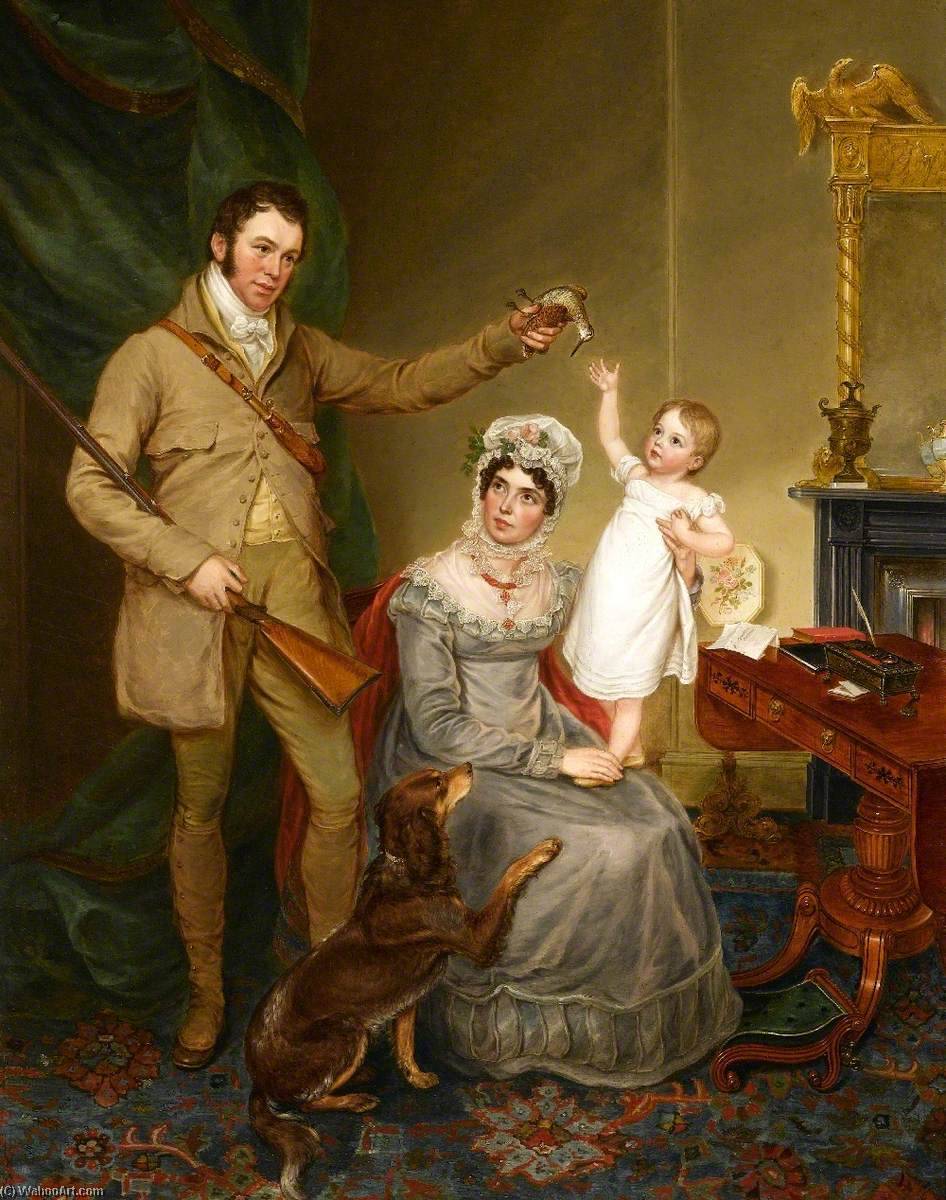
John White Abbott (1763–1851), The Palmer Family 及 Landscape with Figures and Cattle, Sea in the Distance:皇家阿尔伯特纪念博物馆, Exeter收藏了本页中 7 件作品。
In the quiet, rolling landscapes of 18th-century Exeter, a profound artistic vision began to take shape through the hands of James Leakey. Born on September 20th, 1775, Leakey was a man whose life was deeply intertwined with the heritage of Devon. Descended from a family prominent in the local wool trade, his upbringing provided a stable foundation that allowed him to pursue a calling far more ethereal than commerce. His early years were marked by a pivotal encounter with the greatness of Sir Joshua Reynolds; through an apprenticeship under this titan of British portraiture, Leakey absorbed the classical ideals of beauty, meticulous observation, and the mastery of light that would become the hallmarks of his mature style.
Leakey’s artistry was never confined to a single genre, though he found particular resonance in the depiction of the English countryside. He possessed a rare ability to translate the tranquil essence of rural life onto canvas, whether through delicate miniatures or expansive oil landscapes. His works, such as The Mill at Berry Pomeroy, Devon, reveal an artist deeply enamored with the textures of the natural world—the soft graze of a cow in a meadow, the rhythmic presence of a farmhouse, and the gentle interplay of light through ancient trees. There is a certain tranquility that pervades his compositions, a sense of timelessness that invites the viewer to step into a bygone era of pastoral peace.
The technical evolution of Leakey’s work demonstrates a sophisticated command over diverse media. While he is celebrated for his oil paintings, such as the sweeping Nadderwater, near Exeter, Devon, he also displayed an exquisite touch in pen and miniature works. This versatility allowed him to capture both the grand scale of a valley filled with riders and the intimate, delicate details of a single figure. His brushwork, often described as luminous and precise, served to elevate the mundane aspects of Devonshire life into something much more poetic.
<While his artistic contributions are significant, Leakey’s historical footprint extends into realms far removed from the easel. He belonged to a lineage that would eventually become custodians of scientific discovery, bridging the gap between the aesthetic and the empirical. His family name is inextricably linked to the burgeoning field of paleoanthropology, a connection that adds a layer of intellectual depth to his biography. This intersection of art and science—of observing the beauty of the present landscape while being part of a lineage that would uncover the ancient history of humanity—makes Leakey a truly multifaceted figure in British history.
Throughout his career, Leakey’s presence was felt far beyond the borders of Exeter. His exhibitions at the Royal Academy, featuring works such as The Marvelous Tale and The Fortune Teller, brought his Devonshire sensibilities to the wider British public. Even during brief periods in London, where he collaborated with luminaries like Thomas Lawrence and David Wilkie, Leakey remained anchored to his roots. He returned to the familiar landscapes of his birth, married Eliza Hubbard Woolmer, and raised a family that would continue to influence the intellectual and scientific landscape of England. Today, we remember James Leakey not just as a painter of scenes, but as a chronicler of a vanishing world, whose delicate brushstrokes preserved the light and soul of 19th-century Devon for eternity.