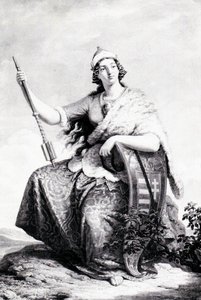
A Hungarian Voice in the Currents of Realism
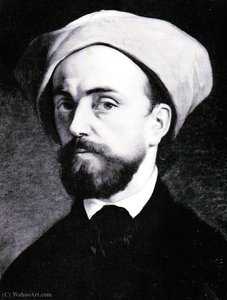
Henrik Weber, born in Pest on May 24th, 1818, emerged as a pivotal figure in 19th-century Hungarian art—a painter who skillfully bridged the delicate sensibilities of the Biedermeier period with the burgeoning force of Realism. His life story is one of artistic dedication, navigating shifting aesthetic tides and contributing significantly to the development of a distinctly Hungarian national identity through his work. Initially steered toward a scientific path by his merchant father, Mihaly Wéber, young Henrik’s innate passion for drawing proved irresistible. Sketchbooks filled with imaginative figures revealed a talent that could not be suppressed, leading his father to arrange lessons with János Tóbiás Kärgling, a local artist who recognized and nurtured the boy's potential.
Weber’s formal artistic education began in 1835 at the Academy of Fine Arts Vienna. There, he came under the influence of Johann Ender and Leopold Kupelwieser, instructors who subtly guided him away from rigid academic conventions toward a more truthful representation of the world—a nascent embrace of Realism. To support his studies, Weber supplemented his income through teaching art lessons and working as a lithographer, demonstrating an early entrepreneurial spirit alongside his artistic pursuits. His talent quickly gained recognition, establishing him as a sought-after portrait painter in Vienna during the late 1830s. However, this success was not to define his entire career.
From Portraits to Historical Narratives
As demand for portraits waned in Vienna around 1840, Weber made the strategic decision to relocate to Munich. This move marked a turning point in his artistic focus. Facing continued challenges in establishing himself, he began exploring historical themes, specifically scenes drawn from Hungarian history. The Death of John Hunyadi, one such work, proved remarkably successful and solidified Weber’s reputation as a prominent figure in Hungarian historical painting. This shift wasn't merely a change in subject matter; it was an assertion of national pride and artistic identity at a time when Hungary was experiencing growing nationalist sentiment.
From 1845 to 1847, Weber embarked on a journey through Italy, immersing himself in the landscapes and observing everyday life. This period yielded genre works depicting peasant life alongside evocative landscapes, revealing an artist keenly attuned to the beauty of the natural world and the dignity of ordinary people. Yet, despite the inspiration offered by Italian art and scenery, Weber found himself increasingly homesick. He returned to Pest in 1847, resuming portraiture while continuing to explore landscape and historical painting.
A Legacy Forged Through Perseverance
Life back in Hungary wasn’t without its struggles. Despite his undeniable talent, consistent commissions proved elusive. Weber supported himself through lithography for local magazines—a testament to his versatility—and continued offering art lessons. This period highlights the precarious existence of many artists during the 19th century, reliant on a fluctuating market and often forced to diversify their skills to survive. He continued working diligently in Pest until his death on May 14th, 1866.
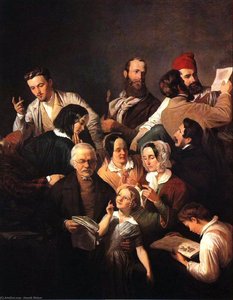
Weber’s artistic style is characterized by its blend of Biedermeier precision with the emerging tenets of Realism. He prioritized accurate representation and a focus on everyday life, influenced significantly by Ender and Kupelwieser in Vienna, as well as Michelangelo Grigoletti during his Italian sojourn. His influence extended beyond his own creations; he mentored younger artists, most notably Károly Lotz, shaping the next generation of Hungarian painters.
Pioneering a National Artistic Voice
Henrik Weber’s historical significance lies in his pioneering role in establishing Realism as a major force within Hungarian art. His paintings weren't simply depictions of events; they were powerful statements contributing to the development of national artistic identity during a period of intense political and cultural change. The Hungarian National Gallery preserves numerous examples of his work, recognizing him as a master of Biedermeier painting and an essential figure in 19th-century Hungarian art. Furthermore, his lithographs documenting historical events for “Az Ország Tükre” (“The Mirror of the Country”) remain historically valuable, offering visual records of a pivotal era.
Weber’s legacy is one of artistic integrity and dedication to portraying the world as he saw it—a world imbued with both beauty and truth. He stands as a testament to the power of art to reflect and shape national identity, leaving an indelible mark on the cultural landscape of Hungary.
问答详情
是否有关于Henrik Weber作品的3D虚拟展厅巡览?
您可以进行虚拟参观:Henrik Weber 的 3D 博物馆 页面在三维画廊中展示了艺术家的作品。
我可以通过关键词来探索 Henrik Weber 的作品吗?
若要按特定主题查找 Henrik Weber 的作品,请访问艺术家的 按关键词检索 页面,该页面通过关键词对作品进行了分类整理。
Henrik Weber 出生于哪个城市和国家?
Henrik Weber 出生于 Hungary 的 Budapest。
Henrik Weber 的哪些作品浏览量最高?
Henrik Weber 的 访问统计 页面展示了基于 本网站 上列出的艺术家作品所计算出的统计数据。
在哪里可以查看 Henrik Weber 作品的色彩风格?
您可以在Henrik Weber的色彩基因页面上,深入研究其在本网站所列作品中的色彩运用。
Henrik Weber 的创作时期属于哪个历史阶段?
Henrik Weber 的创作时期处于 19th Century 时期。这一时期确立了艺术家在历史中的地位。
Henrik Weber 的艺术生涯是如何划分为不同时期的?
Henrik Weber 的艺术生涯在 艺术编年史 页面上按时期逐一展开:以横向时间轴的形式呈现作品,并按创作时期划分为不同的篇章。
Henrik Weber 的出生地和出生年份是?
Henrik Weber 于 1818 出生于 Budapest。